Dyed Fur Scraps
CN → US| HS Code | Tariff Rate | Origin | Destination | Doc |
|---|---|---|---|---|
| 4303900000 | 35.0% | CN | US | Official Doc |
| 4302209000 | 36.7% | CN | US | Official Doc |
| 4303100060 | 39.0% | CN | US | Official Doc |
| 4303900000 | 35.0% | CN | US | Official Doc |
Product Images
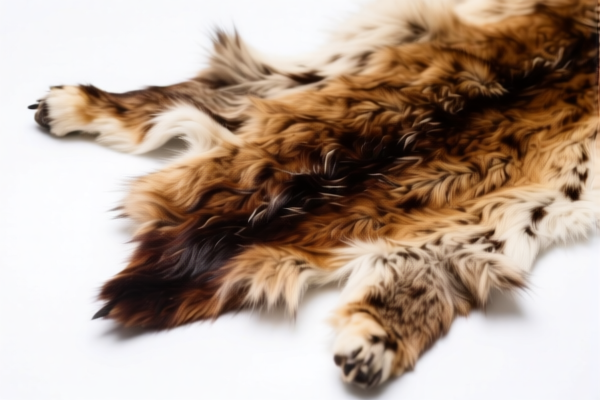
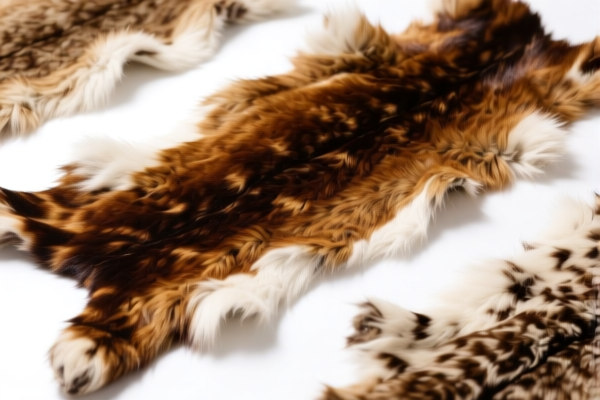
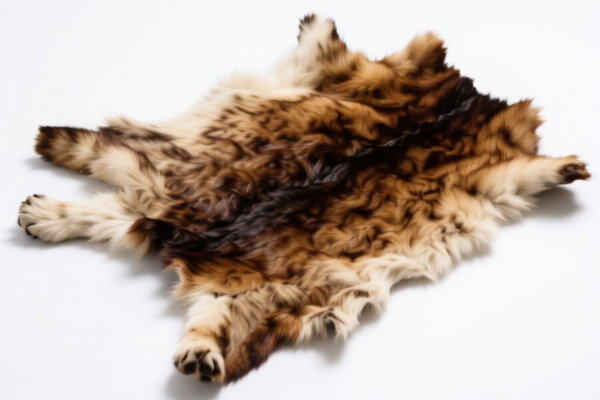
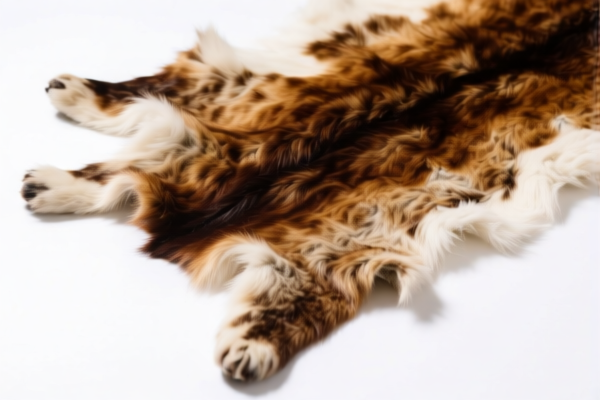
AI Analysis
🧥 Dyed Fur Scraps (Unassembled / Waste)
🌐 HS Code Reference & Customs Clearance Guide | 2026 Latest Tariff Analysis | Professional Clearance Strategy
📌 I. Product Definition & Classification: What Exactly Are "Dyed Fur Scraps"?
Dyed fur scraps refer to residual pieces of fur materials that have undergone dyeing processes but remain unassembled or unprocessed into finished garments. In international trade, these materials are categorized based on their form (scraps vs. waste) and specific animal source, which significantly impacts their HS Code classification and tariff rates.
⚠️ Key Distinction Points:
- If classified as "Scraps/Unassembled": Treated as semi-finished fur materials → Usually falls under 4302 or 4303 depending on preparation level.
- If classified as "Waste for Handicrafts": Treated as raw material waste → May fall under 4303.10 or 4303.90.
- Dyeing Status: All items in this dataset are dyed, which confirms they have undergone significant processing, preventing classification under unprocessed fur categories (Chapter 43, Heading 4301).
📦 II. HS Code Classification Details (2026 Latest Tariff Authority Comparison)
| HS Code | Product Description | Application Scenario | Key Characteristics |
|---|---|---|---|
4303.90.00.00 |
Dyed Fur Scraps (Unassembled) | Semi-finished fur parts, scraps awaiting assembly | Material: Fur; Form: Fragments/Unassembled |
4302.20.90.00 |
Dyed Fur Scraps (Unassembled) | Dyed fur pieces, including specific dyeing features | Material: Fur; Form: Scraps/Unassembled; Feature: Dyed |
4303.10.00.60 |
Dyed Fur Waste (For Handicrafts) | Non-mink fur fur制品 waste used for crafts | Material: Fur; Category: Non-mink fur制品 |
4303.90.00.00 |
Dyed Fur Waste (For Handicrafts) | General fur waste used for handicrafts | Material: Fur; Category: Fur制品 |
🔍 Important Reminder:
-4302vs.4303: Heading 4302 covers prepared fur skins (including dyed), while 4303 covers articles of fur skins. Scraps can sometimes be ambiguous. If the scraps are essentially "prepared fur skins" in fragment form, 4302 may apply. If they are considered "parts of articles," 4303 is used. -4303.10Specificity: This code specifically targets non-mink fur articles. If the fur is not mink, this code might be relevant for waste categories. - Dyeing is Key: The fact that the fur is dyed excludes it from raw, untreated fur categories.
💰 III. 2026 Latest Tariff Rate Details (Including Additional Taxes & Policy Surcharges)
✅ Applicable Country: United States (US)
✅ Country of Origin: China (CN)
✅ Effective Date: 2025 November 10 onwards (including subsequent imports)
🎯 1. 4303.90.00.00 —— Dyed Fur Scraps/Waste (General Classification)
| Item | Content |
|---|---|
| Base Tariff | 0% (ad valorem) |
| USITC Additional Duty | +25% (Under USITC Footnote for Section 301) |
| IEEPA Additional Duty | +10% (Targeting China/HK products, effective Nov 10, 2025) |
| Total Tax Rate | 35.0% |
| Tax Calculation | CIF Value × 35% |
| De Minimis Exemption Available? | ❌ No (deny_de_minimis) |
| Legal Basis Path | IEEPA:9903.01.25 → IEEPA:9903.01.24 → USITC:4303.90.00.00 → FOOTNOTE:301 |
📌 Explanation:
- The 25% USITC surcharge stems from Section 301 of the Trade Act against China; - The 10% IEEPA surcharge is an additional national security/emergency power levy; - Combined Rate: 35%. This is a high tariff category, requiring advance cost planning!
🎯 2. 4302.20.90.00 —— Dyed Fur Scraps (Unassembled, Dyed Feature Specific)
| Item | Content |
|---|---|
| Base Tariff | 1.7% |
| USITC Additional Duty | +25% |
| IEEPA Additional Duty | +10% |
| Total Tax Rate | 36.7% |
| Tax Calculation | CIF Value × 36.7% |
| De Minimis Exemption Available? | ❌ No (deny_de_minimis) |
| Legal Basis Path | IEEPA:9901.25 → IEEPA:9903.01.24 → USITC:4302.20.90.00 → FOOTNOTE:301 |
📌 Note:
- This code applies when the dyed feature is explicitly recognized as a key characteristic of the "prepared fur skin" status; - The base rate is higher (1.7%) than the 4303.90 classification, leading to a slightly higher total tax; - Even if it is just scraps, if it meets the definition of "prepared fur skins" under Heading 4302, this code is used.
🎯 3. 4303.10.00.60 —— Dyed Fur Waste (For Handicrafts, Non-Mink)
| Item | Content |
|---|---|
| Base Tariff | 4.0% |
| USITC Additional Duty | +25% |
| IEEPA Additional Duty | +10% |
| Total Tax Rate | 39.0% |
| Tax Calculation | CIF Value × 39.0% |
| De Minimis Exemption Available? | ❌ No (deny_de_minimis) |
| Legal Basis Path | IEEPA:9903.01.25 → IEEPA:9903.01.24 → USITC:4303.10.00.60 → FOOTNOTE:301 |
📌 Warning:
- This is the highest tax rate (39%) among the listed options; - It specifically targets non-mink fur waste used for handicrafts; - The 4% base tariff makes this the most expensive option if the product fits this description; - Ensure the fur is indeed non-mink and designated for handicraft use to justify this code, otherwise, you risk misclassification penalties.
🎯 4. 4303.90.00.00 (Revisited for Waste) —— Dyed Fur Waste (For Handicrafts, General)
| Item | Content |
|---|---|
| Base Tariff | 0.0% |
| USITC Additional Duty | +25% |
| IEEPA Additional Duty | +10% |
| Total Tax Rate | 35.0% |
| Tax Calculation | CIF Value × 35.0% |
| De Minimis Exemption Available? | ❌ No (deny_de_minimis) |
| Legal Basis Path | IEEPA:9903.01.25 → IEEPA:9903.01.24 → USITC:4303.90.00.00 → FOOTNOTE:301 |
📌 Note:
- Although listed as "waste," this code has a 0% base tariff, making it cheaper than4303.10.00.60; - This suggests that "general fur waste" under 4303.90 is taxed lower than "specific non-mink fur waste" under 4303.10; - Strategic classification between 4303.90 and 4303.10 can save 4% in total taxes.
🛠️ IV. Customs Clearance Practical Advice (Battle-Tested Pitfall Avoidance Guide)
✅ 1. Documentation Checklist (All Required)
| Document | Mandatory | Notes |
|---|---|---|
| ✅ Product Specification Sheet | ✔️ | Include material type (fur species), dyeing method, form (scraps/waste) |
| ✅ Product Photos | ✔️ | Clear images showing texture, color, and that it is unassembled/scrap |
| ✅ Commercial Invoice | ✔️ | Clearly state "Dyed Fur Scraps" or "Dyed Fur Waste for Handicrafts" |
| ✅ Packing List | ✔️ | Detail weight, quantity, and packaging method |
| ✅ Origin Certificate (CO) | ✔️ | If not Chinese origin, may reduce tariffs (but China-origin is assumed here) |
| ✅ Third-Party Test Report | ✅ Optional but Recommended | Chemical safety tests (dyes) to ensure compliance with environmental standards |
✅ 2. Declaration Tips (Key Mantra)
🔥 “Scraps vs. Waste, Definition is King! Non-Mink Adds 4%!”
| Scenario | Correct Declaration | Wrong Practice |
|---|---|---|
| Unassembled Dyed Fur Pieces | 4303.90.00.00 or 4302.20.90.00 |
Misdeclaring as "Finished Garment" → 100%+ tariff |
| Fur Waste for Crafts | 4303.90.00.00 (General) or 4303.10.00.60 (Non-Mink) |
Generic "Fur Waste" without specification |
| Mink Fur Scraps | 4303.90.00.00 |
Using 4303.10.00.60 (Non-Mink) → Misclassification! |
| Mixed Fur Types | Declare all types accurately | Hiding non-mink components to avoid 4303.10 |
✅ 3. Special Case Handling
| Situation | Handling Advice |
|---|---|
| OEM Custom Dyed Scraps | Provide customer design specs to prove "unfinished" status |
| Fur Scraps Contaminated | Provide cleanliness/processing certificates to avoid rejection |
| Fur Scraps for Research | Apply for "Non-Commercial Use" if applicable, but still pay duties unless exempt |
| Fur Scraps for Export Re-Import | Use ATA Carnet if eligible, but US duties still apply upon entry |
🌍 V. Global Main Market Clearance Comparison (2026 Latest)
| Country/Region | Recommended HS Code | Tariff (China Origin) | Certification Required | Notes |
|---|---|---|---|---|
| 🇺🇸 USA | 4303.90.00.00 |
35% | None specific | High additional taxes (25%+10%) |
| 🇨🇳 China | 4303.90.00.00 |
5-10% | None | No additional surcharges |
| 🇪🇺 EU | 4303.90.00.00 |
0-2% (if eligible) | REACH (Chemicals) | CITES permits if endangered species |
| 🇦🇺 Australia | 4303.90.00.00 |
5% | None | Strict biosecurity checks |
| 🇯🇵 Japan | 4303.90.00.00 |
0-2% | CITES | CITES permits if endangered species |
📌 Conclusion:
- USA is the most expensive market for dyed fur scraps due to Section 301 + IEEPA surcharges; - China, EU, Japan have much lower base tariffs but strict environmental and wildlife protection regulations (REACH, CITES); - Biosecurity is a major hurdle in Australia and New Zealand.
📌 VI. Common Errors & Pitfall Guide (Lessons Learned)
❌ Error 1: Declaring "Dyed Fur Scraps" as "Used Fur Garments"
👉 Consequence: Misclassification → Additional duties + Fines!
❌ Error 2: Not specifying "Non-Mink" for 4303.10.00.60
👉 Consequence: If it is mink, you overpay or get flagged for incorrect coding. If it is non-mink, you might be underpaying if mis-coded elsewhere.
❌ Error 3: Ignoring CITES Regulations
👉 Consequence: If the fur is from an endangered species (e.g., certain wild cats), seizure and legal action will occur.
❌ Error 4: Failing to Declare "Dyed" Status
👉 Consequence: Customs may assume it is raw fur, leading to different tariff classifications and delays.
✅ Correct Practice:
"Dyed Fur Scraps, Unassembled, Material: Fox Rabbit Fur, Color: Black, Weight: 50kg, For Craft Use Only"
🎯 VII. Conclusion: Professional Declaration Saves Money!
🎯 Remember the Mantra:
🔹 "Scraps are not Garments! Dyed Status Matters!"
🔹 "USA Tariff is 35-39%, Plan Ahead!"
🔹 "Non-Mink Waste Costs More, Be Specific!"
📌 Tips:
- If your fur scraps are not Chinese-origin, check for preferential tariffs under FTAs (Free Trade Agreements);
- CITES Compliance is critical for any fur imports/exports globally;
- Always apply for Advance Ruling if the classification is ambiguous.
📣 Take Action Now:
📞 Contact a Professional Customs Broker + Provide Product Photos + Apply for HS Code Pre-Ruling
🚀 Ensure your Dyed Fur Scraps clear customs smoothly, avoid penalties, and protect your profits!
✨ Professional Customs Clearance Starts with Accurate Classification!
💼 Every Dollar of Cost Counts!
Customer Reviews
About HS Code Classification
The Harmonized System (HS) is an internationally standardized nomenclature developed by the World Customs Organization (WCO) to classify traded products. Over 200 countries use the HS system as the basis for customs tariffs, trade statistics, and import/export regulations.
Each HS code follows a hierarchical structure:
- Chapter (2 digits) — Broad category of goods (e.g., Chapter 84: Machinery and Mechanical Appliances)
- Heading (4 digits) — More specific grouping within the chapter
- Subheading (6 digits) — Internationally standardized breakdown, used by all WCO member countries
- National subdivisions (8-10 digits) — Country-specific extensions for further classification, such as US HTSUS 10-digit codes
Correct HS code classification is essential for smooth customs clearance, accurate duty payment, and compliance with trade regulations. Misclassification can lead to customs delays, overpayment of duties, or penalties.
When importing from CN to US, the applicable tariff rates may include:
- Most-Favored-Nation (MFN) rate — The standard duty rate applied to WTO members
- General rate — Applied to countries without trade agreements
- Trade remedy duties — Additional tariffs such as Section 301 (anti-dumping), Section 232 (national security), or countervailing duties
The information provided on this page is for reference purposes only. For official classification, please consult with your local customs authority or a licensed customs broker.