Dyed Fur Scraps for Handcraft
CN → US| HS Code | Tariff Rate | Origin | Destination | Doc |
|---|---|---|---|---|
| 4303900000 | 35.0% | CN | US | Official Doc |
| 4303100060 | 39.0% | CN | US | Official Doc |
| 4302209000 | 36.7% | CN | US | Official Doc |
| 4302206000 | 38.5% | CN | US | Official Doc |
Product Images
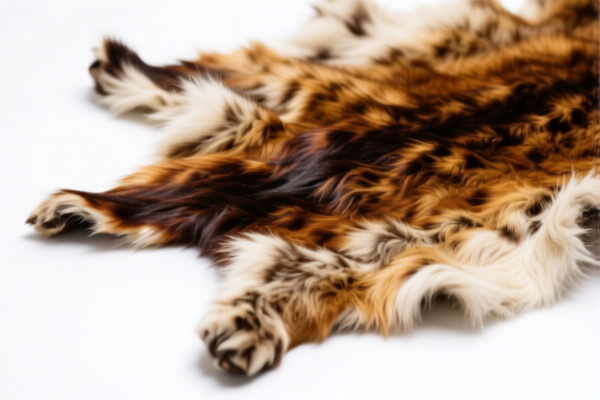
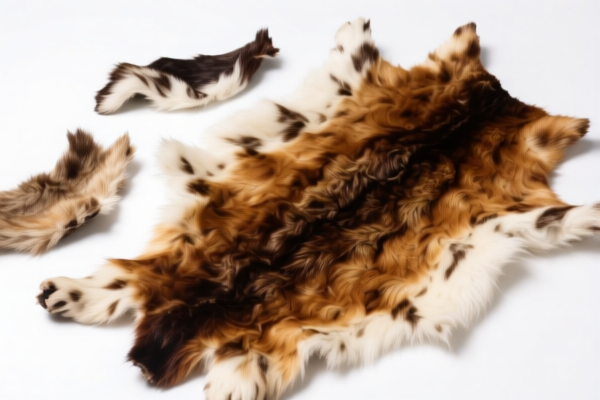
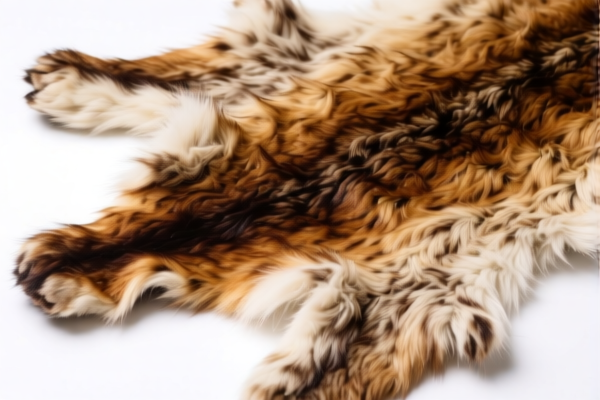
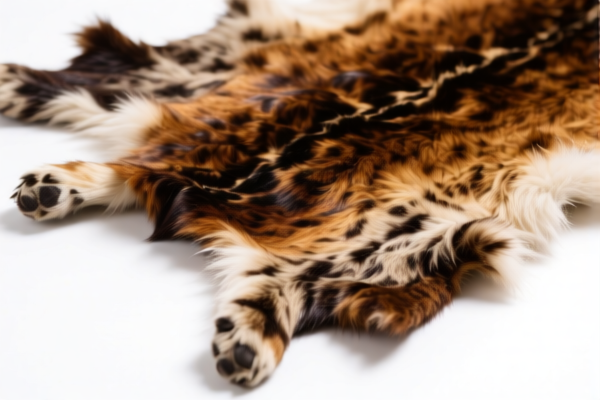
AI Analysis
🧶 Dyed Fur Scraps for Handcraft
🌐 HS Code Reference & Customs Clearance Guide | 2026 Latest Tariff Analysis | Professional Clearance Strategy
📌 I. Product Definition & Classification: What Exactly Are "Dyed Fur Scraps"?
"Dyed Fur Scraps" (often referred to as fur pieces, cuttings, or fragments) are by-products of the fur garment manufacturing process. In international trade, they are strictly categorized based on their assembly status and color treatment.
For the purpose of this guide, we focus on:
Dyed, Unassembled Fur Pieces/Cuttings: These are tanned or dressed furskins (including heads, tails, paws, and other pieces) that have been dyed but remain unassembled (i.e., not sewn into a garment or final article).
⚠️ Key Distinction:
- If the fur pieces are unassembled and dyed →归入 4302.20.90.00
- If the fur pieces are unassembled and not dyed → 归入 4302.20.60.00
- If the fur is sewn into a scarf, collar, or accessory → 归入 4303.90.00.00 or 4303.10.00.60
- Critical Rule: Do NOT classify dyed scraps as finished accessories. The level of processing is the primary determinant.
📦 II. HS Code Classification Details (2026 Latest Tariff Authority Comparison)
| HS Code | Product Description | Application Scenario | Tax Rate (China-Origin to US) |
|---|---|---|---|
4302.20.90.00 |
Dyed Tanned/Dressed Fur Skins (Pieces/Cuttings, Unassembled) | Handcraft materials, dyed fur scraps, unsewn dyed pieces | 26.7% |
4302.20.60.00 |
Not Dyed Tanned/Dressed Fur Skins (Pieces/Cuttings, Unassembled) | Natural color fur scraps for cleaning or further processing | 0.0% |
4303.90.00.00 |
Articles of Apparel/Accessories (Other) | Fur accessories (e.g., dyed fur pom-poms, unstructured items) | 25.0% |
4303.10.00.60 |
Articles of Apparel/Clothing Accessories (Other) | Dyed fur coats, jackets, or assembled clothing | 29.0% |
🔍 Key Reminder:
- "Dyed" vs. "Not Dyed": If the fur has undergone any coloring process (even partial), it falls under 4302.20.90.00, incurring a 26.7% total tax.
- "Unassembled" vs. "Assembled": If the scraps are sewn into a final article (e.g., a fur scarf, trim, or accessory), they may be classified under 4303.90.00.00 (25.0%) or 4303.10.00.60 (29.0%), depending on the item type.
- Misclassification Risk: Declaring "dyed fur scraps" as "not dyed" to save taxes is a high-risk violation. Customs may inspect and levy penalties.
💰 III. 2026 Latest Tariff Rate Breakdown (Including Surcharges & Policy Add-ons)
✅ Applicable Country: United States (US)
✅ Country of Origin: China (CN)
✅ Effective Date: 2025-11-10 onwards (for subsequent imports)
🎯 1. 4302.20.90.00 —— Dyed Fur Pieces/Cuttings (Unassembled)
| Item | Content |
|---|---|
| Base Tariff | 1.7% (ad valorem) |
| Section 301 Surcharge | +25.0% |
| Total Tax Rate | 26.7% |
| Tax Calculation | CIF Value × 26.7% |
| De Minimis Exemption | ❌ Not Applicable (High tariff rate exceeds threshold) |
| Legal Basis Path | USITC:4302.20.90.00 → Section 301: Footnote 9903.88.01 |
📌 Explanation:
- The 1.7% base tariff is standard for dyed fur pieces under HTSUS.
- The 25% surcharge is applied under Section 301 of the Trade Act of 1974, targeting Chinese-origin goods.
- Total 26.7% is significant. Unlike electronics, fur products do not qualify for the $800 de minimis exemption if the value exceeds the threshold, but more importantly, the high rate makes informal entry costly.
🎯 2. 4302.20.60.00 —— Not Dyed Fur Pieces/Cuttings (Unassembled)
| Item | Content |
|---|---|
| Base Tariff | 0.0% |
| Section 301 Surcharge | 0.0% |
| Total Tax Rate | 0.0% |
| Tax Calculation | CIF Value × 0% |
| De Minimis Exemption | N/A (No tax due) |
| Legal Basis Path | USITC:4302.20.60.00 |
📌 Note:
- If your fur scraps are natural color (undyed), the tariff is 0%.
- Strategy: If possible, use natural fur for crafts to avoid taxes. However, if dyeing is required for the product, you must declare it as "dyed" and pay 26.7%.
🎯 3. 4303.90.00.00 —— Other Fur Articles (e.g., Fur Accessories)
| Item | Content |
|---|---|
| Base Tariff | 0.0% |
| Section 301 Surcharge | +25.0% |
| Total Tax Rate | 25.0% |
| Tax Calculation | CIF Value × 25.0% |
| De Minimis Exemption | ❌ Not Applicable |
| Legal Basis Path | USITC:4303.90.00.00 → Section 301: Footnote 9903.88.01 |
📌 Note:
- If you assemble the dyed scraps into a final accessory (e.g., a fur ball, keychain, or trim), it may be classified as an "article" under 4303.90.00.00, with a 25.0% tax.
- This is 1.7% lower than unassembled dyed scraps, so assembly might be beneficial if feasible.
🎯 4. 4303.10.00.60 —— Apparel & Clothing Accessories (Other)
| Item | Content |
|---|---|
| Base Tariff | 4.0% |
| Section 301 Surcharge | +25.0% |
| Total Tax Rate | 29.0% |
| Tax Calculation | CIF Value × 29.0% |
| De Minimis Exemption | ❌ Not Applicable |
| Legal Basis Path | USITC:4303.10.00.60 → Section 301: Footnote 9903.88.01 |
📌 Note:
- This applies to finished apparel (e.g., dyed fur jackets, vests). It is the highest tariff at 29.0%.
- Do NOT classify simple fur scraps as apparel unless they are fully assembled garments.
🛠️ IV. Customs Clearance Practical Advice (Battle-Tested Pitfall Avoidance Guide)
✅ 1. Required Documentation Checklist (Non-Negotiable)
| Document | Mandatory? | Description |
|---|---|---|
| ✅ Commercial Invoice | ✔️ | Must clearly state "Dyed Fur Pieces/Cuttings" and HS Code. |
| ✅ Packing List | ✔️ | Detail weight, quantity, and packaging type. |
| ✅ Product Photos | ✔️ | Show the fur pieces, highlighting that they are unassembled and dyed. |
| ✅ Processing Certificate | ✔️ | If claiming "not dyed," provide proof of natural color. If "dyed," describe the dyeing process. |
| ✅ Material Composition Statement | ✔️ | Specify animal type (e.g., rabbit, mink) and tanning method. |
| ✅ Customs Broker Declaration | ✔️ | Ensure the broker uses the correct HTSUS code. |
✅ 2. Declaration Strategy (Key Mantras)
🔥 "Unassembled + Dyed = 26.7%, Unassembled + Natural = 0%, Assembled Accessory = 25%, Apparel = 29%"
| Scenario | Correct Declaration | Incorrect Action |
|---|---|---|
| Dyed fur scraps, not sewn | 4302.20.90.00 |
Declare as "fur accessories" → 25% (might save 1.7%, but high risk if not assembled) |
| Natural fur scraps, not sewn | 4302.20.60.00 |
Declare as "dyed" → Pay 26.7% unnecessarily |
| Dyed fur sewn into a scarf | 4303.90.00.00 |
Declare as "fur scraps" → 26.7% vs. 25% (small difference, but wrong classification) |
| Dyed fur jacket | 4303.10.00.60 |
Declare as "accessories" → 25% vs. 29% (High risk of penalty) |
✅ 3. Special Case Handling
| Scenario | Recommendation |
|---|---|
| Mixed Lots (Dyed & Un-Dyed) | Must separate and declare separately. Do NOT mix under one HS Code. |
| Small Samples for Handcrafts | If value < $800, may use de minimis, but only if the product is not subject to Section 301 surcharges. Note: Fur items often face strict scrutiny, so de minimis may not apply if classified under high-surcharge codes. |
| Re-exported Fur | If fur was imported, dyed, and re-exported, ensure documentation shows "export" status to avoid double taxation. |
| Endangered Species (CITES) | If fur is from protected species (e.g., certain foxes, cats), CITES permits are required. Non-compliance leads to seizure. |
🌍 V. Global Market Comparison (2026 Latest)
| Country/Region | Recommended HS Code | Tariff (China-Origin) | Certification | Notes |
|---|---|---|---|---|
| 🇺🇸 USA | 4302.20.90.00 |
26.7% | None | High surcharge under Section 301 |
| 🇨🇳 China | 4302.20.90.00 |
~10-15% (Import) | None | Different tariff structure |
| 🇪🇺 EU | 4302.20.90 |
~0-5% (if not protected) | REACH, CITES | Lower base tariff, but strict CITES |
| 🇬🇧 UK | 4302.20.90 |
~0-5% | CITES | Post-Brexit rules apply |
📌 Conclusion:
- USA imposes a 26.7% total tax on dyed fur scraps from China.
- EU/UK have lower tariffs but strict CITES regulations for endangered species.
- If exporting to the EU, ensure CITES compliance to avoid seizure.
📌 VI. Common Mistakes & Pitfall Guide (Lessons from Real Cases)
❌ Mistake 1: Declaring "Dyed Fur Scraps" as "Fur Accessories" to pay 25% instead of 26.7%
👉 Consequence: Customs may reject if items are visibly unassembled. Penalty risk!
❌ Mistake 2: Declaring "Not Dyed" when fur is actually dyed
👉 Consequence: Misdeclaration. 100% tax refund + fines + potential blacklisting!
❌ Mistake 3: Ignoring CITES for certain fur types (e.g., sables, martens)
👉 Consequence: Shipment seized at US Customs. No refund!
❌ Mistake 4: Mixing dyed and undyed scraps in one shipment
👉 Consequence: Customs inspection delay. Separate shipments are required.
✅ Correct Approach:
"Dyed Fur Pieces, Unassembled, For Handcraft Use, Rabbit Fur, HTSUS: 4302.20.90.00"
🎯 VII. Conclusion: Precise Classification Saves Money!
🎯 Remember the Mantra:
🔹 "Unassembled + Dyed = 26.7%, Natural = 0%, Assembled = 25-29%"
🔹 "HS Code Determines Tax, Declaration Accuracy Saves Fines!"
📌 Pro Tip:
- If your fur is natural (undyed), declare as 4302.20.60.00 for 0% tax.
- If dyeing is essential, consider assembling into accessories (4303.90.00.00) to reduce tax to 25% (saving 1.7%).
- Always provide photos and material specs to avoid misclassification penalties.
📣 Immediate Action:
📞 Consult a Customs Broker + Provide Product Photos + Apply for Advance Ruling if unsure.
🚀 Ensure Smooth Clearance, Avoid Penalties, Maximize Profit!
✨ Professional Clearance Starts with Accurate Classification!
💼 Every Dollar Saved is a Dollar Earned!
Customer Reviews
About HS Code Classification
The Harmonized System (HS) is an internationally standardized nomenclature developed by the World Customs Organization (WCO) to classify traded products. Over 200 countries use the HS system as the basis for customs tariffs, trade statistics, and import/export regulations.
Each HS code follows a hierarchical structure:
- Chapter (2 digits) — Broad category of goods (e.g., Chapter 84: Machinery and Mechanical Appliances)
- Heading (4 digits) — More specific grouping within the chapter
- Subheading (6 digits) — Internationally standardized breakdown, used by all WCO member countries
- National subdivisions (8-10 digits) — Country-specific extensions for further classification, such as US HTSUS 10-digit codes
Correct HS code classification is essential for smooth customs clearance, accurate duty payment, and compliance with trade regulations. Misclassification can lead to customs delays, overpayment of duties, or penalties.
When importing from CN to US, the applicable tariff rates may include:
- Most-Favored-Nation (MFN) rate — The standard duty rate applied to WTO members
- General rate — Applied to countries without trade agreements
- Trade remedy duties — Additional tariffs such as Section 301 (anti-dumping), Section 232 (national security), or countervailing duties
The information provided on this page is for reference purposes only. For official classification, please consult with your local customs authority or a licensed customs broker.