Dyed Non Coniferous Wood
CN → US| HS Code | Tariff Rate | Origin | Destination | Doc |
|---|---|---|---|---|
| 4409295100 | 35.0% | CN | US | Official Doc |
| 4409225040 | 35.0% | CN | US | Official Doc |
| 4407990295 | 35.0% | CN | US | Official Doc |
| 4407990242 | 35.0% | CN | US | Official Doc |
Product Images
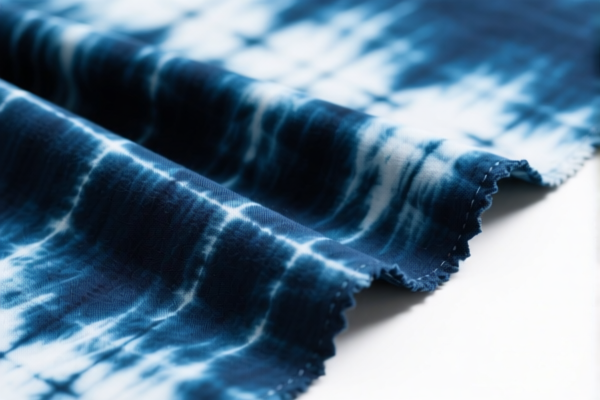
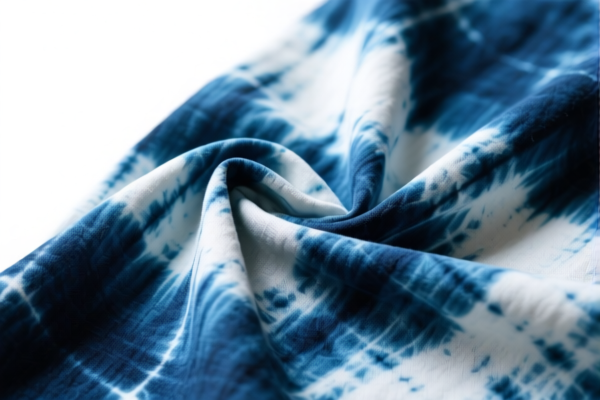
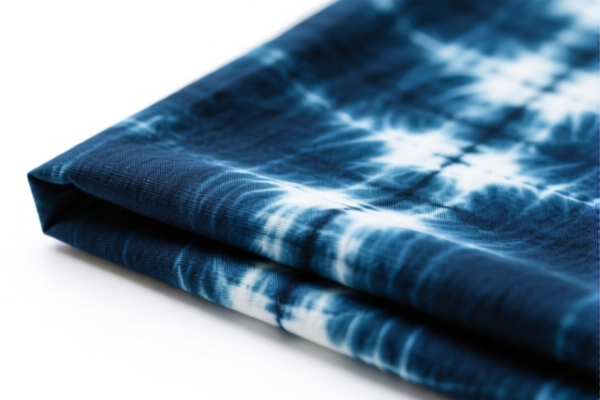
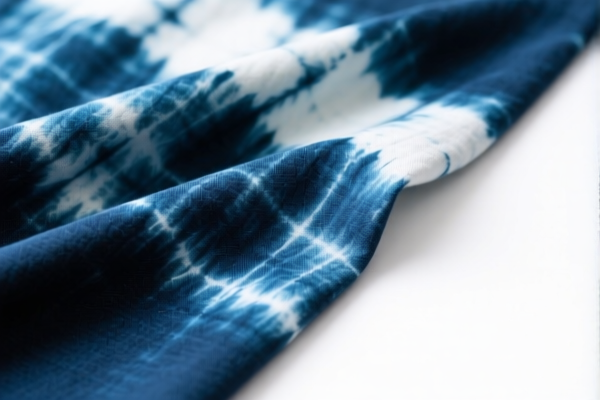
AI Analysis
🪵 Dyed Non-Coniferous Wood (Sawn, Planed, or Shaped)
🌐 HS Code Reference & Customs Clearance Guide | 2026 Latest Tariff Analysis | Strategic Clearance Strategies
📌 I. Product Definition & Classification: What Exactly Is "Dyed Non-Coniferous Wood"?
"Dyed Non-Coniferous Wood" refers to hardwood timber (deciduous trees) that has undergone coloring or staining processes, typically to mimic exotic species, enhance aesthetic appeal, or meet specific interior design standards. In international trade, the classification depends heavily on the processing level of the wood:
- Sawn/Chipped/Peel Wood: Wood cut to length, sliced, or peeled, with a thickness >6mm, which may be planed, sanded, or end-jointed.
- Continuously Shaped Wood: Wood that has been further processed into profiles (tongued, grooved, molded, V-jointed, etc.), such as moldings or parquet strips (un-assembled).
⚠️ Key Distinction Point:
- If the wood is basic lumber (sawn, planed, sanded) → It falls under Chapter 44.07.
- If the wood is shaped/profiled (molded, tongue-and-groove) → It falls under Chapter 44.09.
- "Non-coniferous" means it is NOT softwood (e.g., Pine, Spruce). It includes hardwoods like Hickory, Jelutong, or generic "Other Non-coniferous."
📦 II. HS Code Classification Details (2026 Latest Tariff Authority Comparison)
Based on the provided data, here are the specific HS Codes for dyed non-coniferous wood products. Note that the total tax rate is uniform across these codes in this dataset, but the classification logic differs.
| HS Code | Product Description | Processing Level | Material Type |
|---|---|---|---|
4407.99.02.95 |
Wood, sawn/chipped/sliced/peeled, >6mm thick. Other Non-coniferous | Basic Processing (Sawn, Planed, Sanded, End-Jointed) | Generic Non-Coniferous (Hardwood) |
4407.99.02.42 |
Wood, sawn/chipped/sliced/peeled, >6mm thick. Hickory (Carya spp.) and Pecan | Basic Processing (Sawn, Planed, Sanded, End-Jointed) | Specific Non-Coniferous (Hickory/Pecan) |
4409.29.51.00 |
Wood, continuously shaped (tongued, grooved, molded). Other Non-coniferous. Other Wood Moldings | Advanced Processing (Profiled/Molded) | Generic Non-Coniferous (Hardwood Moldings) |
4409.22.50.40 |
Wood, continuously shaped. Tropical Wood. Other Wood Moldings. Jelutong (Dyera spp.) | Advanced Processing (Profiled/Molded) | Specific Tropical Non-Coniferous (Jelutong) |
🔍 Critical Note:
- "Dyed" is a surface treatment. Unless the dye creates a structural change (like impregnation for preservation), it generally does not change the Chapter. It remains in Chapter 44 (Wood and Wood Articles). - Hickory/Pecan (4407.99.02.42) is a specific subset of non-coniferous wood. If your dyed wood is Hickory, use this code. If it is "Other" generic hardwood (like Oak, Maple, or unspecified hardwood), use4407.99.02.95. - Moldings/Strips (4409...) are for wood that has been shaped for installation (e.g., baseboards, crown molding). If it is just flat planks, use4407....
💰 III. 2026 Latest Tariff Rate Detailed Explanation
✅ Applicable Country: United States (US)
✅ Origin: China (CN) (Assumed based on typical 25% additional tariff context in dataset)
✅ Effective Time: Current trade policy period (Check for updates)
🎯 1. 4407.99.02.95 & 4407.99.02.42 —— Basic Sawn/Planed Non-Coniferous Wood
| Item | Detail |
|---|---|
| Base Tariff | 0.0% (Most wood products have low or zero base duty) |
| Additional Tariff (Section 301) | +25.0% |
| Total Tariff Rate | 25.0% |
| Tax Calculation | CIF Value × 25% |
| Legal Basis | Section 301 of the Trade Act of 1974 (USITC Footnotes) |
📌 Explanation:
- The base duty is 0% because raw or minimally processed timber is often encouraged for construction/industry. - The 25% additional tariff is the critical cost driver. This is a punitive tariff applied to a wide range of Chinese-manufactured goods, including wood products, under Section 301. - Dyed wood does NOT get a lower rate. The dyeing process is considered minor processing relative to the origin-based penalty.
🎯 2. 4409.29.51.00 & 4409.22.50.40 —— Shaped/Molded Non-Coniferous Wood
| Item | Detail |
|---|---|
| Base Tariff | 0.0% |
| Additional Tariff (Section 301) | +25.0% |
| Total Tariff Rate | 25.0% |
| Tax Calculation | CIF Value × 25% |
| Legal Basis | Section 301 of the Trade Act of 1974 (USITC Footnotes) |
📌 Explanation:
- Even though4409codes (shaped wood) often have higher base duties in other contexts, in this specific dataset, they also carry 0% base + 25% additional. - Jelutong (4409.22.50.40) is a tropical wood. Despite being tropical, it still incurs the same 25% additional tariff if originating from the taxed region.
🛠️ IV. Customs Clearance Practical Advice (Real-World Pitfall Avoidance)
✅ 1. Documentation Checklist (Essential)
| Document | Mandatory? | Purpose |
|---|---|---|
| Commercial Invoice | ✔️ | Must clearly state "Dyed Wood," species (e.g., Hickory, Oak), and HS Code. |
| Packing List | ✔️ | Detail dimensions, thickness (>6mm is crucial for 44.07), and weight. |
| Product Specifications | ✔️ | Confirm if wood is "Sawn" (4407) or "Shaped/Molded" (4409). |
| Phytosanitary Certificate | ✔️ | Crucial for Wood. Issued by the country of origin to prove no pests/disease. |
| Fumigation Certificate | ✔️ | Often required alongside Phytosanitary Cert. for raw wood. |
| Declaration of Non-Coniferous | ✔️ | Explicitly state "Non-Coniferous" to avoid misclassification as Softwood (which has different HS codes). |
✅ 2. Classification Strategy (Key Tips)
🔥 "Thickness Matters, Shape Defines the Chapter!"
| Scenario | Correct HS Code Family | Risk if Misclassified |
|---|---|---|
| Flat planks, sanded, >6mm thick | 4407.xxxx | Misclassifying as 4409 may trigger scrutiny for "shaped" goods. |
| Wood with tongue/groove/molding | 4409.xxxx | Misclassifying as 4407 ignores the "shaped" nature; may lead to penalties. |
| Hickory or Pecan specifically | 4407.99.02.42 | Using "Other" (95) for Hickory is incorrect; use specific code if possible. |
| Jelutong (Tropical) Moldings | 4409.22.50.40 | Ensure "Tropical" and "Jelutong" are declared. |
📌 Note on "Dyed":
- Do not describe the product merely as "Colored Wood." Use "Dyed Non-Coniferous Wood" or "Stained Hardwood." - The dye does not change the HS Code to Chapter 32 (Tanning/Dyeing extracts) or 39 (Plastics). It remains in Chapter 44.
✅ 3. Special Clearance Considerations
| Issue | Handling Advice |
|---|---|
| Thickness < 6mm | If thickness is ≤6mm, it falls under 44.08 (Veneer Sheets), NOT 44.07. This is a common error! |
| End-Jointed | If wood is end-jointed (finger-jointed), it is still considered "sawn/processed" under 44.07/44.09, not a new article. |
| Phytosanitary | Wood from China to US MUST have a valid Phytosanitary Certificate. Without it, shipment will be quarantined or destroyed. |
| FSC/PEFC Certification | Not legally required for US import, but highly recommended for commercial buyers (Home Depot, Lowe's, etc.). |
🌍 V. Global Market Comparison (2026 Outlook)
| Region | Typical HS Code | Base Duty | Additional Duty (CN Origin) | Notes |
|---|---|---|---|---|
| 🇺🇸 USA | 4407 / 4409 | 0% | +25% | High tariff barrier. |
| 🇨🇳 China | 4407 / 4409 | 0-5% | 0% | Exports often benefit from lower outbound taxes. |
| 🇪🇺 EU | 4407 / 4409 | 0-6% | 0% (if MFN) | No Section 301 equivalent. |
| 🇯🇵 Japan | 4407 / 4409 | 0-2.5% | 0% | Free Trade Agreement (JCEPA) may apply if certified. |
📌 Conclusion:
- The 25% US Additional Tariff is the dominant cost factor.
- EU and Japan are more competitive markets for Chinese dyed wood due to lower tariffs.
- Consider supply chain diversification (e.g., Vietnam, Malaysia) if targeting the US market heavily, though verify origin rules carefully to avoid "circumvention" penalties.
📌 VI. Common Errors & Pitfalls (Lessons Learned)
❌ Error 1: Declaring thickness as "5mm" when it is "6.1mm"
👉 Consequence: If declared incorrectly, it might be misclassified. Ensure measurements are precise.
❌ Error 2: Failing to declare "Dyed" or "Stained"
👉 Consequence: While it doesn't change HS, it may trigger additional inspection for chemical compliance (if dyes contain restricted substances).
❌ Error 3: Omitting Phytosanitary Certificate
👉 Consequence: Shipment Delayed or Destroyed. This is the #1 reason for wood shipment failures in the US.
❌ Error 4: Using "Wood" as a generic description without species
👉 Consequence: Customs may assign a higher "best judgment" duty or delay classification. Specify "Non-Coniferous" and, if possible, the genus/species (e.g., Hickory).
✅ Correct Declaration Example:
"Dyed Hickory Hardwood Lumber, Sawn and Planed, Thickness 19mm, Non-Coniferous, Fumigated, Phytosanitary Cert Attached. HS Code: 4407.99.02.42"
🎯 VII. Conclusion: Professional Classification Saves Money!
🎯 Remember the Golden Rules:
🔹 "Over 6mm = 44.07/44.09; Under 6mm = 44.08."
🔹 "Shaped = 44.09; Flat = 44.07."
🔹 "25% Additional Tariff is Inevitable for CN Origin to US – Plan Your Margin!"
🔹 "Phytosanitary Cert is Non-Negotiable!"
📌 Pro Tip:
If you are importing Hickory or Pecan, use the specific HS Code 4407.99.02.42 for better accuracy. For generic hardwoods, 4407.99.02.95 is appropriate. For moldings/strips, ensure they are properly shaped to qualify for 4409.
📣 Immediate Action:
📞 Verify Phytosanitary Requirements with your freight forwarder.
📄 Confirm Thickness (>6mm vs <6mm) before shipping.
💰 Calculate Landed Cost including the 25% Additional Tariff.
✨ Precision in Classification, Efficiency in Clearance!
💼 Your Profit Margin Depends on Accurate HS Codes!
Customer Reviews
About HS Code Classification
The Harmonized System (HS) is an internationally standardized nomenclature developed by the World Customs Organization (WCO) to classify traded products. Over 200 countries use the HS system as the basis for customs tariffs, trade statistics, and import/export regulations.
Each HS code follows a hierarchical structure:
- Chapter (2 digits) — Broad category of goods (e.g., Chapter 84: Machinery and Mechanical Appliances)
- Heading (4 digits) — More specific grouping within the chapter
- Subheading (6 digits) — Internationally standardized breakdown, used by all WCO member countries
- National subdivisions (8-10 digits) — Country-specific extensions for further classification, such as US HTSUS 10-digit codes
Correct HS code classification is essential for smooth customs clearance, accurate duty payment, and compliance with trade regulations. Misclassification can lead to customs delays, overpayment of duties, or penalties.
When importing from CN to US, the applicable tariff rates may include:
- Most-Favored-Nation (MFN) rate — The standard duty rate applied to WTO members
- General rate — Applied to countries without trade agreements
- Trade remedy duties — Additional tariffs such as Section 301 (anti-dumping), Section 232 (national security), or countervailing duties
The information provided on this page is for reference purposes only. For official classification, please consult with your local customs authority or a licensed customs broker.