Dyed Preservative Wood Fence Post
CN → US| HS Code | Tariff Rate | Origin | Destination | Doc |
|---|---|---|---|---|
| 4407110002 | 35.0% | CN | US | Official Doc |
| 4407120002 | 35.0% | CN | US | Official Doc |
Product Images
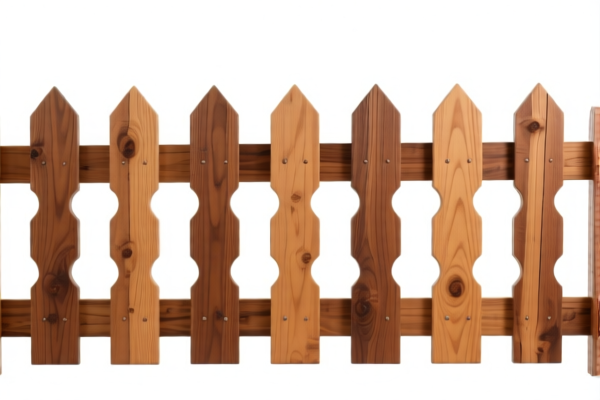
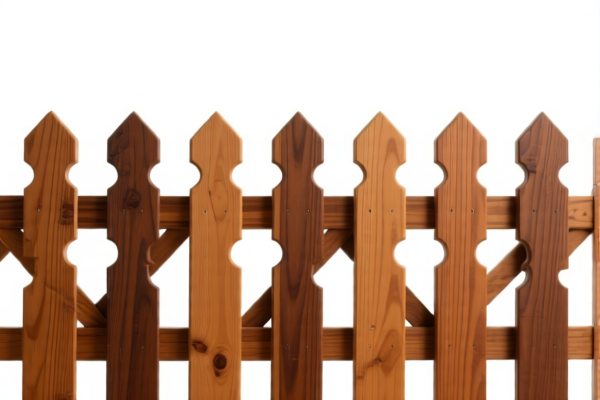
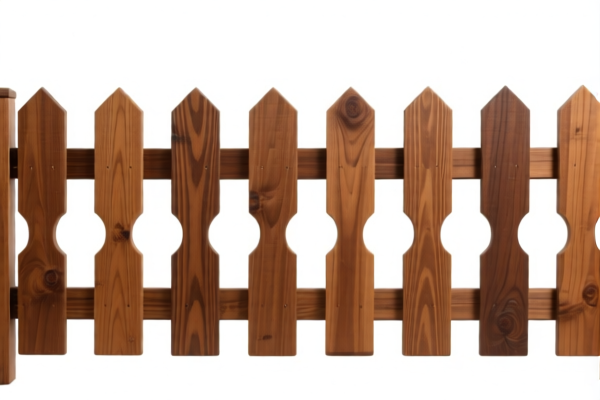
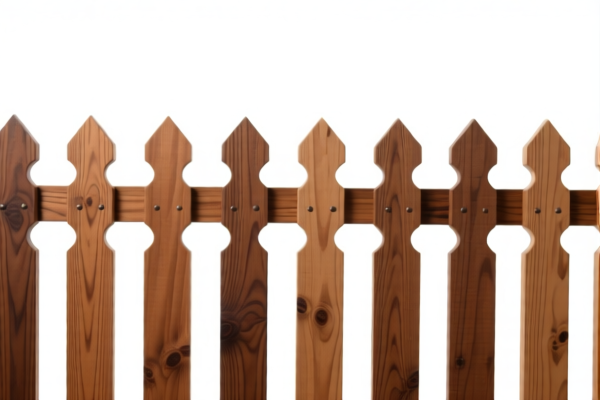
AI Analysis
🌲 Dyed Preservative Wood Fence Post (Wood Fence Post)
🌐 HS Code Reference & Customs Clearance Guide | 2026 Latest Tariff Analysis | Professional Clearance Strategy 📌 I. Product Definition and Classification: What Exactly is a "Dyed Preservative Wood Fence Post"?
A "Dyed Preservative Wood Fence Post" refers to processed timber specifically treated for outdoor durability. In international trade, it is not classified as raw lumber but as processed wood products subject to specific treatment regulations.
Key Characteristics: 1. Material: Coniferous wood (Softwood), specifically Pine (Pinus spp.) or Fir (Abies spp.)/Spruce (Picea spp.). 2. Processing: Sawn, chipped, lengthwise, sliced, or peeled. Thickness exceeds 6 mm. 3. Treatment: The wood has been treated with paint, stain, creosote, or other preservatives (the "dyed" aspect usually refers to stained/painted or chemically impregnated for weather resistance).
⚠️ Critical Distinction:
- If the wood is untreated raw lumber → It falls under different subheadings (e.g., 4407.10.00).
- If the wood is treated/dyed → It MUST be classified under the specific codes provided below (4407.11.00.02 or 4407.12.00.02).
- Do not confuse with "Piled Wood" (4407): These are processed logs, not raw logs (4403) or simple planks (4407 untreated).
📦 II. HS Code Classification Details (2026 Latest Tariff Authority Comparison)
Based on the provided, there are two specific HS Codes depending on the tree species. Both carry the same tax rate.
| HS Code | Species Type | Product Description | Key Identifier |
|---|---|---|---|
4407.11.00.02 |
Pine (Pinus spp.) | Wood sawn/chipped lengthwise, thickness > 6mm, treated with paint, stain, creosote, or other preservative. | ✅ Pine |
4407.12.00.02 |
Fir / Spruce (Abies / Picea spp.) | Wood sawn/chipped lengthwise, thickness > 6mm, treated with paint, stain, creosote, or other preservative. | ✅ Fir/Spruce |
🔍 Important Note:
- Both codes require the wood to be treated. If the "dye" is merely a surface stain without preservative qualities, customs may still classify it under these codes if it is marketed as "preservative-treated."
- Thickness Constraint: The wood must be thicker than 6 mm. If it is thinner (e.g., veneer or thin slats), it does NOT belong here.
- Species Verification: You must declare the specific species. Misidentifying Pine as Fir (or vice versa) can lead to classification disputes, even though the tax rate is identical in this dataset.
💰 III. 2026 Latest Tariff Rate Details (Detailed Breakdown)
✅ Applicable Country: United States (US)
✅ Origin: China (CN) (Assumed based on typical 25% addition context, though the data shows 0% base + 25% addition)
✅ Effective Time: Current 2026 Trade Policy
🎯 1. 4407.11.00.02 (Treated Pine) & 4407.12.00.02 (Treated Fir/Spruce)
| Item | Content |
|---|---|
| Base Tariff Rate | 0.0% (Ad Valorem) |
| Section 301 Additional Tariff | +25.0% |
| Total Tax Rate | 25.0% |
| Tax Calculation | CIF Value × 25% |
| De Minimis Exemption | ❌ Not Applicable (High value commodity, typically exceeds $800 threshold or is subject to specific exclusions) |
| Legal Basis Path | HTSUS:4407.11/12 → Section 301 List 3/4 |
📌 Explanation:
- Base Rate 0%: The US generally imposes low base tariffs on raw or semi-processed timber to support construction industries.
- Add-on Tariff 25%: This is the Section 301 tariff imposed on certain Chinese goods. Wood products, especially those processed and treated (value-added), are often included in these lists.
- Total 25%: This is a significant cost factor. A $10,000 shipment will incur $2,500 in duties alone.
- No Base Tax Benefit: Even though the base is 0%, the 25% add-on makes it expensive. There are no base tax credits to offset this.
🛠️ IV. Customs Clearance Practical Advice (Real-World Pitfall Avoidance)
✅ 1. Preparation Checklist (Essential Documents)
| Document | Required? | Description |
|---|---|---|
| ✅ Commercial Invoice | ✔️ | Must explicitly state: "Wood Fence Post, Treated with Preservative/Stain, Species: Pine/Fir" |
| ✅ Packing List | ✔️ | Detailed weight and volume. Wood is heavy; accurate volume is crucial for freight. |
| ✅ Species Declaration | ✔️ | Critical! Specify if it is Pinus, Abies, or Picea. Do not just say "Softwood." |
| ✅ Treatment Certificate | ✔️ | Proof of preservative/stain treatment (e.g., CCA, ACQ, or organic stain). |
| ✅ ISPM 15 Phytosanitary Certificate | ✔️ | If not already pressure-treated (which kills pests), wood may require fumigation. Note: Treated wood is often exempt from fumigation if treatment is approved, but proof is needed. |
| ✅ Material Safety Data Sheet (MSDS) | ✔️ | If chemical preservatives are used, customs may request MSDS for hazardous material check. |
✅ 2. Declaration Tips (Key Rules)
🔥 "Species Specific, Treatment Proof, Thickness Check"
| Scenario | Correct Declaration | Incorrect Practice |
|---|---|---|
| Pine Fence Post | 4407.11.00.02 |
Declare as generic "Lumber" → Risk of reclassification |
| Fir/Spruce Post | 4407.12.00.02 |
Mix with Pine in one line item → Confusion |
| Untreated Post | Different HS Code (e.g., 4407.10) | Declare as "Treated" when it is not → Fraud risk |
| Thin Slats (<6mm) | Not 4407 | Declare as 4407 → Customs will reject (thickness issue) |
✅ 3. Special Considerations for "Dyed" Wood
- "Dyed" vs. "Treated": If the wood is merely painted with aesthetic paint without preservative chemicals, it may still fall under these codes if the paint is considered a "preservative" or if the wood is intended for outdoor use. However, if it is just "decorative paint," customs might question the "preservative" aspect. Best Practice: Label it as "Preservative-Treated and Stained."
- Hazardous Chemicals: If the preservative contains Creosote or Arsenic (CCA), extra environmental disclosures may be required. Modern ACQ (Alkaline Copper Quaternary) is safer but still requires declaration.
🌍 V. Global Market Comparison (2026 Latest)
| Country/Region | Recommended HS Code | Tariff (China Origin) | Key Requirement | Note |
|---|---|---|---|---|
| 🇺🇸 USA | 4407.11.00.02 / 4407.12.00.02 |
25.0% (25% Add-on) | ISPM 15, Species Decl. | High duty cost. |
| 🇨🇳 China | 4407.11/12 | 0% - 5% | Phytosanitary Cert. | Lower duty, strict biosecurity. |
| 🇪🇺 EU | 4407.11/12 | 0% (if compliant) | FSC/PEFC Certification | Sustainability certs are key. |
| 🇬🇧 UK | 4407.11/12 | 0% - 5% | FSC/PEFC Certification | Similar to EU post-Brexit. |
| 🇨🇦 Canada | 4407.11/12 | 0% | CFIA Compliance | Strict pest regulations. |
📌 Conclusion:
- USA is the most expensive market due to the 25% Section 301 tariff.
- For other markets, duties are significantly lower or zero, but phytosanitary and sustainability certifications become the primary barriers.
📌 VI. Common Errors & Pitfalls (Lessons Learned)
❌ Error 1: Declaring as "Raw Lumber" (4403) to avoid Section 301 tariffs.
👉 Consequence: Customs will inspect and reclassify as 4407 (processed) because fence posts are sawn and treated. Penalty + Back Taxes.
❌ Error 2: Ignoring the "Thickness > 6mm" rule.
👉 Consequence: If the product is thin decking slats (often <6mm), they may be classified as 4409 (continuously shaped), which has different tax rules. Misclassification.
❌ Error 3: Not specifying the Species (Pine vs. Fir).
👉 Consequence: Customs may audit the entry, delay release, or demand additional documentation. Delay.
❌ Error 4: Using vague terms like "Wood Post" without mentioning "Preservative Treatment."
👉 Consequence: Customs may assume it is untreated and apply a different code, or flag it for pest control checks. Inspection Delay.
✅ Correct Declaration Example:
"Wood Fence Posts, Coniferous, Species: Southern Yellow Pine, Sawn Lengthwise, Treated with ACQ Preservative and Stained, Thickness: 40mm, HS Code: 4407.11.00.02"
🎯 VII. Conclusion: Professional Clearance, Save Cost!
🎯 Remember:
🔹 "Pine or Fir? Declare it Right."
🔹 "Treated Wood? Expect 25% Duty in the US."
🔹 "Thickness > 6mm? You’re in 4407."
🔹 "Phytosanitary Cert? Don’t Forget It!"
📌 Pro Tip:
- If you are exporting to the US, consider supply chain diversification (e.g., sourcing wood from Southeast Asia or North America) to avoid the 25% Section 301 tariff.
- For domestic US sales (if imported from China), factor the 25% duty into your pricing model. It is not negligible.
📣 Immediate Action:
📞 Contact your freight forwarder to verify ISPM 15 compliance.
📄 Prepare Species-Specific commercial invoices.
💰 Calculate 25% duty cost into your FOB/CIF pricing.
✨ Accurate Classification Saves Money!
💼 Every percent of duty counts in the lumber trade!
Customer Reviews
About HS Code Classification
The Harmonized System (HS) is an internationally standardized nomenclature developed by the World Customs Organization (WCO) to classify traded products. Over 200 countries use the HS system as the basis for customs tariffs, trade statistics, and import/export regulations.
Each HS code follows a hierarchical structure:
- Chapter (2 digits) — Broad category of goods (e.g., Chapter 84: Machinery and Mechanical Appliances)
- Heading (4 digits) — More specific grouping within the chapter
- Subheading (6 digits) — Internationally standardized breakdown, used by all WCO member countries
- National subdivisions (8-10 digits) — Country-specific extensions for further classification, such as US HTSUS 10-digit codes
Correct HS code classification is essential for smooth customs clearance, accurate duty payment, and compliance with trade regulations. Misclassification can lead to customs delays, overpayment of duties, or penalties.
When importing from CN to US, the applicable tariff rates may include:
- Most-Favored-Nation (MFN) rate — The standard duty rate applied to WTO members
- General rate — Applied to countries without trade agreements
- Trade remedy duties — Additional tariffs such as Section 301 (anti-dumping), Section 232 (national security), or countervailing duties
The information provided on this page is for reference purposes only. For official classification, please consult with your local customs authority or a licensed customs broker.