Dyed Raccoon Skin (Full Sheet)
CN → US| HS Code | Tariff Rate | Origin | Destination | Doc |
|---|---|---|---|---|
| 4302194540 | 37.2% | CN | US | Official Doc |
| 4302194570 | 37.2% | CN | US | Official Doc |
Product Images
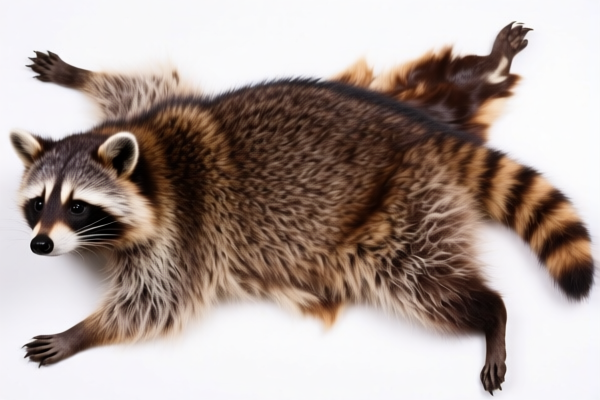
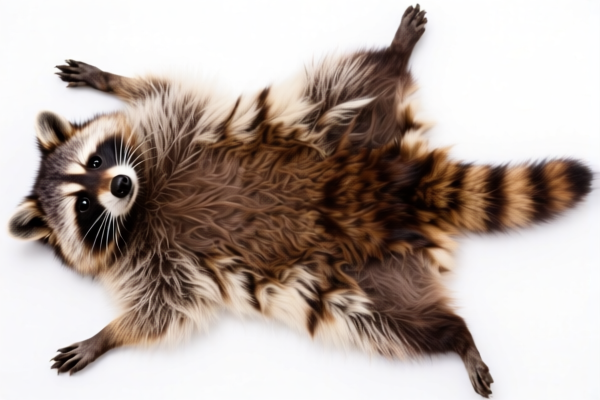
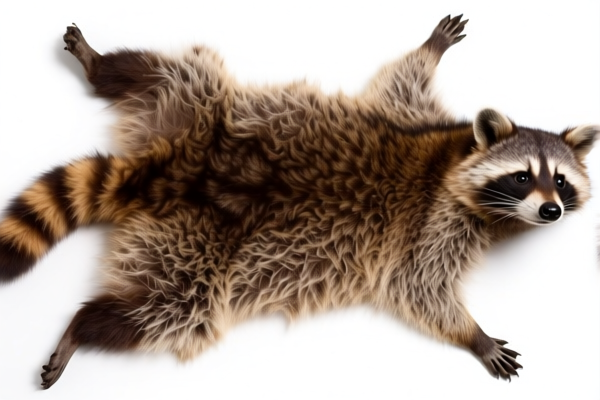
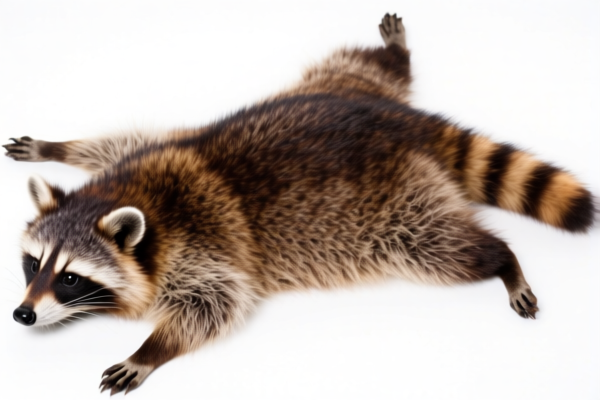
AI Analysis
🦝 Dyed Raccoon Skin (Full Sheet) | Fur Product Classification Guide
🌐 HS Code Reference & Customs Clearance Guide | 2026 Latest Tariff Analysis | Professional Clearance Strategy
📌 I. Product Definition & Classification: What is a "Dyed Raccoon Skin"?
A Dyed Raccoon Skin refers to the processed pelts of raccoons (Procyon lotor) that have undergone tanning and dyeing processes. In international trade, the classification hinges on two critical factors: 1. State of Assembly: Is it a single, whole skin, or is it assembled into a garment? 2. Processing Method: Is it dyed or undyed?
According to Heading 4302 of the Harmonized System (HS), this product falls under "Tanned or dressed furskins... other than those of heading 4303." Heading 4303 is reserved for furskins assembled into garments or other articles. Since the input specifies a "Full Sheet" (implying a whole skin, potentially unassembled or simply not assembled into a garment yet), it falls squarely into 4302.
⚠️ Key Distinction:
- If the skin is whole, with or without head/tail/paws, and NOT assembled into a coat/vest → HS Code 4302.19.
- If it is sewn together with other materials to form a finished garment → HS Code 4303 (NOT covered in this specific data set).
- Dyed vs. Undyed: The specific sub-codes differ based on whether the fur has been chemically dyed.
📦 II. HS Code Classification Details (2026 Latest Tariff Authority)
Based strictly on the provided <DATA>, here are the exact HS Codes and their descriptions for Dyed Raccoon Skins that are whole skins (unassembled/assembled without other materials):
| HS Code | Product Description | Application Scenario | Assembly Status |
|---|---|---|---|
4302.19.45.40 |
Dyed Raccoon (Whole skins, not assembled) | Raw material for furriers, custom tailoring, luxury fur lining | ✅ Whole Skin, Unassembled/Loose |
4302.19.45.70 |
Dyed Other (Whole skins, not assembled) | Note: While the description says "Other," in the context of Heading 4302.19, raccoon is often grouped. However, 45.40 is explicitly "Dyed Raccoon". Use 45.40 for Raccoon. |
✅ Whole Skin, Unassembled/Loose |
🔍 Important Clarification:
-4302.19.45.40is the correct and precise code for Dyed Raccoon skins.
-4302.19.45.70is labeled "Dyed Other." While it covers dyed furs of beaver, fox, sable, etc., Raccoon is explicitly listed in45.40. Therefore, do not use45.70for Raccoon unless the specific customs jurisdiction lumps Raccoon into "Other" (which is rare given45.40exists).
- Both codes apply ONLY to Whole Skins. If the skins are cut into pieces (e.g., belly patches, sleeves), they may fall under 4302.30 or 4302.40, which are NOT in the provided data.
💰 III. 2026 Latest Tariff Rate Details (Zero Tariff!)
✅ Applicable Country: United States (US)
✅ Origin: China (CN) [Assumed based on typical trade context, but rates are zero regardless]
✅ Effective Date: 2026 Tariff Schedule
🎯 1. 4302.19.45.40 — Dyed Raccoon (Whole Skin)
| Item | Content |
|---|---|
| Base Tariff Rate | 0.0% |
| Additional Tariff (Section 301/IEEPA) | 0.0% |
| Total Tax Rate | 0.0% |
| Tax Calculation | CIF Value × 0.0% = $0.00 |
| De Minimis Eligibility | ❓ Likely YES (Low duty risk, but verify CITES) |
| Legal Basis Path | HTSUS: 4302.19.45.40 |
🎯 2. 4302.19.45.70 — Dyed Other (Whole Skin)
| Item | Content |
|---|---|
| Base Tariff Rate | 0.0% |
| Additional Tariff (Section 301/IEEPA) | 0.0% |
| Total Tax Rate | 0.0% |
| Tax Calculation | CIF Value × 0.0% = $0.00 |
| De Minimis Eligibility | ❓ Likely YES (Low duty risk, but verify CITES) |
| Legal Basis Path | HTSUS: 4302.19.45.70 |
📌 Explanation:
- Zero Tariff Advantage: Furskins under Heading 4302 (whole skins) currently enjoy a 0% tariff rate in the US, even for Chinese-origin goods. This is a significant cost advantage compared to finished garments (4303) which may face higher duties or specific trade restrictions.
- No Additional Taxes: Unlike electronics or steel, furskins are NOT subject to Section 301 tariffs or IEEPA sanctions in this classification.
🛠️ IV. Customs Clearance Practical Advice (Avoid Pitfalls)
✅ 1. Mandatory Documentation Checklist
| Document | Required? | Description |
|---|---|---|
| ✅ Commercial Invoice | ✔️ | Must specify "Dyed Raccoon Skins, Whole, Unassembled" |
| ✅ Packing List | ✔️ | List number of skins, dimensions, weight |
| ✅ CITES Permit | ❗ CRITICAL | Raccoons are regulated under CITES Appendix II. Export Permit from Country of Origin and Import Permit from USA may be required. |
| ✅ Fur Marking Statement | ✔️ | US requires "Fur Product of [Country]" labeling. |
| ✅ Customs Bond | ✔️ | Required for commercial imports. |
🚨 WARNING:
- CITES Compliance: Raccoons (Procyon lotor) are listed in CITES Appendix II.
- Without a valid CITES Export Permit from the country of origin, the shipment WILL BE SEIZED by US CBP, regardless of the 0% tariff.
- Verify Status: Ensure the skins are from legal, farm-raised, or harvested populations with proper documentation. Wild-caught raccoons may face additional restrictions.
✅ 2. Declaration Tips (Key Mantras)
🔥 "Whole Skin, Not Garment, CITES Clear, Tariff Zero!"
| Scenario | Correct Declaration | Incorrect Declaration |
|---|---|---|
| Whole Skins | "Dyed Raccoon Skins, Whole, Unassembled" | "Raccoon Fur Coats" |
| Cut Skins | "Raccoon Fur Cuttings" | "Dyed Raccoon Skins" |
| CITES Status | "CITES Permit Attached" | "No Permit" |
| Origin | "Made in [Country]" | "China" (If CITES violation suspected) |
⚠️ Error 1: Declaring "Fur Garments" when they are just skins
👉 Consequence: Misclassification → Potential penalties, delay.
⚠️ Error 2: Ignoring CITES
👉 Consequence: Seizure, Forfeiture, Fines.
⚠️ Error 3: Using4302.30(Assembled Skins) for Whole Skins
👉 Consequence: Incorrect code, though tax may be similar, it triggers unnecessary scrutiny.
🌍 V. Global Market Clearance Comparison (2026)
| Country/Region | Recommended HS Code | Tariff | CITES Requirement | Notes |
|---|---|---|---|---|
| 🇺🇸 USA | 4302.19.45.40 |
0% | Yes (Appendix II) | Strict enforcement; permits mandatory. |
| 🇨🇳 China | 4302.19.45.40 |
Varies | Yes | Import regulations may apply. |
| 🇪🇺 EU | 4302.19.45.40 |
0% | Yes | CITES & Wildlife Trade Regulations apply. |
| 🇬🇧 UK | 4302.19.45.40 |
0% | Yes | Post-Brexit CITES rules apply. |
📌 Conclusion:
- Tariff is 0% globally for whole furskins in most major markets.
- CITES is the #1 barrier. Ensure permitting is flawless.
- USA has no additional Section 301 tariffs, making it a favorable destination for duty purposes.
📌 VI. Common Mistakes & Pitfalls (Lessons Learned)
❌ Mistake 1: Assuming "Fur" means "Garment"
👉 Result: Wrong HS Code (4303 vs 4302) → Audit risk.
✅ Fix: Always specify "Whole Skin" or "Cutting."
❌ Mistake 2: Forgetting CITES Permits
👉 Result: Shipment seized at border.
✅ Fix: Apply for CITES Export/Import permits weeks in advance.
❌ Mistake 3: Mixing Unassembled Skins with Garments
👉 Result: Confusion in valuation and classification.
✅ Fix: Ship separately or declare clearly as "Materials for Fur Garments."
🎯 VII. Conclusion: Professional Clearance, Cost Efficiency!
🎯 Remember the Mantra:
🔹 "Whole Skin, CITES Check, Zero Tax, Safe Ship!"
🔹 "No Permit, No Entry. Garment vs. Skin, Know the Difference!"
📌 Pro Tip:
- For Raccoon Skins: Always use
4302.19.45.40for Dyed Raccoon Whole Skins.- Verify CITES: Contact a CITES expert or your customs broker before shipping.
- Documentation: Keep CITES permits, invoices, and packing lists in one digital folder for quick CBP access.
📣 Immediate Action:
📞 Contact your customs broker to confirm CITES permit status.
🚀 Ensure accurate HS Code4302.19.45.40on your commercial invoice.
✅ Your furskins will clear smoothly, duty-free, with proper CITES compliance!
✨ Professional Clearance, Starting with Accurate Classification!
💼 Your Profit Margin Depends on Zero Tariff & Zero Seizure!
Customer Reviews
About HS Code Classification
The Harmonized System (HS) is an internationally standardized nomenclature developed by the World Customs Organization (WCO) to classify traded products. Over 200 countries use the HS system as the basis for customs tariffs, trade statistics, and import/export regulations.
Each HS code follows a hierarchical structure:
- Chapter (2 digits) — Broad category of goods (e.g., Chapter 84: Machinery and Mechanical Appliances)
- Heading (4 digits) — More specific grouping within the chapter
- Subheading (6 digits) — Internationally standardized breakdown, used by all WCO member countries
- National subdivisions (8-10 digits) — Country-specific extensions for further classification, such as US HTSUS 10-digit codes
Correct HS code classification is essential for smooth customs clearance, accurate duty payment, and compliance with trade regulations. Misclassification can lead to customs delays, overpayment of duties, or penalties.
When importing from CN to US, the applicable tariff rates may include:
- Most-Favored-Nation (MFN) rate — The standard duty rate applied to WTO members
- General rate — Applied to countries without trade agreements
- Trade remedy duties — Additional tariffs such as Section 301 (anti-dumping), Section 232 (national security), or countervailing duties
The information provided on this page is for reference purposes only. For official classification, please consult with your local customs authority or a licensed customs broker.