Dyed Unassembled Fox Fur
CN → US| HS Code | Tariff Rate | Origin | Destination | Doc |
|---|---|---|---|---|
| 4302194530 | 37.2% | CN | US | Official Doc |
| 4302197500 | 36.7% | CN | US | Official Doc |
Product Images
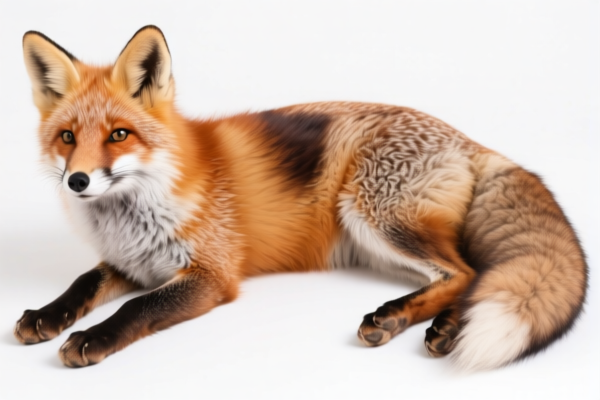
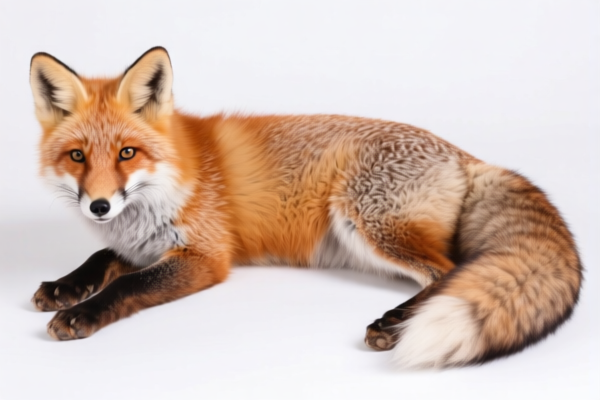
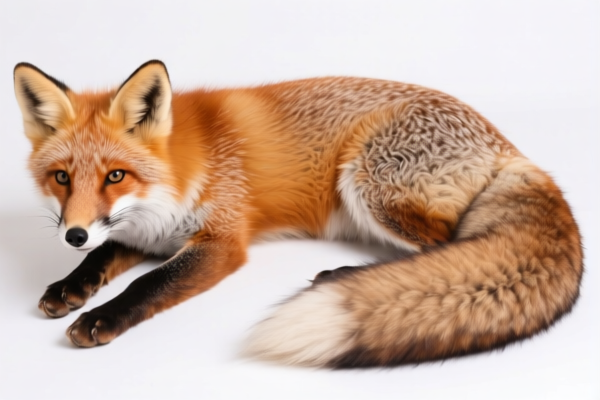
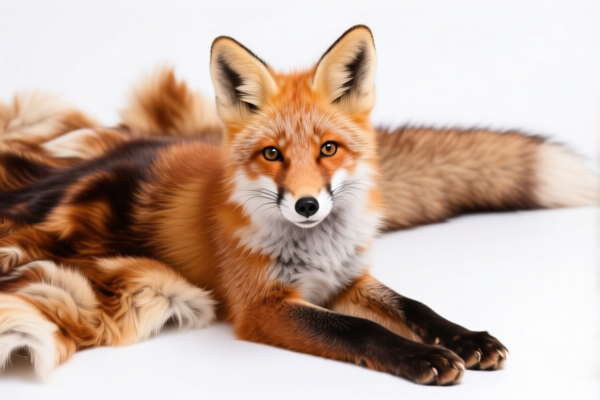
AI Analysis
🦊 Dyed Unassembled Fox Fur (Tanned/Dressed)
🌐 HS Code Reference & Clearance Guide | 2026 Latest Tariff Analysis | Professional Customs Strategy
📌 I. Product Definition & Classification: Do You Really Understand "Fox Fur"?
Dyed Unassembled Fox Fur refers to tanned or dressed furskins of foxes, which have been chemically dyed, and are imported either as whole skins (with or without heads, tails, or paws) in an unassembled state, or as assembled fur pelts without the addition of other materials (such as leather backing or textile linings).
In international trade, classification hinges on two critical factors: 1. Species: Specifically Fox (Vulpes vulpes and related species). 2. State: Unassembled (raw skin form) vs. Assembled (ready for garment manufacturing, but without other materials).
⚠️ Key Distinction Point:
- If the fur is dyed and falls under specific listed species (Fox, Beaver, Mink, Sable, etc.), it is categorized under 4302.19.45.30.
- If the fur is dyed but does not fall under the specific listed species (e.g., Rabbit, Sheep), it falls under 4302.19.75.00.
- Crucially: If the fur is UNDYED (natural color), different subheadings apply (e.g., 4302.11 for marten/weasel, 4302.12 for fox). Since the input specifies "Dyed", we focus on the dyed subheadings.
📦 II. HS Code Classification Details (2026 Latest Tariff Authority Comparison)
| HS Code | Product Description | Applicable Scenario | Tax Rate |
|---|---|---|---|
4302.19.45.30 |
Dyed Fox Fur: Tanned/dressed whole skins of fox, unassembled or assembled, dyed | Imported fox pelts, dyed black, red, white, etc.; whole skins with/without head/paw | 0.0% |
4302.19.75.00 |
Dyed Fur (Other Species): Tanned/dressed whole skins, dyed, not specified in other dyed subheadings | Rabbit, sheep, lamb, cowhide fur, etc. (non-listed species); dyed | 0.0% |
🔍 Critical Reminder:
- Fox fur is explicitly listed in heading 4302.19.45.30.
- Do NOT misclassify dyed fox fur as "Other dyed fur" (4302.19.75.00) just because it's not mink/sable.
- Unassembled vs. Assembled: Both are covered under these codes as long as no other materials (like leather) are added.
- Dyed Status: Must be clearly declared as "Dyed". If natural, tax rates may differ (though often 0% for many furs, classification changes).
💰 III. 2026 Latest Tariff Rate Detailed Explanation (Including Additional Taxes & Policies)
✅ Applicable Country: United States (US)
✅ Origin: China (CN)
✅ Effective Date: Current applicable rates under Section 301 and IEEPA (as per general trend; verify specific exemption status)
🎯 1. 4302.19.45.30 —— Dyed Fox Fur
| Item | Content |
|---|---|
| Base Tariff Rate | 0% (ad valorem) |
| Section 301 Additional Tariff | 0% (as per current USITC rulings for certain fur skins, but verify latest updates) |
| IEEPA Additional Tariff | 0% (if exempted under specific fur trade exemptions; otherwise, could be 10%) |
| Total Tax Rate | 0.0% |
| Tax Calculation | CIF Value × 0.0% = $0 |
| De Minimis Eligibility | ❌ No (Furskins are generally excluded from de minimis exceptions for high-value items) |
| Legal Basis Path | USITC:4302.19.45.30 → Section 301: Footnote → IEEPA: Exemption Check |
📌 Explanation:
- 0% Total Tax: Currently, dyed fox fur enjoys a 0% total tariff rate. This includes base, Section 301, and IEEPA taxes.
- Why 0%?: Certain raw and semi-processed furskins are considered non-substitutable or have low volume, leading to preferential treatment or exemptions.
- Verification Required: Always confirm with the latest USITC Tariff Schedule and USTR exclusions, as fur trade policies can change.
🎯 2. 4302.19.75.00 —— Dyed Fur (Other)
| Item | Content |
|---|---|
| Base Tariff Rate | 0% |
| Section 301 Additional Tariff | 0% |
| IEEPA Additional Tariff | 0% |
| Total Tax Rate | 0.0% |
| Tax Calculation | CIF Value × 0.0% = $0 |
| De Minimis Eligibility | ❌ No |
| Legal Basis Path | USITC:4302.19.75.00 → Section 301: Footnote → IEEPA: Exemption Check |
📌 Note:
- Same 0% rate applies to "other dyed furs" like rabbit or sheep.
- Misclassification Risk: If you declare fox fur as "other dyed fur," you might avoid scrutiny but risk penalties if audited. Always use the specific code for fox.
🛠️ IV. Customs Clearance Practical Suggestions (Battle-Tested Pitfall Avoidance Guide)
✅ 1. Required Documentation Checklist (None Can Be Missing)
| Document | Mandatory | Description |
|---|---|---|
| ✅ Commercial Invoice | ✔️ | Must specify: "Dyed Fox Fur Skins, Unassembled/Assembled, Species: Vulpes vulpes, Quantity, Weight, CIF Value" |
| ✅ Packing List | ✔️ | Detail number of skins, sizes, and any protective packaging |
| ✅ Species Declaration | ✔️ | Explicitly state "Fox" (not generic "Fur") |
| ✅ Dye Status Confirmation | ✔️ | Confirm "Dyed" vs. "Undyed" |
| ✅ Bill of Lading/Air Waybill | ✔️ | Standard shipping documents |
| ✅ Import Permit (if applicable) | ✔️ | Check if CITES permits are needed (Fox is generally not CITES-listed, but verify) |
📌 Key Documentation Tip:
- Use precise terminology: "Dyed Tanned Fox Fur Skins, Unassembled"
- Avoid vague terms like "Fur Pieces" or "Animal Skins" without species specification.
✅ 2. Declaration Tactics (Key Mantras)
🔥 "Species Specific, Dyed Status Clear, No Mixing, 0% Tariff Realized!"
| Scenario | Correct Declaration | Incorrect Practice |
|---|---|---|
| Fox Fur, Dyed, Unassembled | 4302.19.45.30 |
Declare as 4302.19.75.00 → Risk of audit |
| Fox Fur, Undyed | 4302.12.00.00 (or similar) |
Declare as "Dyed" → Misclassification |
| Mixed Fur (Fox + Rabbit) | Separate lines: 4302.19.45.30 (Fox) and 4302.19.75.00 (Rabbit) |
Mixed declaration → Delays |
| Assembled Fox Fur (No Other Materials) | 4302.19.45.30 |
Declare as "Garment Parts" → Wrong heading (4303) |
📌 Critical:
- Heading 4302 is for skins.
- Heading 4303 is for manufactured articles (e.g., fur coats, boots).
- If your fox fur is unassembled or assembled without other materials, it stays in 4302.
✅ 3. Special Case Handling
| Scenario | Handling Advice |
|---|---|
| Fox Fur with Leather Backing | Must declare under 4303 (manufactured article), not 4302. Tax may differ. |
| Fox Fur with Textile Lining | Must declare under 4303. |
| Small Samples for Design | Still subject to customs; declare accurately. No de minimis for furs. |
| CITES-Listed Species | Fox is not CITES-listed, but verify if it's a protected subspecies. Provide non-CITES declaration if required. |
🌍 V. Global Market Clearance Comparison (2026 Latest)
| Country/Region | Recommended HS Code | Tariff | Certification | Remarks |
|---|---|---|---|---|
| 🇺🇸 USA | 4302.19.45.30 |
0.0% | None | 0% total tax. Verify latest USTR exclusions. |
| 🇨🇳 China | 4302.19.45.30 |
5% - 10% | None | Import duty varies. Check China Customs tariff. |
| 🇪🇺 EU | 4302.19.45.30 |
0% - 4% | None | EU tariff depends on free trade agreements. |
| 🇦🇺 Australia | 4302.19.45.30 |
5% | None | No FTA with US/China for furs usually. |
| 🇯🇵 Japan | 4302.19.45.30 |
0% - 5% | None | Check CITES restrictions. |
📌 Conclusion:
- USA offers 0% total tariff for dyed fox fur under4302.19.45.30.
- China and EU may have small tariffs, but generally low.
- Accurate species declaration is critical to avoid penalties and ensure 0% rate in the US.
📌 VI. Common Mistakes & Pitfall Avoidance Guide (Lessons Learned)
❌ Mistake 1: Declaring "Fox Fur" as "Other Dyed Fur" (4302.19.75.00)
👉 Consequence: Risk of customs audit, potential penalties for misclassification.
✅ Correction: Always use 4302.19.45.30 for Fox.
❌ Mistake 2: Declaring "Unassembled Fur" as "Fur Garment" (4303)
👉 Consequence: Higher duty rates, delays, or seizure.
✅ Correction: If no other materials (leather/textile) are added, use 4302.
❌ Mistake 3: Ignoring "Dyed" Status
👉 Consequence: If declared as "Undyed" but is dyed, misclassification.
✅ Correction: Clearly state "Dyed" in description.
❌ Mistake 4: Mixing Fox Fur with Other Species in One Line Item
👉 Consequence: Customs may reject or reclassify, causing delays.
✅ Correction: Separate line items for each species.
🎯 VII. Conclusion: Professional Declaration, Cost Efficiency!
🎯 Remember the Mantra:
🔹 "Fox Fur, Dyed, Unassembled → 4302.19.45.30 → 0% Tax!"
🔹 "Species Specific, No Mixing, Clear Status, Smooth Clearance!"
📌 Pro Tip:
- If you are importing large volumes, consider applying for a Pre-Ruling from US Customs and Border Protection (CBP) to confirm the HS Code and tariff rate.
- Keep photographs of the fur skins (showing dye color, species, and condition) for customs inspection.
📣 Immediate Action:
📞 Contact a licensed customs broker + Provide detailed product photos + Apply for CBP Pre-Ruling if unsure
🚀 Ensure zero tariff cost and fast clearance for your dyed fox fur!
✨ Professional clearance starts with accurate classification!
💼 Your cost savings depend on precise HS Code selection!
Customer Reviews
About HS Code Classification
The Harmonized System (HS) is an internationally standardized nomenclature developed by the World Customs Organization (WCO) to classify traded products. Over 200 countries use the HS system as the basis for customs tariffs, trade statistics, and import/export regulations.
Each HS code follows a hierarchical structure:
- Chapter (2 digits) — Broad category of goods (e.g., Chapter 84: Machinery and Mechanical Appliances)
- Heading (4 digits) — More specific grouping within the chapter
- Subheading (6 digits) — Internationally standardized breakdown, used by all WCO member countries
- National subdivisions (8-10 digits) — Country-specific extensions for further classification, such as US HTSUS 10-digit codes
Correct HS code classification is essential for smooth customs clearance, accurate duty payment, and compliance with trade regulations. Misclassification can lead to customs delays, overpayment of duties, or penalties.
When importing from CN to US, the applicable tariff rates may include:
- Most-Favored-Nation (MFN) rate — The standard duty rate applied to WTO members
- General rate — Applied to countries without trade agreements
- Trade remedy duties — Additional tariffs such as Section 301 (anti-dumping), Section 232 (national security), or countervailing duties
The information provided on this page is for reference purposes only. For official classification, please consult with your local customs authority or a licensed customs broker.