Dyed Whole Animal Hide
CN → US| HS Code | Tariff Rate | Origin | Destination | Doc |
|---|---|---|---|---|
| 4107118000 | 12.4% | CN | US | Official Doc |
| 4107111020 | 35.0% | CN | US | Official Doc |
| 4103901140 | 17.5% | CN | US | Official Doc |
| 4103901190 | 17.5% | CN | US | Official Doc |
| 4107118000 | 12.4% | CN | US | Official Doc |
Product Images
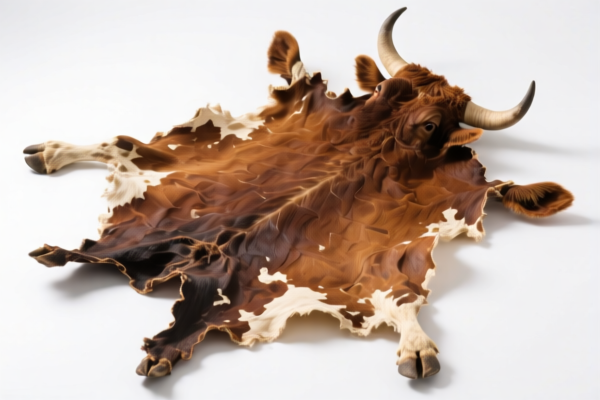
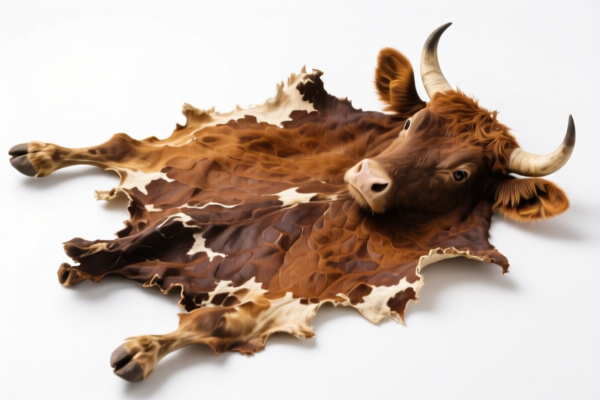
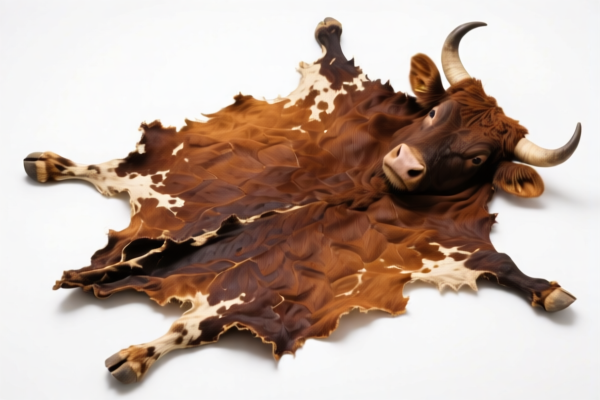
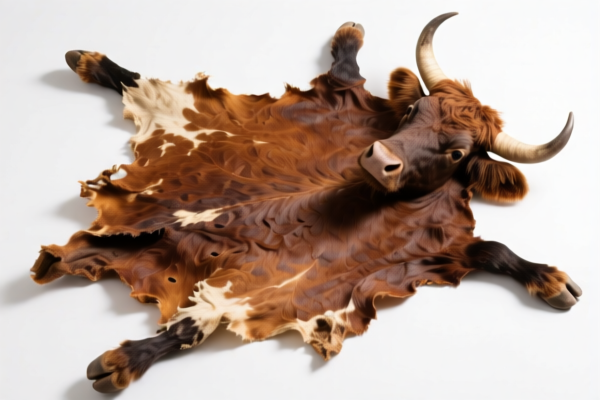
AI Analysis
🐂 Dyed Whole Animal Hide (染色整皮)
🌐 HS Code Reference & Customs Clearance Guide | 2026 Latest Tariff Analysis | Professional Entry Strategy
📌 I. Product Definition & Classification: What exactly is "Dyed Whole Animal Hide"?
"Dyed Whole Animal Hide" refers to the skin of large animals (primarily cattle or horses) that has been tanned (鞣制) and then dyed (染色), retaining its full grain (全粒面) and unsplit (未劈层) integrity.
In international trade, this product sits at a critical intersection between raw materials and finished leather goods. The key distinction lies in the processing stage:
Raw Skins (未加工/仅盐渍): Often classified under Chapter 41 as "Raw Skins" (e.g., Fox skins).
Processed Leather (鞣制+染色): Classified as "Tanned Leather" (e.g., Cow/Horse hide).
⚠️ Key Classification Points:
- If the hide is tanned and dyed, it falls under Chapter 41 (Tanned Leather).
- If it is only dyed but NOT tanned (rare for "hide" terminology, more common for "fur"), it may fall under other subheadings, but standard "Dyed Whole Animal Hide" usually implies tanning.
- Cattle/Horse vs. Fox: The HS codes distinguish between large animal hides (Cow/Horse) and small animal furs (Fox).
📦 II. HS Code Classification Details (2026 Latest Tariff Authority Mapping)
Based on the provided data, there are four specific HS Codes. The classification depends on the species (Cattle/Horse vs. Fox) and the processing state (Tanned vs. Raw).
| HS Code | Product Description | Species Type | Processing State | Key Feature |
|---|---|---|---|---|
4107.11.80.00 |
Dyed whole leather, full grain, unsplit | Cattle or Horse | Tanned + Dyed | Standard tanned leather |
4107.11.10.20 |
Dyed whole leather, full grain, unsplit | Cattle or Horse | Tanned + Dyed | Specific subcategory for tanned leather |
4103.90.11.40 |
Dyed whole fox skin | Fox | Raw (Unprocessed) | Fur/Hair on; No tanning |
4103.90.11.90 |
Dyed whole fox skin | Fox | Raw (Unprocessed) | Fur/Hair on; No tanning |
🔍 Critical Distinction:
- Codes4107...apply to Cattle/Horse hides that have been Tanned and Dyed.
- Codes4103...apply to Fox skins that are Dyed but NOT Tanned (classified as Raw Skins).
- Do not confuse: A "dyed fox skin" is often still considered a "raw skin" in customs terms if it hasn't been tanned into leather, hence the lower base tariff but still subject to additions.
💰 III. 2026 Latest Tariff Rate Breakdown (Detailed Tax Clauses)
✅ Applicable Country: United States (US)
✅ Origin: China (CN)
✅ Effective Date: 2025/2026 (Current Trade Policy)
🎯 1. Cattle/Horse Tanned Leather (HS Codes: 4107.11.80.00 & 4107.11.10.20)
These codes represent finished leather from large animals.
📌 Code: 4107.11.80.00 (Dyed Whole Leather, Cow/Horse)
| Item | Content |
|---|---|
| Base Tariff | 2.4% (ad valorem) |
| Section 301 / Additional Tariff | 0.0% |
| Section 122 Tariff | +10% (Specific penalty/tariff clause) |
| Total Effective Rate | 12.4% |
| Tax Calculation | CIF Value × 12.4% |
| De Minimis Exemption | ❌ Not Applicable (Section 122 taxes usually apply regardless of value) |
| Legal Basis Path | HTSUS:4107.11.80.00 → SEC122:10% |
📌 Explanation:
- The 10% Section 122 tariff is a critical cost driver here. It is often applied to specific textile/leather categories under certain trade enforcement actions.
- Base rate is low (2.4%), but the 122 clause pushes the total to 12.4%.
📌 Code: 4107.11.10.20 (Dyed Whole Leather, Cow/Horse - Specific Subcategory)
| Item | Content |
|---|---|
| Base Tariff | 0.0% |
| Section 301 / Additional Tariff | +25% (USITC Footnote) |
| Section 122 Tariff | +10% |
| Total Effective Rate | 35.0% |
| Tax Calculation | CIF Value × 35.0% |
| De Minimis Exemption | ❌ Not Applicable |
| Legal Basis Path | HTSUS:4107.11.10.20 → USITC:25% → SEC122:10% |
📌 Explanation:
- This subcode attracts a higher burden. The 25% Section 301 tariff (USITC) is applied to this specific subcategory of leather, likely due to trade safeguard measures.
- Total 35% is significantly higher than the other cow/horse code (4107.11.80.00).
- Strategic Note: Verify if your product truly fits4107.11.10.20or if it can be correctly classified under4107.11.80.00to save 22.6% in duties.
🎯 2. Dyed Whole Fox Skins (HS Codes: 4103.90.11.40 & 4103.90.11.90)
These codes classify Fox Skins as Raw Skins (Chapter 41, Heading 41.03), even if they are dyed. They are NOT considered "Tanned Leather" in the same way as cowhide.
📌 Code: 4103.90.11.40 & 4103.90.11.90 (Dyed Whole Fox Skin)
| Item | Content |
|---|---|
| Base Tariff | 0.0% |
| Section 301 / Additional Tariff | +7.5% |
| Section 122 Tariff | +10% |
| Total Effective Rate | 17.5% |
| Tax Calculation | CIF Value × 17.5% |
| De Minimis Exemption | ❌ Not Applicable |
| Legal Basis Path | HTSUS:4103.90.11.xx → USITC:7.5% → SEC122:10% |
📌 Explanation:
- Although the base tariff is 0%, the 7.5% Section 301 and 10% Section 122 apply.
- Why is the Section 301 rate (7.5%) lower than for cowhide (25%)? Because Fox skins are classified under Heading 41.03 (Other Raw Skins), not Heading 41.07 (Tanned Leather). The 25% USITC tariff specifically targets certain tanned leathers.
- Total 17.5% is moderate but still significant.
🛠️ IV. Customs Clearance Practical Advice (Avoid Pitfalls)
✅ 1. Preparation Checklist (Mandatory)
| Document | Required | Notes |
|---|---|---|
| ✅ Product Specification Sheet | ✔️ | Must specify: Species (Cow/Horse/Fox), Processing (Tanned/Dyed), Grain (Full/Unsplit) |
| ✅ Photos of the Hide | ✔️ | Show texture, dye color, and hair side vs. flesh side |
| ✅ Tanning Certificate | ✔️ | Critical for 4107 codes. Proves tanning was completed. |
| ✅ Species Declaration | ✔️ | Must explicitly state "Bovine", "Equine", or "Vulpine (Fox)" |
| ✅ Commercial Invoice | ✔️ | Value must be accurate for CIF calculation |
| ✅ Packing List | ✔️ | Weight (Net/Gross) is crucial for duty calculation |
✅ 2. Declaration Strategy (Key Mnemonic)
🔥 "Species First, Tanning Status Second, Code Determines Cost!"
| Scenario | Correct Classification | Incorrect Classification | Consequence |
|---|---|---|---|
| Cowhide, Tanned & Dyed | 4107.11.80.00 (12.4%) or 4107.11.10.20 (35%) |
4103.90.11.90 |
Underpayment Penalty! Cowhide is not Fox skin. |
| Fox Skin, Dyed but Raw | 4103.90.11.40/.90 (17.5%) |
4107.11.80.00 |
Overpayment Risk! Fox skin is not Tanned Leather. |
| Cowhide, Only Dyed (No Tanning) | Likely 4103.90.11.90 (17.5%) |
4107.11.80.00 (12.4%) |
If not tanned, it's a raw skin, not leather. |
📌 Crucial Warning:
- Do NOT declare Fox skins as Cowhide (4107). The physical characteristics are different, and customs may inspect.
- Do NOT declare Tanned Cowhide as Fox Skin (4103). You will be accused of misclassification to avoid the 25% tariff.
✅ 3. Special Cases
| Situation | Advice |
|---|---|
| Mixed Shipments | Declare Fox and Cow hides separately on the Commercial Invoice. Do not mix under one HS Code. |
| Split Skins | If the hide is split into layers, the tax treatment may change. Ensure "Unsplit" (未劈层) is clearly stated for these codes. |
| Section 122 Liability | Both 12.4% and 35% rates include the 12% Section 122 tariff. This is a non-negotiable surcharge for these origins. Plan cash flow accordingly. |
🌍 V. Global Market Comparison (2026)
| Region | Recommended HS Code | Est. Tariff (China Origin) | Notes |
|---|---|---|---|
| 🇺🇸 USA | 4107.11.80.00 |
12.4% | Best rate for Cowhide. Avoid 4107.11.10.20 (35%) if possible. |
| 🇺🇸 USA | 4103.90.11.40 |
17.5% | For Fox Skins. No 25% Section 301, but 7.5% applies. |
| 🇪🇺 EU | 4107 11 80 |
~6-8% | No Section 122. Lower overall burden. |
| 🇨🇳 China | 4107 11 80 |
2.4% | Base rate only. No Section 301 or 122. |
📌 Conclusion:
- The US market is the most complex due to the叠加 (stacking) of Section 301 and Section 122 tariffs.
- Cowhide (4107) is the most tax-sensitive. Distinguish carefully between.80.00(12.4%) and.10.20(35%).
- Fox Skin (4103) has a moderate 17.5% rate.
📌 VI. Common Errors & Pitfalls (Lessons Learned)
❌ Error 1: Declaring Tanned Cowhide as Fox Skin (4103)
👉 Consequence: Customs seizure for misclassification. Heavy fines.
👉 Fix: Always provide species proof.
❌ Error 2: Ignoring Section 122 in cost calculations
👉 Consequence: Budget shortfall. The 10% surcharge is mandatory and often overlooked in initial quotes.
👉 Fix: Include 12.4% (min) or 35% (max) in landed cost models.
❌ Error 3: Confusing Dyed Raw Fox Skin with Tanned Fox Leather
👉 Consequence: If fox skin is tanned, it may fall under 4107 (Tanned Leather), changing the tax profile.
👉 Fix: Verify tanning process. "Dyed" does not equal "Tanned" for fox skins in this data set.
🎯 VII. Conclusion: Precise Classification Saves Money!
🎯 Remember:
🔹 "Cowhide: 12.4% or 35%? Check the Subcode!"
🔹 "Fox Skin: 17.5% (Raw). Don't Taint it with Leather Codes!"
🔹 "Section 122 is Always 10% On Top!"
📌 Pro Tip:
If you are importing Cowhide, try to ensure your product qualifies for 4107.11.80.00 (12.4%) rather than 4107.11.10.20 (35%). The difference is 22.6%, which can make or break your profit margin. Consult a customs broker to confirm the exact subheading based on your tanning process and leather finish.
✨ Professional Clearance Starts with Accurate Classification!
💼 Your Cost, Precisely Calculated!
Customer Reviews
About HS Code Classification
The Harmonized System (HS) is an internationally standardized nomenclature developed by the World Customs Organization (WCO) to classify traded products. Over 200 countries use the HS system as the basis for customs tariffs, trade statistics, and import/export regulations.
Each HS code follows a hierarchical structure:
- Chapter (2 digits) — Broad category of goods (e.g., Chapter 84: Machinery and Mechanical Appliances)
- Heading (4 digits) — More specific grouping within the chapter
- Subheading (6 digits) — Internationally standardized breakdown, used by all WCO member countries
- National subdivisions (8-10 digits) — Country-specific extensions for further classification, such as US HTSUS 10-digit codes
Correct HS code classification is essential for smooth customs clearance, accurate duty payment, and compliance with trade regulations. Misclassification can lead to customs delays, overpayment of duties, or penalties.
When importing from CN to US, the applicable tariff rates may include:
- Most-Favored-Nation (MFN) rate — The standard duty rate applied to WTO members
- General rate — Applied to countries without trade agreements
- Trade remedy duties — Additional tariffs such as Section 301 (anti-dumping), Section 232 (national security), or countervailing duties
The information provided on this page is for reference purposes only. For official classification, please consult with your local customs authority or a licensed customs broker.