Dyed Whole Animal Hide No Head
CN → US| HS Code | Tariff Rate | Origin | Destination | Doc |
|---|---|---|---|---|
| 4107113000 | 13.6% | CN | US | Official Doc |
| 4107198000 | 12.4% | CN | US | Official Doc |
| 4103901190 | 17.5% | CN | US | Official Doc |
Product Images
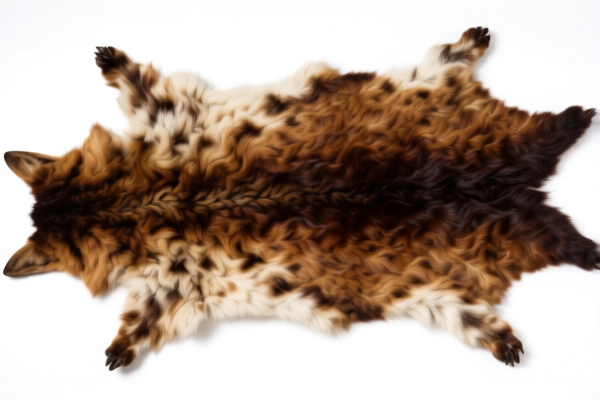
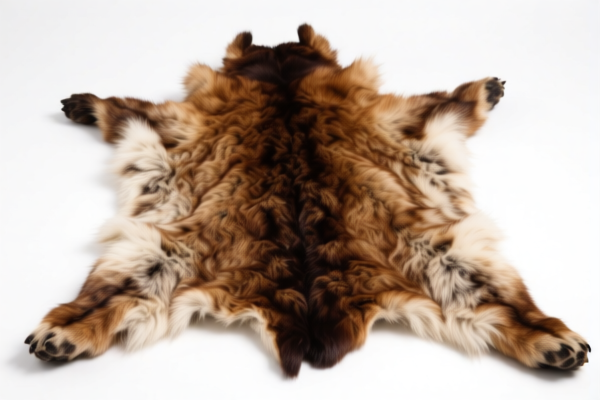
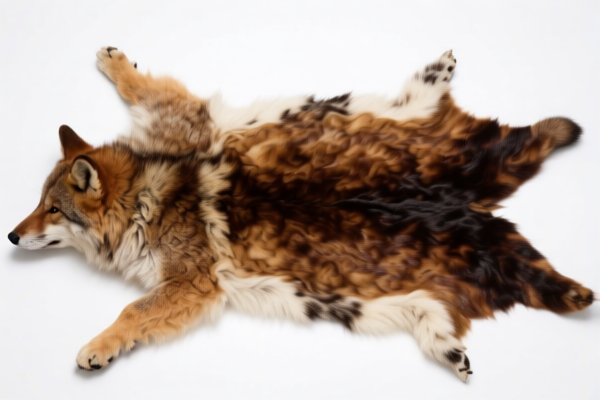
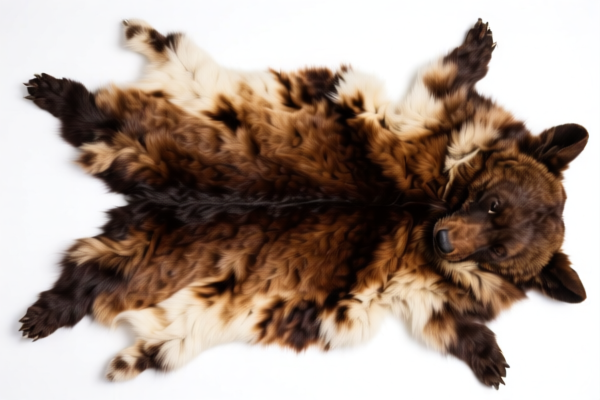
AI Analysis
🧥 Dyed Whole Animal Hide (No Head)
🌐 HS Code Reference & Customs Clearance Guide | 2026 Latest Tariff Analysis | Professional Entry Strategy
📌 I. Product Definition & Classification: Do You Really Understand "Dyed Whole Animal Hide"?
"Dyed Whole Animal Hide (No Head)" refers to the outer skin of animals (typically cattle, buffalo, or similar large mammals) that has been removed, cleaned, and processed to remove hair/flesh, then dyed for color. Key characteristics in this specific classification context:
"Whole": The hide is intact, not split into layers.
"No Head": The head portion has been removed, which affects the weight and value calculation but not necessarily the HS code if the rest of the characteristics match.
"Dyed": The leather/hide has undergone a coloring process after tanning/processing.
⚠️ Key Distinction Points:
- If it is whole (not split) → Typically falls under 4107 category (Other tanned or crust hides of bovine or equine animals, whole).
- If it is split (into layers) → Falls under 4104 or other split hide categories.
- If it is fur (with hair/fur intact and visible as a feature) → Falls under 4103 or 4301/4302 depending on type.
- "No head" is a preparation step but does not change the fundamental HS code if the material is still classified as "whole hide."
📦 II. HS Code Classification Details (Based on Provided Data)
| HS Code | Product Description | Material State | Processing Status | Total Tax Rate |
|---|---|---|---|---|
| 4107.11.30.00 | Dyed whole animal hide (no head), material is dyed hide, form is whole, unsplit | Dyed hide | Dyed, whole, unsplit | 13.6% |
| 4107.19.80.00 | Dyed whole animal hide (no head), material is animal hide, form is whole, dyed | Animal hide | Dyed, whole | 12.4% |
| 4103.90.11.90 | Dyed whole fur (no head, tail, or claws), material is dyed fur, form is unprocessed pelt | Dyed fur | Dyed, unprocessed pelt | 17.5% |
🔍 Critical Analysis:
- 4107.11.30.00 and 4107.19.80.00 both refer to animal hides (not fur), which are whole and dyed.
- 4103.90.11.90 refers to fur, which is treated differently due to the presence of hair/fur as a primary feature.
- Important: Misclassification between "hide" (4107) and "fur" (4103) can lead to significant tax differences and customs delays.
💰 III. 2026 Latest Tariff Rate Breakdown (Including Additional Taxes & Policy Surcharges)
✅ Applicable Country: United States (US)
✅ Origin: China (CN)
✅ Effective Date: From 2025-11-10 onwards (for subsequent imports)
🎯 1. 4107.11.30.00 – Dyed Whole Animal Hide (No Head), Unsplit
| Item | Details |
|---|---|
| Base Tariff Rate | 3.6% (ad valorem) |
| Additional Tariff (122 Clauses) | +10% (Section 122, 10% surcharge) |
| Total Tax Rate | 13.6% |
| Tax Calculation | CIF Value × 13.6% |
| De Minimis Exemption | ❌ Not Applicable |
| Legal Basis | Base tariff from HTSUS; 122 Clauses surcharge under US trade policy |
📌 Explanation:
- The base tariff of 3.6% is applied to dyed whole hides.
- The 10% additional tariff is added under "122 Clauses" (likely referring to Section 122 of the Trade Act or similar trade remedy).
- Total: 13.6%. This is a moderate tariff compared to high-tech goods but significant for raw materials.
🎯 2. 4107.19.80.00 – Dyed Whole Animal Hide (No Head), Other Subcategories
| Item | Details |
|---|---|
| Base Tariff Rate | 2.4% (ad valorem) |
| Additional Tariff (122 Clauses) | +10% |
| Total Tax Rate | 12.4% |
| Tax Calculation | CIF Value × 12.4% |
| De Minimis Exemption | ❌ Not Applicable |
| Legal Basis | Base tariff from HTSUS; 122 Clauses surcharge |
📌 Note:
- This code may apply to hides that are dyed but do not fit the specific subcategory of 4107.11.30.00.
- Slightly lower base tariff (2.4%) but same 10% surcharge, resulting in 12.4% total.
🎯 3. 4103.90.11.90 – Dyed Whole Fur (No Head, Tail, or Claws)
| Item | Details |
|---|---|
| Base Tariff Rate | 0.0% |
| Additional Tariff (7.5%) | +7.5% (Additional surcharge, possibly under different trade provision) |
| Additional Tariff (122 Clauses) | +10% |
| Total Tax Rate | 17.5% |
| Tax Calculation | CIF Value × 17.5% |
| De Minimis Exemption | ❌ Not Applicable |
| Legal Basis | Base tariff from HTSUS; Additional surcharge + 122 Clauses |
📌 Warning:
- This is the highest tax rate (17.5%) among the three codes.
- Even though the base tariff is 0%, the 7.5% additional surcharge + 10% 122 Clauses results in a higher total.
- Misclassification risk: If you ship "fur" but declare as "hide," you may face penalties for undervaluation or misdeclaration.
🛠️ IV. Customs Clearance Practical Advice (Battle-Tested Pitfall Avoidance Guide)
✅ 1. Required Documentation Checklist (All are Mandatory)
| Document | Required | Notes |
|---|---|---|
| ✅ Product Specification Sheet | ✔️ | Must clearly state: "Dyed Whole Animal Hide, No Head, Unsplit" |
| ✅ Material Composition Certificate | ✔️ | Confirm if it is "hide" (leather base) or "fur" (hair/fur intact) |
| ✅ Photographic Evidence | ✔️ | Show full hide, no head, dyed color, and texture |
| ✅ Tanning/Dyeing Process Description | ✔️ | Explain the dyeing method to confirm "dyed" status |
| ✅ Commercial Invoice | ✔️ | Must match HS code description exactly |
| ✅ Packing List | ✔️ | Indicate quantity, weight, and dimensions |
| ✅ Certificate of Origin | ✔️ | If from non-China origin, may affect tax rates |
⚠️ Critical:
- Do NOT mix "hide" and "fur" in the same shipment without clear separation.
- Do NOT omit "No Head" from description if it affects value calculation.
✅ 2. Declaration Tips (Key Mantras)
🔥 "Whole Hide, No Head, Dyed, Unsplit – Declare as 4107, Not 4103!"
| Scenario | Correct Declaration | Incorrect Declaration |
|---|---|---|
| Dyed whole hide, unsplit | 4107.11.30.00 or 4107.19.80.00 |
Misdeclare as 4103 (fur) → Higher tax |
| Dyed fur (with hair) | 4103.90.11.90 |
Misdeclare as 4107 (hide) → Lower tax risk |
| Split hide | 4104 or 4105 |
Misdeclare as "whole hide" → Misclassification |
✅ 3. Special Cases Handling
| Case | Recommendation |
|---|---|
| Partial Heads Included | If any head parts are present, re-evaluate HS code. "No head" is a key descriptor. |
| Mixed Hides & Furs | Separate shipments. Do not mix 4107 and 4103 in one declaration. |
| Re-dyed Hides | Ensure dyeing is permanent and documented. Temporary dyes may be classified differently. |
| Sample Shipments | Even small quantities require full documentation. No de minimis exemption. |
🌍 V. Global Market Comparison (2026 Latest)
| Country/Region | Recommended HS Code | Tariff Rate | Certification Required | Notes |
|---|---|---|---|---|
| 🇺🇸 USA | 4107.11.30.00 |
13.6% | No special certs | 122 Clauses add 10% |
| 🇨🇳 China | 4107.11.30.00 |
3.6% | None | No additional surcharges |
| 🇪🇺 EU | 4107.11.30.00 |
0-4% | REACH compliance | No 122 Clauses |
| 🇬🇧 UK | 4107.11.30.00 |
0-4% | UKCA marking | Post-Brexit rules apply |
| 🇯🇵 Japan | 4107.11.30.00 |
0% | None | Free trade agreement possible |
📌 Conclusion:
- USA has the highest effective tariff (13.6-17.5%) due to additional surcharges.
- China, EU, and Japan offer lower or zero tariffs, making them more favorable markets.
- Proper classification is critical to avoid unexpected costs in the US market.
📌 VI. Common Mistakes & Pitfall Avoidance (Lessons Learned)
❌ Mistake 1: Declaring "fur" as "hide" to save taxes
👉 Consequence: Customs audit → Penalty + Back Taxes + Delay
👉 Solution: Always provide material evidence (hair vs. skin structure)
❌ Mistake 2: Ignoring the "No Head" condition
👉 Consequence: Weight/value discrepancy → Customs query
👉 Solution: Clearly state "No Head" in invoice and description
❌ Mistake 3: Mixing dyed and undyed hides in one shipment
👉 Consequence: Complex classification → Higher administrative burden
👉 Solution: Separate shipments by processing status
❌ Mistake 4: Using generic terms like "Leather" without specifying "Hide" or "Fur"
👉 Consequence: Misclassification risk → Audit
👉 Solution: Use precise terms: "Dyed Whole Animal Hide" or "Dyed Whole Fur"
✅ Correct Declaration Example:
"Dyed Whole Animal Hide, Bovine, No Head, Unsplit, Tanned & Dyed, For Upholstery Use, Origin: China"
🎯 VII. Conclusion: Precise Classification Saves Money & Time
🎯 Remember the Mantra:
🔹 "Hide vs. Fur – Know the Difference!"
🔹 "Whole vs. Split – Declare Accurately!"
🔹 "No Head – Don't Skip the Detail!"
🔹 "122 Clauses – Add 10% to Your Costs!"
📌 Pro Tip:
If your hides/furs are originated from Vietnam, Thailand, or Malaysia, you may qualify for preferential tariff rates under free trade agreements.
Apply for Advance Ruling from US Customs (CBP) to confirm HS code and tax rate before shipment.
📣 Immediate Action:
📞 Consult a licensed customs broker
📄 Provide detailed product photos + specifications
📝 Apply for HS Code Advance Ruling
🚀 Ensure smooth clearance, avoid penalties, and maximize profits!
✨ Professional Customs Clearance Starts with Accurate Classification!
💼 Every percentage point of tariff matters – Get it right the first time!
Customer Reviews
About HS Code Classification
The Harmonized System (HS) is an internationally standardized nomenclature developed by the World Customs Organization (WCO) to classify traded products. Over 200 countries use the HS system as the basis for customs tariffs, trade statistics, and import/export regulations.
Each HS code follows a hierarchical structure:
- Chapter (2 digits) — Broad category of goods (e.g., Chapter 84: Machinery and Mechanical Appliances)
- Heading (4 digits) — More specific grouping within the chapter
- Subheading (6 digits) — Internationally standardized breakdown, used by all WCO member countries
- National subdivisions (8-10 digits) — Country-specific extensions for further classification, such as US HTSUS 10-digit codes
Correct HS code classification is essential for smooth customs clearance, accurate duty payment, and compliance with trade regulations. Misclassification can lead to customs delays, overpayment of duties, or penalties.
When importing from CN to US, the applicable tariff rates may include:
- Most-Favored-Nation (MFN) rate — The standard duty rate applied to WTO members
- General rate — Applied to countries without trade agreements
- Trade remedy duties — Additional tariffs such as Section 301 (anti-dumping), Section 232 (national security), or countervailing duties
The information provided on this page is for reference purposes only. For official classification, please consult with your local customs authority or a licensed customs broker.