Dyed Whole Fur (for Clothing)
CN → US| HS Code | Tariff Rate | Origin | Destination | Doc |
|---|---|---|---|---|
| 4303900000 | 35.0% | CN | US | Official Doc |
| 4303100060 | 39.0% | CN | US | Official Doc |
| 4302194530 | 37.2% | CN | US | Official Doc |
| 4302197500 | 36.7% | CN | US | Official Doc |
| 4302194570 | 37.2% | CN | US | Official Doc |
Product Images
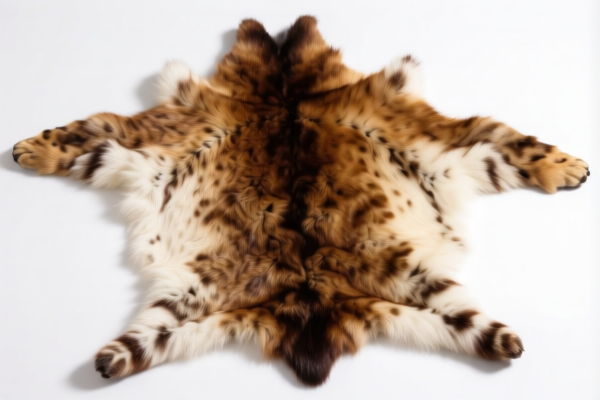
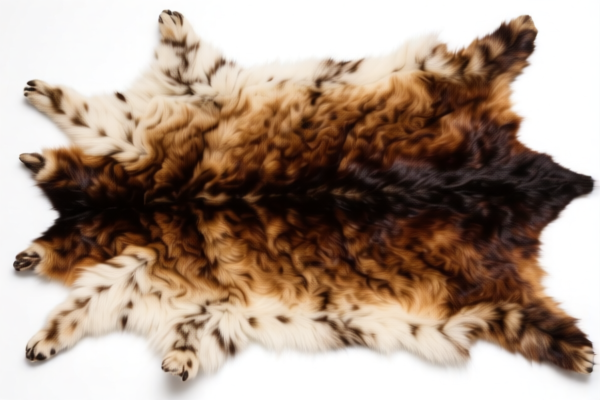
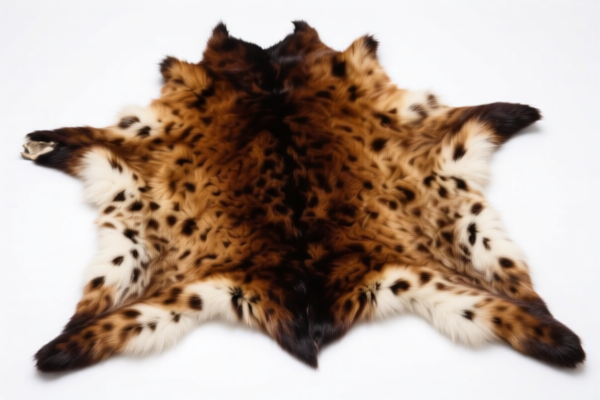
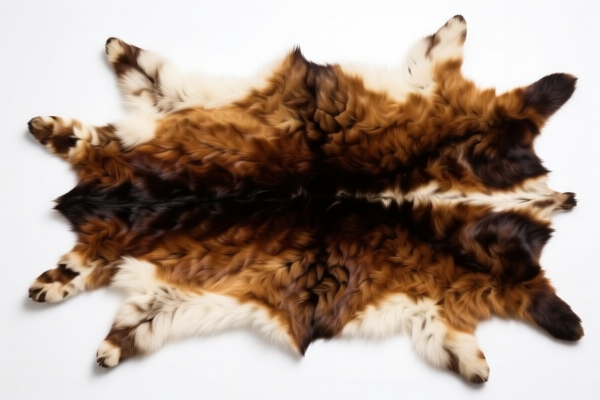
AI Analysis
🧥 Dyed Whole Fur (for Clothing)
🌐 HS Code Reference & Customs Clearance Guide | 2026 Latest Tariff Analysis | Professional Clearance Strategy
📌 I. Product Definition & Classification: What Exactly is "Dyed Whole Fur"?
"Dyed Whole Fur" refers to animal skins that have undergone tanning and dyeing processes, retaining the natural hair/wool attached. In international trade, these are primarily used as raw materials for manufacturing high-end clothing (coats, jackets, vests) or accessories. The classification depends heavily on whether the fur is in finished garment form, unfinished raw hide/pelt form, or specific species types.
⚠️ Key Distinction Points:
- If it is a finished garment ready to wear → It falls under Chapter 4303.
- If it is a dyed pelt/piece of skin intended for further processing into garments → It falls under Chapter 4302.
- The specific tax rate varies based on the base tariff (often low) plus significant Section 301 (25%) and Section 122 (10%) additional duties for Chinese-origin goods.
📦 II. HS Code Classification Details (2026 Latest Tariff Authority)
| HS Code | Product Description | Application Scenario | Tax Category |
|---|---|---|---|
4303.90.00.00 |
Articles of apparel and clothing accessories, of fur or artificial fur, not specified elsewhere (e.g., dyed fur garments not classified as specific species) | Dyed fur coats/jackets not made from mink; general fur apparel accessories | 35.0% |
4303.10.00.60 |
Articles of apparel and clothing accessories, of other than mink fur | Dyed fur (non-mink) used for garment making; belongs to "Other" fur categories | 39.0% |
4302.19.45.30 |
Dyed whole pelts/skins, as fur raw materials | Dyed whole fur pieces (raw material), matching "Dyed Fur" description | 37.2% |
4302.19.75.00 |
Dyed full skin, material and processing match classification | Dyed full skins with complete processing; general dyed raw fur | 36.7% |
4302.19.45.70 |
Dyed full skin/fur, matches HSCODE for dyed and whole skin | Dyed whole fur/fur skins, general category for dyed raw materials | 37.2% |
🔍 Important Reminder:
- Chapter 4303 covers finished articles (garments/accessories).
- Chapter 4302 covers raw/fur skins (pelts, whole skins) that are dyed but not yet sewn into garments.
- Misclassification between "raw fur" and "garments" can lead to significant tariff differences and customs delays.
💰 III. 2026 Latest Tariff Rate Breakdown (Including Additional Duties & Policy Surcharges)
✅ Applicable Country: United States (US)
✅ Origin: China (CN)
✅ Effective Date: From November 10, 2025 onwards (including subsequent imports)
🎯 1. 4303.90.00.00 – Articles of Apparel, Dyed Fur (General)
| Item | Content |
|---|---|
| Base Tariff | 0.0% (ad valorem) |
| Additional Duty (Section 301) | +25.0% |
| Section 122 Duty | +10.0% |
| Total Tax Rate | 35.0% |
| Tax Calculation | CIF Value × 35% |
| De Minimis Eligibility | ❌ Not Eligible (Strict scrutiny on fur products) |
| Legal Basis Path | USITC:4303.90.00.00 → Section 301: Footnote 9903.88.01 → Section 122: IEEPA Provisions |
📌 Explanation:
- The 0% base rate is for general fur articles;
- The 25% Section 301 duty applies to Chinese-origin fur garments/accessories;
- The 10% Section 122 duty is an additional surcharge on certain textile and fur items from China;
- Total 35% is high, requiring precise documentation to prove origin and product nature.
🎯 2. 4303.10.00.60 – Other Fur (Non-Mink) Apparel
| Item | Content |
|---|---|
| Base Tariff | 4.0% |
| Additional Duty (Section 301) | +25.0% |
| Section 122 Duty | +10.0% |
| Total Tax Rate | 39.0% |
| Tax Calculation | CIF Value × 39% |
| De Minimis Eligibility | ❌ Not Eligible |
| Legal Basis Path | USITC:4303.10.00.60 → Section 301 → Section 122 |
📌 Note:
- This category applies to non-mink dyed fur garments (e.g., rabbit, fox, shearling);
- Higher base rate (4%) makes this category more expensive than4303.90.00.00;
- Ensure correct species identification to avoid misclassification penalties.
🎯 3. 4302.19.45.30 – Dyed Whole Pelts (Raw Material)
| Item | Content |
|---|---|
| Base Tariff | 2.2% |
| Additional Duty (Section 301) | +25.0% |
| Section 122 Duty | +10.0% |
| Total Tax Rate | 37.2% |
| Tax Calculation | CIF Value × 37.2% |
| De Minimis Eligibility | ❌ Not Eligible |
| Legal Basis Path | USITC:4302.19.45.30 → Section 301 → Section 122 |
📌 Explanation:
- Applies to dyed whole pelts used as raw materials;
- Slightly lower total rate than garments (4303.90) but still high;
- Must provide proof that items are unsewn pelts, not garments.
🎯 4. 4302.19.75.00 – Dyed Full Skin (General Raw)
| Item | Content |
|---|---|
| Base Tariff | 1.7% |
| Additional Duty (Section 301) | +25.0% |
| Section 122 Duty | +10.0% |
| Total Tax Rate | 36.7% |
| Tax Calculation | CIF Value × 36.7% |
| De Minimis Eligibility | ❌ Not Eligible |
| Legal Basis Path | USITC:4302.19.75.00 → Section 301 → Section 122 |
📌 Note:
- Lowest total rate among raw fur categories (36.7%);
- Suitable for dyed full skins with standard processing;
- Ensure material composition matches "dyed whole fur" description.
🎯 5. 4302.19.45.70 – Dyed Full Skin/Fur (General)
| Item | Content |
|---|---|
| Base Tariff | 2.2% |
| Additional Duty (Section 301) | +25.0% |
| Section 122 Duty | +10.0% |
| Total Tax Rate | 37.2% |
| Tax Calculation | CIF Value × 37.2% |
| De Minimis Eligibility | ❌ Not Eligible |
| Legal Basis Path | USITC:4302.19.45.70 → Section 301 → Section 122 |
📌 Note:
- Matches general "dyed full skin/fur" description;
- Same rate as4302.19.45.30;
- Use for general dyed raw fur imports.
🛠️ IV. Customs Clearance Practical Advice (实战避坑指南)
✅ 1. Required Documentation Checklist (All Must Be Provided)
| Document | Required | Description |
|---|---|---|
| ✅ Product Specification Sheet | ✔️ | Include species, dye type, tanning method, weight, dimensions |
| ✅ Photos of Raw/Pelt/Garment | ✔️ | Clear images showing dyed surface, hair direction, no stitching (if raw) |
| ✅ Commercial Invoice | ✔️ | Clearly state "Dyed Whole Fur" or "Dyed Fur Garments"; specify origin |
| ✅ Packing List | ✔️ | List item counts, weights, and packaging details |
| ✅ Certificate of Origin (CO) | ✔️ | Confirm Chinese origin for accurate duty calculation |
| ✅ Third-Party Test Report | ✔️ | EPA/REACH compliance for dyes, if requested |
✅ 2. Declaration Tips (Key Mantras)
🔥 "Raw vs. Ready: Be Clear, Or Pay More!"
| Scenario | Correct Declaration | Incorrect Practice |
|---|---|---|
| Dyed whole pelts (raw) | 4302.19.75.00 or 4302.19.45.30 |
Declare as "Garments" → Higher tax & scrutiny |
| Finished fur coats/jackets | 4303.90.00.00 or 4303.10.00.60 |
Declare as "Raw Fur" → Misclassification penalty |
| Non-mink fur garments | 4303.10.00.60 |
Declare as "Mink" → False declaration risks |
| Dyed fur accessories | 4303.90.00.00 |
Split into parts → Deemed incomplete shipment |
✅ 3. Special Handling Cases
| Case | Handling Advice |
|---|---|
| OEM Dyed Fur | Provide client design specs; prove it’s for export, not domestic resale |
| Mixed Species Fur | Declare each species separately; avoid "mixed" vague descriptions |
| Fur with Leather Backing | If heavily processed, may fall under 4202 (leather goods); consult customs broker |
| Samples vs. Bulk | Samples still subject to duties; declare accurately to avoid de minimis abuse flags |
🌍 V. Global Market Customs Comparison (2026 Latest)
| Country/Region | Recommended HS Code | Tariff | Certification | Notes |
|---|---|---|---|---|
| 🇺🇸 United States | 4303.90.00.00 / 4302.19.75.00 |
35%–39% (China origin) | EPA/REACH | High additional duties; strict origin checks |
| 🇨🇳 China | 4303.90.00.00 / 4302.19.75.00 |
5%–12% | CCC (if applicable) | Lower base duties; no Section 301 |
| 🇪🇺 European Union | 4303.90.00.00 / 4302.19.75.00 |
0%–12% | CE/REACH | No Section 122; CITES permits if endangered species |
| 🇬🇧 United Kingdom | 4303.90.00.00 / 4302.19.75.00 |
0%–12% | UKCA/REACH | Post-Brexit rules; similar to EU |
| 🇯🇵 Japan | 4303.90.00.00 / 4302.19.75.00 |
0%–10% | PSE/Animal Welfare | Lower duties; no Section 301 |
📌 Conclusion:
- USA is the most expensive market for Chinese-origin dyed fur due to Section 301 + Section 122;
- EU/UK/Japan have lower or zero base duties but require environmental and animal welfare certifications;
- Always verify species-specific restrictions (CITES) before shipping.
📌 VI. Common Errors & Pitfalls (Lessons Learned)
❌ Error 1: Declaring finished garments as raw pelts
👉 Consequence: Customs reclassification → Back taxes + penalties + delay!
❌ Error 2: Using vague terms like "Fur Material" without specifying dyed/undyed or garment/raw
👉 Consequence: Customs requests clarification → Delays + storage fees
❌ Error 3: Ignoring Section 122 surcharge
👉 Consequence: Underpaid duties → Audit + interest + fines
❌ Error 4: Missing species identification for non-mink fur
👉 Consequence: Misclassification under 4303.10.00.60 vs 4303.90.00.00 → Tax difference
✅ Correct Approach:
"Dyed Rabbit Fur Pelts, Raw, Unsewn, Chinese Origin, EPA-Compliant Dyes, HS Code: 4302.19.75.00"
🎯 VII. Conclusion: Professional Declaration, Save Time, Reduce Costs!
🎯 Remember the Mantra:
🔹 "Raw vs. Ready: Declare Clearly!"
🔹 "Section 301 + 122 = 35–39% Tax for US!"
🔹 "HS Code Determines Your Fate – Get It Right!"
📌 Pro Tip:
- If your fur is not of Chinese origin (e.g., sourced from Canada, Finland, Mongolia), you may avoid Section 301 and 122 duties;
- Always obtain a Pre-Ruling (Advance Ruling) from US CBP for high-value fur shipments;
- Keep supply chain documentation ready to prove origin and processing steps.
📣 Immediate Action:
📞 Contact a customs broker + Provide product photos + Apply for HS Code Pre-Ruling
🚀 Ensure smooth clearance, efficient export, and maximized profit!
✨ Professional Clearance Starts with Accurate Classification!
💼 Every cent of cost deserves precise calculation!
Customer Reviews
About HS Code Classification
The Harmonized System (HS) is an internationally standardized nomenclature developed by the World Customs Organization (WCO) to classify traded products. Over 200 countries use the HS system as the basis for customs tariffs, trade statistics, and import/export regulations.
Each HS code follows a hierarchical structure:
- Chapter (2 digits) — Broad category of goods (e.g., Chapter 84: Machinery and Mechanical Appliances)
- Heading (4 digits) — More specific grouping within the chapter
- Subheading (6 digits) — Internationally standardized breakdown, used by all WCO member countries
- National subdivisions (8-10 digits) — Country-specific extensions for further classification, such as US HTSUS 10-digit codes
Correct HS code classification is essential for smooth customs clearance, accurate duty payment, and compliance with trade regulations. Misclassification can lead to customs delays, overpayment of duties, or penalties.
When importing from CN to US, the applicable tariff rates may include:
- Most-Favored-Nation (MFN) rate — The standard duty rate applied to WTO members
- General rate — Applied to countries without trade agreements
- Trade remedy duties — Additional tariffs such as Section 301 (anti-dumping), Section 232 (national security), or countervailing duties
The information provided on this page is for reference purposes only. For official classification, please consult with your local customs authority or a licensed customs broker.