Dyed Whole Fur for Clothing
CN → US| HS Code | Tariff Rate | Origin | Destination | Doc |
|---|---|---|---|---|
| 4303100060 | 39.0% | CN | US | Official Doc |
| 4301800290 | 17.5% | CN | US | Official Doc |
| 4303100030 | 39.0% | CN | US | Official Doc |
Product Images
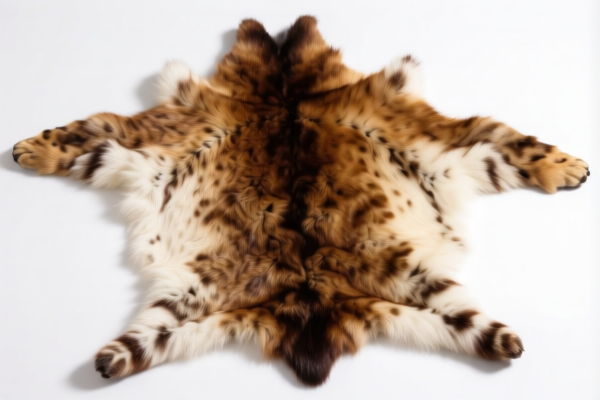
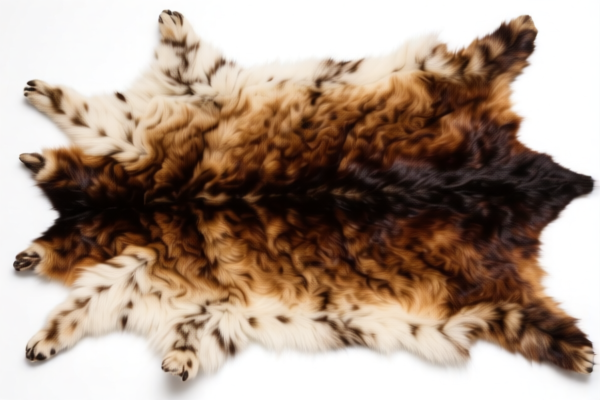
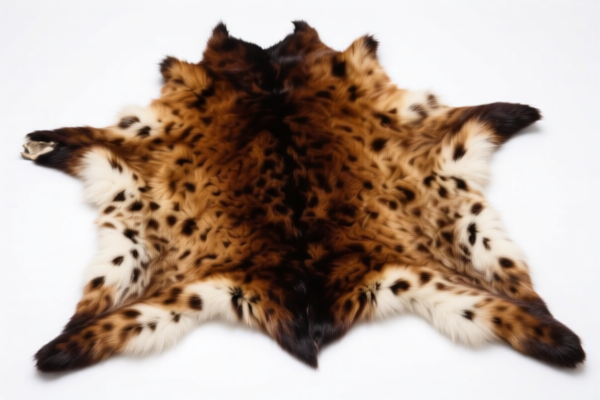
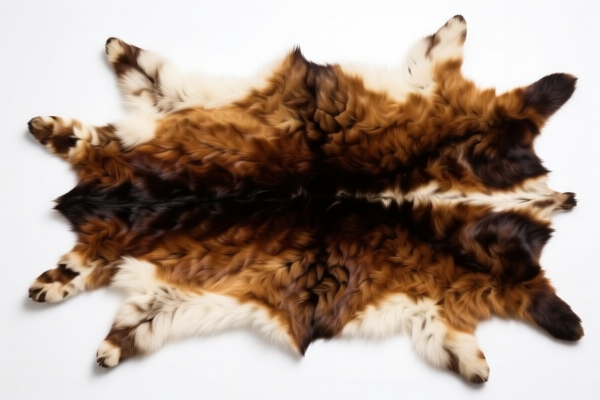
AI Analysis
🐾 Dyed Whole Fur for Clothing (染色毛皮整张用于服装)
🌐 HS Code Reference & Customs Clearance Guide | 2026 Latest Tariff Analysis | Professional Clearance Strategy
📌 I. Product Definition and Classification: Do You Really Understand "Dyed Whole Fur"?
Dyed whole fur skins are raw materials used primarily in the luxury fashion industry for manufacturing high-end clothing such as coats, vests, and jackets. In international trade, the classification depends heavily on the processing state (dyeing/tanning) and the intended use (specifically for clothing).
Key Distinction Points: * Processing State: The fur must be "dyed" (染色). Undyed or simply cured furs fall under different codes. * Form: "Whole" (整张) implies the skin is intact, not cut into pieces or leather. * Usage: Explicitly stated as "for clothing" (用于服装). This triggers specific sub-categories within Chapter 43 (Furskins and artificial fur).
⚠️ Critical Classification Logic:
- If the fur is dyed and prepared specifically for the garment industry, it is generally classified under Heading 43.03 (Articles of furskin).
- However, if it is considered merely a raw material in a specific sub-category of Heading 43.01 (Raw/Unworked Fur Skins) that allows for dyeing, it might fall under 4301.80.02.
- Note: The data provided indicates a split between "Apparel Items" (4303) and "Other Fur Skins" (4301).
📦 II. HS Code Classification Details (2026 Latest Tariff Authoritative Comparison)
| HS Code | Product Description | Applicable Scenario | Tax Detail Summary |
|---|---|---|---|
4303.10.00.60 |
Articles of Furskins: Apparel items, dyed fur whole skins | Dyed whole fur skins used for making clothing (e.g., coats, jackets) | Total: 39.0% (Base 4% + Add-on 25% + Section 122 10%) |
4301.80.02.90 |
Raw/Unworked Fur Skins: Other fur skins, dyed | Dyed whole fur skins belonging to "Other Fur Skin" category (broad raw material classification) | Total: 17.5% (Base 0% + Add-on 7.5% + Section 122 10%) |
4303.10.00.30 |
Articles of Furskins: Fur skins articles, dyed fur whole skins | Dyed whole fur skins categorized under Fur Skin Articles scope | Total: 39.0% (Base 4% + Add-on 25% + Section 122 10%) |
🔍 Key Reminder:
- 4303 vs. 4301:
- 4303 is for "Articles of furskins" (finished or semi-finished goods ready for assembly into clothing). If the customs authority views the dyed skin as a "good ready for use," the higher tariff (39%) applies.
- 4301 is for "Raw or unwrought furskins." If the fur is classified as a semi-processed raw material (even if dyed), the lower tariff (17.5%) may apply.
- Customs Discretion: The key battleground is whether the "dyed whole skin" is considered an "article" (4303) or a "skin" (4301). Misclassification can lead to significant duty differences (39% vs. 17.5%) and potential penalties.
💰 III. 2026 Latest Tariff Rate Breakdown (Including Surtaxes & Policy Surcharges)
✅ Applicable Country: United States (US)
✅ Origin: China (CN)
✅ Effective Time: Current trade rules (Section 301 & Section 122)
🎯 1. 4303.10.00.60 & 4303.10.00.30 —— Articles of Furskins (Dyed Whole Fur for Clothing)
| Item | Content |
|---|---|
| Base Duty Rate | 4.0% (Ad Valorem) |
| Section 301 Surtax | +25.0% (Standard Section 301 rate for many Chinese goods) |
| Section 122 Surtax | +10.0% (Specific surcharge for certain Chinese imports, often applied to textiles/apparel related goods) |
| Total Duty Rate | 39.0% |
| Tax Calculation | CIF Value × 39.0% |
| De Minimis Exemption | ❌ Not Applicable (Deny De Minimis) |
| Legal Basis Path | USITC:4303.10.00.60 → FOOTNOTE:301.88.01 (25%) → SECTION122:10% |
📌 Explanation:
- These codes classify the fur as an "article" or "fur skin article" intended for apparel.
- The 25% is the standard Section 301 tariff.
- The 10% is the Section 122 tariff, which often targets imports affecting US domestic manufacturing or specific sectors.
- Total 39% is a high tariff barrier, significantly impacting profit margins.
🎯 2. 4301.80.02.90 —— Other Fur Skins (Dyed Whole Fur)
| Item | Content |
|---|---|
| Base Duty Rate | 0.0% (Ad Valorem) |
| Section 301 Surtax | +7.5% (Reduced Section 301 rate for certain excluded/sub-categorized goods) |
| Section 122 Surtax | +10.0% (Specific surcharge applied) |
| Total Duty Rate | 17.5% |
| Tax Calculation | CIF Value × 17.5% |
| De Minimis Exemption | ❌ Not Applicable (Deny De Minimis) |
| Legal Basis Path | USITC:4301.80.02.90 → FOOTNOTE:301.88.01 (7.5%) → SECTION122:10% |
📌 Note:
- This code classifies the fur under "Other Fur Skins" (Category 4301), treating it more as a raw material than a finished "article."
- The Base Rate is 0%, which is a major advantage.
- The Section 301 surtax is only 7.5% (compared to 25%), resulting in a lower total duty of 17.5%.
- Strategic Advantage: If the product description and technical documentation support classification under 4301.80.02.90, the duty savings are 21.5 percentage points (39% - 17.5%).
🛠️ IV. Practical Customs Clearance Advice (Combat Avoidance Guide)
✅ 1. Required Documentation Checklist (Non-Negotiable)
| Document | Required | Description |
|---|---|---|
| ✅ Product Specification Sheet | ✔️ | Must clearly state: "Dyed Whole Fur," material composition, size, and intended use for clothing. |
| ✅ Processing Description | ✔️ | Detail the tanning and dyeing process. Does it resemble a finished garment part or a raw skin? |
| ✅ Product Photos (Clear Label) | ✔️ | Show the fur skin, dye uniformity, and any markings. Highlight that it is "whole" and not cut. |
| ✅ Commercial Invoice | ✔️ | Must match the HS code. Use precise terms: "Dyed Fur Skins, Raw Material for Apparel" for 4301; "Fur Skin Articles for Clothing" for 4303. |
| ✅ Packing List | ✔️ | List quantity, weight, and dimensions. Ensure no confusion with finished garments. |
| ✅ Certificate of Origin | ✔️ | Confirm Chinese origin to apply correct Section 122 & 301 rates. |
✅ 2. Declaration Tactics (Key Mantras)
🔥 “Position Matters: Raw Material vs. Article. 0% Base Can Save 21.5%!”
| Scenario | Correct Declaration Approach | Wrong Practice |
|---|---|---|
| Dyed whole skin, sold to garment factories | Use 4301.80.02.90 (Other Fur Skins). Emphasize "Raw Material" status. |
Declaring as "Clothing Part" → 39% Duty |
| Dyed whole skin, semi-finished garment part | Use 4303.10.00.60/30. Acknowledge as "Article." |
Declaring as "Raw Skin" → Risk of Misclassification Penalty |
| Cut fur pieces | Do NOT use "Whole Fur" codes. Use codes for "Fur Pieces" or "Leather." | Misleading description → Seizure/Return |
| Undyed Fur | Do NOT use these codes. Use undyed fur codes. | Incorrect HS Code → Delay/Fines |
✅ 3. Special Case Handling
| Case | Handling Advice |
|---|---|
| High-Value Luxury Fur | Ensure value declaration is accurate. Customs may inspect for "undervaluation" due to high duty rates. |
| Section 122 Exemptions | Check if your specific brand/product line qualifies for any Section 122 exclusions. If excluded, the 10% surtax may be waived, lowering the rate further. |
| Origin Marking | Clearly mark "Made in China" on packaging. Failure to do so can result in additional penalties. |
| Pre-Ruling Application | Given the high stakes (39% vs. 17.5%), consider applying for an Advance Ruling from US Customs and Border Protection (CBP) to lock in the 17.5% rate if supported by technical data. |
🌍 V. Global Main Market Customs Comparison (2026 Latest)
| Country/Region | Recommended HS Code | Duty Rate (China Origin) | Certification Requirements | Remarks |
|---|---|---|---|---|
| 🇺🇸 USA | 4301.80.02.90 (Preferred) |
17.5% (vs. 39% for 4303) | None specific for raw fur | Critical: 301 & 122 tariffs apply. High cost for 4303. |
| 🇨🇳 China | 4303.10.00.60 |
Varies (Export side) | None | Import duty may differ. |
| 🇪🇺 EU | 4303.10 |
~12% | CITES Permit (if endangered species) | No Section 122/301 equivalent. |
| 🇬🇧 UK | 4303.10 |
~12% | CITES Permit | Post-Brexit rules apply. |
| 🇯🇵 Japan | 4303.10 |
~10-12% | CITES Permit | Low base duty. |
📌 Conclusion:
- USA is the most challenging market due to the Section 122 (10%) and Section 301 (7.5%-25%) surcharges.
- Classification Strategy is Key: Fighting for4301.80.02.90(17.5%) instead of4303.10.00.60(39%) can halve the duty cost.
- EU/UK/Japan: Focus on CITES compliance (endangered species protection) rather than high tariffs.
📌 VI. Common Mistakes & Pitfalls Guide (Lessons Learned)
❌ Mistake 1: Declaring "Dyed Whole Fur for Clothing" as 4303.10.00.60 without justification.
👉 Consequence: Pay 39% duty. If customs accepts 4301.80.02.90, you paid 21.5% more than necessary.
❌ Mistake 2: Failing to provide evidence that the fur is "whole" and "dyed."
👉 Consequence: Customs may reject the entry, demand re-classification, or impose penalties for missing data.
❌ Mistake 3: Ignoring Section 122.
👉 Consequence: Underpaying tax if the 10% surtax applies. Overpaying if an exclusion is available but not claimed.
❌ Mistake 4: Using "Fur Clothing" as the product name.
👉 Consequence: Misleading description. Use "Dyed Whole Fur Skins" to accurately reflect the raw material status.
✅ Correct Approach:
"Dyed Whole Fur Skins, Raw Material for Apparel Manufacturing, Not Finished Garments, Model XYZ, Origin: China"
🎯 VII. Conclusion: Professional Declaration, Save Cost, Ensure Compliance!
🎯 Remember the Mantra:
🔹 "Base 0% vs Base 4%: The difference is huge!"
🔹 "Section 301 + Section 122: 17.5% or 39%? Choose wisely!"
🔹 "HS Code determines your profit margin. Don't guess, declare precisely!"
📌 Pro Tip:
- If your fur is NOT from China (e.g., from Canada, Finland, or the US), the Section 122 and Section 301 tariffs DO NOT APPLY. Duty rates will be significantly lower (often 0% base + 0% surtax).
- Always verify CITES permits if the fur is from protected species, regardless of duty rates.
- Apply for Pre-Rulings if your shipment value is high. The cost of a ruling is minimal compared to 21.5% duty savings.
📣 Immediate Action:
📞 Consult with a licensed customs broker + Provide technical specs + Request HS Code Pre-Ruling from CBP.
🚀 Ensure your dyed whole fur clears customs smoothly, minimizes tax burden, and maximizes profitability!
✨ Professional Clearance Starts with Precise Classification!
💼 Every Dollar of Duty Saved is Pure Profit!
Customer Reviews
About HS Code Classification
The Harmonized System (HS) is an internationally standardized nomenclature developed by the World Customs Organization (WCO) to classify traded products. Over 200 countries use the HS system as the basis for customs tariffs, trade statistics, and import/export regulations.
Each HS code follows a hierarchical structure:
- Chapter (2 digits) — Broad category of goods (e.g., Chapter 84: Machinery and Mechanical Appliances)
- Heading (4 digits) — More specific grouping within the chapter
- Subheading (6 digits) — Internationally standardized breakdown, used by all WCO member countries
- National subdivisions (8-10 digits) — Country-specific extensions for further classification, such as US HTSUS 10-digit codes
Correct HS code classification is essential for smooth customs clearance, accurate duty payment, and compliance with trade regulations. Misclassification can lead to customs delays, overpayment of duties, or penalties.
When importing from CN to US, the applicable tariff rates may include:
- Most-Favored-Nation (MFN) rate — The standard duty rate applied to WTO members
- General rate — Applied to countries without trade agreements
- Trade remedy duties — Additional tariffs such as Section 301 (anti-dumping), Section 232 (national security), or countervailing duties
The information provided on this page is for reference purposes only. For official classification, please consult with your local customs authority or a licensed customs broker.