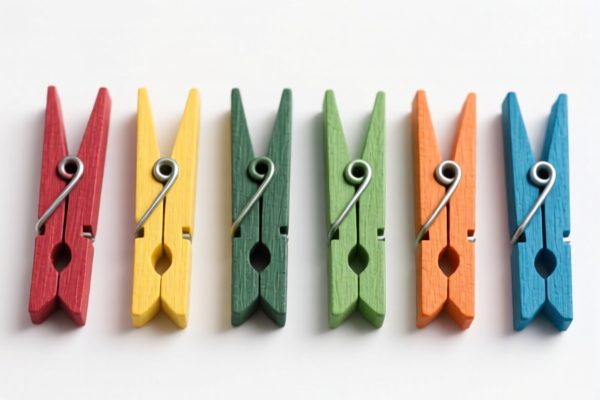
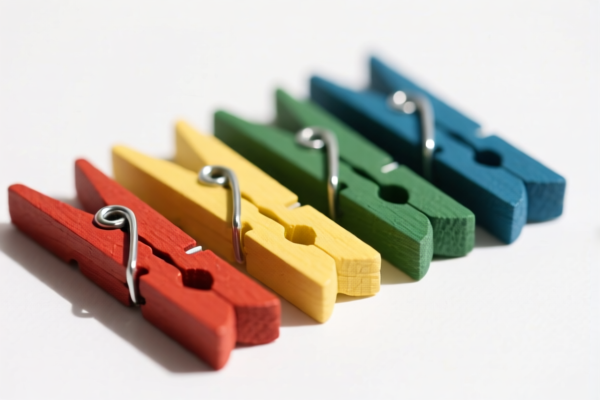
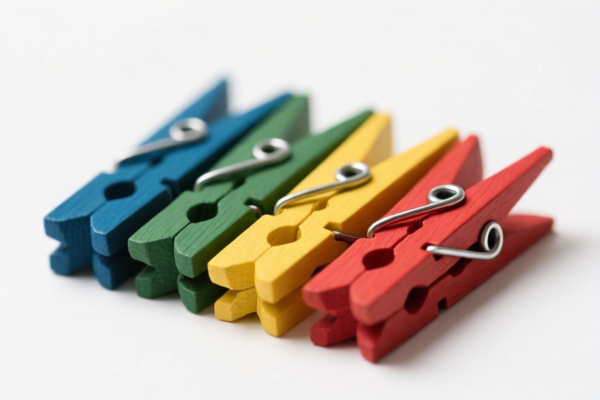
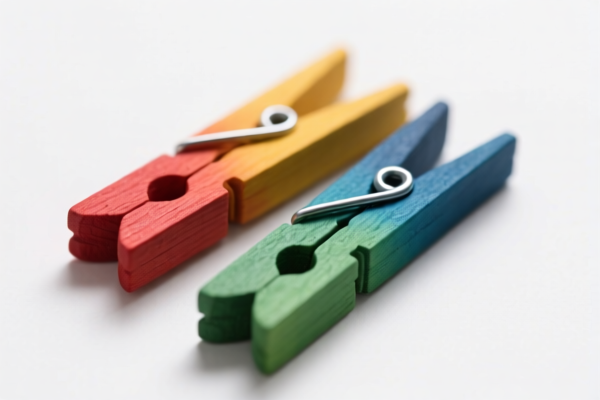
Dyed Wooden Clothespins
CN → US| HS Code | Tariff Rate | Origin | Destination | Doc |
|---|---|---|---|---|
| 4421918024 | 0.0% | CN | US | Official Doc |
| 4421998024 | 0.0% | CN | US | Official Doc |
| 4421998500 | 14.8% | CN | US | Official Doc |
| 4421998033 | 0.0% | CN | US | Official Doc |
| 9403910080 | 35.0% | CN | US | Official Doc |
Product Images
AI Analysis
🎨 Dyed Wooden Clothespins: HS Code Classification & Tariff Breakdown (2026 Guide)
🌐 HS Code Reference & Customs Clearance Guide | 2026 Latest Tariff Analysis | Strategic Compliance Strategy
📌 I. Product Definition & Classification: Do You Know What "Dyed Wooden Clothespins" Really Are?
Dyed wooden clothespins are essential household items used for hanging laundry, organizing fabrics, or as decorative craft supplies. In international trade, their classification depends heavily on material composition, manufacturing process (solid wood vs. processed wood), and value threshold. Misclassification can lead to significantly different tariff liabilities.
⚠️ Key Distinction Points:
- If the clothespin is made from basic wooden materials (strips, processed wood) and valued at standard rates →归入 4421.91.80.24 / 4421.99.80.24 / 4421.99.80.33
- If the clothespin is made from solid natural wood (lumber, carved) →归入 4421.99.85.00
- If the clothespin is marketed as a high-value item (> $0.70 per unit) or considered a furniture accessory (e.g., part of a closet system) →归入 9403.91.00.80
📦 II. HS Code Classification Details (2026 Latest Tariff Authority Comparison)
| HS Code | Product Description | Applicable Scenario | Key Determinant |
|---|---|---|---|
4421.91.80.24 |
Wooden clothespins, material: wooden, use: clothespin | Standard wooden clothespins, processed wood | Basic wooden structure |
4421.99.80.24 |
Wooden clothespins, material: wooden, use: clothespin | Generic wooden clothespins, processed wood | Same as above (alternate subheading) |
4421.99.85.00 |
Solid wood clothespins, material: solid wood, use: clothespin | Clothespins made from solid lumber/carved wood | Solid wood origin |
4421.99.80.33 |
High-value wooden clothespin clips, material: wooden, use: clothespin, value > $0.70 | Premium/luxury wooden clips | Value > $0.70/unit |
9403.91.00.80 |
High-value wooden clothespin clips, material: wooden, form: clip, category: furniture accessories/parts | Clips sold as part of furniture systems (e.g., built-in closets) | Furniture accessory scope |
🔍 Critical Reminder:
- If the clothespin is simply a basic laundry tool, it falls under Chapter 44 (Wood and Articles of Wood). - If the clothespin is sold as a component of furniture (e.g., integrated into a cedar closet system) or is high-value, it may fall under Chapter 94 (Furniture). - Value matters: Items over $0.70 per unit are classified under4421.99.80.33, triggering specific tariff rules.
💰 III. 2026 Latest Tariff Rate Breakdown (Including Surtaxes & Policy Add-ons)
✅ Applicable Country: United States (US)
✅ Origin: China (CN)
✅ Effective Date: 2025 November 10 onwards (and subsequent imports)
🎯 1. 4421.91.80.24 & 4421.99.80.24 – Standard Wooden Clothespins
| Item | Content |
|---|---|
| Base Tariff | 6.5¢/gross (cents per gross, not ad valorem) |
| Section 301 Surtax | 0.0% |
| Section 122 Tariff | +10.0% (applied to base value) |
| Total Effective Rate | 6.5¢/gross + 10% |
| Tax Calculation | Fixed amount per gross + 10% surcharge on declared value |
| De Minimis Exemption | ❌ Not Applicable (specific tariff structure) |
| Legal Basis Path | Section 122: 10% → USITC: 4421.91.80.24 |
📌 Explanation:
- The base duty is specific (6.5 cents per gross), not percentage-based. - Section 122 imposes an additional 10% surcharge. - Section 301 does not apply (0.0%), making this category more favorable than many other Chinese goods.
🎯 2. 4421.99.80.24 – Generic Wooden Clothespins
| Item | Content |
|---|---|
| Base Tariff | 6.5¢/gross |
| Section 301 Surtax | 0.0% |
| Section 122 Tariff | +10.0% |
| Total Effective Rate | 6.5¢/gross + 10% |
| Tax Calculation | Same as above |
| De Minimis Exemption | ❌ Not Applicable |
| Legal Basis Path | Section 122: 10% → USITC: 4421.99.80.24 |
📌 Note:
- Functionally identical to4421.91.80.24in terms of tariff structure. - Use when the product does not fit the narrower definition of4421.91.
🎯 3. 4421.99.85.00 – Solid Wood Clothespins
| Item | Content |
|---|---|
| Base Tariff | 4.8% (ad valorem) |
| Section 301 Surtax | 0.0% |
| Section 122 Tariff | +10.0% |
| Total Effective Rate | 14.8% |
| Tax Calculation | CIF Value × 14.8% |
| De Minimis Exemption | ❌ Not Applicable |
| Legal Basis Path | Section 122: 10% → USITC: 4421.99.85.00 |
📌 Important:
- This category applies only if the clothespin is made of solid wood (not processed/strip wood). - Solid wood often triggers stricter scrutiny for pest control (ISPM 15 compliance may be needed).
🎯 4. 4421.99.80.33 – High-Value Wooden Clothespins (> $0.70/unit)
| Item | Content |
|---|---|
| Base Tariff | 6.5¢/gross |
| Section 301 Surtax | 0.0% |
| Section 122 Tariff | +10.0% |
| Total Effective Rate | 6.5¢/gross + 10% |
| Tax Calculation | Fixed amount + 10% surcharge |
| De Minimis Exemption | ❌ Not Applicable |
| Legal Basis Path | Section 122: 10% → USITC: 4421.99.80.33 |
📌 Trigger Condition:
- If your clothespins are marketed as "premium," "luxury," or have a unit value exceeding $0.70, they fall here. - Despite high value, the tariff structure remains the same as standard clothespins.
🎯 5. 9403.91.00.80 – High-Value Wooden Clothespins (Furniture Accessories)
| Item | Content |
|---|---|
| Base Tariff | 0.0% |
| Section 301 Surtax | +25.0% |
| Section 122 Tariff | +10.0% |
| Total Effective Rate | 35.0% |
| Tax Calculation | CIF Value × 35% |
| De Minimis Exemption | ❌ Not Applicable |
| Legal Basis Path | Section 301: 25% + Section 122: 10% → USITC: 9403.91.00.80 |
📌 High Risk Alert:
- This category is for clothespins considered parts/accessories of furniture (e.g., closet systems). - Total tariff is 35%, significantly higher than basic clothespins. - Section 301 (25%) applies here, which is the main cost driver.
🛠️ IV. Customs Clearance Practical Advice (Battle-Tested Pitfall Avoidance Guide)
✅ 1. Required Documentation Checklist (Missing Any = Delay)
| Document | Mandatory | Description |
|---|---|---|
| ✅ Product Specification Sheet | ✔️ | Material (solid vs. processed), dimensions, dye type |
| ✅ Photos (Clear & Labeled) | ✔️ | Show wood grain, dye color, packaging, and any logos |
| ✅ Commercial Invoice | ✔️ | Must state "Wooden Clothespins" or "High-Value Wooden Clips" |
| ✅ Packing List | ✔️ | Quantity per carton, gross/net weight |
| ✅ Origin Certificate (CO) | ✔️ | If claiming preferential rates (not applicable here, but good practice) |
| ✅ ISPM 15 Phytosanitary Certificate | ⚠️ If Solid Wood | Required for 4421.99.85.00 to prove treatment |
📌 Key Tip:
- For solid wood items (4421.99.85.00), customs may require phytosanitary certification to prove the wood is treated against pests. - For processed/strip wood (4421.91.80.24etc.), ISPM 15 is generally not required.
✅ 2. Declaration Strategy (Key Mantras)
🔥 "Solid Wood = 14.8%; Processed = 6.5¢+10%; Furniture Part = 35%!"
| Scenario | Correct Declaration | Wrong Declaration |
|---|---|---|
| Basic wooden clothespins (strip wood) | 4421.91.80.24 or 4421.99.80.24 |
9403.91.00.80 → 35% tariff |
| Solid wood carved clothespins | 4421.99.85.00 |
4421.91.80.24 → Risk of audit |
| Premium clips (> $0.70/unit) | 4421.99.80.33 |
4421.99.80.24 → Under-declaration risk |
| Closet system accessories | 9403.91.00.80 |
4421.99.80.24 → Misclassification |
📌 Strategy:
- Clearly distinguish between "clothespin" (Chapter 44) and "furniture accessory" (Chapter 94). - If selling separately, use Chapter 44. If sold as part of a furniture kit, use Chapter 94.
✅ 3. Special Cases Handling
| Scenario | Handling Advice |
|---|---|
| OEM/Private Label | Provide brand authorization + product specs to avoid "generic" classification issues |
| Mixed Wood Types | Declare the predominant material. If mixed, use the code with the higher tariff risk if ambiguous |
| High-Value Claims | Ensure unit value is below $0.70 if you want to use 4421.99.80.24. Above that, you must use 4421.99.80.33 |
| Dyed/Colored | Mention "dyed" in description, but it does not change HS code unless it changes the material nature (it doesn’t) |
🌍 V. Global Market Clearance Comparison (2026 Latest)
| Country/Region | Recommended HS Code | Tariff (China Origin) | Certification Requirements | Notes |
|---|---|---|---|---|
| 🇺🇸 United States | 4421.99.80.24 |
6.5¢/gross + 10% | None specific | 35% for furniture accessories |
| 🇪🇺 EU | 4421.99.99 |
0% - 4.5% | FSC/PEFC (if sustainable wood claimed) | Lower tariffs, focus on sustainability |
| 🇬🇧 UK | 4421.99.99 |
0% - 4% | Post-Brexit rules apply | Similar to EU |
| 🇨🇦 Canada | 4421.99.00 |
0% (if FTAA qualified) | Phytosanitary cert for solid wood | Check CUSMA eligibility |
| 🇦🇺 Australia | 4421.99.00 |
5% | Biosecurity permit for wood | Strict wood import rules |
📌 Conclusion:
- USA has unique Section 122 + 301 dynamics for wooden articles. - Solid wood requires more documentation (phytosanitary) globally. - Processed wood is easier to clear but watch out for Section 122 in the US.
📌 VI. Common Errors & Pitfall Guide (Lessons from the Trenches)
❌ Mistake 1: Declaring solid wood clothespins as processed wood (4421.91.80.24)
👉 Consequence: Customs may demand phytosanitary certs post-entry → Delays & Penalties!
❌ Mistake 2: Calling furniture-integrated clips "clothespins" to avoid 35% tariff
👉 Consequence: Customs audit → Back taxes + interest!
❌ Mistake 3: Ignoring the $0.70 threshold for high-value items
👉 Consequence: Incorrect HS code (4421.99.80.24 vs 4421.99.80.33) → Potential misdeclaration (though tariff is same, compliance record suffers)
✅ Correct Approach:
"Dyed Wooden Clothespins, Processed Wood, For Laundry Use, Model XYZ, 100pcs/Box, Value $0.50/unit"
🎯 VII. Conclusion: Precision Classification Saves Money!
🎯 Remember the Mantra:
🔹 "Processed = 6.5¢+10%; Solid = 14.8%; Furniture = 35%! Avoid the 35% trap!"
🔹 "Solid wood needs a certificate; processed wood is easier; value dictates the sub-code!"
📌 Pro Tip:
If your clothespins are made in Vietnam, Malaysia, or Thailand, they may exempt from Section 122 or even Section 301, reducing tariffs to 0%~5%.
Consider supply chain diversification if shipping large volumes to the US.
📣 Immediate Action:
📞 Contact a licensed customs broker + Provide product samples/photos + Apply for HS Code Pre-Ruling
🚀 Ensure your Dyed Wooden Clothespins clear customs smoothly, legally, and cost-effectively!
✨ Professional Clearance Starts with Accurate Classification!
💼 Every cent of tariff is a cent of profit saved!
Customer Reviews
About HS Code Classification
The Harmonized System (HS) is an internationally standardized nomenclature developed by the World Customs Organization (WCO) to classify traded products. Over 200 countries use the HS system as the basis for customs tariffs, trade statistics, and import/export regulations.
Each HS code follows a hierarchical structure:
- Chapter (2 digits) — Broad category of goods (e.g., Chapter 84: Machinery and Mechanical Appliances)
- Heading (4 digits) — More specific grouping within the chapter
- Subheading (6 digits) — Internationally standardized breakdown, used by all WCO member countries
- National subdivisions (8-10 digits) — Country-specific extensions for further classification, such as US HTSUS 10-digit codes
Correct HS code classification is essential for smooth customs clearance, accurate duty payment, and compliance with trade regulations. Misclassification can lead to customs delays, overpayment of duties, or penalties.
When importing from CN to US, the applicable tariff rates may include:
- Most-Favored-Nation (MFN) rate — The standard duty rate applied to WTO members
- General rate — Applied to countries without trade agreements
- Trade remedy duties — Additional tariffs such as Section 301 (anti-dumping), Section 232 (national security), or countervailing duties
The information provided on this page is for reference purposes only. For official classification, please consult with your local customs authority or a licensed customs broker.