E14 Bulb
CN → US| HS Code | Tariff Rate | Origin | Destination | Doc |
|---|---|---|---|---|
| 8539214040 | 37.6% | CN | US | Official Doc |
| 8539228040 | 12.6% | CN | US | Official Doc |
| 8539228040 | 12.6% | CN | US | Official Doc |
| 8539214040 | 37.6% | CN | US | Official Doc |
| 8539228040 | 12.6% | CN | US | Official Doc |
Product Images
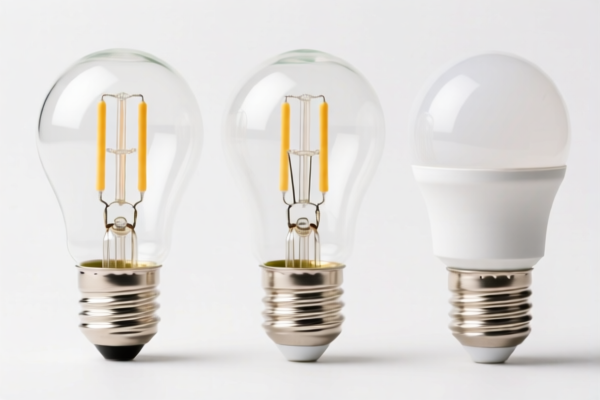
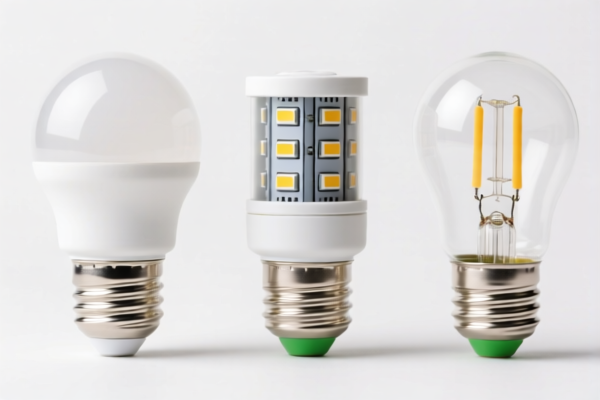
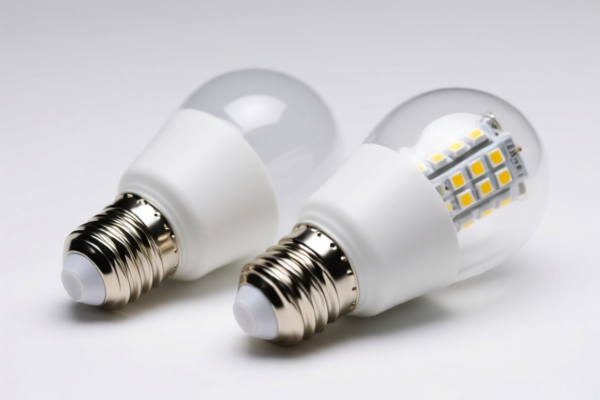
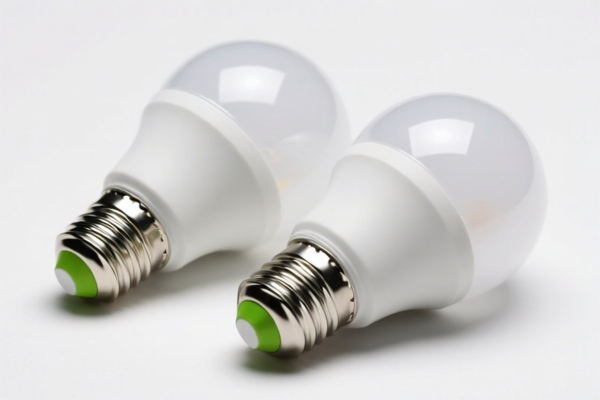
AI Analysis
💡 E14 Bulbs (Candle Tip LED/Incandescent Bulbs)
🌐 HS Code Reference & Customs Clearance Guide | 2026 Latest Tariff Analysis | Professional Clearance Strategy
📌 I. Product Definition & Classification: Do You Really Know “E14 Bulbs”?
E14 bulbs, commonly known as candle tip bulbs, are small screw-base lamps primarily used for chandeliers, decorative lighting, and small fixtures. In international trade, the classification and tariff rates differ significantly depending on the light source technology (Tungsten/Halogen vs. LED/Other) and the application scenario (Household vs. Specialized).
Key Distinction Point: * Tungsten/Halogen Filament Lamps: Generally subject to higher tariffs due to "Section 301" and "Section 122" additional duties if originating from China. * LED/Other Solid-State Lighting: Generally classified under different subheadings with significantly lower additional tariffs.
⚠️ Critical Classification Logic: - If the bulb is a Tungsten/Halogen filament (traditional incandescent): It falls under 8539.21.40.40. - If the bulb is LED or other filament-style (non-tungsten) for household use: It falls under 8539.22.80.40.
📦 II. HS Code Classification Details (2026 Latest Tariff Authority Comparison)
| HS Code | Product Description | Applicable Scenario | Tax Burden Level |
|---|---|---|---|
8539.21.40.40 |
Tungsten-Halogen Lamps or Similar Filament Lamps (Includes Traditional Incandescent/Edison Filament) |
E14 bulbs using tungsten filaments or halogen gas. Often inferred to be <500W. | 🔴 HIGH (37.6%) |
8539.22.80.40 |
Other Electric Filament Lamps / LED Lamps (Standard Household Lighting, 15W-150W) |
E14 bulbs using LED technology or other non-tungsten filaments for standard home lighting. | 🟢 LOW (12.6%) |
🔍 Key Note: - 8539.21.40.40 is reserved for traditional light sources (Tungsten/Halogen). These face severe trade penalties. - 8539.22.80.40 covers modern energy-efficient lighting (LEDs) or specific filament classifications for household use. These enjoy much lower additional tariffs.
💰 III. 2026 Latest Tariff Rate Breakdown (Including Additional Duties & Policy Add-ons)
✅ Applicable Country: USA (US)
✅ Origin: China (CN) (Implied by the high total tax rates in data)
✅ Effective Time: Current regulations apply
🎯 1. 8539.21.40.40 —— Tungsten-Halogen / Similar Filament Lamps
| Item | Content |
|---|---|
| Base Duty | 2.6% |
| Section 301 Additional Duty | +25.0% |
| Section 122 Duty | +10.0% |
| Total Tariff Rate | 37.6% |
| Tax Calculation | CIF Value × 37.6% |
| De Minimis Exemption | ❌ Not Eligible (Standard de minimis does not apply to these high-tariff goods) |
| Legal Basis Path | Base Tariff → USITC:8539.21.40.40 → Section 301 → Section 122 |
📌 Explanation: - The 25% Section 301 tariff is a retaliatory duty against Chinese goods. - The 10% Section 122 tariff is an additional national security/trade balance duty. - Total: 37.6%. This is a very high tariff barrier. Importers must carefully verify if the product truly falls under this category or if a lower-rate alternative (like LED) is applicable.
🎯 2. 8539.22.80.40 —— Other Filament Lamps / LED Household Bulbs
| Item | Content |
|---|---|
| Base Duty | 2.6% |
| Section 301 Additional Duty | +0.0% |
| Section 122 Duty | +10.0% |
| Total Tariff Rate | 12.6% |
| Tax Calculation | CIF Value × 12.6% |
| De Minimis Exemption | ❌ Not Eligible (Based on structure, though lower rate, additional duties may still apply depending on specific sub-headings, but Section 301 is 0%) |
| Legal Basis Path | Base Tariff → USITC:8539.22.80.40 → Section 122 |
📌 Note: - Section 301 is 0% for this specific subheading, which saves the importer 25% compared to the tungsten category. - The 10% Section 122 duty still applies. - This category is ideal for LED E14 bulbs or modern filament-style LED bulbs designed for standard household use.
🛠️ IV. Customs Clearance Practical Advice (Battle-Proven Pitfall Guide)
✅ 1. Preparation Checklist (Mandatory)
| Material | Required | Description |
|---|---|---|
| ✅ Product Specs Sheet | ✔️ | Must clearly state: Wattage (e.g., 15W-150W), Voltage, Base Type (E14), Light Source Type (LED vs. Tungsten/Halogen). |
| ✅ Product Photos | ✔️ | Clear images of the bulb base, filament structure (if visible), and packaging. |
| ✅ Commercial Invoice | ✔️ | Must explicitly describe the item as "LED Candle Bulb" or "Tungsten Halogen Bulb" to match HS Code. |
| ✅ Packing List | ✔️ | List quantities, gross weight, and net weight. |
| ✅ Certifications | ✔️ | UL, ETL, FCC (if applicable), or CE marks. Helps prove product type. |
✅ 2. Declaration Tips (Key Mantras)
🔥 “LED vs. Tungsten, One Letter Changes the Price!”
| Scenario | Correct Declaration | Incorrect Action |
|---|---|---|
| LED E14 Bulb | HS: 8539.22.80.40Desc: "LED Candle Bulb, E14 Base, 15W, Household Use" |
Misdeclaring as "Tungsten Bulb" → Pay 37.6% instead of 12.6% |
| Traditional Incandescent | HS: 8539.21.40.40Desc: "Tungsten Filament Bulb, E14, <500W" |
Trying to force it into LED category → Customs Audit & Penalty |
| Mixed Shipment | Split申报! | Mixing LED and Tungsten in one HS Code → Risk of reclassification for whole shipment |
✅ 3. Special Handling Cases
| Situation | Handling Advice |
|---|---|
| Edison-Style Filament (Looks like Tungsten, is actually LED) | Must Declare as LED! If it uses an LED chip behind a decorative glass, it is 8539.22.80.40 (12.6%). If it uses a real tungsten filament, it is 8539.21.40.40 (37.6%). Provide photos showing LED chip if possible. |
| High Power Bulbs (>150W) | Verify if it still fits 8539.22.80.40. If power exceeds typical household range, customs may question the "household use" description. |
| Non-US Origin | If bulbs are made in Vietnam, Mexico, or Thailand, check for IEEPA Exemptions or lower tariffs. China-origin goods are heavily taxed. |
🌍 V. Global Market Clearance Comparison (2026 Latest)
| Country/Region | Recommended HS Code | Tariff (China Origin) | Certification Requirement | Remarks |
|---|---|---|---|---|
| 🇺🇸 USA | 8539.22.80.40 (LED) |
12.6% | UL/ETL, FCC (if smart) | Tungsten (8539.21) faces 37.6% |
| 🇪🇺 EU | 8539.51 or 8539.32 |
~0-4% | CE, RoHS, WEEE | No Section 301/122 equivalents |
| 🇨🇳 China | 8539.21 / 8539.22 |
~0-7% | CCC (if applicable) | Import tariffs vary |
| 🇬🇧 UK | 8539.51 |
~0-4% | UKCA, RoHS | Post-Brexit rules apply |
📌 Conclusion: - The USA is the most challenging market for E14 bulbs due to the Section 301 and Section 122 additional duties. - LED technology is key to tax optimization. Using LED instead of Tungsten/Halogen reduces the tariff from 37.6% to 12.6%.
📌 VI. Common Mistakes & Pitfalls (Lessons Learned)
❌ Mistake 1: Calling an LED bulb a "Tungsten Bulb" to match old invoices
👉 Result: Customs inspection reveals LED chips. Rejection of declaration, fines, and potential seizure.
❌ Mistake 2: Declaring Tungsten Bulbs as 8539.22.80.40 to avoid 25% tariff
👉 Result: Customs will demand proof of "LED" technology. Failure to provide it leads to back-payment of 25% + penalties.
❌ Mistake 3: Ignoring "Section 122" (10%)
👉 Result: Even LED bulbs (8539.22.80.40) still face 10% Section 122. Don’t assume it’s tax-free. Total is 12.6%, not 2.6%.
✅ Correct Approach:
"LED Candle Bulb, E14 Base, 800 Lumens, Warm White, 60W Equivalent, UL Listed, Model XYZ"
🎯 VII. Conclusion: Professional Declaration for Cost Efficiency
🎯 Remember the Mantra:
🔹 “LED saves 25%! Tungsten pays the price.”
🔹 “Check the filament: Real Tungsten = 37.6%, LED = 12.6%.”
🔹 “Section 122 is always 10%, don’t forget it!”
📌 Pro Tip:
If your E14 bulbs are originating from Vietnam, Mexico, or Malaysia, check for trade agreement exemptions. The US imposes heavy penalties on Chinese-origin goods. Consider supply chain diversification if volume is high.
📢 Immediate Action:
📞 Verify your bulb type (LED vs. Tungsten).
📄 Update your Commercial Invoice to match the correct HS Code.
🚀 Clear customs smoothly, minimize duties, maximize profit!
✨ Professional clearance starts with precise classification!
💼 Every cent counts in international trade!
Customer Reviews
About HS Code Classification
The Harmonized System (HS) is an internationally standardized nomenclature developed by the World Customs Organization (WCO) to classify traded products. Over 200 countries use the HS system as the basis for customs tariffs, trade statistics, and import/export regulations.
Each HS code follows a hierarchical structure:
- Chapter (2 digits) — Broad category of goods (e.g., Chapter 84: Machinery and Mechanical Appliances)
- Heading (4 digits) — More specific grouping within the chapter
- Subheading (6 digits) — Internationally standardized breakdown, used by all WCO member countries
- National subdivisions (8-10 digits) — Country-specific extensions for further classification, such as US HTSUS 10-digit codes
Correct HS code classification is essential for smooth customs clearance, accurate duty payment, and compliance with trade regulations. Misclassification can lead to customs delays, overpayment of duties, or penalties.
When importing from CN to US, the applicable tariff rates may include:
- Most-Favored-Nation (MFN) rate — The standard duty rate applied to WTO members
- General rate — Applied to countries without trade agreements
- Trade remedy duties — Additional tariffs such as Section 301 (anti-dumping), Section 232 (national security), or countervailing duties
The information provided on this page is for reference purposes only. For official classification, please consult with your local customs authority or a licensed customs broker.