E14 Light Bulbs
CN → US| HS Code | Tariff Rate | Origin | Destination | Doc |
|---|---|---|---|---|
| 8539214040 | 37.6% | CN | US | Official Doc |
| 8539228040 | 12.6% | CN | US | Official Doc |
| 8539228040 | 12.6% | CN | US | Official Doc |
| 8539214040 | 37.6% | CN | US | Official Doc |
| 8539228040 | 12.6% | CN | US | Official Doc |
Product Images
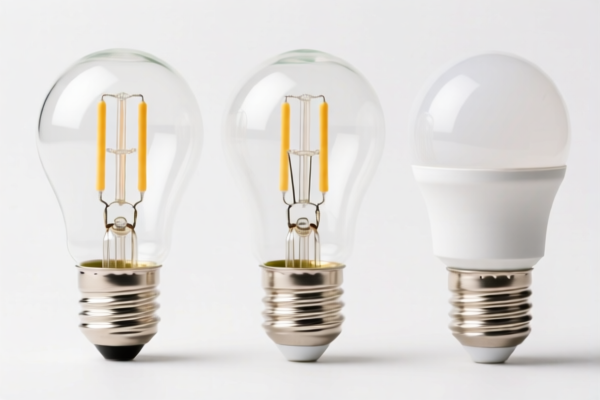
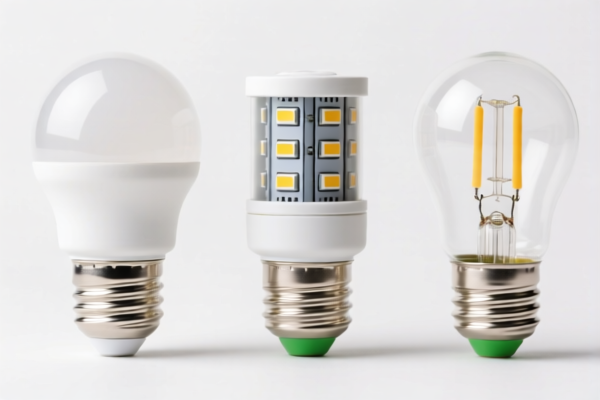
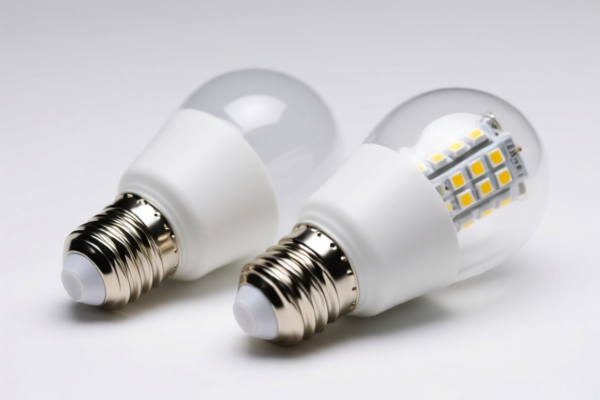
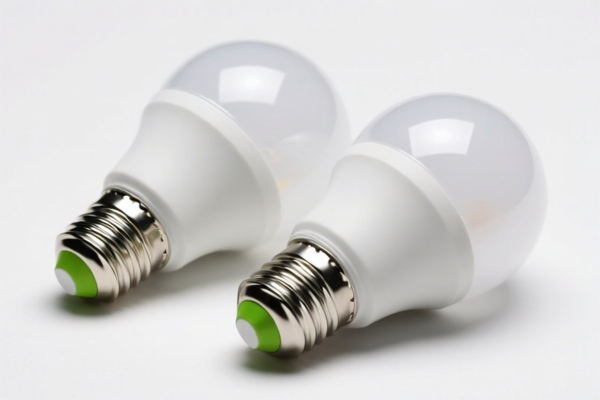
AI Analysis
💡 E14 Light Bulbs (Small Screw Base Lamps)
🌐 HS Code Reference & Customs Clearance Guide | 2026 Latest Tariff Analysis | Professional Strategy
📌 I. Product Definition: What Exactly is an "E14 Light Bulb"?
E14 light bulbs are small screw-base lamps, commonly known in the industry as "Screw-in Candle" or "Small Screw" lamps. They are widely used in chandeliers, decorative fixtures, wall sconces, and kitchen appliances.
In international trade, E14 bulbs are not a single tariff category but are split based on technology and power. The two most common classifications for standard incandescent halogen bulbs fall under Heading 8539.
⚠️ Critical Distinction:
- If the bulb is Tungsten Halogen (gas-filled with halogen vapor) and < 500W →归入 8539.21.40.40
- If the bulb is Other Filament (non-halogen incandescent) and ≤ 200W →归入 8539.22.80.40
- ⚠️ Note: LED bulbs with E14 base are not listed in your provided data, but typically fall under 8539.29.50. This guide strictly follows the provided DATA.
📦 II. HS Code Classification Details (Based on Provided DATA)
| HS Code | Product Description | Key Criteria | Power Limit |
|---|---|---|---|
8539.21.40.40 |
Tungsten halogen lamps (Other filament lamps, excluding UV/IR) | Halogen Technology | < 500 W |
8539.22.80.40 |
Other filament lamps (Non-halogen incandescent) | Non-Halogen Technology | ≤ 150 W (specifically 15W–150W) |
🔍 Key Differentiator:
- Halogen vs. Non-Halogen: Check the bulb glass. Halogen bulbs usually have a clear or slightly blue tint and often have a small extra quartz bulb inside (the "jacket") to keep the halogen cycle active. Standard incandescent bulbs have a larger, yellowish or frosted glass envelope.
- Power Matters: Both categories have strict power caps. Halogen must be less than 500W; Non-halogen must be 15W to 150W.
💰 III. 2026 Latest Tariff Rate Breakdown (Including Additional Duties)
✅ Applicable Country: United States (US)
✅ Origin: China (CN)
✅ Effective Date: Current US Trade Policy (Section 301 & IEEPA)
🎯 1. 8539.21.40.40 — Tungsten Halogen Lamps (< 500 W)
| Item | Detail |
|---|---|
| Basic Tariff | 2.6% (ad valorem) |
| Additional Duty (Section 301) | +25.0% |
| Total Tariff Rate | 27.6% |
| Tax Calculation | CIF Value × 27.6% |
| De Minimis Exemption | ❌ Not Eligible (Most shipments from China >$800 do not qualify for de minimis due to high additional duties and enforcement) |
| Legal Basis Path | HTSUS:8539.21.40.40 → USITC Footnote: 301 Additional Duty |
📌 Explanation:
- The 2.6% is the standard Most Favored Nation (MFN) rate for tungsten halogen lamps.
- The 25% is the Section 301 retaliatory tariff on Chinese goods.
- Total Cost Impact: For every $1,000 of CIF value, you pay $276 in duties. This is a high-cost category for importers.
🎯 2. 8539.22.80.40 — Other Filament Lamps (≤ 200 W, Specifically 15W–150W)
| Item | Detail |
|---|---|
| Basic Tariff | 0.0% (ad valorem) |
| Additional Duty (Section 301) | +0.0% |
| Total Tariff Rate | 0.0% |
| Tax Calculation | $0 (No duty payable) |
| De Minimis Exemption | ✅ Eligible (If value < $800 per shipment, no duties even if rate were higher; here, it’s 0 anyway) |
| Legal Basis Path | HTSUS:8539.22.80.40 → No Section 301 Footnote |
📌 Explanation:
- This is a duty-free category under current US tariffs.
- Condition: Must be non-halogen incandescent bulbs.
- Power Range: Must be between 15W and 150W. Bulbs <15W may fall under different subheadings; >200W are excluded from this specific 0% rate.
- Strategic Advantage: If you can source or manufacture non-halogen E14 bulbs (e.g., standard decorative incandescent), you save 27.6% compared to halogen alternatives.
🛠️ IV. Customs Clearance Practical Advice (Risk Avoidance)
✅ 1. Documentation Checklist (Mandatory)
| Document | Required? | Purpose |
|---|---|---|
| ✅ Commercial Invoice | ✔️ | Must clearly state: "E14 Screw Base Lamp", "Tungsten Halogen" OR "Non-Halogen Incandescent", Power (Watts), Voltage (V), Quantity |
| ✅ Product Photos | ✔️ | Show base (E14), glass type, and any internal structure (to distinguish halogen jacket) |
| ✅ Spec Sheet | ✔️ | Confirm wattage is <500W (halogen) or 15W–150W (non-halogen) |
| ✅ Certificate of Origin | ✔️ | To prove Chinese origin (triggers or avoids additional duties) |
| ✅ Packaging List | ✔️ | Detail net/gross weight, number of boxes |
📌 Critical Tip:
- Misclassification is common: If you declare "Light Bulbs" vaguely, Customs may assign a default higher rate or hold the shipment for inspection.
- Always specify: "Tungsten Halogen" vs. "Incandescent Non-Halogen".
✅ 2. Declaration Strategy (Key Rules)
| Scenario | Correct HS Code | Wrong Code | Consequence |
|---|---|---|---|
| Halogen E14, 40W | 8539.21.40.40 |
8539.22.80.40 |
Penalty + Back Taxes (27.6%) |
| Non-Halogen E14, 40W | 8539.22.80.40 |
8539.21.40.40 |
Overpayment (27.6% wasted) |
| Halogen E14, 600W | Not in provided DATA | 8539.21.40.40 |
Incorrect (Must be <500W) |
| LED E14 Bulb | Not in provided DATA | 8539.21.40.40 |
Incorrect (LED is not filament/halogen) |
🔥 "Golden Rule":
"Check the Filament & Gas: Halogen = 27.6%, Non-Halogen = 0%. Get it wrong, and you pay double."
✅ 3. Special Cases & Warnings
| Case | Handling Advice |
|---|---|
| Mixed Shipments (Halogen + Non-Halogen) | Do NOT merge into one HS code. Declare separately. Misdeclaration can lead to seizure. |
| LED E14 Bulbs | Not covered in your DATA. Typically 8539.29.50. Check current US tariff for LEDs (often 0-2.6%, but verify Section 301 status). |
| Voltage Mismatch | If bulbs are rated for 230V but imported to US (120V), ensure labeling is clear. Customs may reject if not compliant with UL/ETL standards. |
| Gift Packs | If E14 bulbs are part of a gift set (e.g., with a lamp), the entire set may be classified under the lamp (HS 9405), not the bulb. |
🌍 V. Global Market Comparison (2026 Outlook)
| Country/Region | Recommended HS Code | Tariff (China Origin) | Notes |
|---|---|---|---|
| 🇺🇸 USA | 8539.21.40.40 / 8539.22.80.40 |
27.6% / 0.0% | Highly dependent on halogen vs. non-halogen |
| 🇪🇺 EU | 8539.51.00 / 8539.52.00 |
4.0% / 0.0% | EU has different subheadings; generally lower tariffs |
| 🇨🇳 China | 8539.21.40 / 8539.22.80 |
0.0% / 0.0% | Import into China is duty-free for these codes |
| 🇬🇧 UK | 8539.21.40 / 8539.22.80 |
4.0% / 0.0% | Post-Brexit tariffs similar to EU |
📌 Conclusion:
- USA is the most complex market due to Section 301 tariffs.
- Halogen bulbs are expensive to import into the US.
- Non-halogen incandescent bulbs are duty-free, making them highly competitive in price.
📌 VI. Common Mistakes & Pitfalls (Lessons Learned)
❌ Mistake 1: Declaring "E14 Bulbs" without specifying Halogen vs. Non-Halogen
👉 Result: Customs holds shipment, asks for clarification, delays clearance by 3-7 days.
❌ Mistake 2: Using 8539.21.40.40 for non-halogen bulbs
👉 Result: You overpay 27.6% in duties. Easy to fix, but costly.
❌ Mistake 3: Assuming all E14 bulbs are LED
👉 Result: LED bulbs fall under different HS codes (e.g., 8539.29.50). Misclassification leads to inaccurate duty estimation.
❌ Mistake 4: Ignoring Wattage Limits
👉 Result: Halogen >500W is excluded from 8539.21.40.40. Non-halogen >200W is excluded from 8539.22.80.40. Wrong code = Penalties.
✅ Correct Declaration Example:
"E14 Screw Base Tungsten Halogen Lamp, 40W, 120V, Clear Glass, Model XYZ" → 8539.21.40.40
"E14 Screw Base Incandescent Lamp (Non-Halogen), 40W, 120V, Frosted Glass, Model ABC" → 8539.22.80.40
🎯 VII. Conclusion: Precision Saves Money!
🎯 Key Takeaway:
🔹 Halogen E14 = 27.6% Duty (High Cost)
🔹 Non-Halogen E14 = 0% Duty (Low Cost)
🔹 LED E14 = Separate HS Code (Check Current Rates)📌 Pro Tip:
If your supply chain allows, switch to non-halogen incandescent E14 bulbs for the US market to save 27.6% in duties. If halogen is required for technical reasons, budget for the 27.6% tax.
📣 Immediate Action:
📞 Contact your customs broker with the exact product specifications:
1. Is it Halogen or Non-Halogen?
2. What is the Wattage?
3. Is it LED (not covered in your data)?🚀 Avoid surprises at the port. Declare correctly. Pay less.
✨ Smart Classification, Smarter Profits!
💼 Every cent in duty counts. Get it right the first time.
Customer Reviews
About HS Code Classification
The Harmonized System (HS) is an internationally standardized nomenclature developed by the World Customs Organization (WCO) to classify traded products. Over 200 countries use the HS system as the basis for customs tariffs, trade statistics, and import/export regulations.
Each HS code follows a hierarchical structure:
- Chapter (2 digits) — Broad category of goods (e.g., Chapter 84: Machinery and Mechanical Appliances)
- Heading (4 digits) — More specific grouping within the chapter
- Subheading (6 digits) — Internationally standardized breakdown, used by all WCO member countries
- National subdivisions (8-10 digits) — Country-specific extensions for further classification, such as US HTSUS 10-digit codes
Correct HS code classification is essential for smooth customs clearance, accurate duty payment, and compliance with trade regulations. Misclassification can lead to customs delays, overpayment of duties, or penalties.
When importing from CN to US, the applicable tariff rates may include:
- Most-Favored-Nation (MFN) rate — The standard duty rate applied to WTO members
- General rate — Applied to countries without trade agreements
- Trade remedy duties — Additional tariffs such as Section 301 (anti-dumping), Section 232 (national security), or countervailing duties
The information provided on this page is for reference purposes only. For official classification, please consult with your local customs authority or a licensed customs broker.