EPDM Rubber Primary Form
CN → US| HS Code | Tariff Rate | Origin | Destination | Doc |
|---|---|---|---|---|
| 4002700000 | 35.0% | CN | US | Official Doc |
| 4002990000 | 35.0% | CN | US | Official Doc |
| 4008210000 | 35.0% | CN | US | Official Doc |
| 4008292000 | 37.9% | CN | US | Official Doc |
| 4002700000 | 35.0% | CN | US | Official Doc |
Product Images
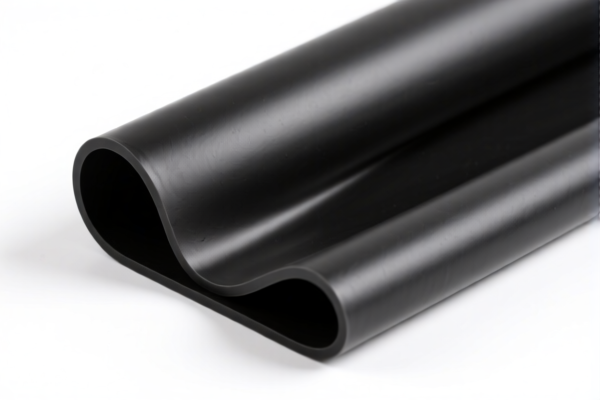
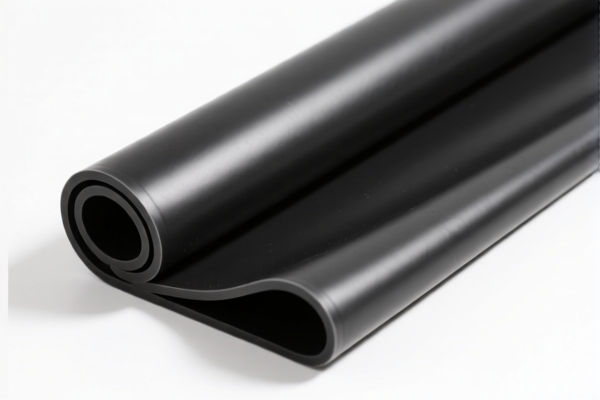
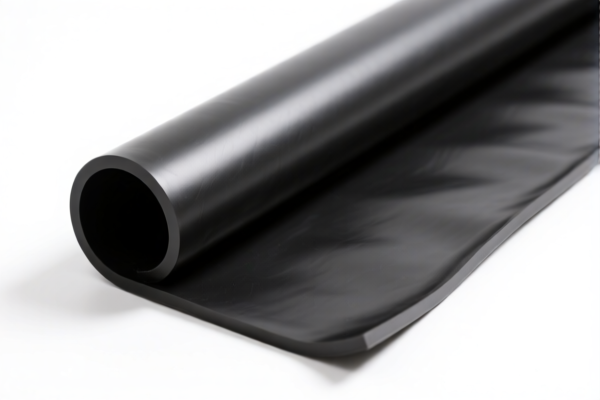
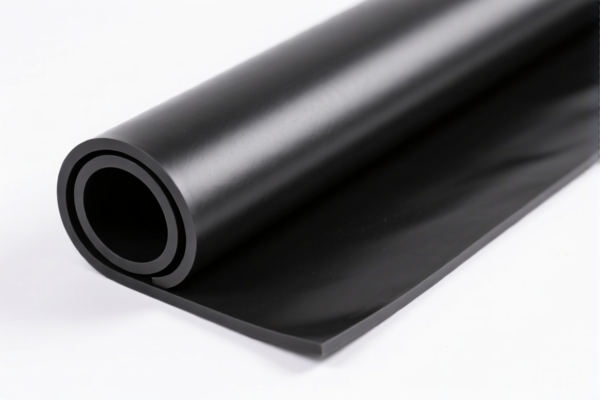
AI Analysis
🧪 EPDM Rubber (Primary Forms & Semi-Finished Products)
🌐 HS Code Reference & Customs Clearance Guide | 2026 Latest Tariff Analysis | Professional Clearance Strategy
📌 I. Product Definition & Classification: What is "EPDM Primary Form"?
EPDM (Ethylene Propylene Diene Monomer) is a synthetic rubber known for its excellent resistance to weather, ozone, heat, and chemicals. In international trade, it is classified based on its physical state during import:
- Primary Form (Unvulcanized): This includes raw rubber in lumps, powder, granules, flakes, or similar bulk forms. It is the raw material used for further processing (compounding and vulcanization).
- Semi-Finished Products (Vulcanized/Processed): This includes sheets, plates, strips, rods, or profiles that have been shaped and often vulcanized (cured). These are ready for specific manufacturing applications but not yet final consumer goods.
⚠️ Key Distinction Point:
- Unvulcanized Raw Material: Falls under Chapter 4002 (Primary Forms).
- Vulcanized Shaped Goods (Sheets/Plates): Falls under Chapter 4008 (Articles of Rubber).
- Misclassification Risk: Declaring vulcanized sheets as "primary form" can lead to penalties; declaring raw rubber as "finished sheets" may result in incorrect duty assessment.
📦 II. HS Code Classification Details (Based on Provided Data)
The following HS Codes are derived from the specific data provided, reflecting different physical states and customs interpretations of EPDM rubber.
| HS Code | Product Description | Physical State | Tax Rate | Tax Detail Breakdown |
|---|---|---|---|---|
4002.70.00.00 |
EPDM Rubber Sheets (Primary Form) Form: Sheet material, classified under primary synthetic rubber. |
Unvulcanized/Semi-finished | 35.0% | Base: 0.0% Add-on: 25.0% Section 301 (122): 10% |
4002.99.00.00 |
EPDM Rubber Sheets (Other Synthetic Rubber) Category: Synthetic rubber, fits plate/sheet primary form definition. |
Unvulcanized/Semi-finished | 35.0% | Base: 0.0% Add-on: 25.0% Section 301 (122): 10% |
4008.21.00.00 |
EPDM Rubber Sheets (Vulcanized, Non-foam) Category: Vulcanized rubber, non-foam sheets/plates/strips. |
Vulcanized | 35.0% | Base: 0.0% Add-on: 25.0% Section 301 (122): 10% |
4008.29.20.00 |
EPDM Rubber Sheets (Vulcanized, Other Shapes) Category: Vulcanized rubber, bars/rods/profiles. |
Vulcanized | 37.9% | Base: 2.9% Add-on: 25.0% Section 301 (122): 10% |
🔍 Critical Analysis:
- Codes4002.70.00.00and4002.99.00.00: These are for EPDM in primary forms. Even if described as "sheets," if they are unvulcanized raw rubber sheets for further processing, they fall here.
- Codes4008.21.00.00and4008.29.20.00: These are for Vulcanized Rubber. If the EPDM has been cross-linked (cured), it is no longer "primary form" in the strict chemical sense, but rather a manufactured article.
- Tax Variation: Code4008.29.20.00has a higher total tax (37.9%) due to a 2.9% Base Tariff, whereas the others have 0% Base Tariff. This is a crucial cost difference!
💰 III. 2026 Latest Tariff Rate Breakdown (Including Additional Duties)
✅ Applicable Country: United States (US)
✅ Country of Origin: China (CN)
✅ Effective Date: November 10, 2025 onwards
🎯 1. 4002.70.00.00 & 4002.99.00.00 — EPDM Rubber (Primary Form)
| Item | Content |
|---|---|
| Base Tariff | 0% (ad valorem) |
| USITC Add-on Duty | +25% (Under Section 301, Footnote 9903.88.01) |
| IEEPA Add-on Duty | +10% (Targeting China/HK products, effective Nov 10, 2025) |
| Total Tariff | 35.0% |
| Calculation | CIF Value × 35% |
| De Minimis Exemption? | ❌ NO (deny_de_minimis) |
| Legal Basis Path | IEEPA:9903.01.25 → USITC:4002.70.00.00 → FOOTNOTE:9903.88.01 |
📌 Explanation:
- The 25% is the standard Section 301 tariff for Chinese synthetic rubber.
- The 10% is the additional IEEPA tariff.
- Total 35% is a significant cost burden. Proper documentation proving "primary form" (unvulcanized) is essential to avoid being misclassified as finished goods which might have different rates.
🎯 2. 4008.21.00.00 — Vulcanized EPDM Sheets (Non-foam)
| Item | Content |
|---|---|
| Base Tariff | 0% |
| USITC Add-on Duty | +25% |
| IEEPA Add-on Duty | +10% |
| Total Tariff | 35.0% |
| Calculation | CIF Value × 35% |
| De Minimis Exemption? | ❌ NO |
| Legal Basis Path | Similar to above, under Chapter 4008 |
📌 Note: Despite being vulcanized, this code still enjoys the 0% base rate, keeping the total at 35%.
🎯 3. 4008.29.20.00 — Vulcanized EPDM (Other Shapes/Profiles)
| Item | Content |
|---|---|
| Base Tariff | 2.9% |
| USITC Add-on Duty | +25% |
| IEEPA Add-on Duty | +10% |
| Total Tariff | 37.9% |
| Calculation | CIF Value × 37.9% |
| De Minimis Exemption? | ❌ NO |
| Legal Basis Path | USITC:4008.29.20.00 |
📌 Critical Warning:
- This code incurs a 2.9% base tariff that the other codes do not.
- Total duty is 37.9%, which is 2.9% higher than the primary form or non-foam sheet codes.
- This code is for "other" shapes like rods, bars, or complex profiles, not simple flat sheets.
🛠️ IV. Customs Clearance Practical Advice (Avoiding Pitfalls)
✅ 1. Documentation Checklist (Mandatory)
| Document | Required? | Explanation |
|---|---|---|
| ✅ Product Specification Sheet | ✔️ | Must clearly state: Unvulcanized vs. Vulcanized, composition, hardness, density. |
| ✅ Chemical Composition Report | ✔️ | Proves EPDM content (Ethylene/Propylene ratio). |
| ✅ Product Photos (Packaged & Unpackaged) | ✔️ | Shows form: Granules, Sheets, Rolls. |
| ✅ Commercial Invoice | ✔️ | Accurate description: e.g., "Unvulcanized EPDM Rubber Sheets, HS 4002.70" |
| ✅ Certificate of Origin (CO) | ✔️ | Essential for proving China origin to apply correct tariffs. |
| ✅ Bill of Lading | ✔️ | Consistent with invoice description. |
✅ 2. Declaration Strategy (Key Tips)
🔥 "Know Your State: Raw vs. Cured, Sheet vs. Shape!"
| Scenario | Correct HS Code | Incorrect Code | Consequence |
|---|---|---|---|
| Unvulcanized EPDM in sheets | 4002.70.00.00 or 4002.99.00.00 |
4008.21.00.00 |
May lead to misclassification if "primary form" is not proven. |
| Vulcanized EPDM Sheets | 4008.21.00.00 |
4002.70.00.00 |
High Risk: Customs may reject "primary form" claim. |
| Vulcanized EPDM Rods/Profiles | 4008.29.20.00 |
4008.21.00.00 |
Wrong tax rate (37.9% vs 35%). |
| Granules/Powder | 4002.70.00.00 |
4008.21.00.00 |
Major classification error. |
📌 Important:
- Do not use "Sheet" if the product is actually granules or powder.
- Do not claim "Primary Form" (4002) if the rubber is vulcanized. Vulcanized rubber is not primary form.
- If you import unvulcanized sheets for further molding, ensure the invoice states "For Further Processing".
✅ 3. Special Cases
| Situation | Handling Advice |
|---|---|
| Mixed Shipments | If a container has both raw rubber and vulcanized parts, declare separately. Do not combine. |
| OEM Custom Shapes | If the shape is complex, likely 4008.29.20.00 (37.9%). Confirm with supplier if it's a "semi-finished sheet" for cutting (might be 4008.21.00.00). |
| Foam EPDM | Not covered in this specific dataset. Foam rubber usually falls under 4008.11.00.00 or 4008.19.00.00. Check separately. |
🌍 V. Global Market Comparison (2026)
| Country/Region | Recommended HS Code (EPDM Sheets) | Tariff (China Origin) | Notes |
|---|---|---|---|
| 🇺🇸 USA | 4002.70.00.00 (Raw) / 4008.21.00.00 (Vulcanized) |
35% | High Section 301 + IEEPA. No de minimis. |
| 🇨🇳 China | 4002.70.00.00 |
5-10% (Est.) | Lower base tariffs, no Section 301. |
| 🇪🇺 EU | 4002.70.00.00 |
~0-2% | No Section 301 tariffs. |
| 🇬🇧 UK | 4002.70.00.00 |
~0-2% | Post-Brexit, separate tariffs from EU. |
| 🇨🇦 Canada | 4002.70.00.00 |
0-2.5% | CUSMA benefits may apply for certain goods. |
📌 Conclusion:
- The US market is the most expensive due to the 35% total tariff (Base 0% + 25% Section 301 + 10% IEEPA).
- For other markets, EPDM rubber remains relatively cheap to import.
- Cost Optimization Tip: Consider sourcing from non-China origins (e.g., Southeast Asia) to avoid Section 301 tariffs if exporting to the US.
📌 VI. Common Mistakes & Pitfalls (Lessons Learned)
❌ Mistake 1: Declaring Vulcanized sheets as Primary Form (4002)
👉 Consequence: Customs will reclassify to 4008, possibly with penalties, and delay shipment.
❌ Mistake 2: Using 4008.29.20.00 for simple Sheets
👉 Consequence: Paying 37.9% instead of 35%. Unnecessary cost increase.
❌ Mistake 3: Ignoring the 10% IEEPA Tariff
👉 Consequence: Budget miscalculation. Many importers only account for the 25% Section 301 tariff.
❌ Mistake 4: Mixing Granules and Sheets in one HS Code
👉 Consequence: Incorrect declaration. Granules should be 4002.99.00.00 or similar, not necessarily 4002.70.00.00 if not specifically classified there.
✅ Correct Declaration Example:
"Unvulcanized EPDM Rubber Sheets, for further vulcanization, HS 4002.70.00.00, Country of Origin: China"
🎯 VII. Conclusion: Precision in Classification Saves Money
🎯 Remember:
🔹 "Raw is 4002, Vulcanized is 4008"
🔹 "Sheets can be 35%, but Profiles are 37.9%"
🔹 "Section 301 + IEEPA = 35% for EPDM from China"
🔹 "No De Minimis for Rubber – Pay Full Duty!"
📌 Pro Tip:
If your EPDM rubber is sourced from Vietnam, Thailand, or Malaysia, you may qualify for preferential tariffs (avoiding Section 301).
Recommendation:
📞 Consult a licensed customs broker.
📄 Request a Binding Ruling from US Customs if unsure about "Primary Form" status.
🚀 Accurate HS Code = Accurate Cost = Competitive Edge!
✨ Professional Customs Clearance Starts with Correct Classification!
💼 Every Percent of Duty Saved is Pure Profit!
Customer Reviews
About HS Code Classification
The Harmonized System (HS) is an internationally standardized nomenclature developed by the World Customs Organization (WCO) to classify traded products. Over 200 countries use the HS system as the basis for customs tariffs, trade statistics, and import/export regulations.
Each HS code follows a hierarchical structure:
- Chapter (2 digits) — Broad category of goods (e.g., Chapter 84: Machinery and Mechanical Appliances)
- Heading (4 digits) — More specific grouping within the chapter
- Subheading (6 digits) — Internationally standardized breakdown, used by all WCO member countries
- National subdivisions (8-10 digits) — Country-specific extensions for further classification, such as US HTSUS 10-digit codes
Correct HS code classification is essential for smooth customs clearance, accurate duty payment, and compliance with trade regulations. Misclassification can lead to customs delays, overpayment of duties, or penalties.
When importing from CN to US, the applicable tariff rates may include:
- Most-Favored-Nation (MFN) rate — The standard duty rate applied to WTO members
- General rate — Applied to countries without trade agreements
- Trade remedy duties — Additional tariffs such as Section 301 (anti-dumping), Section 232 (national security), or countervailing duties
The information provided on this page is for reference purposes only. For official classification, please consult with your local customs authority or a licensed customs broker.