EPDM Rubber Strip
CN → US| HS Code | Tariff Rate | Origin | Destination | Doc |
|---|---|---|---|---|
| 4002700000 | 35.0% | CN | US | Official Doc |
| 4002990000 | 35.0% | CN | US | Official Doc |
| 4008210000 | 35.0% | CN | US | Official Doc |
| 4008292000 | 37.9% | CN | US | Official Doc |
Product Images
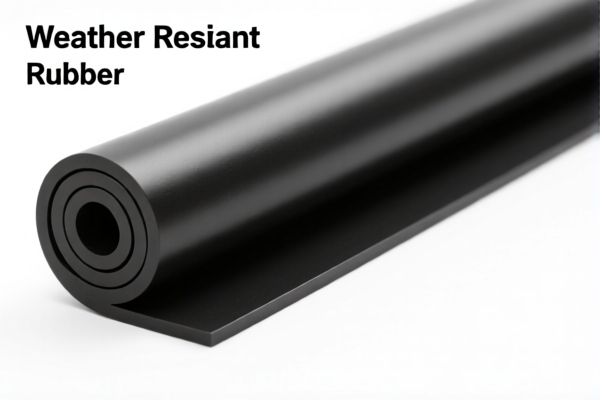
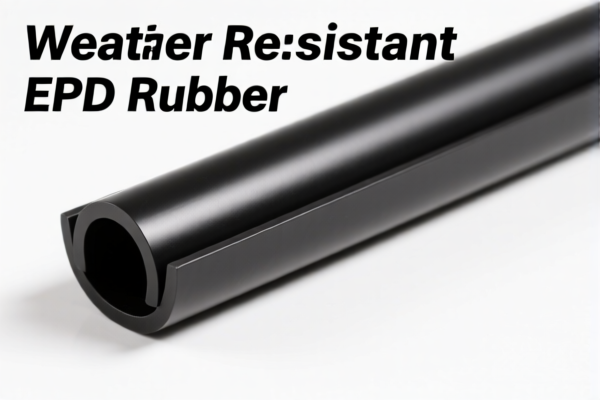


AI Analysis
🧪 EPDM Rubber Strip (三元乙丙橡胶片/条)
🌐 HS Code Reference & Customs Clearance Guide | 2026 Latest Tariff Analysis | Professional-Level Strategy
📌 Part 1: Product Definition & Classification: Do You Really Understand "EPDM Rubber"?
EPDM (Ethylene Propylene Diene Monomer) is a synthetic rubber known for its resistance to weather, ozone, heat, and chemicals. In international trade, the classification of EPDM depends heavily on its state (raw vs. vulcanized) and form (shape).
1. Raw Synthetic Rubber (Unvulcanized):
If the EPDM is in its primary form, not yet chemically cross-linked (vulcanized), it falls under Chapter 40, Heading 40.02.
Key Feature*: No fixed shape/memory, sticky or powdery, not ready for final use without further processing.
2. Vulcanized Rubber (Finished/Intermediate):
If the EPDM has been vulcanized (heated/pressed to cure), it becomes elastic and durable. It is classified under Heading 40.08.
Key Feature*: Fixed shape (sheets, strips, rods), non-foam, ready for cutting or installation.
⚠️ Critical Distinction:
- Raw State → 4002.xx (Primary Forms)
- Vulcanized State → 4008.xx (Plates, Sheets, Strip, Rods & Profiles)
- Mistake: Declaring vulcanized strips as raw rubber will lead to misclassification penalties.
📦 Part 2: HS Code Classification Details (2026 Latest Tariff Authority)
Based on the provided data, here are the four possible classifications for EPDM Rubber Sheets/Strips, depending on the exact physical state and composition.
| HS Code | Product Description | Application Scenario | State & Form |
|---|---|---|---|
4002.70.00.00 |
Ethylene-Propylene Copolymer Rubber (EPM/EPDM) | Raw EPDM rubber, in primary forms. | ✅ Raw (Unvulcanized) Sheet/Form: Primary |
4002.99.00.00 |
Other Synthetic Rubber | General synthetic rubber, not elsewhere specified (e.g., specific grades of EPDM not covered by 4002.70). | ✅ Raw (Unvulcanized) Sheet/Form: Primary |
4008.21.00.00 |
Vulcanized Rubber Sheets/Strip | Non-foam, non-honeycomb rubber plates, sheets, strip, rods, and profiles. | ✅ Vulcanized Non-Foam, Sheet/Strip |
4008.29.20.00 |
Other Vulcanized Rubber Articles | Specific profiles or sheets not covered by 4008.21 (e.g., specific thicknesses or types of bars/rods). | ✅ Vulcanized Sheet/Strip/Profile |
🔍 Key Reminder:
- If your product is soft, stretchy, and heat-resistant (ready to use as a seal), it is likely Vulcanized (4008).
- If it is harder, sticky, or in pellet/powder form for manufacturing, it is Raw (4002).
- 4008.21 is the most common for standard non-foam EPDM sheets/strips. 4008.29.20 applies if it's a specific profile or bar.
💰 Part 3: 2026 Latest Tariff Rate Breakdown (Including Surtaxes & Policy Add-ons)
✅ Applicable Country: United States (US)
✅ Country of Origin: China (CN)
✅ Effective Date: Current trade policies (2025-2026)
🎯 1. 4002.70.00.00 & 4002.99.00.00 —— Raw Synthetic Rubber (Primary Forms)
| Item | Detail |
|---|---|
| Basic Tariff | 0.0% |
| Section 301 Surcharge | +25.0% |
| Section 122 Surcharge | +10.0% |
| Total Tariff Rate | 35.0% |
| Tax Calculation | CIF Value × 35% |
| De Minimis Exemption | ❌ Not Applicable |
| Legal Basis | USITC:4002.70.00.00 → Footnote: 9903.88.01 (301 Tariff) + IEEPA (122 Tariff) |
📌 Explanation:
- Although the base duty is 0%, the Section 301 tariff (25%) and Section 122 tariff (10%) are applied to Chinese-origin synthetic rubber.
- Total Impact: 35%. This is a significant cost factor for raw material importers.
🎯 2. 4008.21.00.00 & 4008.29.20.00 —— Vulcanized Rubber Sheets/Strips
| Item | Detail |
|---|---|
| Basic Tariff | 0.0% (for 4008.21) / 2.9% (for 4008.29.20) |
| Section 301 Surcharge | +25.0% |
| Section 122 Surcharge | +10.0% |
| Total Tariff Rate | 35.0% (for 4008.21) 37.9% (for 4008.29.20) |
| Tax Calculation | CIF Value × 35% / 37.9% |
| De Minimis Exemption | ❌ Not Applicable |
| Legal Basis | USITC:4008.xx → Footnote: 9903.88.01 + IEEPA |
📌 Explanation:
- For4008.21.00.00: Base duty is 0%, but with 25% + 10% surcharges, the total is 35%.
- For4008.29.20.00: Base duty is 2.9%, plus 25% + 10% surcharges, resulting in a total of 37.9%.
- Note: The difference between 35% and 37.9% is small but critical for high-volume shipments.
🛠️ Part 4: Customs Clearance Practical Advice (Avoid Pitfalls)
✅ 1. Documentation Checklist (Essential)
| Document | Required? | Explanation |
|---|---|---|
| ✅ Product Specification Sheet | ✔️ | Must specify: Raw vs. Vulcanized, EPDM composition, hardness (Shore A), thickness. |
| ✅ Certificate of Origin (CO) | ✔️ | To prove origin as China. If from Vietnam/Malaysia, may avoid surcharges. |
| ✅ Commercial Invoice | ✔️ | Clearly state: "EPDM Rubber Sheet/Strip, HS Code 4008.21.00.00" (or applicable). |
| ✅ Packing List | ✔️ | Include net weight, gross weight, dimensions. |
| ✅ Test Report | ✔️ | Prove vulcanization status (e.g., ASTM D2240 for hardness). |
✅ 2. Declaration Tips (Key Mnemonic)
🔥 "Raw is 4002, Cured is 4008; Check Shape, Check Cure!"
| Scenario | Correct HS Code | Risk if Misdeclared |
|---|---|---|
| Raw EPDM Pellets/Powder | 4002.70.00.00 |
Misdeclaring as vulcanized may lead to duty underpayment. |
| Vulcanized Rubber Sheet | 4008.21.00.00 |
Misdeclaring as raw may lead to duty overpayment (if base rate differs) or rejection. |
| Vulcanized Rubber Strip/Profile | 4008.29.20.00 (if specific profile) |
Ensure shape matches "strip/rod" definition. |
| Foam EPDM | ❌ Not in Data | Foam rubber falls under different codes (e.g., 4008.11). Do not use 4008.2x for foam! |
✅ 3. Special Handling Cases
| Situation | Recommendation |
|---|---|
| Mixed Shipments (Raw + Vulcanized) | Separate declarations. Do not mix HS codes in one line item. |
| EPDM with Additives (Carbon Black, etc.) | Still classified under 4002 or 4008. Additives do not change the primary rubber classification. |
| Cut-to-Size Sheets | Still considered "Sheets/Strips" under 4008 if not further worked into a specific article. |
| Import from Non-China Origin | If from Vietnam, Malaysia, Thailand, Section 301 (25%) may not apply. Verify origin rules carefully! |
🌍 Part 5: Global Market Clearance Comparison (2026)
| Country/Region | Recommended HS Code | Tariff (China Origin) | Certifications | Notes |
|---|---|---|---|---|
| 🇺🇸 USA | 4008.21.00.00 |
35.0% | N/A | High tariffs due to Section 301 & 122. |
| 🇨🇳 China | 4008.21.00.00 |
5% (Import) | CCC (if applicable) | Lower import duty, no US surcharges. |
| 🇪🇺 EU | 4008.21.00.00 |
0% | REACH Compliance | No additional surcharges for rubber. |
| 🇯🇵 Japan | 4008.21.00.00 |
0% | JIS Standards | Free trade agreement benefits may apply. |
| 🇰🇷 South Korea | 4008.21.00.00 |
0% (under KFTA) | KC Mark | KFTA may reduce tariffs to 0%. |
📌 Conclusion:
- USA is the most expensive market due to 35%–37.9% total tariffs.
- EU, Japan, Korea offer 0% tariffs for rubber sheets, making them more cost-effective for final assembly if sourced from China.
- Consider Supply Chain Shift: If shipping to the US, consider sourcing EPDM from Vietnam or Malaysia to avoid Section 301 tariffs.
📌 Part 6: Common Mistakes & Pitfalls (Lessons Learned)
❌ Mistake 1: Declaring Vulcanized Sheets as Raw Rubber to avoid "Section 122"
👉 Consequence: Customs inspection reveals vulcanization (via hardness test). Penalties + Back Taxes.
❌ Mistake 2: Confusing Foam EPDM with Non-Foam EPDM
👉 Consequence: Foam rubber has different HS codes (e.g., 4008.11). Misclassification leads to wrong duty rate and delays.
❌ Mistake 3: Not specifying "Non-Foam" in Description
👉 Consequence: Customs may doubt the classification. Always include "Non-Foam Vulcanized Rubber Sheet" in the description.
❌ Mistake 4: Ignoring Section 122 Tariff (10%)
👉 Consequence: Assuming only 25% Section 301 applies. Total is 35%. Budget accordingly!
✅ Correct Declaration Example:
"EPDM Rubber Sheet, Vulcanized, Non-Foam, Black, 2mm Thickness, HS Code 4008.21.00.00, Made in China"
🎯 Part 7: Conclusion: Precision in Classification Saves Money!
🎯 Remember the Mnemonic:
🔹 "Raw = 4002, Cured = 4008"
🔹 "Base 0% + 25% (301) + 10% (122) = 35% Total"
🔹 "Check Foam vs. Non-Foam"
🔹 "Consider Non-China Origin for US Market"
📌 Pro Tip:
If your EPDM rubber is sourced from Vietnam, Malaysia, or Thailand, you may avoid the 25% Section 301 tariff.
👉 Action: Verify the Country of Origin and apply for Preferred Treatment if eligible.
📣 Immediate Action:
📞 Consult a licensed customs broker.
📄 Prepare specification sheets proving vulcanization status.
🚀 Optimize your supply chain to minimize the 35%+ tariff burden.
✨ Professional Clearance Starts with Accurate Classification!
💼 Every percent saved is pure profit!
Customer Reviews
About HS Code Classification
The Harmonized System (HS) is an internationally standardized nomenclature developed by the World Customs Organization (WCO) to classify traded products. Over 200 countries use the HS system as the basis for customs tariffs, trade statistics, and import/export regulations.
Each HS code follows a hierarchical structure:
- Chapter (2 digits) — Broad category of goods (e.g., Chapter 84: Machinery and Mechanical Appliances)
- Heading (4 digits) — More specific grouping within the chapter
- Subheading (6 digits) — Internationally standardized breakdown, used by all WCO member countries
- National subdivisions (8-10 digits) — Country-specific extensions for further classification, such as US HTSUS 10-digit codes
Correct HS code classification is essential for smooth customs clearance, accurate duty payment, and compliance with trade regulations. Misclassification can lead to customs delays, overpayment of duties, or penalties.
When importing from CN to US, the applicable tariff rates may include:
- Most-Favored-Nation (MFN) rate — The standard duty rate applied to WTO members
- General rate — Applied to countries without trade agreements
- Trade remedy duties — Additional tariffs such as Section 301 (anti-dumping), Section 232 (national security), or countervailing duties
The information provided on this page is for reference purposes only. For official classification, please consult with your local customs authority or a licensed customs broker.