EPS Plastic Light Box Board
CN → US| HS Code | Tariff Rate | Origin | Destination | Doc |
|---|---|---|---|---|
| 3926909910 | 22.8% | CN | US | Official Doc |
| 3926909989 | 22.8% | CN | US | Official Doc |
| 9405994090 | 91.0% | CN | US | Official Doc |
| 9405920000 | 38.7% | CN | US | Official Doc |
Product Images
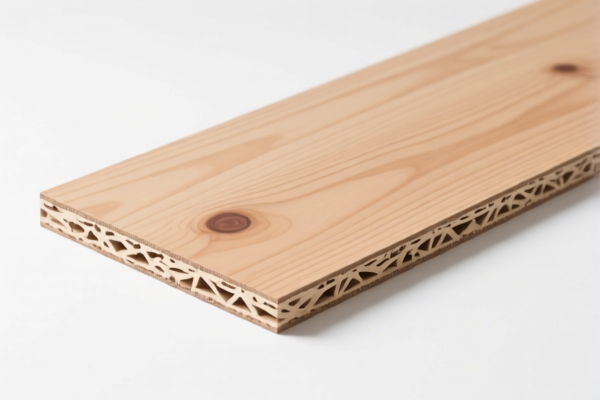
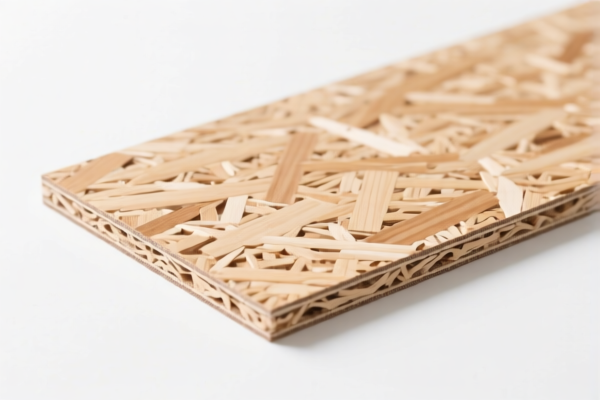
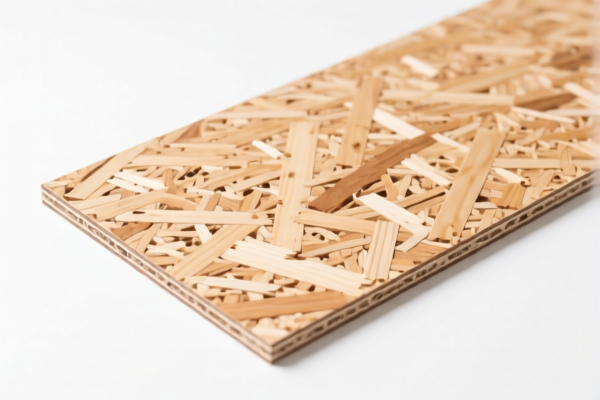
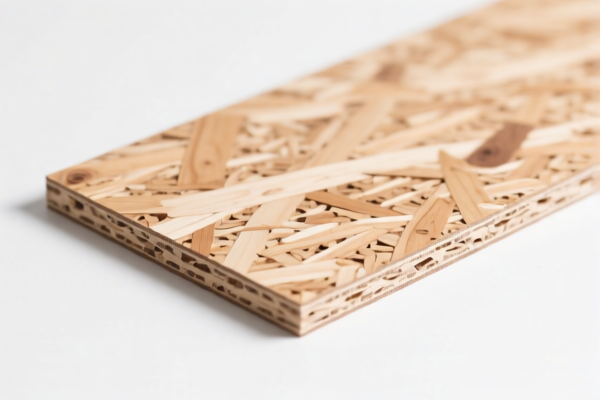
AI Analysis
🎨 EPS Plastic Light Box Board (Polystyrene Signage Panels)
🌐 HS Code Reference & Customs Clearance Guide | 2026 Latest Tariff Analysis | Professional Entry Strategy
📌 I. Product Definition & Classification: What Exactly is an "EPS Light Box Board"?
In the international trade of advertising materials and lighting fixtures, "EPS Plastic Light Box Board" refers to translucent or opaque flat panels made from Polystyrene (PS) resin. These boards are typically used as the diffuser or cover for light boxes, illuminated signs, and display systems.
Internationally, these products are classified into two distinct categories based on their function and integration:
-
Raw/Component Material (Chapter 39):
- If the product is identified primarily as a plastic sheet/board used in manufacturing, regardless of whether it is pre-cut for a light box. It is considered a general-purpose or specific plastic article.
- Key Indicator: No electrical components, no specific mounting hardware for lighting fixtures, just the plastic material itself.
-
Part of a Lighting Device (Chapter 94):
- If the product is explicitly designed as a component of a light fixture, such as a diffuser panel, reflector, or structural part of a lighting apparatus.
- Key Indicator: Specifically marketed as a "light box part," "diffuser for LED lights," or integrated into a lighting system definition.
⚠️ Critical Distinction Point:
- If declared as "Plastic Sheets/Plates" for general use or manufacturing →归入 Chapter 39 (Lower Base Tariff, but high Section 301/122 duties).
- If declared as "Parts of Lamps/Lighting Fixtures" → 归入 Chapter 94 (Higher Base Tariff, potentially massive Section 301/122 duties depending on material composition).
📦 II. HS Code Classification Details (2026 Latest Tariff Authority Comparison)
Based on the provided data context, here are the four possible HS Codes for EPS/PS Plastic Light Box Boards:
| HS Code | Product Description | Applicable Scenario | Material/Format |
|---|---|---|---|
3926.90.99.10 |
PS Plastic Light Box Board, Polystyrene, Plate Shape, Other Plastic Articles | General advertising materials, raw plastic sheets for cutting | ✅ PS Plastic, Plate Form |
3926.90.99.89 |
PS Plastic Light Box Board, Polystyrene Resin Articles, Plate Form | Other plastic articles not specified elsewhere, resin-based | ✅ PS Resin, Plate Form |
9405.99.40.90 |
PS Plastic Light Box Board, Component of Light Boxes, Other Materials | Parts of lighting fixtures, glow-in-the-dark/signage components | ✅ Part of Lighting Device |
9405.92.00.00 |
PS Plastic Light Box Board, Part of Lighting Apparatus | Specific parts for lamps, luminaires, or floodlights | ✅ Part of Lighting Apparatus |
🔍 Key Reminder:
- The same physical product (a PS plastic board) can have vastly different tax rates depending on how it is described and its intended use. - Misclassification Risk: Declaring a "Light Box Part" as a "General Plastic Sheet" to save on base tariff, but being caught by customs, can lead to severe penalties due to the huge difference in total tax rates (see below).
💰 III. 2026 Latest Tariff Rate Breakdown (Including Surcharges & Policy Add-ons)
✅ Applicable Country: United States (US)
✅ Origin: China (CN)
✅ Effective Time: Current 2026 Tariff Structure
🎯 1. 3926.90.99.10 & 3926.90.99.89 —— General Plastic Articles (Chapter 39)
These codes treat the product as a plastic product, not a lighting part.
| Item | Content |
|---|---|
| Base Tariff | 5.3% (ad valorem) |
| Section 301 Additional Duty | +7.5% (Specific to certain plastic articles) |
| Section 122 Additional Duty | +10% (Targeting specific Chinese goods) |
| Total Tariff | 22.8% |
| Tax Calculation | CIF Value × 22.8% |
| De Minimis Exemption | ❌ Not Applicable (Commercial shipment) |
| Legal Basis Path | HTSUS:3926.90.99.10/89 → Section 301:7.5% → Section 122:10% |
📌 Explanation:
- This is the most cost-effective classification for raw PS plastic boards. - The base tariff is moderate (5.3%), and the additional duties, while present, result in a moderate total rate of 22.8%. - Suitable if the product is sold as a material to manufacturers who will assemble the light box themselves.
🎯 2. 9405.92.00.00 —— Parts of Lighting Apparatus (Chapter 94)
This code treats the product as a component of a lamp or lighting fixture.
| Item | Content |
|---|---|
| Base Tariff | 3.7% (ad valorem) |
| Section 301 Additional Duty | +25.0% (High duty on lighting parts) |
| Section 122 Additional Duty | +10.0% |
| Total Tariff | 38.7% |
| Tax Calculation | CIF Value × 38.7% |
| De Minimis Exemption | ❌ Not Applicable |
| Legal Basis Path | HTSUS:9405.92.00.00 → Section 301:25% → Section 122:10% |
📌 Explanation:
- Although the base tariff is lower (3.7%), the Section 301 duty is significantly higher (25%) compared to the plastic article code (7.5%). - This results in a higher total cost (38.7%). - Only choose this if your product is explicitly a "part of a lighting fixture" and you have no other option. However, note that misclassification here (when it should be a plastic article) might not save money, and misclassifying a lighting part as a plastic article is a compliance risk.
🎯 3. 9405.99.40.90 —— Other Parts of Lighting Fixtures (Chapter 94, High Risk)
This code falls under "Other parts of lighting fixtures" and carries the highest risk and cost.
| Item | Content |
|---|---|
| Base Tariff | 6.0% (ad valorem) |
| Section 301 Additional Duty | +25.0% |
| Section 122 Additional Duty | +10.0% |
| Steel/Aluminum/Copper Surcharges | +50.0% (If applicable, though PS is not metal, this line item suggests high scrutiny) |
| Total Tariff | 91.0% |
| Tax Calculation | CIF Value × 91.0% |
| De Minimis Exemption | ❌ Not Applicable |
| Legal Basis Path | HTSUS:9405.99.40.90 → Section 301:25% → Section 122:10% → Steel/Al/Cu Surcharges:50% |
📌 Warning:
- AVOID THIS CODE unless the product contains significant steel/aluminum/copper components (which PS does not). - The 91.0% total tariff is prohibitively expensive. - If customs determines your PS board falls under this "Other" category without the metal surcharge, it may still be interpreted as 91.0% due to strict enforcement on lighting parts from China.
🛠️ IV. Customs Clearance Practical Advice (Battle-Tested Pitfall Avoidance)
✅ 1. Preparation Checklist (Non-Negotiable)
| Document | Must Provide | Notes |
|---|---|---|
| ✅ Product Specification Sheet | ✔️ | Must clearly state: "Polystyrene (PS) Plastic Sheet," dimensions, thickness, opacity. |
| ✅ Material Composition Proof | ✔️ | MSDS (Material Safety Data Sheet) showing 100% Polystyrene, no metal cores. |
| ✅ Product Photos | ✔️ | Clear images of the board, showing no electrical components, connectors, or mounting hardware for lights. |
| ✅ Commercial Invoice | ✔️ | Description should be "Polystyrene Plastic Sheets for Advertising Signage" or "PS Plastic Boards", NOT "Light Box Parts" if using Chapter 39 codes. |
| ✅ Packing List | ✔️ | Weight and dimensions of the plastic sheets only. |
✅ 2. Declaration Strategy (Key Mantras)
🔥 “Material vs. Part: Name it Right, Tax it Lighter!”
| Scenario | Correct Declaration | Incorrect Declaration |
|---|---|---|
| Selling PS Sheets | 3926.90.99.10"Polystyrene Plastic Sheets, 100% PS, for Signage Manufacturing" |
"Light Box Panel" or "Lighting Part" → Leads to 9405 codes (38.7% - 91.0%) |
| Selling as Lighting Part | 9405.92.00.00"Part of Lighting Apparatus, PS Diffuser" |
"Plastic Sheet" → Risk of misclassification audit, but tax is still 38.7% (higher than 22.8%) |
| Mixing Materials | Verify if metal clips are attached. If yes, may fall under 9405.99.40.90 → Avoid! |
Ignoring attached hardware → 91.0% Tariff |
Strategic Advice:
- If you are selling raw materials to advertisers who assemble their own light boxes, always declare under Chapter 39 (3926.90.99.10or89).
- Use precise language: "Polystyrene (PS) Plastic Boards/Sheets". Avoid the term "Light Box" in the HS Code description if possible, or qualify it as "Plastic Articles for Advertising."
✅ 3. Special Case Handling
| Situation | Handling Suggestion |
|---|---|
| Pre-cut Light Box Panels | Even if pre-cut, if they are just plastic with no electrical integration, argue for Chapter 39. Provide cutting diagrams to prove they are raw materials. |
| With Mounting Clips? | If the product comes with metal clips, customs may classify it as a set or part of a fixture. Consider shipping clips separately or using plastic clips to stay in Chapter 39. |
| Opaque vs. Translucent | Both fall under PS Plastic Articles. Translucency does not automatically move it to Chapter 94 unless it's a "diffuser for a lamp" sold as a functional lighting component. |
| OEM Orders | If the client is a lighting manufacturer, they might insist on 9405 codes for their internal accounting. However, for US Customs entry, if the product is purely plastic, Chapter 39 is legally defensible and cheaper. |
🌍 V. Global Market Comparison (2026 Latest)
| Country/Region | Recommended HS Code | Total Tariff (China Origin) | Certification Requirements | Notes |
|---|---|---|---|---|
| 🇺🇸 USA | 3926.90.99.10 |
22.8% (Best Option) | No special certs required for plastic | 91.0% if misclassified as lighting part |
| 🇨🇳 China | 3926.90.99.10 |
~5-6% | No special certs | Low import duty |
| 🇪🇺 EU | 3926.90.99 |
6.5% | CE (if applicable), RoHS | No Section 301/122 equivalents |
| 🇬🇧 UK | 3926.90.90 |
6.5% | UKCA | Post-Brexit tariffs |
| 🇦🇺 Australia | 3926.90.90 |
5% | RCM | Low tariff |
📌 Conclusion:
- The USA has the most complex and highest tariff landscape for these products due to Section 301 and 122. - Correct classification under Chapter 39 saves nearly 50-70% in tariffs compared to Chapter 94 codes. - China-origin PS plastic boards face significant US tariffs, but the difference between 22.8% and 91.0% is a massive cost driver.
📌 VI. Common Errors & Pitfalls (Lessons Learned)
❌ Error 1: Using "Light Box Panel" as the product name without specifying "Plastic Material"
👉 Consequence: Customs may assume it's a lighting part → 9405.99.40.90 → 91.0% Tax!
❌ Error 2: Declaring under 3926.90.99.10 when the product includes metal framing
👉 Consequence: Misclassification, potential fines, and retroactive taxes.
❌ Error 3: Ignoring Section 122 and 301 duties
👉 Consequence: Unexpected costs at border. Total tax is 22.8%, not just the base 5.3%.
❌ Error 4: Assuming "EPS" (Expanded Polystyrene) and "PS" (Polystyrene) are different for tariff purposes
👉 Consequence: Both are Polystyrene. Use 3926 for both. No extra code needed for EPS vs. PS.
✅ Correct Practice:
"Polystyrene (PS) Plastic Sheets, 100% PS, Translucent/Opaque, For Advertising Signage Manufacturing, Model XYZ, 5.3% Base + 7.5% S301 + 10% S122"
🎯 VII. Conclusion: Professional Declaration, Save Costs, Ensure Compliance!
🎯 Remember the Mantra:
🔹 "Plastic Sheets = Ch. 39 (22.8%)"
🔹 "Lighting Parts = Ch. 94 (38.7% - 91.0%)"
🔹 "Name it Right, Tax it Lighter!"
🔹 "Avoid 'Light Box Part' if you can say 'Plastic Sheet'!"
📌 Pro Tip:
If you are exporting to the US, always apply for a Binding Tariff Ruling (BTR) from US Customs (CBP) if the product is borderline. This provides legal protection against future reclassification and 91.0% tariffs.
📣 Immediate Action:
📞 Consult a Licensed Customs Broker + Provide Material Safety Data Sheet (MSDS) + Apply for Advance Ruling
🚀 Let your PS Plastic Boards Clear Customs Smoothly, Efficiently, and Profitably!
✨ Professional Clearance Starts with Accurate Classification!
💼 Every Percentage Point of Tariff Matters in Your Bottom Line!
Customer Reviews
About HS Code Classification
The Harmonized System (HS) is an internationally standardized nomenclature developed by the World Customs Organization (WCO) to classify traded products. Over 200 countries use the HS system as the basis for customs tariffs, trade statistics, and import/export regulations.
Each HS code follows a hierarchical structure:
- Chapter (2 digits) — Broad category of goods (e.g., Chapter 84: Machinery and Mechanical Appliances)
- Heading (4 digits) — More specific grouping within the chapter
- Subheading (6 digits) — Internationally standardized breakdown, used by all WCO member countries
- National subdivisions (8-10 digits) — Country-specific extensions for further classification, such as US HTSUS 10-digit codes
Correct HS code classification is essential for smooth customs clearance, accurate duty payment, and compliance with trade regulations. Misclassification can lead to customs delays, overpayment of duties, or penalties.
When importing from CN to US, the applicable tariff rates may include:
- Most-Favored-Nation (MFN) rate — The standard duty rate applied to WTO members
- General rate — Applied to countries without trade agreements
- Trade remedy duties — Additional tariffs such as Section 301 (anti-dumping), Section 232 (national security), or countervailing duties
The information provided on this page is for reference purposes only. For official classification, please consult with your local customs authority or a licensed customs broker.