EPS Plastic Wall Panel
CN → US| HS Code | Tariff Rate | Origin | Destination | Doc |
|---|---|---|---|---|
| 3921190090 | 41.5% | CN | US | Official Doc |
| 3925100000 | 41.3% | CN | US | Official Doc |
| 3925900000 | 40.3% | CN | US | Official Doc |
| 3921110000 | 40.3% | CN | US | Official Doc |
| 3921190090 | 41.5% | CN | US | Official Doc |
Product Images

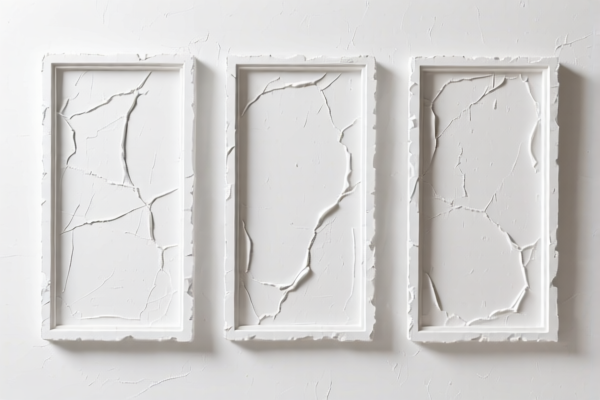
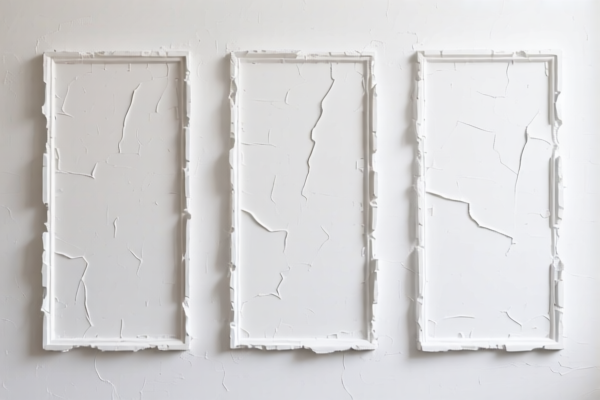
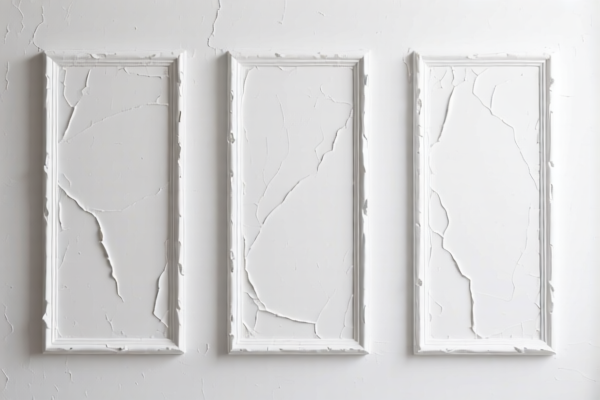
AI Analysis
🧱 EPS Plastic Wall Panel (Construction Formwork/Cladding)
🌐 HS Code Reference & Customs Clearance Guide | 2026 Latest Tariff Analysis | Professional Clearance Strategy
📌 1. Product Definition & Classification: Do You Really Understand "EPS Plastic Wall Panel"?
EPS (Expanded Polystyrene) Plastic Wall Panels are lightweight, high-strength construction materials widely used in formwork (concrete casting molds), temporary fencing, and interior/exterior insulation cladding. In international trade, they are primarily classified based on their material composition (Polystyrene/Plastic), physical form (Sheet/Board), and specific application (Construction Component).
⚠ Key Classification Distinctions:
- If the product is a pure plastic sheet/board made of Polystyrene without specific structural integration for a specific machine → Classified under 3921 (Plastic sheets, films, plates, etc.).
- If the product is specifically designed and used as a building component (e.g., concrete formwork, insulation boards fixed to structures) → Classified under 3925 (Builders' ware of plastics).
📦 2. Detailed HSC Code Classification (2026 Latest Tariff Authority Comparison)
| HSC Code | Product Description | Application Scenario | Basis for Classification |
|---|---|---|---|
3921.19.00.90 |
Other plates, sheets, film, foil and strip, of polymers of ethylene | EPS Plastic Sheets: General purpose plastic boards/sheets, not specifically identifiable as construction components. | Material & Form: Pure Polystyrene (EPS) sheet/board format. |
3925.10.00.00 |
Tanks, vats and similar containers | Construction Components: EPS panels used as prefabricated building parts or formwork systems. | Function: Classified as "Builders' Ware" or specific construction assembly. |
3925.90.00.00 |
Other builders' ware of plastics | General Construction Use: Catch-all category for plastic construction items not specified elsewhere (e.g., specialized formwork panels). | Function & Form: Flexible catch-all for plastic construction parts. |
3921.11.00.00 |
Plates, sheets, film, foil and strip, of polymers of ethylene | Polystyrene Boards: Specific focus on Polystyrene polymer sheets (EPS is a polymer of styrene). | Material Match: Strictly matches "Polymers of Styrene" (EPS) in sheet form. |
🔍 Important Reminder:
- Formwork vs. Cladding: If the EPS panel is used as temporary concrete formwork (reusable or disposable mold),3925categories are often more appropriate due to their specific construction function.
- Pure Insulation/Sheet: If the product is a simple insulation board without specific structural integration for building assembly,3921categories may apply.
- Misclassification Warning: Do not simply label all EPS products as "Plastic Sheets" if they are clearly engineered construction components (3925).
💰 3. Detailed 2026 Tariff Rate Explanation (Including Additional Taxes & Policy Surcharges)
✅ Applicable Country: United States (US)
✅ Country of Origin: China (CN)
✅ Effective Date: November 10, 2025 onwards (including subsequent imports)
🎯 1. 3921.19.00.90 – EPS Plastic Sheets (Polystyrene Sheets, Other)
| Item | Details |
|---|---|
| Base Tariff | 6.5% (Standard MFN rate) |
| Section 301 Surcharge | +25.0% (Under US Trade Act Section 301) |
| Section 122 Surcharge | +10.0% (Under IEEPA/Section 122 regulations for specific Chinese goods) |
| Total Tariff Rate | 41.5% |
| Calculation | CIF Value × 41.5% |
| De Minimis Exempt? | ❌ No (Denied de minimis status under current trade restrictions) |
| Legal Basis | Section 301: Footnote 9903.88.01 → IEEPA: Section 122 → HTSUS: 3921.19.00.90 |
📌 Explanation:
- The 6.5% base rate applies to other plastic plates/sheets.
- The 25% Section 301 tariff is a major surcharge on Chinese plastic products.
- The 10% Section 122 tariff is an additional layer of duty on specific Chinese materials.
- Total 41.5% is a high-cost barrier. Pre-calculation is essential.
🎯 2. 3925.10.00.00 – Construction Components (Tanks/Vats/Specific Building Parts)
| Item | Details |
|---|---|
| Base Tariff | 6.3% |
| Section 301 Surcharge | +25.0% |
| Section 122 Surcharge | +10.0% |
| Total Tariff Rate | 41.3% |
| Calculation | CIF Value × 41.3% |
| De Minimis Exempt? | ❌ No |
| Legal Basis | Section 301 → IEEPA: Section 122 → HTSUS: 3925.10.00.00 |
📌 Note:
- This category applies if the EPS panel is explicitly defined as a specific construction container or component.
- Slightly lower base rate (6.3% vs 6.5%) but still subject to the same 35% surcharges (25% + 10%).
- Total 41.3% makes this highly competitive with3921but requires precise functional definition.
🎯 3. 3925.90.00.00 – Other Builders' Ware of Plastics (Catch-All)
| Item | Details |
|---|---|
| Base Tariff | 5.3% |
| Section 301 Surcharge | +25.0% |
| Section 122 Surcharge | +10.0% |
| Total Tariff Rate | 40.3% |
| Calculation | CIF Value × 40.3% |
| De Minimis Exempt? | ❌ No |
| Legal Basis | Section 301 → IEEPA: Section 122 → HTSUS: 3925.90.00.00 |
📌 Strategy:
- This is the lowest total tariff (40.3%) among the four options.
- It serves as the catch-all for plastic construction items not specifically listed in 3925.10.
- If your EPS panel doesn't fit neatly into "Tanks/Vats" (3925.10), this is the safest and most cost-effective route for construction-specific EPS products.
🎯 4. 3921.11.00.00 – Polymers of Styrene (EPS Specific Sheets)
| Item | Details |
|---|---|
| Base Tariff | 5.3% |
| Section 301 Surcharge | +25.0% |
| Section 122 Surcharge | +10.0% |
| Total Tariff Rate | 40.3% |
| Calculation | CIF Value × 40.3% |
| De Minimis Exempt? | ❌ No |
| Legal Basis | Section 301 → IEEPA: Section 122 → HTSUS: 3921.11.00.00 |
📌 Explanation:
- EPS is a polymer of styrene. If the product is strictly a sheet/board and not classified as a "builder's ware" component, this code applies.
- Total 40.3% matches3925.90.
- Key Advantage: If customs inspectors view the product as a raw material/semi-finished plastic sheet rather than a finished construction component, this code is highly accurate.
🛠 4. Customs Clearance Practical Advice (Pitfall Avoidance Guide)
✅ 1. Documentation Checklist (Mandatory)
| Document | Required? | Explanation |
|---|---|---|
| ✅ Product Specification Sheet | ✔ | Details density (kg/m³), fire rating (B1/B2), dimensions, and material (EPS/Polystyrene). |
| ✅ Technical Drawings | ✔ | Shows if the panel is a simple sheet or a complex construction formwork system. |
| ✅ Product Photos | ✔ | Clear images of the panel, edges, and any connection mechanisms. |
| ✅ Fire Safety Report | ✔ | Crucial for construction materials in the US (ASTM E84/UL 723 standards). |
| ✅ Commercial Invoice | ✔ | Must clearly state "EPS Plastic Wall Panel/Construction Formwork" and material composition. |
| ✅ Packing List | ✔ | Weight and dimensions per package. |
| ✅ **Country of Origin Cert (CO) |
| ❌ Critical Warning:
- Do NOT under-declare value or mislabel as "Plastic Toy" or "Craft Material."
- Do NOT omit fire rating info. US customs and CBP (Customs and Border Protection) may flag fire-safety compliance.
✅ 2. Declaration Strategy (Key Mantras)
🔥 "Material First, Function Second, Code Matches Both!"
| Scenario | Correct Declaration | Wrong Practice |
|---|---|---|
| Simple Insulation Board | 3921.11.00.00 (Polystyrene Sheet) |
Label as "Construction Part" → Higher scrutiny. |
| Concrete Formwork Panel | 3925.90.00.00 (Other Builders' Ware) |
Label as "Plastic Sheet" → May be reclassified. |
| Pre-fabricated Wall Section | 3925.10.00.00 or 3925.90.00.00 |
Split into "Plastic" + "Hardware" → Complex duty calculation. |
| Raw EPS Beads/Granules | 3903.11.00.00 (Different Code!) |
Do NOT use 3921/3925 for raw materials. |
✅ 3. Special Case Handling
| Situation | Handling Advice |
|---|---|
| Fire-Rated EPS | Must provide ASTM E84 or UL 723 test reports. Non-compliant items may be rejected. |
| OEM Custom Sizes | Provide customer order + design files. Avoid generic descriptions. |
| Mixed Containers | If mixed with non-EPS goods, declare separately. Mixed classification errors lead to audits. |
| Value-Added Processing | If coated with foil or metal, ensure the coating doesn't change the essential character. |
🌍 5. Global Market Clearance Comparison (2026 Latest)
| Country/Region | Recommended HSC Code | Tariff (China Origin) | Certification Req. | Notes |
|---|---|---|---|---|
| 🇺🇸 USA | 3921.19.00.90 / 3925.90.00.00 |
40.3% – 41.5% | ASTM E84 / UL | High surcharges (35%). |
| 🇨🇳 China | 3921.11.00.00 |
5.3% | GB/T Standards | Low duty, high volume. |
| 🇪🇺 EU | 3921.11.00 |
6.5% | CE / Fire Safety | No Section 301 surcharge. |
| 🇬🇧 UK | 3921.11.00 |
6.5% | UKCA / Fire Safety | Post-Brexit rules apply. |
| 🇨🇦 Canada | 3921.11.00 |
5.0% | CSA / Fire Safety | No major surcharges. |
📌 Conclusion:
- USA is the most expensive market due to Section 301 (25%) and Section 122 (10%) surcharges.
- Tariff Difference: The difference between the lowest (40.3%) and highest (41.5%) is small (1.2%), but correct classification is critical to avoid audits.
- Strategy: Aim for3925.90.00.00or3921.11.00.00for the lowest total duty (40.3%).
📌 6. Common Mistakes & Pitfall Guide (Lessons from Blood & Tears)
❌ Mistake 1: Classifying Formwork as General Plastic Sheets (3921.19.00.90).
👉 Consequence: Higher base rate (6.5% vs 5.3%) → +0.2% extra duty. Small, but precision matters.
❌ Mistake 2: Labeling Fire-Rated Panels as Non-Rated.
👉 Consequence: Seizure or Return by CBP for safety violations. Fines apply.
❌ Mistake 3: Missing Fire Safety Test Reports.
👉 Consequence: Customs may request additional proof, causing clearance delay (7-14 days).
❌ Mistake 4: Using Vague Descriptions like "Plastic Board".
👉 Consequence: Customs may classify it under a higher-duty category or reject it.
✅ Best Practice:
"EPS Plastic Wall Panel, Polystyrene Foam, Fire Rated B1, ASTM E84 Certified, 2400mm x 1200mm x 50mm, for Concrete Formwork"
🎯 7. Conclusion: Professional Declaration, Cost Reduction!
🎯 Remember the Mantras:
🔹 "Formwork = Builders' Ware (3925), Sheet = Plastic (3921)"
🔹 "Total Duty = 40.3% - 41.5% (USA)", No De Minimis Exempt!
🔹 "Fire Report is Key, No Report, No Entry!"
📌 Tips:
- If your EPS panels are produced in Vietnam, Thailand, or Mexico, you may qualify for IEEPA Exemptions or lower tariffs.
- Apply for Advance Rulings from CBP if the classification is ambiguous.
- Negotiate Terms: Since tariffs are high, consider DDP (Delivered Duty Paid) terms carefully.
📣 Immediate Action:
📞 Contact a Professional Customs Broker + Provide Product Specs + Apply for Advance Ruling
🚀 Ensure your EPS Wall Panels clear customs smoothly, minimize costs, and maximize profits!
✨ Professional Clearance Starts with Accurate Classification!
💼 Every Penny of Duty Should Be Precisely Managed!
Customer Reviews
About HS Code Classification
The Harmonized System (HS) is an internationally standardized nomenclature developed by the World Customs Organization (WCO) to classify traded products. Over 200 countries use the HS system as the basis for customs tariffs, trade statistics, and import/export regulations.
Each HS code follows a hierarchical structure:
- Chapter (2 digits) — Broad category of goods (e.g., Chapter 84: Machinery and Mechanical Appliances)
- Heading (4 digits) — More specific grouping within the chapter
- Subheading (6 digits) — Internationally standardized breakdown, used by all WCO member countries
- National subdivisions (8-10 digits) — Country-specific extensions for further classification, such as US HTSUS 10-digit codes
Correct HS code classification is essential for smooth customs clearance, accurate duty payment, and compliance with trade regulations. Misclassification can lead to customs delays, overpayment of duties, or penalties.
When importing from CN to US, the applicable tariff rates may include:
- Most-Favored-Nation (MFN) rate — The standard duty rate applied to WTO members
- General rate — Applied to countries without trade agreements
- Trade remedy duties — Additional tariffs such as Section 301 (anti-dumping), Section 232 (national security), or countervailing duties
The information provided on this page is for reference purposes only. For official classification, please consult with your local customs authority or a licensed customs broker.