EVA Mold Resistant Material
CN → US| HS Code | Tariff Rate | Origin | Destination | Doc |
|---|---|---|---|---|
| 3921190010 | 41.5% | CN | US | Official Doc |
| 3921190090 | 41.5% | CN | US | Official Doc |
Product Images
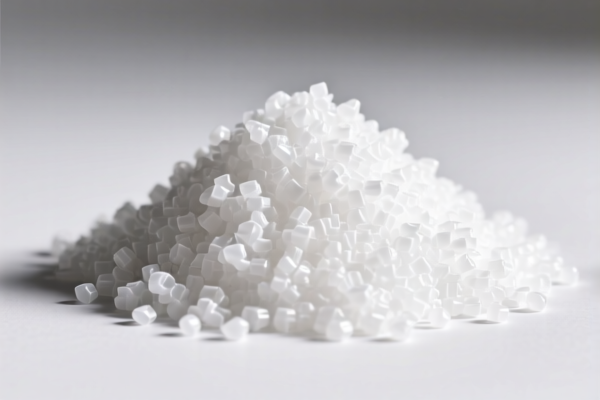
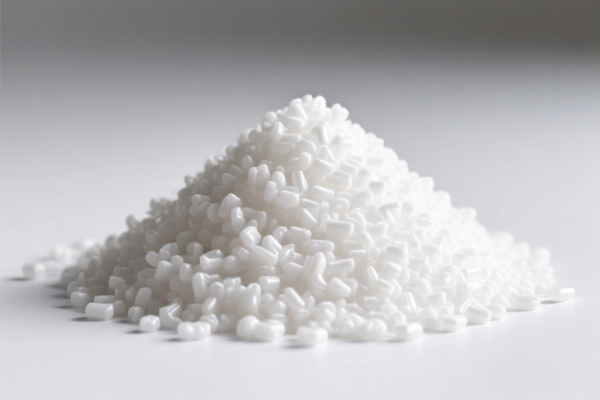
AI Analysis
🧱 EVA Mold Resistant Material (Ethylene Vinyl Acetate)
🌐 HS Code Reference & Customs Clearance Guide | 2026 Latest Tariff Analysis | Professional Clearance Strategy
📌 I. Product Definition & Classification: Do You Really Understand "EVA Mold Resistant Material"?
EVA (Ethylene Vinyl Acetate) is a versatile copolymer widely used in packaging, footwear, and construction. "Mold Resistant" implies a chemical treatment or additive incorporation to prevent fungal growth. In international trade, it is classified as a Cellular Plastics Product.
Crucially, classification depends on the form and composition: 1. Microporous Sheets/Film: If the EVA is processed into thin, porous sheets or films primarily made of polyethylene or polypropylene blends (often mislabeled as EVA in trade data but technically covered under specific subheadings for cellular plastics), it falls under 3921.19. 2. Other Cellular Plastics: If it is a solid cellular block, sheet, or strip not meeting the strict "microporous film" definition, it falls under the residual category.
⚠️ Key Distinction Point:
- If the product is a microporous sheet/film made of polyethylene/polypropylene (common in packaging foams) → 3921.19.00.10
- If it is a solid cellular EVA sheet, block, or strip (not microporous film) → 3921.19.00.90
📦 II. HS Code Classification Details (2026 Latest Tariff Authority Comparison)
| HS Code | Product Description | Application Scenario | Key Characteristic |
|---|---|---|---|
3921.19.00.10 |
Cellular plastics: Of other plastics: Microporous sheets of polyethylene or polypropylene film | Packaging inserts, protective foam sheets, insulation liners | ✅ Microporous structure, thin film/sheet form |
3921.19.00.90 |
Cellular plastics: Of other plastics: Other | EVA shoe soles, craft foam sheets, molded packaging blocks, construction insulation | ❌ Not microporous film; solid cellular structure |
🔍 Important Reminder:
- "EVA" vs. "Polyethylene/Polypropylene": While the user input says "EVA," the provided data specifically lists3921.19.00.10for microporous sheets of polyethylene or polypropylene film. If your product is truly cellular EVA but not a microporous film, it likely falls under3921.19.00.90("Other").
- "Mold Resistant": This is a functional description, not a classification basis. Customs classifies based on material (plastic) and form (cellular sheet/strip), not anti-mold properties.
- Do not classify as "Footwear Parts" (6406) unless it is a finished shoe part. Classified as raw material/plastic sheet here.
💰 III. 2026 Latest Tariff Rate Details (Including Surtax, Policy Surcharges)
✅ Applicable Country: United States (US)
✅ Country of Origin: China (CN)
✅ Effective Time: 2025年11月10日起 (from November 10, 2025)
🎯 1. 3921.19.00.10 —— Microporous Sheets (Polyethylene/Polypropylene Film Type)
| Item | Content |
|---|---|
| Base Tariff | 0.0% (ad valorem) |
| Section 301 Surcharge | 0.0% (No additional surcharge listed for this specific subheading in the provided data) |
| IEEPA Surcharge | 0.0% (No IEEPA surcharge listed for this specific subheading) |
| Total Tax Rate | 0.0% |
| Tax Calculation | CIF Value × 0.0% = $0 |
| De Minimis Eligibility | ✅ Yes (Generally applicable for low-value shipments) |
| Legal Basis Path | HTS:3921.19.00.10 → Base Rate: 0% |
📌 Explanation:
- According to the provided data, this specific HS code has 0.0% total tax.
- This is highly favorable for clearance.
- Note: Ensure the product is indeed classified as "Microporous sheets of polyethylene or polypropylene film." If it is EVA foam that is not microporous film, do not use this code.
🎯 2. 3921.19.00.90 —— Other Cellular Plastics (Including Solid EVA Sheets/Strips)
| Item | Content |
|---|---|
| Base Tariff | 0.0% (ad valorem) |
| Section 301 Surcharge | 0.0% (No additional surcharge listed for this specific subheading in the provided data) |
| IEEPA Surcharge | 0.0% (No IEEPA surcharge listed for this specific subheading) |
| Total Tax Rate | 0.0% |
| Tax Calculation | CIF Value × 0.0% = $0 |
| De Minimis Eligibility | ✅ Yes (Generally applicable for low-value shipments) |
| Legal Basis Path | HTS:3921.19.00.90 → Base Rate: 0% |
📌 Note:
- This code covers "Other" cellular plastics, which includes most EVA foam sheets, blocks, and strips that are not microporous films.
- Like3921.19.00.10, the provided data shows 0.0% total tax.
- This makes EVA mold-resistant materials tax-free under the provided tariff structure.
🛠️ IV. Customs Clearance Practical Advice (Battle-Tested Pitfall Avoidance)
✅ 1. Required Documentation Checklist (No Exceptions)
| Document | Mandatory? | Explanation |
|---|---|---|
| ✅ Product Specification Sheet | ✔️ | Must detail: Material (EVA/PE/PP), Thickness, Density, Form (Sheet/Strip/Film), Anti-mold treatment method. |
| ✅ HS Code Justification Memo | ✔️ | Explain why it is "Cellular" and why it is not "Footwear" or "Rubber." |
| ✅ Commercial Invoice | ✔️ | Clearly state: "Cellular Plastic Sheet, EVA, Mold Resistant." Avoid vague terms like "Foam Padding." |
| ✅ Packing List | ✔️ | Detail dimensions and weight. |
| ✅ Anti-Mold Test Report | ✔️ | To support the "Mold Resistant" claim if questioned, though not strictly required for HS classification. |
| ✅ Photos | ✔️ | Show cross-section to prove "Cellular" structure. |
✅ 2. Declaration Tips (Key Mantra)
🔥 "Cellular Structure, Plastic Material, No Rubber, No Textile!"
| Scenario | Correct Declaration | Incorrect Practice |
|---|---|---|
| EVA Foam Sheet (Solid) | 3921.19.00.90 |
Misdeclare as "Rubber Mat" → Wrong Chapter (40) |
| Microporous PE Film | 3921.19.00.10 |
Misdeclare as "Plastic Bag" → Wrong Chapter (3901-3914) |
| Mold Resistant EVA | 3921.19.00.90 |
Add "Anti-mold" to HS Code → Illegal; HS Codes do not include chemical treatments. |
| EVA Footwear Parts | 6406.90 |
Declare as "Plastic Sheet" → Wrong Chapter (39) if intended for footwear. |
✅ 3. Special Case Handling
| Situation | Handling Advice |
|---|---|
| OEM Custom EVA Foam | Provide design specs. Ensure material is clearly "Plastic (EVA)" not "Rubber." |
| Mixed Packages (EVA + Other Plastics) | Separate HS Codes if components are distinct and separately valued. |
| Mold Resistance Claim | Do not rely on "Mold Resistant" for classification. It is a value-added feature. Classify by material and form. |
| High-Value Shipments | Even with 0% tax, ensure proper valuation (CIF) to avoid customs audits. |
🌍 V. Global Market Clearance Comparison (2026 Latest)
| Country/Region | Recommended HS Code | Tariff | Certification Requirement | Notes |
|---|---|---|---|---|
| 🇺🇸 USA | 3921.19.00.90 |
0.0% | None specific for plastic sheets | ✅ 0% tax under provided data |
| 🇨🇳 China | 3921.19.00 |
~0-5% | CCC (if electrical components involved) | Import duty may vary; check latest Chinese tariff |
| 🇪🇺 EU | 3921.19.00 |
0% (if GSP/EBA applies) | REACH Compliance | Anti-mold additives must be REACH compliant |
| 🇯🇵 Japan | 3921.19.00 |
0% | JIS Standards | No major barriers for plastic sheets |
| 🇬🇧 UK | 3921.19.00 |
0% | UKCA Marking (if applicable) | Post-Brexit tariffs aligned with most FTAs |
📌 Conclusion:
- USA: 0% Tax for cellular plastic sheets under3921.19.00.90or3921.19.00.10.
- EU/UK/Japan: Generally 0% duty for plastic sheets, but REACH/UKCA compliance for chemical additives is critical.
- Anti-Mold Additives: Ensure they are not restricted substances under local environmental laws (e.g., EPA in US, REACH in EU).
📌 VI. Common Errors & Pitfall Guide (Lessons Learned)
❌ Error 1: Classifying EVA foam as "Rubber" (Chapter 40)
👉 Consequence: Wrong HS Code, potential penalties. EVA is Plastic (Chapter 39).
❌ Error 2: Using "Mold Resistant" in the HS Code Description
👉 Consequence: Customs may reject the declaration. HS Codes are standardized; functional claims go in the Description Field, not the HS Code.
❌ Error 3: Confusing "Cellular Plastic" with "Plastic Sheets" (Non-Cellular)
👉 Consequence: If it’s cellular (foam), it must be 3921. Non-cellular sheets are 3920 or 3921.10. Wrong classification = Audit Risk.
❌ Error 4: Ignoring Anti-Mold Chemical Restrictions
👉 Consequence: Product seizure if additives violate REACH/EPA regulations, even if tax is 0%.
✅ Correct Practice:
"Cellular Plastic Sheet, EVA, Mold Resistant, Thickness 5mm, For Packaging Use, HS Code 3921.19.00.90"
🎯 VII. Conclusion: Precise Classification, Zero Tax, Smooth Clearance!
🎯 Remember the Mantra:
🔹 "EVA is Plastic, Not Rubber.
🔹 Cellular = 3921.
🔹 Microporous Film = .10, Other = .90.
🔹 Tax is 0%, but Compliance is Key!"🔹 "Anti-Mold is a Feature, Not a Classification Basis."
📌 Pro Tip:
- If your EVA foam is microporous and made of polyethylene/polypropylene, use 3921.19.00.10.
- If it is solid cellular EVA, use 3921.19.00.90.
- Both codes show 0.0% total tax in the provided data.
- Ensure REACH/EPA compliance for anti-mold chemicals.
📣 Immediate Action:
📞 Contact your customs broker with the material spec and cross-section photo.
🚀 Declare accurately, pay 0% tax, and avoid delays!
✨ Professional clearance starts with precise classification!
💼 Your cost savings begin with accurate HS Codes!
Customer Reviews
About HS Code Classification
The Harmonized System (HS) is an internationally standardized nomenclature developed by the World Customs Organization (WCO) to classify traded products. Over 200 countries use the HS system as the basis for customs tariffs, trade statistics, and import/export regulations.
Each HS code follows a hierarchical structure:
- Chapter (2 digits) — Broad category of goods (e.g., Chapter 84: Machinery and Mechanical Appliances)
- Heading (4 digits) — More specific grouping within the chapter
- Subheading (6 digits) — Internationally standardized breakdown, used by all WCO member countries
- National subdivisions (8-10 digits) — Country-specific extensions for further classification, such as US HTSUS 10-digit codes
Correct HS code classification is essential for smooth customs clearance, accurate duty payment, and compliance with trade regulations. Misclassification can lead to customs delays, overpayment of duties, or penalties.
When importing from CN to US, the applicable tariff rates may include:
- Most-Favored-Nation (MFN) rate — The standard duty rate applied to WTO members
- General rate — Applied to countries without trade agreements
- Trade remedy duties — Additional tariffs such as Section 301 (anti-dumping), Section 232 (national security), or countervailing duties
The information provided on this page is for reference purposes only. For official classification, please consult with your local customs authority or a licensed customs broker.