EVA Resistant Aging Material
CN → US| HS Code | Tariff Rate | Origin | Destination | Doc |
|---|---|---|---|---|
| 3921190010 | 41.5% | CN | US | Official Doc |
| 3901306000 | 40.3% | CN | US | Official Doc |
| 3901302000 | 35.0% | CN | US | Official Doc |
| 6402993165 | 16.0% | CN | US | Official Doc |
| 6402993177 | 16.0% | CN | US | Official Doc |
Product Images
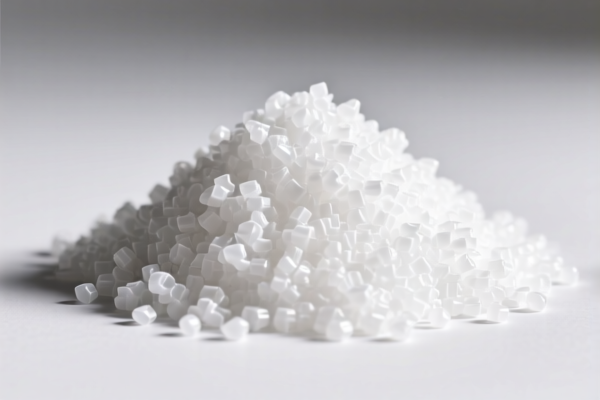
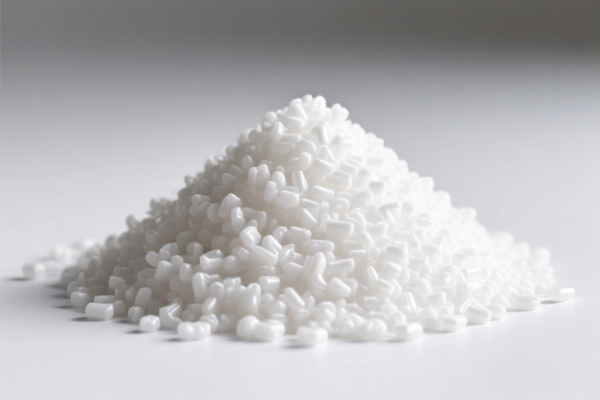
AI Analysis
🖥️ EVA Resistant Aging Material: HS Code Classification & US Customs Clearance Guide
🌐 HS Code Reference & Customs Clearance Guide | 2026 Latest Tariff Analysis | Professional-Level通关 Strategy
📌 I. Product Definition & Classification: Do You Really Understand "EVA Resistant Aging Material"?
EVA (Ethylene-Vinyl Acetate Copolymer) is a versatile material known for its elasticity, transparency, and chemical resistance. In international trade, the classification of EVA depends entirely on its physical form and end-use.
The term "Resistant Aging Material" is a performance description (indicating UV/heat stability), not a functional category. It does not change the fundamental nature of the material. The key to correct classification is determining whether the material is: 1. Raw Material/Semi-finished: Plates, sheets, films, or pellets. 2. Finished Goods: Specifically shaped items, such as footwear soles/upper materials.
⚠️ Critical Distinction Point:
- If the item is plates, sheets, films, or raw granules → It falls under Chapter 39 (Plastics).
- If the item is specifically shaped for footwear (soles/upper parts) → It falls under Chapter 64 (Footwear).
- Misclassification Risk: Declaring a shoe part as raw plastic (or vice versa) leads to significant tariff differences and potential customs delays.
📦 II. HS Code Classification Details (2026 Latest Tariff Authority Comparison)
| HS Code | Product Description | Application Scenario | Material Form | Total Tax Rate (US/CN) |
|---|---|---|---|---|
3921.19.00.10 |
Plates, sheets, film, foil, and strip: Other: Other: Of polymers of ethylene | Raw sheets, industrial films, construction membranes | ✅ Sheet/Film/Form | 41.5% |
3901.30.60.00 |
Primary forms: Ethylene-propylene copolymers: Other: Other | Raw granules, pellets, or bulk resin with anti-aging properties | ✅ Raw/Primary Form | 40.3% |
3901.30.20.00 |
Primary forms: Ethylene-propylene copolymers: Ethylene copolymers with acrylic or methacrylic acids: Other | Raw materials where acrylic modifiers are present (less common for pure EVA but possible in blends) | ✅ Raw/Primary Form | 35.0% |
6402.99.31.65 |
Footwear with outer soles and uppers of rubber or plastics: Other: Other: Other: Other | EVA used specifically for footwear soles or uppers | ❌ Shoe Component | 16.0% |
6402.99.31.77 |
Footwear with outer soles and uppers of rubber or plastics: Other: Other: Other: Other | Generic EVA shoe parts (fallback category for specific shoe components) | ❌ Shoe Component | 16.0% |
🔍 Key Reminder:
- "Resistant Aging" is a feature, not a classification basis. It does not justify a separate HS code. - If you are importing bulk sheets for shoe manufacturing, declare under 3921.19.00.10 (not 6402). - If you are importing finished shoe parts or items clearly destined for footwear, declare under 6402.99.31.x. - Tariff Impact: Raw materials carry ~35-41% tax, while footwear components carry only ~16%. However, misdeclaring raw sheets as shoe parts can lead to smuggling allegations or rejection if the goods do not match the description of "footwear."
💰 III. 2026 Latest Tariff Rate Breakdown (Including Surtaxes, Policy Surcharges)
✅ Applicable Country: United States (US)
✅ Origin: China (CN)
✅ Effective Date: November 10, 2025 onwards (including subsequent imports)
🎯 1. 3921.19.00.10 — Plates, Sheets, Film (EVA Raw/Process Material)
| Item | Content |
|---|---|
| Base Tariff | 6.5% (ad valorem) |
| USITC Surtax | +25.0% (from USITC Footnote 9903.88.01) |
| IEEPA Surtax | +10.0% (for China/HK products, effective Nov 10, 2025) |
| Total Rate | 41.5% |
| Tax Calculation | CIF Value × 41.5% |
| De Minimis Exemption | ❌ Not Eligible (deny_de_minimis) |
| Legal Basis Path | IEEPA:9903.01.25 → IEEPA:9903.01.24 → USITC:3921.19.00.10 → FOOTNOTE:9903.88.01 |
📌 Explanation:
- The 25% USITC surtax applies to most plastics from China under Section 301. - The 10% IEEPA surtax is a new layer added in late 2025. - Total 41.5% is a very high tax burden. This applies to bulk EVA sheets used in construction, packaging, or manufacturing.
🎯 2. 3901.30.60.00 — Primary Forms (EVA Resin/Granules)
| Item | Content |
|---|---|
| Base Tariff | 5.3% |
| USITC Surtax | +25.0% |
| IEEPA Surtax | +10.0% |
| Total Rate | 40.3% |
| Tax Calculation | CIF Value × 40.3% |
| De Minimis Exemption | ❌ Not Eligible |
| Legal Basis Path | IEEPA:9903.01.24 → USITC:3901.30.60.00 → FOOTNOTE:9903.88.01 |
📌 Note:
- Slightly lower base tariff (5.3%) than sheets (6.5%), but total impact is similar. - Applies to pellets, powders, or loose raw EVA.
🎯 3. 3901.30.20.00 — Other Ethylene Copolymers (Specific Blend)
| Item | Content |
|---|---|
| Base Tariff | 0.0% |
| USITC Surtax | +25.0% |
| IEEPA Surtax | +10.0% |
| Total Rate | 35.0% |
| Tax Calculation | CIF Value × 35.0% |
| De Minimis Exemption | ❌ Not Eligible |
| Legal Basis Path | IEEPA:9903.01.24 → USITC:3901.30.20.00 → FOOTNOTE:9903.88.01 |
📌 Note:
- Only apply if the material is a specific ethylene-acrylic copolymer blend. Pure EVA typically falls under 3901.30.60 or 3921.19.
🎯 4. 6402.99.31.65 / 6402.99.31.77 — Footwear Components (EVA Soles/Uppers)
| Item | Content |
|---|---|
| Base Tariff | 6.0% |
| USITC Surtax | 0.0% (Footwear often exempt from Section 301 25% surtax in this subheading) |
| IEEPA Surtax | +10.0% |
| Total Rate | 16.0% |
| Tax Calculation | CIF Value × 16.0% |
| De Minimis Exemption | ❌ Not Eligible |
| Legal Basis Path | IEEPA:9903.01.24 → USITC:6402.99.31.65 |
📌 Critical Insight:
- Footwear components enjoy a significantly lower total tax (16%) compared to raw plastics (~40%). - However, you cannot arbitrarily declare raw EVA sheets as footwear components to save tax. The goods must physically match the description of "outer soles or uppers" or be clearly destined for immediate assembly as such. - If customs inspects and finds bulk sheets, they will reclassify to Chapter 39 and charge ~40%.
🛠️ IV. Customs Clearance Practical Advice (Real-World Pitfall Avoidance Guide)
✅ 1. Required Documentation Checklist (None Missing)
| Document | Mandatory | Description |
|---|---|---|
| ✅ Product Specification Sheet | ✔️ | Must clearly state: "EVA (Ethylene-Vinyl Acetate Copolymer)," "Anti-Aging/UV Stable," and Physical Form (Sheet/Granule/Part). |
| ✅ Product Photos | ✔️ | Clear images of the item. If raw material: show texture/packaging. If shoe part: show shape/sole pattern. |
| ✅ Commercial Invoice | ✔️ | Description must match HS Code. E.g., "EVA Sheets for Industrial Use" vs. "EVA Shoe Soles." |
| ✅ Packing List | ✔️ | Details weight, dimensions, and quantity. |
| ✅ Material Safety Data Sheet (MSDS) | ✔️ | Required for chemical handling, especially for "Resistant Aging" formulations. |
| ✅ Proof of End-Use (if applicable) | ✔️ | If claiming footwear classification, provide order details showing they are for shoe manufacturing. |
✅ 2. Declaration Tips (Key Mantras)
🔥 “Form Determines Code, Use Determines Duty!”
| Scenario | Correct Declaration | Wrong Practice |
|---|---|---|
| Bulk EVA Sheets/Films | 3921.19.00.10 Desc: "EVA Plates, Sheets, Anti-Aging Grade" |
Declaring as "Shoe Parts" → Smuggling/Rejection |
| EVA Granules/Pellets | 3901.30.60.00 Desc: "EVA Resin, Primary Form, UV Stabilized" |
Declaring as "Finished Plastic Parts" → Delay |
| EVA Shoe Soles/Uppers | 6402.99.31.65 Desc: "EVA Outer Soles for Footwear" |
Declaring as "Raw Material" → Overpay Tax (16% vs 40%) but Risky if not actual parts |
| Mixed Batch (Sheets + Parts) | Split Declaration | Bundling all under one code → Confusion & Audit |
✅ 3. Special Situation Handling
| Situation | Handling Advice |
|---|---|
| OEM Custom EVA Parts | Provide customer order + design drawings. If they are half-finished for shoes, classify under 6402. If they are raw sheets to be cut later, classify under 3921. |
| "Resistant Aging" Claim | Do not create a new HS Code. This is a quality attribute. Declare as standard EVA with "UV/Heat Stabilized" in the description. |
| Importing for Resale (No Specific Use) | If selling to multiple industries, classify as Raw Material (3921/3901). Do not guess "Footwear" unless you have binding orders. |
| Small Samples | Still subject to full duties. De Minimis (Section 321) does not apply to Chinese origin goods under IEEPA 10% surtax. |
🌍 V. Global Market Comparison (2026 Latest)
| Country/Region | Recommended HS Code | Tariff (China Origin) | Certification | Notes |
|---|---|---|---|---|
| 🇺🇸 US | 3921.19.00.10 (Sheets) |
41.5% | No specific (MSDS req.) | High tax. 6402 (16%) only for actual shoe parts. |
| 🇺🇸 US | 6402.99.31.65 (Parts) |
16.0% | No specific | Lower tax, but strict inspection. |
| 🇨🇳 China | 3921.19.00.10 |
6.5% | CCC (if applicable) | No US surtaxes. |
| 🇪🇺 EU | 3920.62.00 (Similar) |
4-6.5% | REACH | No Section 301 style surtax. |
📌 Conclusion:
- US Market is Cost-Intensive: Raw EVA materials from China face ~40% total duty.
- Footwear Component Pathway: If you are a shoe manufacturer importing EVA soles/uppers, you benefit from a 16% rate.
- Strategic Advice:
- If you are a shoe maker, ensure your EVA parts are pre-shaped for shoes to qualify for6402.
- If you are a trader of raw EVA, budget for 40%+ tax.
- Never misdeclare raw sheets as shoe parts to save 24% tax. The risk of penalties, back-taxes, and seizure is extremely high.
📌 VI. Common Errors & Pitfall Guide (Blood & Tears Lessons)
❌ Error 1: Declaring EVA Sheets as Shoe Parts to pay 16% instead of 41.5%
👉 Consequence: Customs inspection finds flat sheets. Reclassification to 3921, back-taxes + interest + potential fraud penalties.
❌ Error 2: Ignoring the 10% IEEPA Surtax
👉 Consequence: Assuming only 25% + 6.5% = 31.5%. Actual cost is 41.5%. Profit margin erosion!
❌ Error 3: Using "Resistant Aging" as a standalone product name
👉 Consequence: Customs cannot determine HS Code. Shipment held, requiring detailed technical clarification.
❌ Error 4: Assuming De Minimis (800 USD exemption) applies
👉 Consequence: No exemption for Chinese origin goods under Section 321 as of late 2025. All shipments taxed.
✅ Correct Practice:
"EVA Sheets, 2mm thick, Anti-Aging/UV Stabilized, Raw Material for Industrial Use, Model XYZ, MSDS Provided"
🎯 VII. Conclusion: Professional Declaration, Save Time & Money!
🎯 Remember the Mantra:
🔹 "Raw Sheets = Chapter 39 (High Tax ~41%). Shoe Parts = Chapter 64 (Lower Tax ~16%). Don't Mix!"
🔹 "IEEPA 10% + USITC 25% = High Cost for Plastics. Verify Form First!"
📌 Pro Tip:
If you are a footwear manufacturer, structure your supply chain so that EVA is imported as finished soles/uppers (HS 6402) where possible, rather than raw sheets, to save ~25% in duties. However, this must be physically accurate.
📣 Immediate Action:
📞 Consult a licensed customs broker + Provide Product Photos + Verify Physical Form
🚀 Ensure your Commercial Invoice description matches the HS Code exactly.
💼 Your compliance prevents costly delays and unexpected taxes.
✨ Professional Customs Clearance Starts with Accurate Classification!
💼 Every dollar of duty saved is a dollar of profit kept!
Customer Reviews
About HS Code Classification
The Harmonized System (HS) is an internationally standardized nomenclature developed by the World Customs Organization (WCO) to classify traded products. Over 200 countries use the HS system as the basis for customs tariffs, trade statistics, and import/export regulations.
Each HS code follows a hierarchical structure:
- Chapter (2 digits) — Broad category of goods (e.g., Chapter 84: Machinery and Mechanical Appliances)
- Heading (4 digits) — More specific grouping within the chapter
- Subheading (6 digits) — Internationally standardized breakdown, used by all WCO member countries
- National subdivisions (8-10 digits) — Country-specific extensions for further classification, such as US HTSUS 10-digit codes
Correct HS code classification is essential for smooth customs clearance, accurate duty payment, and compliance with trade regulations. Misclassification can lead to customs delays, overpayment of duties, or penalties.
When importing from CN to US, the applicable tariff rates may include:
- Most-Favored-Nation (MFN) rate — The standard duty rate applied to WTO members
- General rate — Applied to countries without trade agreements
- Trade remedy duties — Additional tariffs such as Section 301 (anti-dumping), Section 232 (national security), or countervailing duties
The information provided on this page is for reference purposes only. For official classification, please consult with your local customs authority or a licensed customs broker.