EVA Resistant Anti static Transparent Granules
CN → US| HS Code | Tariff Rate | Origin | Destination | Doc |
|---|---|---|---|---|
| 3901306000 | 40.3% | CN | US | Official Doc |
| 3901302000 | 35.0% | CN | US | Official Doc |
Product Images
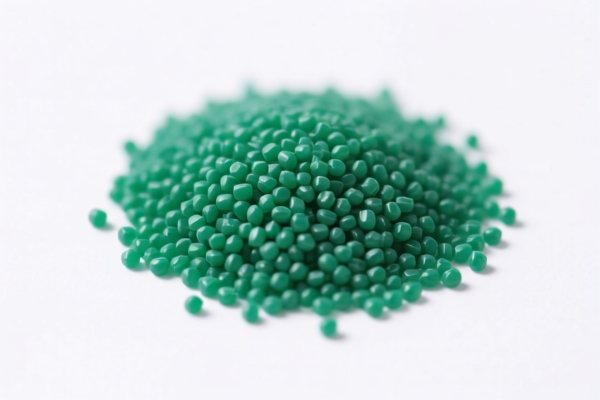
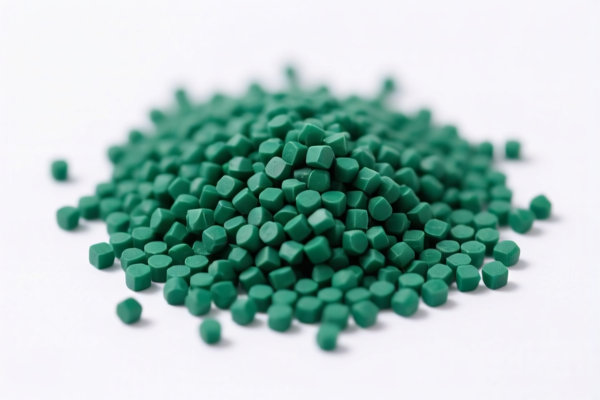
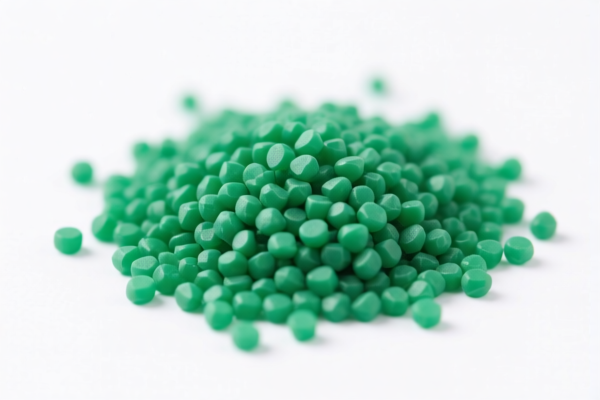
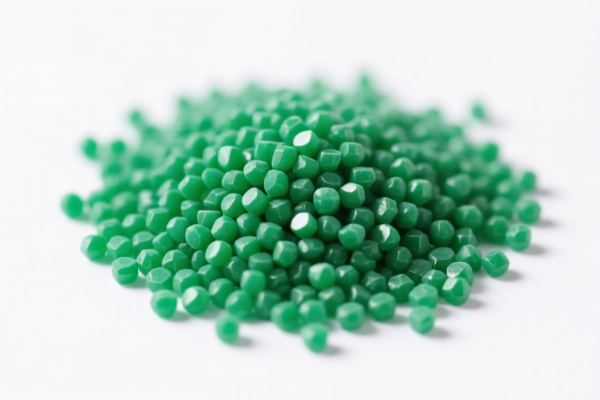
AI Analysis
🧪 EVA Resistant Anti-static Transparent Granules
🌐 HS Code Reference & Customs Clearance Guide | 2026 Latest Tariff Analysis | Professional Compliance Strategy
📌 I. Product Definition & Classification: What Exactly Are You Importing?
EVA Granules refer to raw material polymers in their primary forms (unprocessed or minimally processed). The terms "Resistant" (likely referring to chemical/UV resistance) and "Anti-static" describe the physical properties or modifications of the polymer, not its chemical composition for customs purposes.
In international trade, classification depends on monomer composition and specific copolymer types. Based on the provided data, these granules fall under Chapter 39 (Plastics and Articles Thereof), specifically Heading 3901 (Polymers of Ethylene, in Primary Forms).
⚠️ Critical Distinction for Classification:
- "Anti-static" additives (like carbon black or conductive polymers) generally do not change the HS code if they are minor additives (<5% by weight) intended to impart a temporary property. The product is still classified based on its base polymer (EVA).
- "Transparent" implies no significant pigment or opacifying agent, confirming it as a base polymer.
- "Resistant" is a performance claim, not a classification factor.
The two potential HS Codes provided reflect different copolymer/terpolymer compositions: 1. Standard Ethylene-Vinyl Acetate Copolymers (EVA): Basic EVA resins. 2. Vinyl Acetate-Vinyl Chloride-Ethylene Terpolymers: A more complex 3-component polymer, likely used for specific industrial applications requiring different chemical resistance.
📦 II. HS Code Classification Details (2026 Latest Tariff Concordance)
| HS Code | Product Description | Key Criteria for Classification | Tax Rate (China Origin → US) |
|---|---|---|---|
| 3901.30.60.00 | Ethylene-vinyl acetate copolymers: Other | • Base polymer is EVA. • Vinyl Acetate (VA) content typically > 40% or unspecified. • No Vinyl Chloride (VC) component. • Standard transparent/translucent granules. |
0.0% (Base: 0% + Additional: 0%) |
| 3901.30.20.00 | Vinyl acetate-vinyl chloride-ethylene terpolymers, containing < 50% derivatives of vinyl acetate | • Three monomers: Ethylene, Vinyl Acetate, Vinyl Chloride. • VA content is less than 50% by weight. • Not polymerized from aromatic monomers. • Often used for high-performance adhesives or specialty films. |
25.0% (Base: 0% + Additional: 25%) |
🔍 Key Differentiator:
- If your granules are pure EVA (Ethylene + Vinyl Acetate), use 3901.30.60.00.
- If your granules contain Vinyl Chloride as a third monomer (Terpolymer) and VA is < 50%, use 3901.30.20.00.
- "Anti-static": Unless the anti-static agent constitutes the primary monomer (which is rare for granules; usually a masterbatch or additive), it does not shift the code to Chapter 38 or 90. It remains a plastic resin.
💰 III. 2026 Latest Tariff Rate Breakdown
✅ Applicable Market: United States (US)
✅ Country of Origin: China (CN)
✅ Effective Date: Current rates apply (No additional IEEPA surcharge listed in data for these specific codes, unlike other categories)
🎯 1. 3901.30.60.00 —— Ethylene-Vinyl Acetate Copolymers (Standard EVA)
| Item | Details |
|---|---|
| Base Tariff | 0.0% |
| Additional Tariff (Section 301) | 0.0% |
| Total Effective Rate | 0.0% |
| Calculation Basis | CIF Value × 0% = $0 Duty |
| De Minimis Eligibility | ❌ N/A (Generally, bulk polymers are not eligible for de minimis if duty is > $800, but rate is 0%, so no duty regardless. However, formal entry may still be required depending on value.) |
| Legal Basis | HTSUS 3901.30.60.00 |
📌 Interpretation:
This is a duty-free entry for standard EVA copolymers. No hidden Section 301 tariffs apply to this specific subheading in the provided data. This makes standard EVA highly cost-effective compared to modified or complex terpolymers.
🎯 2. 3901.30.20.00 —— VA-VC-Ethylene Terpolymers
| Item | Details |
|---|---|
| Base Tariff | 0.0% |
| Additional Tariff (Section 301) | +25.0% |
| Total Effective Rate | 25.0% |
| Calculation Basis | CIF Value × 25% |
| De Minimis Eligibility | ❌ Not Applicable (If value > $800, duty is charged) |
| Legal Basis | HTSUS 3901.30.20.00 + Section 301 Footnotes |
📌 Interpretation:
The 25% surcharge is a Section 301 tariff specifically targeting Chinese-origin plastics that fall under this complex terpolymer category. This significantly impacts cost. You must ensure your product is NOT a terpolymer if you want to avoid this duty.
🛠️ IV. Customs Clearance Practical Advice
✅ 1. Documentation Checklist (Mandatory)
| Document | Required? | Notes |
|---|---|---|
| ✅ Commercial Invoice | ✔️ | Must clearly state: "Polymer of Ethylene," "Vinyl Acetate Content: XX%," "No Vinyl Chloride" (if applying for 3901.30.60.00). |
| ✅ Product Specification Sheet | ✔️ | Must include: Chemical composition, VA/VC percentages, physical form (granules), and intended use. |
| ✅ Safety Data Sheet (SDS) | ✔️ | Required for hazardous material checks. Confirm no restricted chemicals. |
| ✅ Anti-Static Certification | Optional | Proof of anti-static properties (e.g., surface resistance < 10^9 ohms) may be requested to verify "no conductive pigments" that might alter classification. |
| ✅ Certificate of Origin | ✔️ | Required to prove China origin (triggering the 25% if misclassified). |
✅ 2. Classification Strategy (Crucial for Cost Saving)
🔥 "Prove It’s Not a Terpolymer!"
| Scenario | Correct HS Code | Risk if Misclassified |
|---|---|---|
| Pure EVA (Ethylene + VA only) | 3901.30.60.00 (0% Duty) |
If Customs suspects VC content → Rejected to 3901.30.20.00 → 25% Duty + Penalties. |
| EVA with Anti-Static Additive | 3901.30.60.00 (0% Duty) |
Ensure additive is < 5% and not a monomer. Provide lab report showing no VC. |
| Terpolymer (Ethylene + VA + VC) | 3901.30.20.00 (25% Duty) |
No workaround. Duty is mandatory. |
📌 Tip: If your granules are marketed as "Anti-static," do not claim they contain "Conductive Fillers" that might be mistaken for chemical additives. State clearly: "Anti-static properties achieved via surface treatment/minor non-conductive additives; Base Polymer: Ethylene-Vinyl Acetate."
✅ 3. Special Handling for "Transparent" and "Resistant"
- Transparent: No issue. Confirms lack of carbon black or titanium dioxide (which might shift to other subheadings).
- Resistant: If "UV Resistant," ensure no titanium dioxide is present in large quantities. If "Chemical Resistant," this is a performance claim, not a composition fact. Do not over-claim in customs docs.
🌍 V. Global Market Comparison (2026)
| Country | HS Code | Duty Rate | Notes |
|---|---|---|---|
| 🇺🇸 USA | 3901.30.60.00 |
0% | Best case for EVA. |
| 🇺🇸 USA | 3901.30.20.00 |
25% | Avoid if possible. |
| 🇨🇳 China | 3901.30.60.00 |
4.0% | Standard import duty. |
| 🇪🇺 EU | 3901.30.80 |
5.3% | No Section 301 equivalent. |
| 🇬🇧 UK | 3901.30.90 |
5.3% | Post-Brexit rate. |
📌 VI. Common Mistakes & Pitfalls
❌ Mistake 1: Claiming "Anti-static" means it’s an electronic component (Chapter 85).
👉 Result: Classification error. It’s still a plastic resin (Chapter 39).
❌ Mistake 2: Assuming all EVA is duty-free.
👉 Result: If your EVA contains Vinyl Chloride (even 1%), it becomes a terpolymer and faces 25% duty.
❌ Mistake 3: Omitting VA percentage in specifications.
👉 Result: Customs may classify under "Other" (3901.30.60.00) but request clarification, delaying clearance.
✅ Correct Declaration Example:
"EVA Granules, Ethylene-Vinyl Acetate Copolymer, VA Content 28%, Transparent, Anti-Static Surface Treatment, No Vinyl Chloride, Primary Form"
🎯 VII. Conclusion: Strategic Clearance Advice
🎯 Key Takeaway:
- Standard EVA = 0% Duty (3901.30.60.00).
- Terpolymer (with VC) = 25% Duty (3901.30.20.00).
📌 Action Plan:
1. Lab Test: Verify no Vinyl Chloride in your granules.
2. Documentation: Clearly state "No Vinyl Chloride" on the Invoice.
3. Labeling: Use "EVA Copolymer" not "Terpolymer."
4. Clearance: File entry under 3901.30.60.00 to enjoy 0% duty.
🚀 Pro Tip: If your product is truly a terpolymer, consider if a slight adjustment in composition (reducing VC below 50% or removing it) could shift it to the duty-free category. Always consult a licensed customs broker for pre-ruling.
✨ Accurate Classification = Significant Savings!
💼 Don’t let a 25% tariff eat your margins. Verify your polymer composition today!
Customer Reviews
About HS Code Classification
The Harmonized System (HS) is an internationally standardized nomenclature developed by the World Customs Organization (WCO) to classify traded products. Over 200 countries use the HS system as the basis for customs tariffs, trade statistics, and import/export regulations.
Each HS code follows a hierarchical structure:
- Chapter (2 digits) — Broad category of goods (e.g., Chapter 84: Machinery and Mechanical Appliances)
- Heading (4 digits) — More specific grouping within the chapter
- Subheading (6 digits) — Internationally standardized breakdown, used by all WCO member countries
- National subdivisions (8-10 digits) — Country-specific extensions for further classification, such as US HTSUS 10-digit codes
Correct HS code classification is essential for smooth customs clearance, accurate duty payment, and compliance with trade regulations. Misclassification can lead to customs delays, overpayment of duties, or penalties.
When importing from CN to US, the applicable tariff rates may include:
- Most-Favored-Nation (MFN) rate — The standard duty rate applied to WTO members
- General rate — Applied to countries without trade agreements
- Trade remedy duties — Additional tariffs such as Section 301 (anti-dumping), Section 232 (national security), or countervailing duties
The information provided on this page is for reference purposes only. For official classification, please consult with your local customs authority or a licensed customs broker.