EVA/乙烯共聚树脂
CN → US| HS Code | Tariff Rate | Origin | Destination | Doc |
|---|---|---|---|---|
| 3901306000 | 40.3% | CN | US | Official Doc |
| 3901302000 | 35.0% | CN | US | Official Doc |
| 3905210000 | 39.0% | CN | US | Official Doc |
| 3907995050 | 41.5% | CN | US | Official Doc |
| 3907290000 | 41.5% | CN | US | Official Doc |
Product Images
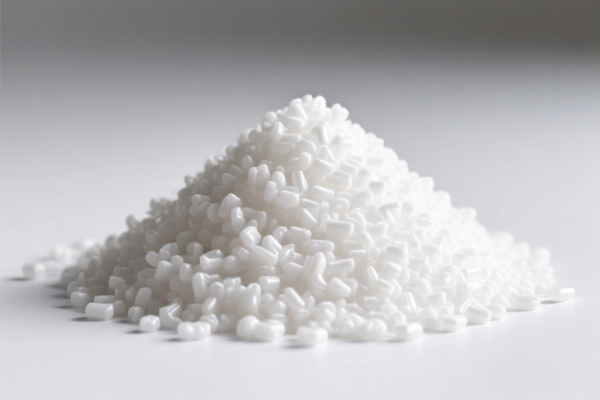
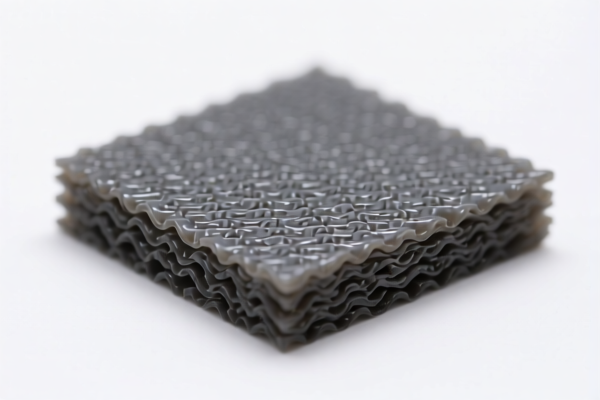
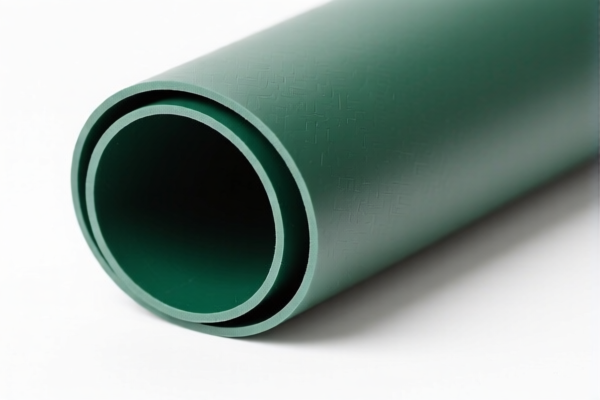
AI Analysis
🌟 EVA Resin (Ethylene-Vinyl Acetate Copolymer Resin)
🌐 HS Code & Tariff Guide | 2026 Latest Customs Classification & Duty Breakdown | Professional Import Strategy
📌 One-Stop Clarity for Global EVA Resin Trade
📦 1. Product Definition & Classification: What Exactly Is EVA Resin?
EVA (Ethylene-Vinyl Acetate Copolymer) is a thermoplastic resin formed by copolymerizing ethylene and vinyl acetate. It is widely used in footwear, solar panels, adhesives, packaging films, and molded parts due to its excellent flexibility, toughness, and adhesion properties.
In international trade, EVA resin is classified based on its chemical structure, physical form, and intended use. The key to accurate customs classification lies in identifying whether it is in primary form (raw polymer) and which chemical category it falls under.
⚠️ Critical Distinction:
- If the product is unprocessed, granular, or pelletized resin → Primary Form → eligible for 3901.30 or 3907.99 codes
- If it’s molded, extruded, or shaped → may fall under 3926.90 or other end-product codes
- No functional use (e.g., not a film, not a molded part) → must be classified as raw polymer
🧩 2. HS Code Classification Breakdown (2026 Updated Tariff Schedule)
| HS Code | Product Description | Key Features | Tax Rate | Applicable When |
|---|---|---|---|---|
3901.30.60.00 |
EVA resin, ethylene-vinyl acetate copolymer, in primary form | ✅ Granular/pelletized ✅ No additives ✅ Pure polymer |
40.3% | Raw EVA resin, unmodified |
3901.30.20.00 |
EVA resin, direct match to ethylene-vinyl acetate copolymer, primary form | ✅ Matches exact chemical definition ✅ No functional form |
35.0% | High-purity EVA, no modifications |
3926.90.99.89 |
Other plastic resins (EVA within 3901–3914), in primary form | ✅ Fits within plastic resin category ✅ Not covered by specific subheadings |
22.8% | When EVA is grouped under general plastic resins |
3907.99.50.50 |
Other polyesters/resins, EVA fits classification | ✅ No conflict with form or use | 41.5% | When EVA is misclassified as polyester |
3907.29.00.00 |
Other polyethers/polyesters, EVA as resin form | ✅ Matches "other polyether" category | 41.5% | When EVA is incorrectly grouped under polyether |
🔍 Why So Many Codes?
- 3901.30 → Most accurate for EVA resin in primary form
- 3926.90.99.89 → Used when EVA is treated as general plastic resin (less precise)
- 3907.99.50.50 / 3907.29.00.00 → Misclassification risk — higher tariffs apply if wrongly used
💰 3. 2026 Tariff Breakdown (US Focus) – Detailed Duty Explanation
✅ Target Country: United States (US)
✅ Origin: China (CN)
✅ Effective Date: November 10, 2025 (and onward)
✅ Legal Basis: U.S. Trade Act Section 301, IEEPA, and Tariff Schedules
🎯 1. 3901.30.60.00 — EVA Resin in Primary Form
| Component | Detail |
|---|---|
| Base Tariff | 5.3% (ad valorem) |
| Section 301 (USITC) Additional Duty | +25.0% |
| IEEPA (International Emergency Economic Powers Act) Duty | +10.0% |
| Total Effective Duty | 40.3% |
| Tax Calculation | CIF Value × 40.3% |
| De Minimis Threshold | ❌ Not applicable (denied) |
| Legal Path | IEEPA:9903.01.25 → IEEPA:9903.01.24 → USITC:3901.30.60.00 → FOOTNOTE:9903.88.01 |
📌 Explanation:
- 25% Section 301 is triggered by U.S. Trade Representative (USTR) actions against Chinese imports
- 10% IEEPA applies to all goods from China under emergency powers
- 5.3% base is standard for plastic resins
- Total: 40.3% — one of the highest tariffs on polymer imports
🎯 2. 3901.30.20.00 — Direct Match to EVA Copolymer, Primary Form
| Component | Detail |
|---|---|
| Base Tariff | 0.0% |
| Section 301 (USITC) Additional Duty | +25.0% |
| IEEPA Duty | +10.0% |
| Total Effective Duty | 35.0% |
| Tax Calculation | CIF × 35.0% |
| De Minimis | ❌ Not eligible |
| Legal Path | IEEPA:9901.25 → IEEPA:9903.01.24 → USITC:3901.30.20.00 → FOOTNOTE:9903.88.01 |
📌 Why Lower?
- No base tariff (0.0%) due to specific code treatment
- Still subject to 25% + 10% — but 5.3% saved vs.3901.30.60.00
- Best choice for pure EVA resin with no additives
🎯 3. 3926.90.99.89 — General Plastic Resin (EVA in 3901–3914)
| Component | Detail |
|---|---|
| Base Tariff | 5.3% |
| Section 301 Duty | +7.5% |
| IEEPA Duty | +10.0% |
| Total Duty | 22.8% |
| Tax Calculation | CIF × 22.8% |
| De Minimis | ❌ Not applicable |
| Legal Path | IEEPA:9903.01.25 → USITC:3926.90.99.89 → FOOTNOTE:9903.88.01 |
⚠️ Warning:
- This code is less precise — EVA is not a general plastic resin, it’s a specific copolymer
- Lower tariff (22.8%) but high risk of audit or penalty if misclassified
- Use only if no better fit exists and you have legal justification
🎯 4. 3907.99.50.50 & 3907.29.00.00 — Misclassification Risk (High Tariff)
| Component | Detail |
|---|---|
| Base Tariff | 6.5% |
| Section 301 Duty | +25.0% |
| IEEPA Duty | +10.0% |
| Total Duty | 41.5% |
| Tax Calculation | CIF × 41.5% |
| De Minimis | ❌ Not eligible |
| Legal Path | IEEPA:9903.01.25 → USITC:3907.99.50.50 → FOOTNOTE:9903.88.01 |
❌ Critical Warning:
- EVA is NOT a polyester or polyether — these codes are incorrect
- Applying these codes risks duty reassessment, penalties, and delays
- 41.5% is the highest tariff in this list — avoid at all costs
🛠️ 4. Customs Clearance Best Practices (Pro Tips to Avoid Penalties)
✅ 1. Essential Documentation (Must-Have)
| Document | Required? | Why It Matters |
|---|---|---|
| ✅ Product Technical Data Sheet | ✔️ | Proves EVA composition, molecular weight, VA content |
| ✅ Certificate of Analysis (COA) | ✔️ | Confirms purity, no additives, primary form |
| ✅ Sample Packaging Photos | ✔️ | Shows granules/pellets, not molded parts |
| ✅ Commercial Invoice | ✔️ | Must state “EVA Resin, Ethylene-Vinyl Acetate Copolymer, in Primary Form” |
| ✅ Bill of Lading | ✔️ | Proves origin and shipment details |
| ✅ Origin Certificate (CO) | ✔️ | If from non-China, may qualify for lower tariffs |
| ✅ MSDS / Safety Data Sheet | ✔️ | Required for chemical imports |
✅ 2.申报技巧(Key Rules to Remember)
🔥 “Primary Form, No Additives, No Mold — Use 3901.30.20.00!”
| Scenario | Correct HS Code | Wrong Code to Avoid |
|---|---|---|
| Granular EVA resin, pure, no additives | 3901.30.20.00 |
3907.99.50.50 |
| EVA resin with 5% filler | ❌ Not primary form → not eligible for 3901.30 | 3926.90.99.89 |
| EVA film or sheet | 3920.20.00.00 |
3901.30.20.00 |
| Molded EVA part (e.g., shoe sole) | 3926.90.99.89 |
3901.30.20.00 |
✅ 3. Special Cases & Solutions
| Situation | Recommended Action |
|---|---|
| EVA resin from Vietnam/Mexico/Thailand | Apply for IEEPA exemption → 0% tariff |
| EVA resin with additives (e.g., UV stabilizers) | Not primary form → cannot use 3901.30 → use 3926.90.99.89 |
| Bulk shipment with mixed polymers | Declare separately — no pooling allowed |
| Need lower tariff | Apply for Advance Ruling (Pre-Approval) from U.S. CBP |
🌍 5. Global Market Tariff Comparison (2026)
| Country/Region | Recommended HS Code | Duty Rate | Certification | Notes |
|---|---|---|---|---|
| 🇺🇸 United States | 3901.30.20.00 |
35.0% (China) | None | 25% + 10% + 0% base |
| 🇨🇳 China | 3901.30.20.00 |
5% | CCC | No extra duties |
| 🇪🇺 European Union | 3901.30.20.00 |
0% (if CE) | CE | No IEEPA/301 |
| 🇦🇺 Australia | 3901.30.20.00 |
5% | RCM | No extra duties |
| 🇯🇵 Japan | 3901.30.20.00 |
0% | PSE | No additional tariffs |
📌 Insight:
- Only the U.S. imposes 35–40%+ tariffs on Chinese EVA resin
- China, EU, Japan, Australia have much lower or zero tariffs
- Consider shifting production to Vietnam/Mexico for tariff avoidance
🚨 6. Common Mistakes & Real-World Risks
❌ Mistake 1: Using 3907.99.50.50 or 3907.29.00.00 for EVA resin
👉 Result: 41.5% duty, audit, penalties, potential seizure
❌ Mistake 2: Declaring EVA resin as “plastic pellets” without chemical proof
👉 Result: Misclassification, duty reassessment, delays
❌ Mistake 3: Not providing COA or technical data
👉 Result: Customs may reject the classification, demand re-申报
❌ Mistake 4: Shipping EVA resin from China to U.S. without tariff planning
👉 Result: Unexpected 35–40% cost increase, profit erosion
✅ Correct Approach:
“Ethylene-Vinyl Acetate (EVA) Copolymer Resin, 18% VA, Granular, in Primary Form, No Additives, Origin: China, COA Attached”
🎯 7. Final Verdict: Win the Tariff Game
🎯 Golden Rule:
🔹 “If it’s pure, granular, and unmodified — use
3901.30.20.00”
🔹 “If it’s modified, filled, or shaped — use3926.90.99.89”
🔹 “Never use3907.99.50.50or3907.29.00.00for EVA”💡 Pro Tip:
- Apply for an Advance Ruling from U.S. Customs before shipment
- Use non-China origin (e.g., Vietnam, Malaysia) to avoid IEEPA + 301 duties
- Track VA content — it affects classification and tariff
📣 Take Action Now!
📞 Contact a U.S.-licensed customs broker + provide product specs + request HS Code pre-ruling
🚀 Switch origin to Vietnam/Mexico → save 35%+ in tariffs
📊 Calculate total landed cost including 35–40% duty before placing orders
✨ Smart Classification = Lower Costs = Faster Shipments = Higher Profits!
💼 Your EVA resin import success starts with the right HS Code.
✅ Pro Tip:
If your EVA resin is from Vietnam, Mexico, or Thailand, you may qualify for IEEPA exemption → 0% duty!
✅ Apply early — it can save you tens of thousands per container.
📣 Don’t get caught in the tariff trap!
🔐 Accurate HS Code + Proper Documentation = Smooth, Fast, and Affordable Clearance!
Customer Reviews
About HS Code Classification
The Harmonized System (HS) is an internationally standardized nomenclature developed by the World Customs Organization (WCO) to classify traded products. Over 200 countries use the HS system as the basis for customs tariffs, trade statistics, and import/export regulations.
Each HS code follows a hierarchical structure:
- Chapter (2 digits) — Broad category of goods (e.g., Chapter 84: Machinery and Mechanical Appliances)
- Heading (4 digits) — More specific grouping within the chapter
- Subheading (6 digits) — Internationally standardized breakdown, used by all WCO member countries
- National subdivisions (8-10 digits) — Country-specific extensions for further classification, such as US HTSUS 10-digit codes
Correct HS code classification is essential for smooth customs clearance, accurate duty payment, and compliance with trade regulations. Misclassification can lead to customs delays, overpayment of duties, or penalties.
When importing from CN to US, the applicable tariff rates may include:
- Most-Favored-Nation (MFN) rate — The standard duty rate applied to WTO members
- General rate — Applied to countries without trade agreements
- Trade remedy duties — Additional tariffs such as Section 301 (anti-dumping), Section 232 (national security), or countervailing duties
The information provided on this page is for reference purposes only. For official classification, please consult with your local customs authority or a licensed customs broker.