Ear Cleaner
CN → US| HS Code | Tariff Rate | Origin | Destination | Doc |
|---|---|---|---|---|
| 7326908688 | 87.9% | CN | US | Official Doc |
| 7326903500 | 92.8% | CN | US | Official Doc |
| 3926909989 | 22.8% | CN | US | Official Doc |
| 3926909910 | 22.8% | CN | US | Official Doc |
| 9603294090 | 0.0% | CN | US | Official Doc |
| 9603298090 | 0.0% | CN | US | Official Doc |
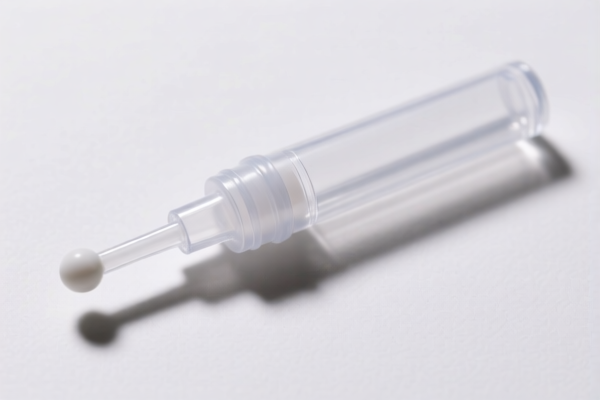
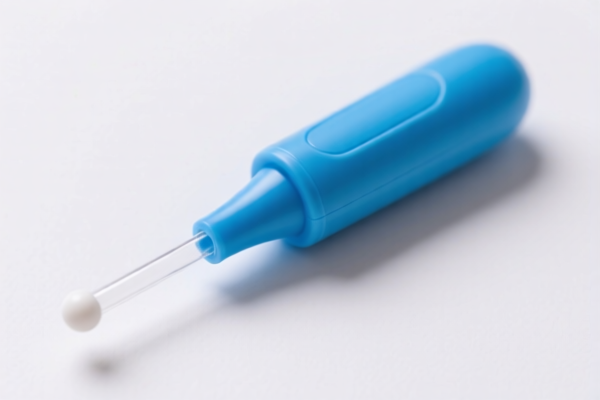
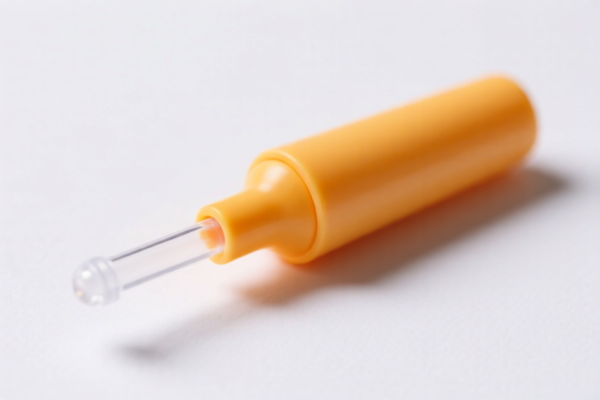
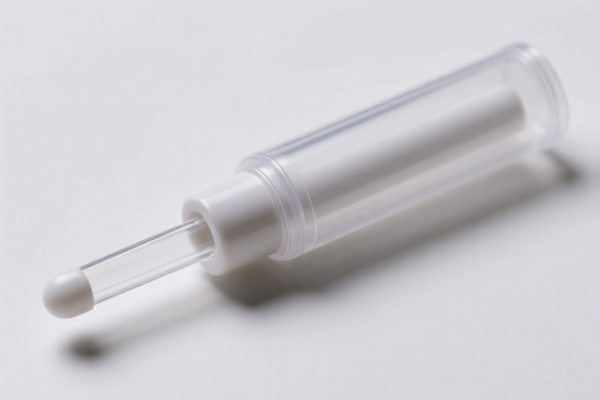
Product Images
AI Analysis
🚿 Ear Cleaner Devices & Tools (Hearing Care & Hygiene Products)
🌐 HS Code Reference & Customs Clearance Guide | 2024-2025 Latest Tariff Analysis | Professional Clearance Strategy
📌 I. Product Definition & Classification: Do You Really Know "Ear Cleaners"?
"Ear Cleaner" is a broad term in international trade, covering a wide range of products from simple manual tools to advanced electronic devices. In customs classification, the key distinction lies in the material composition and specific function:
- Manual/Hardware Tools: Ear picks, wax loops, metal brushes, or tweezers.
- Classified under Chapter 73 (Articles of Iron or Steel) or Chapter 96 (Miscellaneous Manufactured Articles).
- Plastic/Aesthetic Tools: Plastic ear spoons, silicone tips, or brush handles.
- Classified under Chapter 39 (Plastics and Articles Thereof).
- Electronic Devices: Ear irrigation devices, ultrasonic cleaners, or suction tools.
- Note: The provided
<DATA>does not cover electronic devices (e.g., HS 8543). This guide strictly focuses on non-electronic hardware and plastic tools based on the provided data.
- Note: The provided
⚠️ Key Distinction Point:
- If the product is metal (stainless steel, etc.), it falls under 7326.90 (Other articles of iron or steel).
- If the product is plastic, it falls under 3926.90 (Other articles of plastics).
- Crucial Check: Do not classify ear cleaners as "Toilet Brushes" (HS 9603.29) unless they are explicitly hair/nail brushes. Most ear tools are not "brushes for use on the person" in the legal sense of toilet brushes; they are distinct articles. However, if the item is a brush specifically for the ear, HS 9603.29 might apply, but metal/plastic picks are generally not brushes.
📦 II. HS Code Classification Details (Based on Provided DATA)
| HS Code | Product Description | Applicable Scenario | Material | Electronic? |
|---|---|---|---|---|
7326.90.86.88 |
Other articles of iron or steel: Other: Other: Other: Other | Metal ear picks, stainless steel wax loops, metal tweezers for ear care | Iron/Steel | ❌ No |
7326.90.35.00 |
Other articles of iron or steel: Containers of a kind normally carried on the person... | Unlikely for ear cleaners. This is for pockets/handbags. Only if the ear cleaner is inside a specific metal case/pouch being imported as a "container". | Iron/Steel | ❌ No |
3926.90.99.89 |
Other articles of plastics: Other: Other Other | Plastic ear spoons, silicone ear wax removal tools, plastic ear brush handles | Plastic | ❌ No |
3926.90.99.10 |
Other articles of plastics: Laboratory ware | Rarely Applied. Only if the ear cleaner is a specialized plastic pipette or tool used exclusively in a laboratory setting for ear samples. | Plastic | ❌ No |
9603.29.40.90 |
Toothbrushes, shaving brushes... other toilet brushes... Valued not over 40¢ each | Possible but Risky. If the product is explicitly a "brush" (bristles) for the ear and valued ≤$0.40. | Mixed/Hair | ❌ No |
9603.29.80.90 |
Toothbrushes, shaving brushes... other toilet brushes... Valued over 40¢ each | Possible but Risky. If the product is a "brush" for the ear and valued >$0.40. | Mixed/Hair | ❌ No |
🔍 Important Note on "Brushes" (HS 9603.29):
The HS Code 9603.29 covers "Toilet brushes for use on the person," which explicitly includes hair, nail, and eyelash brushes. It does not explicitly list "ear brushes." Customs may reject 9603.29 for ear tools unless they are clearly marketed as brushes. Metal picks (7326) and Plastic tools (3926) are safer, more accurate classifications for non-brush ear cleaners.
💰 III. Tariff Rate Analysis (Detailed Tax Breakdown)
✅ Applicable Country: United States (US)
✅ Origin: China (CN) (Assumed based on tax structure in<DATA>)
✅ Effective Date: Current applicable rates as per<DATA>
🎯 1. 7326.90.86.88 – Metal Ear Tools (Pick, Loop, Tweezers)
| Item | Content |
|---|---|
| Base Tariff | 2.9% (Ad Valorem) |
| Additional Tariff (Section 301) | 25.0% |
| Section 232 Tariff (Steel/Aluminum) | 50% |
| Total Effective Tax Rate | 77.9% |
| Tax Calculation | CIF Value × 77.9% |
| De Minimis Exemption | ❌ Not Applicable |
| Legal Basis | Base Tariff + Section 301 + Section 232 |
📌 Explanation:
- Section 232 (50%) applies because the product is made of iron or steel. This is a critical, high-cost factor.
- Section 301 (25%) is the standard additional tariff for many Chinese goods.
- Base (2.9%) is the standard MFN rate.
- Total: 2.9% + 25% + 50% = 77.9%.
- Warning: This is an extremely high tariff. Many importers avoid metal ear tools from China due to this cost.
🎯 2. 3926.90.99.89 – Plastic/Silicone Ear Tools
| Item | Content |
|---|---|
| Base Tariff | 5.3% (Ad Valorem) |
| Additional Tariff (Section 301) | 7.5% |
| Section 232 Tariff | 0% (Plastic is not steel/aluminum) |
| Total Effective Tax Rate | 12.8% |
| Tax Calculation | CIF Value × 12.8% |
| De Minimis Exemption | ❌ Not Applicable (Section 301 goods are not exempt under de minimis if valued over $800, but de minimis doesn't apply to Section 301 anyway for most cases) |
| Legal Basis | Base Tariff + Section 301 |
📌 Explanation:
- Plastic ear cleaners are significantly cheaper to import than metal ones.
- Section 232 does not apply to plastics.
- Section 301 (7.5%) is lower than the 25% for steel.
- Total: 5.3% + 7.5% = 12.8%.
- Strategy: If possible, switch from metal to plastic/silicone ear tools to save ~65% in tariffs.
🎯 3. 9603.29.40.90 / 9603.29.80.90 – Ear Brushes (If Applicable)
| Item | Content |
|---|---|
| Base Tariff | 0.0% |
| Additional Tariff | 0.0% |
| Section 232 Tariff | 0% |
| Total Effective Tax Rate | 0.0% |
| Tax Calculation | $0 |
| De Minimis Exemption | ❌ Not Applicable (But tax is 0%, so irrelevant) |
| Legal Basis | None (Exempt/Zero Rate) |
📌 Explanation:
- If your product is classified as a "Toilet Brush" (HS 9603.29), the tariff is 0%.
- Risk: Customs may challenge this classification if the product is not clearly a "brush" (e.g., if it has no bristles).
- Recommendation: Only use this if the product is a soft-bristled ear cleaning brush. For metal picks or plastic spoons, do not use this code, as it will lead to reclassification and penalties.
🛠️ IV. Customs Clearance Practical Advice (Avoiding Pitfalls)
✅ 1. Documentation Checklist (Must-Haves)
| Document | Required? | Description |
|---|---|---|
| ✅ Product Specifications | ✔️ | Material (Steel vs. Plastic), Dimensions, Weight |
| ✅ Product Photos | ✔️ | Clear images showing the tool, especially if it's a "brush" vs. "pick" |
| ✅ Commercial Invoice | ✔️ | Must accurately describe the product (e.g., "Stainless Steel Ear Pick" vs. "Metal Tool") |
| ✅ Material Declaration | ✔️ | Explicitly state "100% Stainless Steel" or "100% PP Plastic" |
| ✅ Certificate of Origin | ✔️ | Required for Section 301 application |
✅ 2. Declaration Tips (Key Mnemonics)
🔥 "Metal is 77%, Plastic is 12%, Brush is 0% (If Safe)!"
| Scenario | Correct HS Code | Error to Avoid |
|---|---|---|
| Stainless Steel Ear Pick | 7326.90.86.88 |
❌ Do NOT declare as Plastic → 12.8% (Avoids 77.9%, but is fraud) |
| Plastic Ear Spoon | 3926.90.99.89 |
❌ Do NOT declare as Metal → 77.9% |
| Soft Ear Brush | 9603.29.80.90 |
❌ Do NOT declare as Metal if it has bristles |
| Ear Cleaner Kit (Mixed) | Split Declaration | ❌ Do NOT mix steel and plastic in one HS code |
✅ 3. Special Handling Cases
| Case | Recommendation |
|---|---|
| OEM Custom Metal Picks | Provide material test reports to prove it is "Iron/Steel" (HS 7326), not "Aluminum" (which might have different Section 232 implications). |
| Silicone Ear Tips | Classified as Plastic (HS 3926), not Rubber. Tariff: 12.8%. |
| Ear Cleaner with Storage Case | Declare separately. The tool is the primary article. The case might be classified differently. |
| "Lab Ware" Ear Tools | Only use 3926.90.99.10 (0% tax) if the product is exclusively for laboratory use and not for consumer personal care. High risk of rejection if marketed for home use. |
🌍 V. Global Market Comparison (2024-2025)
| Country/Region | Recommended HS Code | Tariff (China Origin) | Key Requirement |
|---|---|---|---|
| 🇺🇸 USA | 3926.90.99.89 (Plastic) |
12.8% | FDA not required for non-medical tools |
| 🇺🇸 USA | 7326.90.86.88 (Metal) |
77.9% | High cost due to Section 232 |
| 🇪🇺 EU | 7326.90 / 3926.90 | Low/Zero (Free Trade) | CE Marking (if applicable) |
| 🇨🇳 China | 7326.90 / 3926.90 | Low (Import Duty) | CCC (if electrical, but these are non-electrical) |
📌 Conclusion:
- USA: Plastic ear cleaners are highly preferred for cost efficiency (12.8% vs. 77.9%).
- EU/China: Tariffs are minimal, so material choice depends on product design, not cost.
📌 VI. Common Errors & Pitfalls (Lessons Learned)
❌ Error 1: Declaring a Metal Ear Pick as "Plastic Tool"
👉 Consequence: Customs inspection reveals steel → Rejection + Penalty + Back Tax of 77.9%.
❌ Error 2: Declaring a Plastic Ear Spoon as "Toilet Brush" (HS 9603.29)
👉 Consequence: Customs reclassifies as "Other Plastic Article" (HS 3926) → Tariff increases from 0% to 12.8%.
❌ Error 3: Ignoring Section 232 for Steel Products
👉 Consequence: Underpaying 50% duty → Seizure of goods + Fines.
❌ Error 4: Using "Ear Cleaner" as a vague description
👉 Consequence: Customs delays for classification review.
👉 Correct Description: "Stainless Steel Ear Wax Removal Tool, Model XYZ" or "PP Plastic Ear Pick, Model XYZ".
✅ Correct Practice:
"Ear Cleaner, Plastic, PP Material, Non-Medical, for Personal Hygiene" → HS 3926.90.99.89
🎯 VII. Conclusion: Professional Declaration, Cost Optimization!
🎯 Key Takeaway:
🔹 Metal = 77.9% (High Risk, High Cost)
🔹 Plastic = 12.8% (Low Risk, Moderate Cost)
🔹 Brush = 0% (Low Risk, Low Cost, but Strict Definition)
📌 Pro Tip:
If you are importing from China to the US, switch to plastic or silicone ear cleaners to save 65% in tariffs. Metal ear tools are rarely cost-effective due to Section 232 and 301 tariffs.
📣 Immediate Action:
📞 Consult a customs broker for Advance Ruling if you are unsure about the material classification.
🚀 Optimize your supply chain by choosing plastic over metal for the US market!
✨ Precision in Classification, Savings in Customs!
💼 Every Percentage Point Counts in International Trade!
Customer Reviews
About HS Code Classification
The Harmonized System (HS) is an internationally standardized nomenclature developed by the World Customs Organization (WCO) to classify traded products. Over 200 countries use the HS system as the basis for customs tariffs, trade statistics, and import/export regulations.
Each HS code follows a hierarchical structure:
- Chapter (2 digits) — Broad category of goods (e.g., Chapter 84: Machinery and Mechanical Appliances)
- Heading (4 digits) — More specific grouping within the chapter
- Subheading (6 digits) — Internationally standardized breakdown, used by all WCO member countries
- National subdivisions (8-10 digits) — Country-specific extensions for further classification, such as US HTSUS 10-digit codes
Correct HS code classification is essential for smooth customs clearance, accurate duty payment, and compliance with trade regulations. Misclassification can lead to customs delays, overpayment of duties, or penalties.
When importing from CN to US, the applicable tariff rates may include:
- Most-Favored-Nation (MFN) rate — The standard duty rate applied to WTO members
- General rate — Applied to countries without trade agreements
- Trade remedy duties — Additional tariffs such as Section 301 (anti-dumping), Section 232 (national security), or countervailing duties
The information provided on this page is for reference purposes only. For official classification, please consult with your local customs authority or a licensed customs broker.