Ear Pick
CN → US| HS Code | Tariff Rate | Origin | Destination | Doc |
|---|---|---|---|---|
| 3926909989 | 22.8% | CN | US | Official Doc |
| 3926903500 | 16.5% | CN | US | Official Doc |
| 8205595560 | 40.3% | CN | US | Official Doc |
| 8205598000 | 38.7% | CN | US | Official Doc |
Product Images
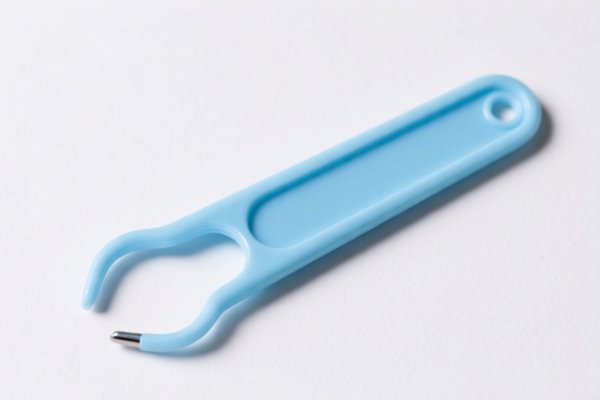
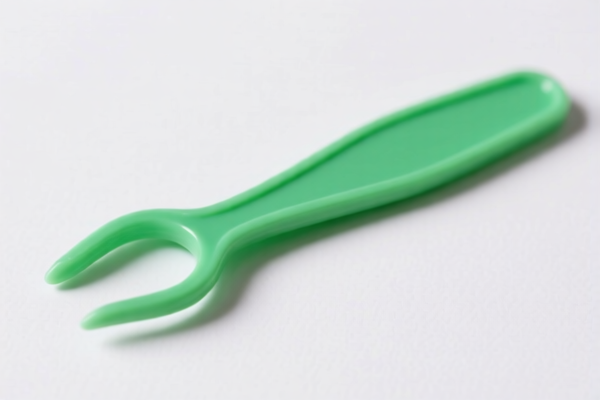
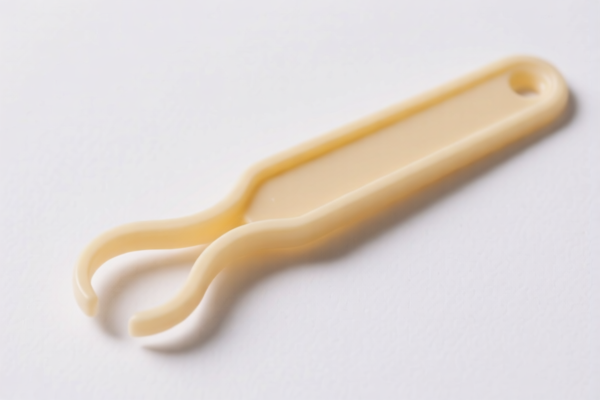
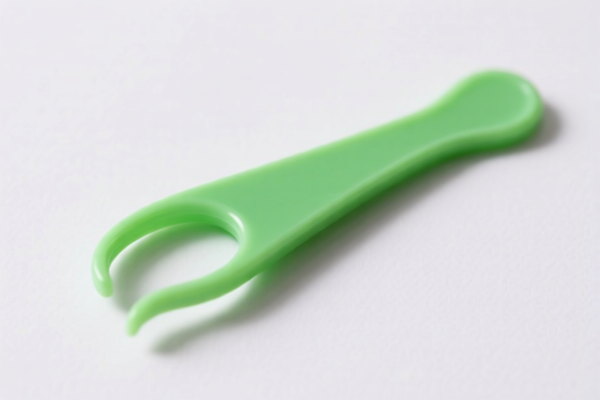
AI Analysis
🎧 Ear Pick (Ear Cleaner / Aural Spoon)
🌐 HS Code Reference & Customs Clearance Guide | 2026 Latest Tariff Analysis | Professional-Level Clearance Strategy
📌 I. Product Definition and Classification: Do You Really Understand "Ear Pick"?
An Ear Pick (also known as an ear cleaner, aural spoon, or ear spoon) is a small tool used for the personal hygiene of cleaning earwax. In international trade, its classification depends heavily on its material and primary function. It is generally categorized in two distinct chapters:
- Hand Tools (Chapter 82): If made primarily of base metal (iron, steel, etc.), even if it has a plastic handle, it may be classified as a hand tool.
- Articles of Plastics (Chapter 39): If made primarily of plastic or if the plastic component is the defining material, it is classified under plastics.
⚠️ Key Distinction Point:
- If the item is metal (or primarily metal) → It falls under Chapter 82 as "Other Handtools."
- If the item is plastic → It falls under Chapter 39 as "Other Articles of Plastics."
- Note: The provided DATA contains specific HS codes for both categories. The correct classification depends on the primary material of the specific ear pick being imported.
📦 II. HS Code Classification Details (2026 Latest Tariff Authority Comparison)
Based on the provided <DATA>, here are the relevant HS codes and their corresponding tax treatments:
1. Metal-Based Ear Picks (Handtools)
| HS Code | Product Description | Material | Tax Rate | Applicable Scenario |
|---|---|---|---|---|
| 8205.59.55.60 | Other handtools (including glass cutters) and parts thereof; Of iron or steel. | Iron or Steel | 0.0% | Metal ear picks, often with a small handle. Classified as "Other handtools not elsewhere specified." |
| 8205.59.80.00 | Other handtools (including glass cutters) and parts thereof; Other. | Other Base Metals | 0.0% | Ear picks made of metals other than iron/steel (e.g., brass, aluminum) or unspecified base metals. |
🔍 Interpretation:
- Both metal ear pick codes carry a 0.0% total tax rate (Base Tariff: 0.0%, Additional Tariff: 0.0%).
- They are classified under "8205.59" (Other handtools) because ear picks are not explicitly listed as standard tools like hammers or screwdrivers, hence "not elsewhere specified."
2. Plastic-Based Ear Picks (Articles of Plastics)
| HS Code | Product Description | Material | Tax Rate | Applicable Scenario |
|---|---|---|---|---|
| 3926.90.99.89 | Other articles of plastics and articles of other materials of headings 3901 to 3914; Other; Other. | Plastics | 12.8% | Plastic ear picks, silicone ear cleaners, or ear picks with significant plastic components. |
| 3926.90.35.00 | Other articles of plastics...; Beads, bugles and spangles... not strung... articles thereof; Other. | Plastics | 0.0% | Note: This code is typically for beads/spangles. Use with caution. It is unlikely to apply to functional ear picks unless they are considered decorative items or accessories thereof. |
🚨 Critical Warning:
- Code3926.90.99.89is the most likely code for standard plastic ear picks. It carries a 12.8% total tax rate (Base: 5.3%, Additional: 7.5%).
- Code3926.90.35.00has a 0.0% tax rate, but its description ("beads, bugles and spangles") is highly specific and likely inappropriate for functional hygiene tools. Misclassifying an ear pick here could lead to customs scrutiny, penalties, or reclassification.
- Recommendation: Unless the ear pick is a decorative accessory (e.g., a dangling earring-like item), do not use3926.90.35.00. Use3926.90.99.89for plastic ear picks.
💰 III. 2026 Latest Tariff Rate Breakdown (Including Additional Taxes)
✅ Applicable Country: United States (US)
✅ Origin: China (CN) (Assumed based on typical export context; verify origin)
✅ Effective Date: Current 2026 rates as per provided data
🎯 1. Metal Ear Picks (8205.59.55.60 / 8205.59.80.00)
| Item | Content |
|---|---|
| Base Tariff | 0.0% |
| Additional Tariff (Section 301/IEEPA) | 0.0% |
| Total Tax Rate | 0.0% |
| Tax Calculation | CIF Value × 0% = $0 |
| De Minimis Eligibility | ✅ Yes (if value < $800, no duties apply anyway) |
| Legal Basis | HTSUS 8205.59 |
📌 Explanation:
- Metal ear picks are classified as "other handtools" with zero additional tariffs under the current data.
- This makes them very competitive for import compared to plastic versions.
🎯 2. Plastic Ear Picks (3926.90.99.89)
| Item | Content |
|---|---|
| Base Tariff | 5.3% |
| Additional Tariff | 7.5% |
| Total Tax Rate | 12.8% |
| Tax Calculation | CIF Value × 12.8% |
| De Minimis Eligibility | ✅ Yes (if value < $800, no duties apply) |
| Legal Basis | HTSUS 3926.90.99.89 |
📌 Explanation:
- Plastic ear picks incur a 12.8% total tariff.
- This is significantly higher than metal ear picks (0%).
- Cost Impact: For a $1,000 shipment, you pay $128 in duties vs. $0 for metal.
🛠️ IV. Customs Clearance Practical Advice (Battle-Tested Pitfall Guide)
✅ 1. Preparation Checklist (No Missing Documents)
| Document | Required | Notes |
|---|---|---|
| ✅ Product Specification Sheet | ✔️ | Must clearly state material (e.g., "Stainless Steel Ear Pick" or "Plastic Ear Cleaner"). |
| ✅ Product Photos | ✔️ | Clear images showing the item, handle, and tip. |
| ✅ Commercial Invoice | ✔️ | Must accurately describe the item. Avoid vague terms like "Tool." Use "Ear Wax Removal Tool (Plastic)" or "Stainless Steel Ear Pick." |
| ✅ Bill of Lading / Airway Bill | ✔️ | Standard shipping document. |
| ✅ HS Code Confirmation | ✔️ | Pre-classify based on material. If mixed materials, determine the "essential character." |
✅ 2. Declaration Tips (Key Mantra)
🔥 “Material is King, Description is Queen! Don’t Mix Metal and Plastic!”
| Scenario | Correct Declaration | Incorrect Declaration |
|---|---|---|
| All Metal Ear Pick | 8205.59.55.60 - "Stainless Steel Ear Pick" |
3926.90.99.89 - "Plastic Ear Cleaner" → Wrong Tax! |
| All Plastic Ear Pick | 3926.90.99.89 - "Plastic Ear Cleaner" |
8205.59.80.00 - "Handtool" → Wrong Tax! |
| Mixed Material | Classify by essential character (usually the main functional part). If the tip is metal, often still 8205. |
Vague: "Beauty Tool" → Customs Delay! |
| Decorative/Accessory | Consider 3926.90.35.00 ONLY if it’s a non-functional decorative item. |
Functional plastic ear pick under 3926.90.35.00 → High Risk of Audit! |
✅ 3. Special Handling
| Scenario | Handling Advice |
|---|---|
| Mixed Shipment | If a container has both metal and plastic ear picks, declare separately with different HS codes. Do not lump them under one code. |
| Hygiene Certification | While not always required for customs, having FDA or CE documentation can speed up clearance if the CBP officer questions the product’s intended use. |
| Branded vs. Generic | Ensure the invoice lists the correct brand or "No Brand." Counterfeit claims can lead to seizure. |
🌍 V. Global Market Clearance Comparison (2026 Latest)
| Country/Region | Recommended HS Code | Estimated Tariff | Notes |
|---|---|---|---|
| 🇺🇸 USA | 8205.59.55.60 (Metal) 3926.90.99.89 (Plastic) |
0.0% (Metal) 12.8% (Plastic) |
Metal is tax-free. Plastic incurs additional tariffs. |
| 🇨🇳 China | 8205.59 (Metal) 3926.90 (Plastic) |
~5-10% | Varies by specific Chinese tariff line. |
| 🇪🇺 EU | 8205.59 (Metal) 3926.90 (Plastic) |
~2.5-4% | Generally lower than US. No additional Section 301 tariffs. |
| 🇬🇧 UK | 8205.59 (Metal) 3926.90 (Plastic) |
~0-5% | Post-Brexit tariffs apply. Check UK Global Tariff. |
📌 Conclusion:
- USA is the most expensive market for plastic ear picks due to the 12.8% combined tariff.
- Metal ear picks are highly tax-efficient for US imports. Consider sourcing or manufacturing metal versions to reduce costs.
📌 VI. Common Mistakes & Pitfall Guide (Blood & Tears Lessons)
❌ Mistake 1: Classifying plastic ear picks under 3926.90.35.00 to save tax.
👉 Consequence: Customs audit, retroactive duties + interest, potential penalty. The description "beads and spangles" does not fit functional hygiene tools.
❌ Mistake 2: Declaring mixed metal/plastic ear picks under one HS code.
👉 Consequence: Incorrect duty payment. If under-declared, you owe back taxes. If over-declared, you lose profit.
❌ Mistake 3: Using vague terms like "Beauty Tool" or "Cleaning Stick" on the invoice.
👉 Consequence: CBP may reject the classification, delay clearance, and apply the highest possible duty rate.
✅ Correct Practice:
"Stainless Steel Ear Pick, Model XYZ, for Personal Hygiene Use"
"Plastic Ear Cleaner, Model ABC, for Earwax Removal"
🎯 VII. Conclusion: Professional Declaration, Cost Savings, Efficient Clearance!
🎯 Remember the Mantra:
🔹 "Metal is Zero, Plastic is Twelve-Point-Six!"
🔹 "Don’t fake 'beads' with 'ear picks'!"
🔹 "HS Code determines duty, accuracy saves money!"
📌 Pro Tip:
- If you are importing large quantities, consider pre-classification ruling from CBP to lock in the HS code, especially for mixed-material items.
- For small shipments (<$800), de minimis rules apply, so duties are $0 regardless. But for commercial imports, accurate classification is critical.
📣 Immediate Action:
📞 Contact your customs broker with product photos and material specs.
🚀 Ensure your invoice explicitly states "Ear Pick" and material (e.g., "Stainless Steel").
💼 Your profit margin depends on accurate duty calculation!
✨ Professional Clearance Starts with Precise Classification!
💼 Every cent of duty is worth calculating accurately!
Customer Reviews
About HS Code Classification
The Harmonized System (HS) is an internationally standardized nomenclature developed by the World Customs Organization (WCO) to classify traded products. Over 200 countries use the HS system as the basis for customs tariffs, trade statistics, and import/export regulations.
Each HS code follows a hierarchical structure:
- Chapter (2 digits) — Broad category of goods (e.g., Chapter 84: Machinery and Mechanical Appliances)
- Heading (4 digits) — More specific grouping within the chapter
- Subheading (6 digits) — Internationally standardized breakdown, used by all WCO member countries
- National subdivisions (8-10 digits) — Country-specific extensions for further classification, such as US HTSUS 10-digit codes
Correct HS code classification is essential for smooth customs clearance, accurate duty payment, and compliance with trade regulations. Misclassification can lead to customs delays, overpayment of duties, or penalties.
When importing from CN to US, the applicable tariff rates may include:
- Most-Favored-Nation (MFN) rate — The standard duty rate applied to WTO members
- General rate — Applied to countries without trade agreements
- Trade remedy duties — Additional tariffs such as Section 301 (anti-dumping), Section 232 (national security), or countervailing duties
The information provided on this page is for reference purposes only. For official classification, please consult with your local customs authority or a licensed customs broker.