Early Education Books
CN → US| HS Code | Tariff Rate | Origin | Destination | Doc |
|---|---|---|---|---|
| 4901990010 | 17.5% | CN | US | Official Doc |
| 4901990093 | 17.5% | CN | US | Official Doc |
| 4903000000 | 10.0% | CN | US | Official Doc |
Product Images
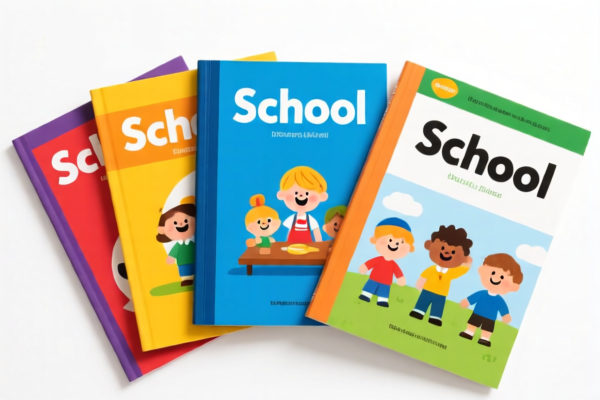
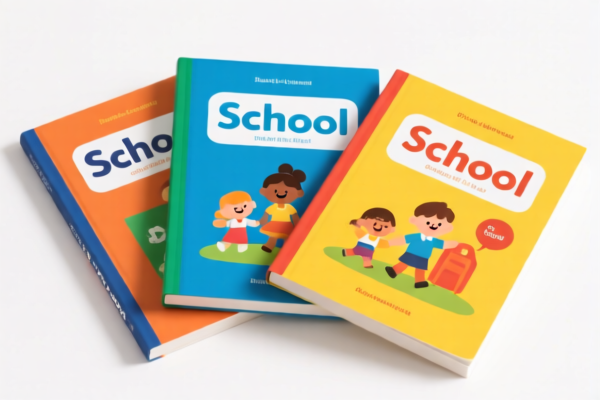
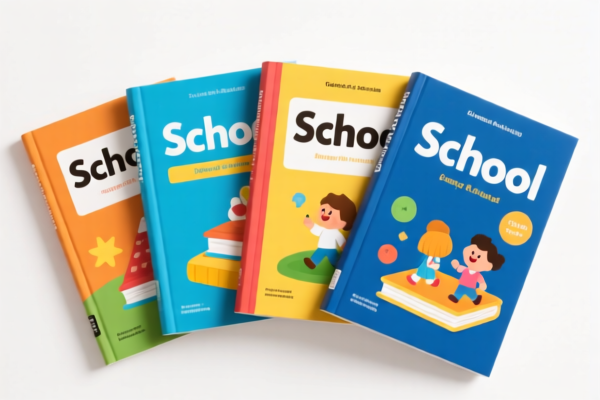

AI Analysis
📚 Early Education Books (Educational Publications for Children)
🌐 HS Code Reference & Clearance Guide | 2026 Latest Tariff Analysis | Professional Customs Strategy
📌 I. Product Definition & Classification: What Exactly Are "Early Education Books"?
Early Education Books, commonly referred to as "Zao Jiao Shu" in Chinese markets, are specialized printed materials designed for the cognitive, linguistic, and social development of infants and toddlers. In international trade, these items are classified based on their content, format, and target audience.
While they may visually resemble standard textbooks, their primary purpose—early childhood education—places them in specific sub-categories within Chapter 49 (Printed Books, Newspapers, Periodicals, and Other Products of the Printing Industry).
⚠️ Key Distinction:
- General Textbooks (4901): Broad educational materials, often with complex structures or adult-oriented content.
- Children’s Illustrated Books (4903): Specifically designed for children, often containing pictures, simple text, or coloring elements, directly aimed at early learning.
- Catch-All Categories (4901.99): Used when the specific subtype doesn’t fit neatly into the primary "textbook" definition but still falls under printed educational products.
📦 II. HS Code Classification Details (2026 Latest Tariff Reference)
Based on the provided data, there are three potential HS Code classifications for Early Education Books, depending on their specific physical format and detailed content description.
| HS Code | Product Description | Applicable Scenario | Reason for Classification |
|---|---|---|---|
4903.00.00.00 |
Children's Picture or Coloring Books | Board books, pop-up books, simple illustration-heavy books for toddlers | Primary Fit: Purpose is education/learning; format matches "children's pictures/coloring books." |
4901.99.00.10 |
Printed Educational Products (Textbooks) | Traditional paper-bound books with structured learning content | Secondary Fit: Classified as general printed books for educational purposes. |
4901.99.00.93 |
Other Printed Books (Catch-All) | Books that don't fit the specific "picture book" or standard "textbook" definitions | Tertiary Fit: General catch-all category for printed educational materials. |
🔍 Critical Note:
- The lowest tariff rate applies to4903.00.00.00(Children's Picture/Coloring Books).
- If the book is more text-heavy or structured like a conventional textbook, customs may classify it under4901.99.00.10or4901.99.00.93.
- Do not misclassify: A book with dense text might be rejected from4903and moved to4901, resulting in higher taxes.
💰 III. 2026 Latest Tariff Rate Breakdown (Including Additional Duties)
✅ Applicable Country: United States (US)
✅ Origin: China (CN)
✅ Effective Date: 2025 November 10 (and subsequent imports)
🎯 1. 4903.00.00.00 — Children’s Picture or Coloring Books (Recommended)
| Item | Detail |
|---|---|
| Base Tariff | 0.0% |
| Section 301 Additional Duty | 0.0% |
| Section 122 Duty | +10.0% |
| Total Tariff Rate | 10.0% |
| Tax Calculation | CIF Value × 10% |
| De Minimis Eligibility | ❌ Not Eligible (Deny de_minimis) |
| Legal Basis Path | Section 122: 10% → HS: 4903.00.00.00 |
📌 Explanation:
- This category benefits from 0% Section 301 tariffs due to its classification as a children’s picture/coloring book.
- However, it is subject to the 10% Section 122 duty (often related to specific trade enforcement or temporary measures).
- Total Cost: Only 10%, making this the most cost-effective classification if the product qualifies.
🎯 2. 4901.99.00.10 — Printed Educational Products (General)
| Item | Detail |
|---|---|
| Base Tariff | 0.0% |
| Section 301 Additional Duty | +7.5% |
| Section 122 Duty | +10.0% |
| Total Tariff Rate | 17.5% |
| Tax Calculation | CIF Value × 17.5% |
| De Minimis Eligibility | ❌ Not Eligible |
| Legal Basis Path | Section 301: 7.5% → Section 122: 10% → HS: 4901.99.00.10 |
📌 Explanation:
- If classified here, the product incurs a 7.5% Section 301 tariff plus 10% Section 122.
- Total Cost: 17.5%, which is 7.5 percentage points higher than the4903category.
🎯 3. 4901.99.00.93 — Other Printed Books (Catch-All)
| Item | Detail |
|---|---|
| Base Tariff | 0.0% |
| Section 301 Additional Duty | +7.5% |
| Section 122 Duty | +10.0% |
| Total Tariff Rate | 17.5% |
| Tax Calculation | CIF Value × 17.5% |
| De Minimis Eligibility | ❌ Not Eligible |
| Legal Basis Path | Section 301: 7.5% → Section 122: 10% → HS: 4901.99.00.93 |
📌 Explanation:
- Same tax burden as4901.99.00.10.
- This code is used when the book does not fit the specific "textbook" description of.10but is still considered a general printed educational product.
🛠️ IV. Customs Clearance Practical Advice (Avoid Pitfalls)
✅ 1. Documentation Checklist (Mandatory)
| Document | Required | Notes |
|---|---|---|
| ✅ Product Photos | ✔️ | Must show cover, interior pages, and binding. Highlight illustrations to support 4903 classification. |
| ✅ Table of Contents | ✔️ | Shows educational structure. If heavily illustrated, supports 4903. |
| ✅ Sample Book | ✔️ | Highly recommended for pre-classification rulings. |
| ✅ Commercial Invoice | ✔️ | Describe as "Children's Educational Picture Book" not just "Book." |
| ✅ Packing List | ✔️ | Standard requirement. |
| ✅ Origin Certificate | ✔️ | Proves CN origin for accurate tariff calculation. |
✅ 2. Declaration Strategy (Key Tips)
🔥 "Illustration Heavy = 10%; Text Heavy = 17.5%"
| Scenario | Recommended HS Code | Declaration Name |
|---|---|---|
| Board Books, Pop-Up Books, Simple Illustrations | 4903.00.00.00 |
"Children's Picture Book for Early Education" |
| Traditional Paper Books with Some Images | 4901.99.00.10 |
"Educational Printed Book for Children" |
| Unusual Format (Non-Standard) | 4901.99.00.93 |
"Printed Educational Material" |
⚠️ Warning:
- Do not declare a text-heavy book as4903hoping to get the lower tax. Customs will inspect the content and may reclassify it, leading to back taxes + penalties.
- If the book is primarily for entertainment (e.g., a storybook with no educational exercises), it might not qualify for "educational" status and could face different duties. Ensure the "educational" purpose is clear.
✅ 3. Special Considerations
| Situation | Advice |
|---|---|
| Mixed Shipments (Books + Toys) | Declare separately. Books under 4903 or 4901; toys under their respective HS codes. Do not bundle. |
| E-Book/Print-on-Demand | Physical copies are still classified under HS 4903/4901. Digital rights are different. |
| Multilingual Books | If the primary content is in English, it’s still 4903 if it’s a children’s picture book. Language doesn’t change the HS code. |
| De Minimis Threshold | ❌ No De Minimis. All shipments, regardless of value, are subject to duty calculation. |
🌍 V. Global Market Comparison (2026 Latest)
| Country/Region | Recommended HS Code | Tariff Rate (CN Origin) | Notes |
|---|---|---|---|
| 🇺🇸 USA | 4903.00.00.00 |
10% (Best Case) | 17.5% if misclassified as general textbook. |
| 🇨🇳 China | 4903.00.00.00 |
0%~6% (Import Duty) | VAT applies separately. |
| 🇪🇺 EU | 4903.00.00 |
0% | Standard book tariff. VAT varies by country. |
| 🇬🇧 UK | 4903.00.00 |
0% | Zero-rated VAT for children’s books. |
| 🇯🇵 Japan | 4903.00.00 |
0% | Standard book rate. |
📌 Conclusion:
- USA is the only major market with significant additional tariffs (Section 122/301).
- Optimize for4903.00.00.00to save 7.5% in Section 301 tariffs.
- China, EU, UK, and Japan have minimal or zero import duties for these books, making them highly competitive in those markets.
📌 VI. Common Errors & Pitfalls (Lessons Learned)
❌ Error 1: Declaring a text-heavy textbook as a "Picture Book" to get 10% tax.
👉 Consequence: Customs inspection reveals dense text → Reclassified to 4901 → Back taxes + 17.5% total rate + penalties.
❌ Error 2: Using vague terms like "Educational Material" without specifying format.
👉 Consequence: Customs defaults to the catch-all 4901.99.00.93 → 17.5% tax instead of 10%.
❌ Error 3: Ignoring Section 122 and 301 implications.
👉 Consequence: Underestimating landed cost by 7.5%~17.5% → Profit margin erosion.
✅ Correct Approach:
"Children's Board Book, 12 pages, full-color illustrations, early learning focus, Model: EEB-001"
🎯 VII. Conclusion: Smart Classification, Higher Profits
🎯 Key Takeaway:
🔹 "Picture Book = 10%; Textbook = 17.5%."
🔹 "Always provide photos and TOC to prove classification."
🔹 "Do not risk misclassification for short-term gains."
📌 Pro Tip:
If your early education books have minimal text and heavy visuals, lean towards 4903.00.00.00. If they are more structured like a textbook, use 4901.99.00.10.
Apply for a Pre-Ruling from US Customs if you are unsure. This provides legal certainty and avoids surprises at the border.
📣 Act Now:
📞 Contact a Licensed Customs Broker
📸 Provide Clear Product Images & Content Samples
📄 Prepare Accurate Commercial Invoices
🚀 Ensure Smooth Clearance & Maximize Your Margins!
✨ Professional Clearance Starts with Precise Classification!
💼 Every Dollar Saved in Tariffs is Pure Profit!
Customer Reviews
About HS Code Classification
The Harmonized System (HS) is an internationally standardized nomenclature developed by the World Customs Organization (WCO) to classify traded products. Over 200 countries use the HS system as the basis for customs tariffs, trade statistics, and import/export regulations.
Each HS code follows a hierarchical structure:
- Chapter (2 digits) — Broad category of goods (e.g., Chapter 84: Machinery and Mechanical Appliances)
- Heading (4 digits) — More specific grouping within the chapter
- Subheading (6 digits) — Internationally standardized breakdown, used by all WCO member countries
- National subdivisions (8-10 digits) — Country-specific extensions for further classification, such as US HTSUS 10-digit codes
Correct HS code classification is essential for smooth customs clearance, accurate duty payment, and compliance with trade regulations. Misclassification can lead to customs delays, overpayment of duties, or penalties.
When importing from CN to US, the applicable tariff rates may include:
- Most-Favored-Nation (MFN) rate — The standard duty rate applied to WTO members
- General rate — Applied to countries without trade agreements
- Trade remedy duties — Additional tariffs such as Section 301 (anti-dumping), Section 232 (national security), or countervailing duties
The information provided on this page is for reference purposes only. For official classification, please consult with your local customs authority or a licensed customs broker.