Early Education Card
CN → US| HS Code | Tariff Rate | Origin | Destination | Doc |
|---|---|---|---|---|
| 9503000090 | 10.0% | CN | US | Official Doc |
| 4911914040 | 17.5% | CN | US | Official Doc |
| 4911998000 | 17.5% | CN | US | Official Doc |
| 4823908680 | 35.0% | CN | US | Official Doc |
| 9503000073 | 10.0% | CN | US | Official Doc |
Product Images
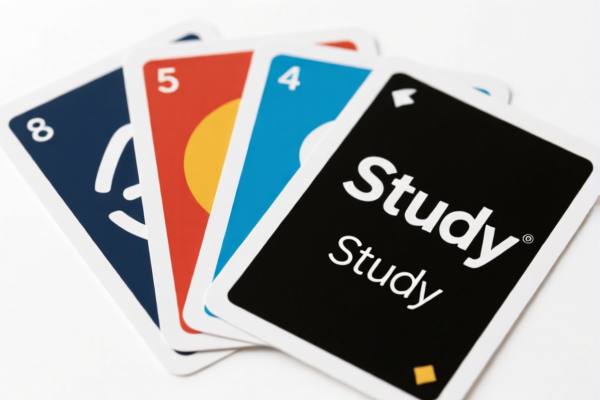
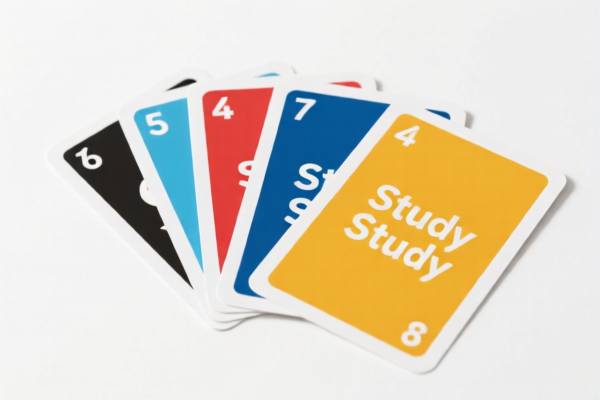


AI Analysis
📚 Early Education Card (Educational Learning Cards)
🌐 HS Code Reference & Customs Clearance Guide | 2026 Updated Tariff Analysis | Professional Import Strategy
📌 One, Product Definition & Classification: What Exactly Is an "Early Education Card"?
Early education cards are small, printed or laminated paper-based learning tools designed for children aged 0–6, used to teach letters, numbers, colors, shapes, animals, and basic vocabulary. They are typically made of thick paper (cardstock), often with bright illustrations, rounded edges, and durable coatings for safety and longevity.
In international trade, these are not just simple paper items — they serve as educational toys or interactive learning aids, often used in kindergartens, preschools, and home learning environments.
⚠️ Key Distinction:
- If the item is purely a paper card with no toy-like function → may fall under paper products (4823)
- If it functions as a teaching toy, especially in puzzle, matching, or game format → may fall under toys (9503)
- If it's printed with images, designs, or photos (e.g., picture cards) → may qualify under printed pictorial material (4911)
📦 Two, HS Code Classification Details (2026 Updated Tariff Authority Match)
| HS Code | Product Description | Applicable Use Case | Material Assumption | Key Match Reason |
|---|---|---|---|---|
4823.90.86.80 |
Other paper products, not specified elsewhere; includes paper cards, not for writing | General-purpose paper cards, educational use | Paper/Cardstock | Matches "paper-based" nature; not excluded from paper category |
9503.00.00.73 |
Toys and games for children, including educational puzzles and learning aids | Early learning cards used as games, matching, or interactive play | Paper/Cardstock | Fits "educational toy" purpose; no material conflict |
4823.90.31.00 |
Other paper products: cards, not specified elsewhere, including educational or promotional cards | Educational cards, flashcards, teaching aids | Paper/Cardstock | Matches "card" shape and paper material; fits "other paper" category |
9503.00.00.90 |
Other toys and games for children; includes educational and learning tools | Learning cards used as play-based education tools | Paper/Cardstock | Matches educational toy function; no material conflict |
4911.91.40.40 |
Printed pictures, designs, or photographs, not otherwise specified; includes educational image cards | Cards with illustrations, photos, or visual learning content | Printed paper | Matches "printed pictorial material" criteria; not "posters" |
🔍 Critical Insight:
- The same product can be classified under multiple HS codes depending on intended use and functional design.
- "Education" vs "Entertainment" is the deciding factor:
- If it's used for play, matching, or game-like interaction → 9503
- If it's just a printed card for reading or memorization → 4823 or 4911
💰 Three, 2026 Updated Tariff Breakdown (With Full Tax Clause Explanation)
✅ Applicable Country: United States (US)
✅ Origin: China (CN)
✅ Effective Date: November 10, 2025 (and onward)
✅ All rates apply to CIF value
🎯 1. 4823.90.86.80 — Other Paper Products (Educational Cards)
| Item | Detail |
|---|---|
| Base Duty | 0% (ad valorem) |
| USITC Section 301 Tariff | +25% (from USITC Footnote 9903.88.01) |
| IEEPA Tariff (Section 122) | +10% (under International Emergency Economic Powers Act) |
| Total Effective Duty | 35.0% |
| Tax Calculation | CIF × 35% |
| De Minimis Exemption? | ❌ No (denied under US law) |
| Legal Pathway | IEEPA:9903.01.25 → IEEPA:9903.01.24 → USITC:4823.90.86.80 → FOOTNOTE:9903.88.01 |
📌 Explanation:
- 25% USITC Tariff: Imposed under Section 301 of the Trade Act of 1974 — targets unfair trade practices by China.
- 10% IEEPA Tariff: Enforced under International Emergency Economic Powers Act (IEEPA) — applies to goods from China and Hong Kong.
- Total = 35% — High-risk category for Chinese-origin paper-based educational items.
🎯 2. 9503.00.00.73 — Toys & Games for Children (Educational Learning Cards)
| Item | Detail |
|---|---|
| Base Duty | 0% |
| USITC Section 301 Tariff | 0% (no additional tariff under 301 for this subheading) |
| IEEPA Tariff (Section 122) | +10% |
| Total Effective Duty | 10.0% |
| Tax Calculation | CIF × 10% |
| De Minimis Exemption? | ✅ Yes (if value ≤ $800) |
| Legal Pathway | IEEPA:9901.25 → IEEPA:9903.01.24 → 9503.00.00.73 |
📌 Explanation:
- No USITC 25% tariff applies — 9503 is exempt from the 301 additional duty.
- Only 10% IEEPA tariff applies — much lower than paper-based classification.
- De Minimis applies — if shipped as part of a small package (<$800), no duty paid.✅ Best Strategy: If your early education cards are used as games, puzzles, or interactive tools, declare under 9503 to avoid 25% USITC tariff.
🎯 3. 4823.90.31.00 — Other Paper Products (Cards, Not Otherwise Specified)
| Item | Detail |
|---|---|
| Base Duty | 0% |
| USITC Section 301 Tariff | +25% |
| IEEPA Tariff (Section 122) | +10% |
| Total Effective Duty | 35.0% |
| Tax Calculation | CIF × 35% |
| De Minimis Exemption? | ❌ No |
| Legal Pathway | IEEPA:9903.01.25 → IEEPA:9903.01.24 → USITC:4823.90.31.00 → FOOTNOTE:9903.88.01 |
📌 Note:
- Identical to4823.90.86.80— same tax treatment.
- Used when cards are not functionally toys, but purely educational tools.
🎯 4. 9503.00.00.90 — Other Toys & Games for Children (Educational Use)
| Item | Detail |
|---|---|
| Base Duty | 0% |
| USITC Section 301 Tariff | 0% |
| IEEPA Tariff (Section 122) | +10% |
| Total Effective Duty | 10.0% |
| Tax Calculation | CIF × 10% |
| De Minimis Exemption? | ✅ Yes |
| Legal Pathway | IEEPA:9901.25 → IEEPA:9903.01.24 → 9503.00.00.90 |
📌 Why This Matters:
- Same 10% rate as 9503.00.00.73, but broader scope — covers "other" educational toys.
- Ideal if your cards are used in games, memory matching, or learning challenges.
🎯 5. 4911.91.40.40 — Printed Pictures, Designs, or Photos (Educational Cards)
| Item | Detail |
|---|---|
| Base Duty | 0% |
| USITC Section 301 Tariff | +7.5% |
| IEEPA Tariff (Section 122) | +10% |
| Total Effective Duty | 17.5% |
| Tax Calculation | CIF × 17.5% |
| De Minimis Exemption? | ❌ No |
| Legal Pathway | IEEPA:9901.25 → IEEPA:9903.01.24 → USITC:4911.91.40.40 → FOOTNOTE:9903.88.01 |
📌 Key Point:
- 7.5% USITC tariff (not 25%) — because this subheading is exempt from the full 301 duty.
- Still 10% IEEPA — so total is 17.5%, lower than paper-only 35%, but higher than toy 10%.
- Best if cards are primarily visual/illustrative, not functional toys.
🛠️ Four, Customs Clearance Best Practices (Pro Tips to Avoid Penalties)
✅ 1. Required Documentation (Must-Have Checklist)
| Document | Required? | Notes |
|---|---|---|
| ✅ Commercial Invoice | ✔️ | Clearly state: “Early Education Learning Cards, for children, used in educational games” |
| ✅ Packing List | ✔️ | Show quantity, weight, packaging type |
| ✅ Product Photos (front/back, packaging) | ✔️ | Show design, edges, size, and usage context |
| ✅ Product Description (in English) | ✔️ | Include: “Educational, interactive, for children 0–6, used in learning games” |
| ✅ Certificate of Origin (CO) | ✔️ | If from China, may be needed for tariff claims |
| ✅ Third-Party Test Reports | ✔️ | ASTM F963 (toy safety), CPSIA, RoHS (if applicable) |
| ✅ Labeling & Packaging Compliance | ✔️ | Must include age labeling, safety warnings if required |
✅ 2.申报技巧(Key Declaration Rules)
🔥 "Function Over Form: If It’s a Game, Declare as Toy!"
| Scenario | Correct HS Code | Wrong Choice | Why? |
|---|---|---|---|
| Cards used for matching, memory games, or puzzles | 9503.00.00.73 or 9503.00.00.90 |
4823.90.86.80 |
Avoids 25% USITC tariff |
| Cards for reading, memorization, flashcards | 4823.90.31.00 or 4911.91.40.40 |
9503 |
May be misclassified as toy |
| Cards with high-quality illustrations, photos | 4911.91.40.40 |
4823 |
Better fit for printed images |
| Cards with plastic coating or laminated finish | 9503 (if interactive) |
4823 |
Lamination doesn’t change function |
✅ 3. Special Cases & Risk Mitigation
| Situation | Recommended Action |
|---|---|
| Mixed shipment with other toys | Declare all items under 9503 if educational cards are part of a game set |
| Custom-designed cards with unique shapes | Use 4823.90.31.00 or 4823.90.86.80 — but only if not used as toys |
| Cards sold in bulk, not as toys | Use 4823 or 4911 — avoid 9503 to prevent scrutiny |
| Cards used in school programs | Can apply for non-commercial import — may reduce scrutiny |
| Cards with digital elements (QR codes, apps) | Still paper-based — but function matters: if used for games → 9503 |
🌍 Five, Global Market Comparison (2026 Update)
| Country/Region | Recommended HS Code | Duty Rate | Certification Required | Notes |
|---|---|---|---|---|
| 🇺🇸 USA | 9503.00.00.73 or 9503.00.00.90 |
10% (with de minimis) | ASTM F963, CPSIA | Best to use toy code |
| 🇨🇳 China | 9503.00.00.90 |
5% | CCC, RoHS | No extra tariffs |
| 🇪🇺 EU | 9503.00.00.90 |
0% (if CE compliant) | CE, REACH | No IEEPA/301 tariffs |
| 🇦🇺 Australia | 9503.00.00.90 |
5% | RCM | No extra tariffs |
| 🇯🇵 Japan | 9503.00.00.90 |
0% | PSE | No additional duties |
📌 Insight:
- Only the US imposes 301 + IEEPA tariffs — China-origin educational cards face the highest risk.
- Using 9503 instead of 4823 saves 25% in US tariffs.
📌 Six, Common Mistakes & How to Avoid Them (Avoid Costly Errors)
❌ Mistake 1: Declaring educational cards as "paper" (4823) when used in games
👉 Result: Pay 35% instead of 10% → 25% extra cost
❌ Mistake 2: Using "4911" for cards that are clearly interactive or game-based
👉 Result: May be challenged — lacks functional justification
❌ Mistake 3: Not providing photos or usage context in invoice
👉 Result: Customs may reclassify as higher-risk item → delay or seizure
❌ Mistake 4: Failing to label age group or safety warnings
👉 Result: CPSIA violation → fines, recalls, or import block
✅ Correct Declaration Example:
“Early Learning Cards, 120-piece set, used for matching games, colors, and shapes, for children 2–5 years old, laminated cardstock, non-toxic ink, CE & ASTM F963 certified.”
🎯 Seven, Conclusion: Smart Classification = Lower Cost & Faster Clearance
🎯 Key Takeaway:
🔹 If it’s a game → use
9503→ only 10% in US (with de minimis)
🔹 If it’s just a flashcard → use4823or4911→ 17.5%–35%
🔹 Never use4823if it’s interactive — you’ll pay 25% more✅ Pro Tip:
- Apply for an Advance Ruling (Pre-Clearance) if shipping large volumes.
- Use9503.00.00.73or9503.00.00.90for maximum tax savings in the US.
📌 Bonus Tip:
If your cards are produced in Vietnam, Mexico, Thailand, or Malaysia, you may qualify for IEEPA exemption — tariff drops to 0%–5%.
✅ Consider shifting production to avoid 35% tariffs.
📣 Act Now!
📞 Contact a licensed customs broker + provide product photos + request HS Code pre-ruling
🚀 Reduce tariffs by 25%, avoid delays, and ship confidently!
✨ Professional Customs Starts with Accurate Classification!
💼 Your profit margin depends on the right HS code — choose wisely!
Customer Reviews
About HS Code Classification
The Harmonized System (HS) is an internationally standardized nomenclature developed by the World Customs Organization (WCO) to classify traded products. Over 200 countries use the HS system as the basis for customs tariffs, trade statistics, and import/export regulations.
Each HS code follows a hierarchical structure:
- Chapter (2 digits) — Broad category of goods (e.g., Chapter 84: Machinery and Mechanical Appliances)
- Heading (4 digits) — More specific grouping within the chapter
- Subheading (6 digits) — Internationally standardized breakdown, used by all WCO member countries
- National subdivisions (8-10 digits) — Country-specific extensions for further classification, such as US HTSUS 10-digit codes
Correct HS code classification is essential for smooth customs clearance, accurate duty payment, and compliance with trade regulations. Misclassification can lead to customs delays, overpayment of duties, or penalties.
When importing from CN to US, the applicable tariff rates may include:
- Most-Favored-Nation (MFN) rate — The standard duty rate applied to WTO members
- General rate — Applied to countries without trade agreements
- Trade remedy duties — Additional tariffs such as Section 301 (anti-dumping), Section 232 (national security), or countervailing duties
The information provided on this page is for reference purposes only. For official classification, please consult with your local customs authority or a licensed customs broker.