Early Education Cards
CN → US| HS Code | Tariff Rate | Origin | Destination | Doc |
|---|---|---|---|---|
| 4823908680 | 35.0% | CN | US | Official Doc |
| 4823903100 | 35.0% | CN | US | Official Doc |
| 9503000073 | 10.0% | CN | US | Official Doc |
| 4911998000 | 17.5% | CN | US | Official Doc |
| 9503000090 | 10.0% | CN | US | Official Doc |
Product Images
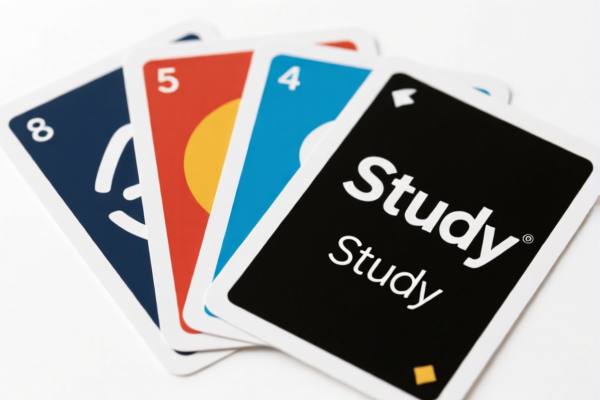
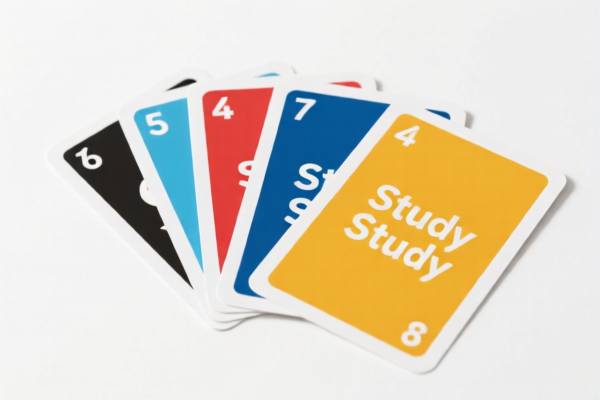


AI Analysis
🧠 Early Education Cards (Educational Flashcards)
🌐 HS Code Reference & Customs Clearance Guide | 2026 Latest Tariff Analysis | Professional-Level Customs Strategy
📌 1. Product Definition & Classification: Do You Really Understand "Early Education Cards"?
Early Education Cards are typically printed educational materials designed for children's cognitive development, language learning, or pattern recognition. In international trade, the classification hinges on two critical factors: Material and Function.
Paper-Based Educational Tools: Primarily made of paper/cardboard, falling under general paper products or printed matter.
Toys/Playthings: If marketed specifically as interactive learning toys, puzzles, or games, they may fall under the "Toys" chapter.
⚠️ Key Distinction Point:
- If the product is primarily a printed card used for reading/study → Classified under Chapter 48 (Paper) or Chapter 49 (Printed Matter).
- If the product is marketed as a game, puzzle, or interactive toy → Classified under Chapter 95 (Toys).
📦 2. HS Code Classification Details (2026 Latest Tariff Authority Comparison)
| HS Code | Product Description | Application Scenario | Material/Function Conflict? |
|---|---|---|---|
4823.90.86.80 |
Other paper articles | Generic paper cards, not specified elsewhere | ✅ No conflict; reasonable for generic paper cards |
4823.90.31.00 |
Other paper articles (size/shape specified) | Paper cards, matches "other shapes of paper products" | ✅ No conflict; fits "cards" morphology |
9503.00.00.73 |
Toys (puzzles/educational models) | Educational toys, puzzles, playful learning gear | ✅ No conflict; fits "toy/puzzle" purpose |
4911.99.80.00 |
Other printed matter | Printed educational cards, books, pamphlets | ✅ No conflict; fits "printed matter" definition |
9503.00.00.90 |
Other toys | General educational toys, accessories | ✅ No conflict; fits "other toys" category |
🔍 Key Reminder:
- Paper vs. Toy: If the card is simple and static (e.g., letter recognition), Chapter 48/49 is safer. If it involves rules, pieces, or interactive play, Chapter 95 is more appropriate.
- No Material Conflict: All listed HS codes are compatible with paper/cardboard materials.
💰 3. 2026 Latest Tariff Rate Details (Including Surcharges & Policy Additions)
✅ Applicable Country: United States (US)
✅ Origin: China (CN)
✅ Effective Date: Post-November 2025 (including subsequent imports)
🎯 1. 4823.90.86.80 —— Other Paper Articles
| Item | Content |
|---|---|
| Base Rate | 0% (ad valorem) |
| USITC Surcharge | +25% (from USITC Footnote 9903.88.01) |
| IEEPA Surcharge | +10% (for China/HK products, from Nov 10, 2025) |
| Total Rate | 35.0% |
| Tax Calculation | CIF Value × 35% |
| De Minimis Exemption | ❌ Not Eligible |
| Legal Basis | IEEPA:9903.01.25 → USITC:4823.90.86.80 → FOOTNOTE:9903.88.01 |
📌 Explanation:
- "USITC Surcharge 25%" comes from Section 301 of the US Trade Act;
- "IEEPA 10%" is the supplemental tariff under IEEPA for Chinese goods;
- Total 35%, considered a high tariff, must be anticipated!
🎯 2. 4823.90.31.00 —— Other Paper Articles (Specific Size/Shape)
| Item | Content |
|---|---|
| Base Rate | 0% |
| USITC Surcharge | +25% |
| IEEPA Surcharge | +10% |
| Total Rate | 35.0% |
| Tax Calculation | CIF × 35% |
| De Minimis Exemption | ❌ Not Eligible |
| Legal Basis | IEEPA:9903.01.25 → USITC:4823.90.31.00 → FOOTNOTE:9903.88.01 |
📌 Note:
- Same as above, both fall under Chapter 48 (Paper);
- Whether it's standard or custom-shaped cards, if classified as paper, the 35% rate applies.
🎯 3. 9503.00.00.73 —— Toys (Puzzles/Educational Models)
| Item | Content |
|---|---|
| Base Rate | 0% |
| USITC Surcharge | +0% (Note: Base toy rate is 0%, no 301 surcharge for this specific subheading in some cases, but IEEPA applies) |
| IEEPA Surcharge | +10% |
| Total Rate | 10.0% |
| Tax Calculation | CIF × 10% |
| De Minimis Exemption | ❌ Not Eligible |
| Legal Basis | IEEPA:9901.25 → USITC:9503.00.00.73 |
📌 Advantage:
- Significantly lower tariff (10%) compared to paper classifications;
- Suitable if the product is marketed as an interactive toy/puzzle;
- Justification: "Educational gameplay" rather than just "printed matter".
🎯 4. 4911.99.80.00 —— Other Printed Matter
| Item | Content |
|---|---|
| Base Rate | 0% |
| USITC Surcharge | +7.5% (Partial surcharge for printed matter) |
| IEEPA Surcharge | +10% |
| Total Rate | 17.5% |
| Tax Calculation | CIF × 17.5% |
| De Minimis Exemption | ❌ Not Eligible |
| Legal Basis | IEEPA:9901.25 → USITC:4911.99.80.00 |
📌 Note:
- Intermediate rate (17.5%);
- Best for printed educational materials (e.g., flashcards viewed as reading aids);
- Lower than paper products (35%) but higher than toys (10%).
🎯 5. 9503.00.00.90 —— Other Toys
| Item | Content |
|---|---|
| Base Rate | 0% |
| USITC Surcharge | +0% |
| IEEPA Surcharge | +10% |
| Total Rate | 10.0% |
| Tax Calculation | CIF × 10% |
| De Minimis Exemption | ❌ Not Eligible |
| Legal Basis | IEEPA:9901.25 → USITC:9503.00.00.90 |
📌 Advantage:
- Same low rate (10%) as9503.00.00.73;
- Broad category for general educational toys;
- Safe fallback if specific toy subheading is unsure.
🛠️ 4. Customs Clearance Practical Advice (Battlefield Pitfall Avoidance Guide)
✅ 1. Documentation Checklist (All Required)
| Document | Mandatory | Notes |
|---|---|---|
| ✅ Product Specification Sheet | ✔️ | Include material (paper type), dimensions, age recommendation |
| ✅ Product Photos (with Label) | ✔️ | Show card content, packaging, and branding |
| ✅ Commercial Invoice | ✔️ | Clearly state "Educational Flashcards" or "Learning Toys" |
| ✅ Packing List | ✔️ | Detail contents to avoid "mixed declaration" issues |
| ✅ Third-Party Test Report | ✔️ | ASTM F963 (US Toy Safety), CPSIA Compliance |
| ✅ Origin Certificate (CO) | ✔️ | For preferential treatment if applicable (rare for US-CN) |
✅ 2. Declaration Tips (Key Mantra)
🔥 "Material First, Function Second, Name Precision, Tariff Cut in Half!"
| Scenario | Correct Declaration | Incorrect Practice |
|---|---|---|
| Simple Printed Cards | 4823.90.xxxx or 4911.99.80.00 |
Misdeclare as "Toy" → Risk of audit/penalty |
| Interactive Game Cards | 9503.00.00.73/90 |
Misdeclare as "Paper" → 17.5%-35% extra cost! |
| Mixed Pack (Cards + Puzzle) | Declare as Toy (9503) |
Split declaration → Higher complexity & risk |
✅ 3. Special Cases Handling
| Situation | Handling Advice |
|---|---|
| OEM Custom Cards | Provide design drawings + client order to prove "toy/educational" intent |
| Cards with Plastic Parts | If plastic parts are significant, consider Chapter 95 (Toy) |
| Educational Kits | If cards are part of a larger kit (e.g., with blocks), declare the Kit as a Toy |
| Sample Declarations | Ensure sample value is accurate; "De Minimis" ($800) does not apply due to IEEPA |
🌍 5. Global Market Customs Comparison (2026 Latest)
| Country/Region | Recommended HS Code | Tariff | Certification | Notes |
|---|---|---|---|---|
| 🇺🇸 USA | 9503.00.00.73/90 |
10% | ASTM F963 + CPSIA | Best for Toys; Paper is 17.5%-35% |
| 🇨🇳 China | 4911.99.90.00 |
5% | CCC (if applicable) | No additional surcharges |
| 🇪🇺 EU | 9503.00.00 |
0% (if CE) | CE + EN71 | No surcharges; Toy preferred |
| 🇬🇧 UK | 9503.00.00 |
0% | UKCA | No surcharges |
| 🇯🇵 Japan | 9503.00.00 |
0% | PSE | No surcharges |
📌 Conclusion:
- USA is the most sensitive market due to IEEPA/Section 301 tariffs;
- Toy Classification (10%) is significantly cheaper than Paper Classification (17.5%-35%);
- Strategy: Market as "Educational Toys" if possible to leverage 10% rate.
📌 6. Common Mistakes & Pitfall Avoidance (Lessons Learned)
❌ Mistake 1: Declaring "Toy Cards" as "Paper Products"
👉 Result: 35% tariff instead of 10% → Extra 25% cost!
❌ Mistake 2: Declaring "Paper Cards" as "Toys" without proof
👉 Result: Customs may reject → Delay, inspection, or penalty
❌ Mistake 3: Ignoring IEEPA 10% Surcharge
👉 Result: Underestimated cost → Profit margin erosion
❌ Mistake 4: Using vague names like "Paper Goods"
👉 Result: Ambiguity → Customs discretion may impose highest rate
✅ Correct Practice:
"Educational Learning Toy Cards, Paper-based, for Ages 3+, ASTM F963 Compliant, Model XYZ"
🎯 7. Conclusion: Precise Classification, Maximize Profit!
🎯 Remember the Mantra:
🔹 "Toy 10%, Paper 35%, Name it Right, Save 25%!"
🔹 "HS Code Determines Fate, Tax Difference 25 Points, One Mistake Costs a Fortune!"
📌 Pro Tip:
If your cards are made in Vietnam, Mexico, or Malaysia, you may qualify for IEEPA Exemption, reducing tariffs to 0%-5%;
Recommend applying for Advance Ruling to confirm classification before shipment.
📣 Immediate Action:
📞 Contact Professional Customs Broker + Provide Product Photos + Apply for HS Code Advance Ruling
🚀 Let your Early Education Cards Clear Customs Smoothly, Export Efficiently, Double Profits!
✨ Professional Customs Clearance Starts with Precise Classification!
💼 Every Cent of Your Cost Deserves Exact Calculation!
Customer Reviews
About HS Code Classification
The Harmonized System (HS) is an internationally standardized nomenclature developed by the World Customs Organization (WCO) to classify traded products. Over 200 countries use the HS system as the basis for customs tariffs, trade statistics, and import/export regulations.
Each HS code follows a hierarchical structure:
- Chapter (2 digits) — Broad category of goods (e.g., Chapter 84: Machinery and Mechanical Appliances)
- Heading (4 digits) — More specific grouping within the chapter
- Subheading (6 digits) — Internationally standardized breakdown, used by all WCO member countries
- National subdivisions (8-10 digits) — Country-specific extensions for further classification, such as US HTSUS 10-digit codes
Correct HS code classification is essential for smooth customs clearance, accurate duty payment, and compliance with trade regulations. Misclassification can lead to customs delays, overpayment of duties, or penalties.
When importing from CN to US, the applicable tariff rates may include:
- Most-Favored-Nation (MFN) rate — The standard duty rate applied to WTO members
- General rate — Applied to countries without trade agreements
- Trade remedy duties — Additional tariffs such as Section 301 (anti-dumping), Section 232 (national security), or countervailing duties
The information provided on this page is for reference purposes only. For official classification, please consult with your local customs authority or a licensed customs broker.