Earphones
CN → US| HS Code | Tariff Rate | Origin | Destination | Doc |
|---|---|---|---|---|
| 8518301000 | 17.5% | CN | US | Official Doc |
| 8543708900 | 17.5% | CN | US | Official Doc |
| 8543709860 | 37.6% | CN | US | Official Doc |
| 8517690000 | 35.0% | CN | US | Official Doc |
| 8518302000 | 10.0% | CN | US | Official Doc |
Product Images
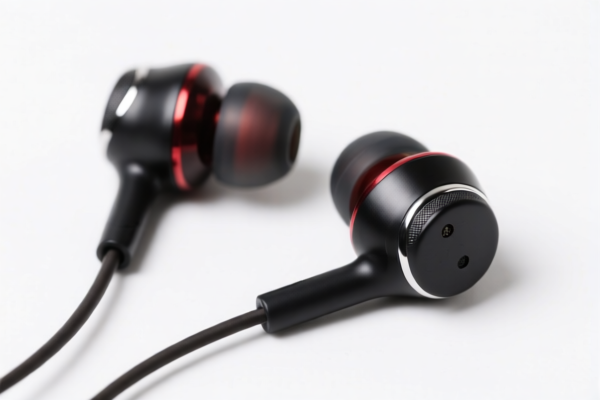
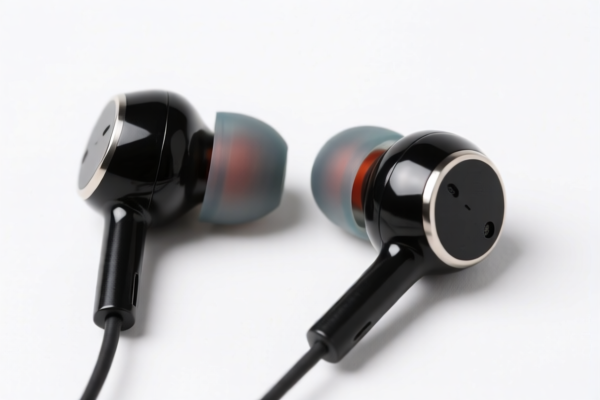
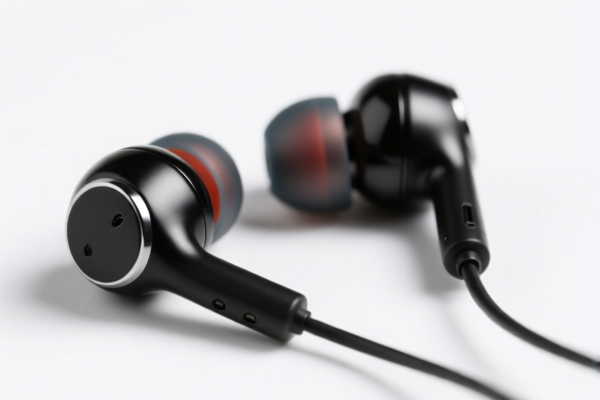
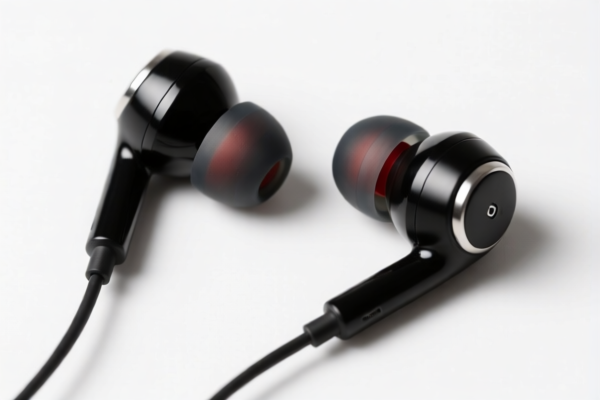
AI Analysis
🎧 Earphones & Headsets (Earphones for Audio Transmission/Processing)
🌐 HS Code Reference & Customs Clearance Guide | 2026 Latest Tariff Analysis | Professional Clearance Strategy
📌 1. Product Definition & Classification: Do You Really Understand "Earphones"?
Earphones are small audio output devices designed to be placed in or on the user’s ear canal or outer ear. In international trade, the classification of earphones depends heavily on their technical function, physical structure, and whether they contain active circuitry for data transmission.
Key Distinction Points: * Pure Audio Output (Passive/Active): Simple conversion of electrical signals to sound waves. → Typically HS 8518.30 * Audio Processing/Transmission: Devices that modify, process, or transmit audio/data signals beyond simple playback (e.g., Bluetooth headsets with microcontrollers, noise-canceling specific processors). → Typically HS 8543 or 8517 * Wireless/Data Transmission: If the primary function is considered part of a data transmission system (e.g., specific voice-data combo devices), it may fall under telecom equipment. → Typically HS 8517
⚠️ Critical Warning:
- If the device is a simple "listener" (no active processing/transmission logic), it is 8518.30.
- If it includes a microcontroller for Bluetooth pairing, voice commands, or active noise cancellation that is deemed "processing," customs may classify it as 8543.70 or 8517.69.
- Misclassification leads to massive duty differences (from 10% to 37.6%)!
📦 2. HS Code Classification Details (2026 Latest Tariff Authority Comparison)
| HS Code | Product Description | Applicable Scenario | Key Feature | Total Tax (China to US) |
|---|---|---|---|---|
8518.30.10.00 |
Earphones, including headphones, whether or not combined with a microphone; headsets (excluding items of heading 85.18.20) | Standard wired/wireless earphones for listening to music/podcasts | Pure audio playback/listening function | 17.5% |
8543.70.89.00 |
Other apparatus and articles, for electrical signalling or sound copying or reproduction (e.g., audio players/recorders) | Earphones classified as "audio playback equipment" due to internal recording/reproduction logic | Functioning as an audio recording/reproduction device | 17.5% |
8543.70.98.60 |
Other machines and apparatus, for electrical signalling or sound copying or reproduction | Earphones with complex audio processing/transmission capabilities (e.g., advanced DSP for noise cancellation) | Audio transmission/processing function | 37.6% |
8517.69.00.00 |
Other apparatus for the transmission or reception of voice, images or other data | Earphones integrated as part of a voice/data transmission system (e.g., specific telecom headsets) | Voice/image/data transmission/reception role | 35.0% |
8518.30.20.00 |
Earphones and headsets, including combinations thereof | Optimized Category: Standard earbuds/in-ear headphones | Standard earphone/headset definition | 10.0% |
🔍 Key Insight:
-8518.30.20.00offers the lowest tax rate (10%) for standard earphones/headsets. It is the most favorable code for general consumer earbuds.
-8543.70.98.60and8517.69.00.00carry significantly higher taxes (35%-37.6%) because they are viewed as "processing" or "transmission" equipment rather than simple output devices.
- Avoid classifying simple earphones as8543or8517unless they have specialized industrial/commercial transmission functions.
💰 3. 2026 Latest Tariff Rate Breakdown (Including Additional Duties & Policy Surcharges)
✅ Applicable Country: United States (US)
✅ Origin: China (CN)
✅ Effective Date: From November 10, 2025 onwards
🎯 1. 8518.30.20.00 —— Best Case Scenario: Standard Earphones/Headsets
| Item | Detail |
|---|---|
| Base Duty | 0% |
| Section 301 Additional Duty | 0% |
| IEEPA Additional Duty (122 Clause) | 10% |
| Total Duty Rate | 10% |
| Calculation | CIF Value × 10% |
| De Minimis Exemption | ❌ Not Eligible (High-value items subject to full duty) |
| Legal Basis | IEEPA:9903.01.25 → USITC:8518.30.20.00 |
📌 Explanation:
- This is the most cost-effective classification for standard consumer earbuds.
- Only the 10% IEEPA surcharge applies. No Section 301 (25%) tax.
🎯 2. 8518.30.10.00 & 8543.70.89.00 —— Moderate Scenario: General Earphones/Audio Devices
| Item | Detail |
|---|---|
| Base Duty | 0% |
| Section 301 Additional Duty | 7.5% |
| IEEPA Additional Duty (122 Clause) | 10% |
| Total Duty Rate | 17.5% |
| Calculation | CIF Value × 17.5% |
| De Minimis Exemption | ❌ Not Eligible |
| Legal Basis | IEEPA:9903.01.25 → IEEPA:9903.01.24 (7.5%) → USITC:8518.30.10.00 / 8543.70.89.00 |
📌 Explanation:
- Applies if the product is classified under general "headsets" (8518.30.10) or as "other audio apparatus" (8543.70.89).
- Slightly higher than the optimized8518.30.20due to the 7.5% Section 301 surcharge.
🎯 3. 8543.70.98.60 —— High Tax Scenario: Audio Processing/Transmission Devices
| Item | Detail |
|---|---|
| Base Duty | 2.6% |
| Section 301 Additional Duty | 25% |
| IEEPA Additional Duty (122 Clause) | 10% |
| Total Duty Rate | 37.6% |
| Calculation | CIF Value × 37.6% |
| De Minimis Exemption | ❌ Not Eligible |
| Legal Basis | IEEPA:9903.01.25 → USITC:8543.70.98.60 |
📌 Explanation:
- Avoid this classification for standard consumer earphones.
- Applies if customs determines the earphones have significant data processing capabilities (e.g., advanced AI noise cancellation, biometric data processing) that exceed simple audio playback.
🎯 4. 8517.69.00.00 —— High Tax Scenario: Data Transmission Equipment
| Item | Detail |
|---|---|
| Base Duty | 0% |
| Section 301 Additional Duty | 25% |
| IEEPA Additional Duty (122 Clause) | 10% |
| Total Duty Rate | 35.0% |
| Calculation | CIF Value × 35.0% |
| De Minimis Exemption | ❌ Not Eligible |
| Legal Basis | IEEPA:9903.01.25 → USITC:8517.69.00.00 |
📌 Explanation:
- Applies if the earphones are deemed primarily as voice/data transmission apparatus (e.g., specialized business headsets with integrated data ports).
- High risk of being misclassified as "telecom equipment" rather than "audio equipment."
🛠️ 4. Customs Clearance Practical Advice (Battle-Tested Pitfall Guide)
✅ 1. Documentation Checklist (All Required)
| Document | Mandatory | Description |
|---|---|---|
| ✅ Product Datasheet | ✔️ | Must specify: Type (In-ear/Over-ear), Connection (Wired/Bluetooth), Purpose (Audio Playback). |
| ✅ Circuit Diagram/Schematic | ✔️ | Crucial to prove NO advanced data processing/transmission logic if claiming 8518.30.20. |
| ✅ Product Photos (Labeled) | ✔️ | Show model number, brand, and physical form factor. |
| ✅ Test Reports | ✔️ | FCC (US), CE (EU), RoHS. Bluetooth SIG Certification if wireless. |
| ✅ Commercial Invoice | ✔️ | Clearly state: "Earphones for Audio Playback Only, No Data Transmission Function." |
| ✅ Packing List | ✔️ | List all components (case, cables, tips) as part of the set. |
✅ 2. Declaration Tips (Key Mantra)
🔥 "Simple Playback = 10%, Processing = 37%, Transmission = 35%!"
| Scenario | Correct Declaration | Wrong Practice |
|---|---|---|
| Standard Bluetooth Earbuds | 8518.30.20.00 - "Wireless Earphones for Audio Playback" |
Claiming "Data Transmission Device" → 35% |
| Wired Headphones | 8518.30.20.00 - "Headphones for Audio Listening" |
Claiming "Audio Processor" → 37.6% |
| Noise-Canceling Earphones | 8518.30.20.00 (if passive/simple active) |
Overstating DSP complexity → 37.6% |
| Headset with Microphone for Calls | 8518.30.20.00 (if primarily audio) |
Classifying as "Telecom Apparatus" → 35% |
📌 Critical Note:
- Even if earphones have a microphone, if their primary function is audio playback/listening, they should still fall under8518.30.
- Do not use keywords like "Data Transmission," "Internet," or "Server Communication" in the description unless truly applicable.
✅ 3. Special Cases Handling
| Scenario | Handling Advice |
|---|---|
| OEM Private Label | Ensure invoice matches the supplier's original HS code classification. Provide product specs proving it's a standard consumer earphone. |
| Earbuds with Biometric Sensors | If it measures heart rate/blood oxygen, customs may classify it as a medical device or data processor → Risk of 37.6%. Consult a broker. |
| Industrial Communication Headsets | May be classified as 8517.69 (Transmission) → 35%. Justify with "Audio Playback" function to aim for 8518.30. |
| Wireless Earphones with ANC | Do not over-emphasize "Active Noise Cancellation Circuitry" as "Processing." Describe it as "Sound Isolation Feature" to stay in 8518.30. |
🌍 5. Global Market Customs Comparison (2026 Latest)
| Country/Region | Recommended HS Code | Tariff Rate (China Origin) | Certification Requirements | Notes |
|---|---|---|---|---|
| 🇺🇸 United States | 8518.30.20.00 |
10% (IEEPA only) | FCC, Bluetooth SIG | Avoid 8543/8517 to save 25%+ |
| 🇨🇳 China (Import) | 8518.30.20.00 |
0% - 10% | CCC (if applicable) | Standard consumer goods |
| 🇪🇺 European Union | 8518.30.20.00 |
0% (Most MFN rates are 0%) | CE, RoHS, REACH | No additional duties |
| 🇬🇧 United Kingdom | 8518.30.20.00 |
0% | UKCA | Post-Brexit standards apply |
| 🇦🇺 Australia | 8518.30.20.00 |
5% | RCM | Moderate duty |
📌 Conclusion:
- USA is the only major market with significant additional tariffs on Chinese electronics.
- Correct classification is the single biggest cost-saving factor. A misclassification can cost you an extra 25-27% in duties.
📌 6. Common Errors & Pitfalls (Lessons Learned)
❌ Error 1: Using "Headset" or "Bluetooth Speaker" instead of "Earphones"
👉 Consequence: May trigger scrutiny under telecom equipment (8517) → 35% duty.
❌ Error 2: Over-describing technical features (e.g., "AI Noise Cancellation Chip")
👉 Consequence: Customs may deem it "Audio Processing Equipment" (8543) → 37.6% duty.
❌ Error 3: Ignoring the Microphone Function
👉 Consequence: If the mic is for phone calls, it's still part of the headset (8518). Don't split it as a "Transmitter."
✅ Correct Description Example:
"TWS Earphones, Bluetooth 5.2, In-Ear Design, with Microphone for Audio Playback, Model XYZ, FCC Certified, For Personal Audio Listening Only"
🎯 7. Conclusion: Precision Classification Saves Money!
🎯 Remember the Mantra:
🔹 "Simple Earphones = 10% (
8518.30.20)"
🔹 "Processing/Transmission = 35-37.6%"
🔹 "Don't describe chips, describe function: Listening!"
📌 Pro Tip:
- If your earphones have advanced features (biometrics, data logging), consult a customs broker before shipping.
- For standard consumer earbuds, always aim for 8518.30.20.00 to minimize duties.
📣 Immediate Action:
📞 Contact your customs broker with the product spec sheet.
📝 Ensure the Commercial Invoice clearly states "Audio Playback Device" and NOT "Data Transmission Equipment."
🚀 Save 25-27% in duties by choosing the right HS Code!
✨ Professional Clearance Starts with Accurate Classification!
💼 Your Margins Depend on Precision!
Customer Reviews
About HS Code Classification
The Harmonized System (HS) is an internationally standardized nomenclature developed by the World Customs Organization (WCO) to classify traded products. Over 200 countries use the HS system as the basis for customs tariffs, trade statistics, and import/export regulations.
Each HS code follows a hierarchical structure:
- Chapter (2 digits) — Broad category of goods (e.g., Chapter 84: Machinery and Mechanical Appliances)
- Heading (4 digits) — More specific grouping within the chapter
- Subheading (6 digits) — Internationally standardized breakdown, used by all WCO member countries
- National subdivisions (8-10 digits) — Country-specific extensions for further classification, such as US HTSUS 10-digit codes
Correct HS code classification is essential for smooth customs clearance, accurate duty payment, and compliance with trade regulations. Misclassification can lead to customs delays, overpayment of duties, or penalties.
When importing from CN to US, the applicable tariff rates may include:
- Most-Favored-Nation (MFN) rate — The standard duty rate applied to WTO members
- General rate — Applied to countries without trade agreements
- Trade remedy duties — Additional tariffs such as Section 301 (anti-dumping), Section 232 (national security), or countervailing duties
The information provided on this page is for reference purposes only. For official classification, please consult with your local customs authority or a licensed customs broker.