Earplugs Headphones
CN → US| HS Code | Tariff Rate | Origin | Destination | Doc |
|---|---|---|---|---|
| 9021100090 | 10.0% | CN | US | Official Doc |
| 4016990500 | 20.9% | CN | US | Official Doc |
| 4016996050 | 37.5% | CN | US | Official Doc |
| 9021908100 | 10.0% | CN | US | Official Doc |
| 8544422000 | 85.0% | CN | US | Official Doc |
Product Images



AI Analysis
🎧 Earplugs & Headphones (Hearing Protection & Audio Devices)
🌐 HS Code Reference & Customs Clearance Guide | 2026 Latest Tariff Analysis | Professional Clearance Strategy
📌 I. Product Definition & Classification: Do You Really Understand "Earplugs"?
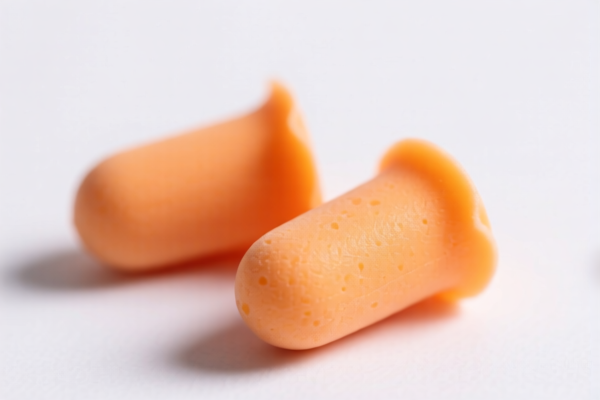
Earplugs are personal protective equipment (PPE) or audio accessories designed to be inserted into the ear canal. In international trade, classification depends heavily on material, function, and structure:
Noise-Isolation/Protective Earplugs:
- Made of foam, silicone, or rubber.
- Primary function: Hearing protection (industrial use) or noise reduction (sleeping/travel).
- Key distinction: Often classified under Headwear/Hats (Chapter 65) or Rubber Articles (Chapter 40) or Medical/Orthopedic Devices (Chapter 90).
Audio/Smart Earplugs (Headphones):
- Contain electronic components (drivers, wires, batteries).
- Primary function: Audio transmission.
- Key distinction: Classified under Electrical Machinery (Chapter 85).
⚠️ Critical Distinction:
- If it is purely passive (foam/silicone, no electronics) → Look at Chapters 40, 65, or 90.
- If it has wires/conductors → Look at Chapter 85.
- If it is for medical hearing aid purposes → Look at Chapter 90.
📦 II. HS Code Classification Details (Based on Provided Data)
According to the provided data, the following HS Codes and tax implications are applicable for Earplugs/Headphones imported into the US (implied by "Section 301/122" references):
| HS Code | Product Description (Inferred) | Applicable Scenario | Material/Function Logic |
|---|---|---|---|
9021.10.00.90 |
Other Orthopedic Appliances (Excluding Plates/Screws) | Hearing protection aids, medical-grade earplugs for defect compensation | Orthopedic/Medical: Classified as "other" orthopedic appliances for compensating defects. No material conflict. |
9021.90.81.00 |
Other Orthopedic Appliances | Hearing protection/assistive devices worn to compensate for defects | Orthopedic/Medical: Worn to compensate for defects/disabilities. Matches "other" category in Ch. 90. |
4016.99.05.00 |
Other Rubber Articles (Household/Personal) | Silicone/Rubber earplugs for home/personal protection | Rubber/Personal: Made of vulcanized rubber/silicone. Used as personal protective/home items. |
4016.99.60.50 |
Other Vulcanized Rubber Articles | Generic rubber earplugs (non-specific use) | Generic Rubber: General-purpose elastic/rubber products. "Other"兜底 (catch-all) category. |
8544.42.20.00 |
Insulated Conductors with Connectors/Accessories | Wired Earplugs (Audio/Headphones) | Electrical: "Wired" implies conductors. Used for telecom/audio transmission. |
🔍 Key Insight:
- Medical/Orthopedic Path (9021.xxxx): If marketed as hearing protection aids or for compensating hearing defects, this path offers the lowest duty (10%).
- Personal Protection/Rubber Path (4016.xxxx): If sold as generic noise-reduction earplugs (foam/silicone), they fall under rubber articles. Duty ranges from 20.9% to 37.5%.
- Electronic Path (8544.xxxx): If "Earplugs" implies wired headphones/audio devices, they are classified as insulated conductors/audio cables. This path has the highest duty (85%) due to Section 301 tariffs.
💰 III. 2026 Latest Tariff Rate Breakdown (US Imports from China)
✅ Applicable Country: United States (US)
✅ Origin: China (CN)
✅ Effective Date: Post-November 2025 (Current Status)
🎯 1. 9021.10.00.90 & 9021.90.81.00 —— Orthopedic/Appliance Hearing Aids
| Item | Detail |
|---|---|
| Base Duty | 0.0% (Free Trade or 0% MFN) |
| Section 301/122 Additional Duty | 0.0% (No extra 7.5% or 25%) |
| 122-Clause Duty (IEEPA) | +10% (Specific to China-origin goods) |
| Total Duty Rate | 10.0% |
| Calculation | CIF Value × 10% |
| De Minimis Exemption | ❌ Not Eligible (Subject to high tariffs) |
| Legal Basis | HTSUS 9021.xx + 122-Clause IEEPA |
📌 Explanation:
- These codes are classified as Orthopedic Appliances.
- Only the 122-Clause 10% tariff applies.
- Significant Advantage: No Section 301 additional tariffs (0% extra). This is the most cost-effective classification if the product can be justified as a medical/orthopedic aid.
🎯 2. 4016.99.05.00 —— Household/Personal Rubber Earplugs
| Item | Detail |
|---|---|
| Base Duty | 3.4% |
| Section 301 Additional Duty | +7.5% |
| 122-Clause Duty (IEEPA) | +10% |
| Total Duty Rate | 20.9% |
| Calculation | CIF Value × 20.9% |
| De Minimis Exemption | ❌ Not Eligible |
| Legal Basis | HTSUS 4016.99.05.00 + 301 + 122 |
📌 Explanation:
- Classified as Vulcanized Rubber for household/personal use.
- Combined Tariff: Base (3.4%) + Section 301 (7.5%) + 122-Clause (10%) = 20.9%.
- Moderate Cost: Higher than orthopedic classification, but lower than generic rubber.
🎯 3. 4016.99.60.50 —— Generic Vulcanized Rubber Articles
| Item | Detail |
|---|---|
| Base Duty | 2.5% |
| Section 301 Additional Duty | +25.0% |
| 122-Clause Duty (IEEPA) | +10% |
| Total Duty Rate | 37.5% |
| Calculation | CIF Value × 37.5% |
| De Minimis Exemption | ❌ Not Eligible |
| Legal Basis | HTSUS 4016.99.60.50 + 301 (High Rate) + 122 |
📌 Explanation:
- Classified as Other Rubber Articles (generic).
- High Section 301 Rate: 25% additional tariff applies to generic rubber goods.
- High Cost: Total 37.5%. Avoid this classification if possible.
🎯 4. 8544.42.20.00 —— Wired Earplugs/Headphones (Electrical)
| Item | Detail |
|---|---|
| Base Duty | 0.0% |
| Section 301 Additional Duty | +25.0% |
| 122-Clause Duty (IEEPA) | +10% |
| Steel/Aluminum/Copper Surcharge | +50% (If applicable components trigger steel/aluminum tariffs) |
| Total Duty Rate | 85.0% (Minimum) |
| Calculation | CIF Value × 85% |
| De Minimis Exemption | ❌ Not Eligible |
| Legal Basis | HTSUS 8544.42.20.00 + 301 + 122 + Steel/Aluminum |
📌 Explanation:
- Classified as Insulated Conductors (Wired devices).
- Extreme Cost: 25% (Section 301) + 10% (122-Clause) = 35% base.
- Potential Steel/Aluminum Surcharge: If the product contains steel/aluminum components (e.g., plugs, housing), an additional +50% may apply, pushing the total to 85%.
- Avoid: This is the most expensive classification. Only use if the product is explicitly a wired audio cable/headphone assembly.
🛠️ IV. Customs Clearance Operational Advice (Practical Pitfall Guide)
✅ 1. Documentation Checklist (Essential)
| Document | Required | Notes |
|---|---|---|
| ✅ Product Specification Sheet | ✔️ | Must detail material (Silicone, Foam, Rubber) and function (Noise Reduction vs. Audio). |
| ✅ Photos (Clear & Labeled) | ✔️ | Show product structure. If wired, highlight conductors. If medical, show packaging claims. |
| ✅ Commercial Invoice | ✔️ | Description must match HS Code logic (e.g., "Orthopedic Ear Protector" vs. "Rubber Ear Plug"). |
| ✅ Origin Certificate (CO) | ✔️ | Proves China origin to apply 122-Clause tariffs. |
| ✅ Third-Party Test Report | ✔️ | If claiming medical/orthopedic status, provide test reports for hearing protection efficacy. |
| ✅ Material Declaration | ✔️ | Explicitly state material composition (e.g., "100% Medical Silicone"). |
✅ 2. Classification Strategy (Key Rules)
🔥 “Function Determines Code, Material Supports It!”
| Scenario | Recommended HS Code | Total Duty | Reasoning |
|---|---|---|---|
| Medical/Orthopedic Hearing Aids | 9021.10.00.90 / 9021.90.81.00 |
10% | Best rate. Justify as "Orthopedic Appliance for Hearing Defects." |
| Silicone/Foam Noise Reduction Plugs | 4016.99.05.00 |
20.9% | Best for general PPE. Justify as "Personal Protection/Rubber." |
| Generic Rubber Earplugs | 4016.99.60.50 |
37.5% | Avoid if possible. High Section 301 rate. |
| Wired Headphones/Earplugs | 8544.42.20.00 |
85.0% | Worst case. Only for wired audio devices. |
📌 Key Tip:
- Do NOT misdeclare wired headphones as "rubber earplugs" to avoid 85% tax. This is fraud.
- Do NOT declare generic rubber plugs as "orthopedic" without medical justification. Customs will reject and impose penalties.
✅ 3. Special Cases & Mitigation
| Case | Handling Advice |
|---|---|
| OEM Earplugs (No Brand) | Provide OEM agreement. Clarify intended use (Industrial vs. Consumer). |
| Mixed Shipment (Earplugs + Cases) | Declare separately. Cases may have different HS codes. Do not lump into one invoice if values differ significantly. |
| Medical Claim | Must provide FDA clearance or CE Medical Device certification to support 9021 classification. |
| Electronic Components | If "Earplugs" have Bluetooth/Batteries, they are NOT 8544.42.20.00 but likely 8518.30 (Headphones). Note: The provided data only lists 8544, implying wired passive/active cables. Assume wired if using provided data. |
🌍 V. Global Market Comparison (2026)
| Market | Recommended HS Code | Duty (China Origin) | Key Requirements |
|---|---|---|---|
| 🇺🇸 USA | 9021.10.00.90 (Best) |
10% | Strict classification. 122-Clause applies. |
| 🇪🇺 EU | 9021.90.81.00 |
Varies (0-6%) | CE Marking. No Section 301. |
| 🇨🇳 China | 9021.10.00.90 |
5-10% | CCC Certification if medical. |
| 🇯🇵 Japan | 9021.10.00.90 |
0-3% | PSE Certification if electronic. |
📌 Conclusion:
- The US market is the most challenging due to 122-Clause and Section 301 tariffs.
- Classification as Orthopedic (9021) is the only viable strategy to minimize costs (10% vs. 37.5% or 85%).
- EU/Asia markets have lower barriers; focus on compliance (CE/PSE) rather than tariff avoidance.
📌 VI. Common Mistakes & Pitfalls (Lessons Learned)
❌ Mistake 1: Declaring wired headphones as "Rubber Earplugs" (4016)
👉 Result: Customs detection of conductors → 85% Tax + Penalties.
✅ Fix: Correctly classify as electrical goods if wired.
❌ Mistake 2: Declaring generic foam earplugs as "Orthopedic" (9021) without proof
👉 Result: Customs rejection → 37.5% Tax (Generic Rubber) + Delay.
✅ Fix: Provide medical justification or use 4016.99.05.00 (20.9%).
❌ Mistake 3: Ignoring the 122-Clause 10% Tariff
👉 Result: Underpayment → Post-Clearance Audit & Interest.
✅ Fix: Always calculate 10% on top of base/301 tariffs.
❌ Mistake 4: Splitting a wired headphone kit into "Plug + Cable"
👉 Result: Each part assessed separately, potentially higher total tax.
✅ Fix: Declare as a complete unit (if possible) or correctly classify each component.
🎯 VII. Conclusion: Professional Classification, Cost Optimization!
🎯 Remember the Golden Rule:
🔹 "Orthopedic = 10% (Best); Rubber = 20.9%~37.5%; Wired = 85% (Worst)"
🔹 "Justify Function, Support with Material, Avoid Fraud!"📌 Pro Tip:
- If your earplugs are medical-grade, aggressively pursue9021classification with supporting documentation.
- If they are consumer PPE, use4016.99.05.00for the lowest possible rubber-related duty.
- Avoid8544unless absolutely necessary.
📣 Immediate Action:
📞 Contact a licensed customs broker.
📄 Submit product samples + medical certificates (if applicable).
🚀 Get an Advance Ruling (Pre-classification) to lock in the 10% rate!
✨ Professional Clearance Starts with Accurate Classification!
💼 Every Percent of Duty Saved is Pure Profit!
Customer Reviews
About HS Code Classification
The Harmonized System (HS) is an internationally standardized nomenclature developed by the World Customs Organization (WCO) to classify traded products. Over 200 countries use the HS system as the basis for customs tariffs, trade statistics, and import/export regulations.
Each HS code follows a hierarchical structure:
- Chapter (2 digits) — Broad category of goods (e.g., Chapter 84: Machinery and Mechanical Appliances)
- Heading (4 digits) — More specific grouping within the chapter
- Subheading (6 digits) — Internationally standardized breakdown, used by all WCO member countries
- National subdivisions (8-10 digits) — Country-specific extensions for further classification, such as US HTSUS 10-digit codes
Correct HS code classification is essential for smooth customs clearance, accurate duty payment, and compliance with trade regulations. Misclassification can lead to customs delays, overpayment of duties, or penalties.
When importing from CN to US, the applicable tariff rates may include:
- Most-Favored-Nation (MFN) rate — The standard duty rate applied to WTO members
- General rate — Applied to countries without trade agreements
- Trade remedy duties — Additional tariffs such as Section 301 (anti-dumping), Section 232 (national security), or countervailing duties
The information provided on this page is for reference purposes only. For official classification, please consult with your local customs authority or a licensed customs broker.