Earthmoving Machinery
CN → US| HS Code | Tariff Rate | Origin | Destination | Doc |
|---|---|---|---|---|
| 8429110010 | 35.0% | CN | US | Official Doc |
| 8430505000 | 35.0% | CN | US | Official Doc |
| 8430690100 | 35.0% | CN | US | Official Doc |
Product Images
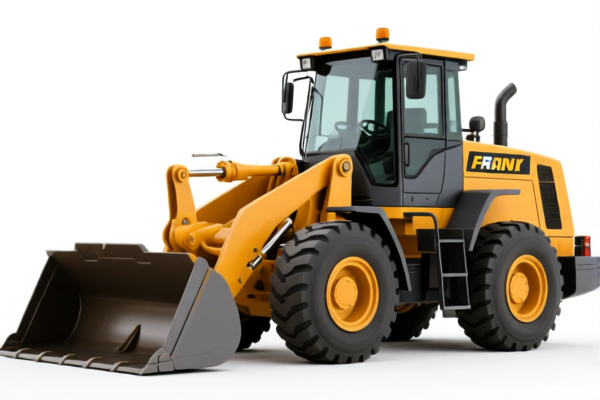
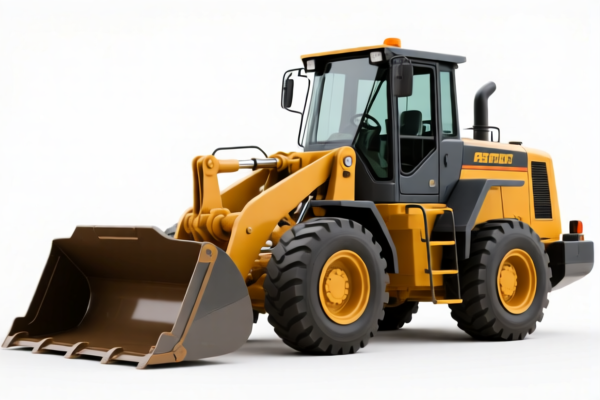
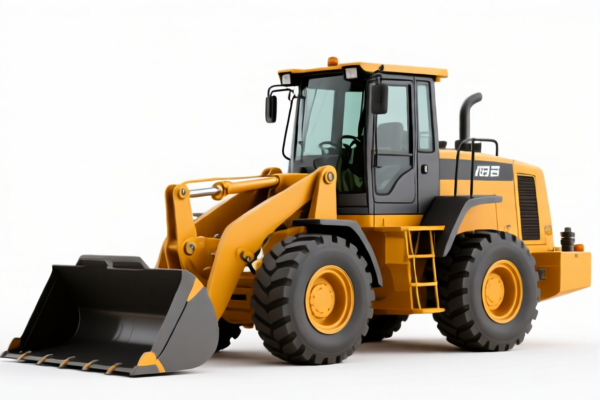
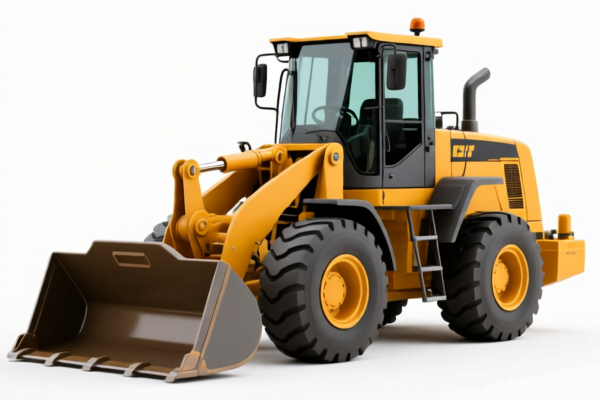
AI Analysis
🚜 Earthmoving Machinery: HS Code Classification & US Customs Clearance Guide | 2026 Tax Breakdown
🌐 HS Code Reference & Customs Strategy | 2026 Latest Tariff Analysis | Professional Entry Guidelines
📌 I. Product Definition: What is "Earthmoving Machinery"?
Earthmoving Machinery is a broad category of heavy-duty equipment designed for moving soil, rock, or other materials. In international trade, it primarily encompasses: * Bulldozers: For pushing large quantities of soil, sand, or rubble. * Graders: For leveling surfaces (roads, airports). * Excavators: For digging trenches or holes. * Loading Shovels & Scoop Tramways.
⚠️ Critical Distinction:
- "Earthmoving" vs. "Construction": While often used interchangeably, customs authorities look at the primary function. If the machine is primarily for digging or pushing earth, it falls under Chapter 84 (Nuclear reactors, boilers, machinery and mechanical appliances).
- Specific vs. General: If the machinery fits a specific subheading (e.g., Bulldozers), it must be classified there. If it is a specialized machine not explicitly listed in specific subheadings, it may fall under "Other" categories.
📦 II. HS Code Classification Details (2026 Latest Tariff Alignment)
Based on the provided data, the term "Earthmoving Machinery" matches three primary HS Codes. Here is the breakdown of why each code applies and the associated tax implications.
| HS Code | Product Description | Why It Matches "Earthmoving Machinery" |
|---|---|---|
8429.11.00.10 |
Bulldozers, Anchored and Unanchored | High Match: The term "Earthmoving Machinery" strongly aligns with Bulldozers, Graders, and Excavators, which are explicitly categorized under this heading as earth-moving mechanical handling equipment. |
8430.50.50.00 |
Other machines for projecting, distributing or spraying liquids, or for dusting solids; Other machines, appliances and mechanical handling equipment for leveling, grading, scraping, excavating, tamping, compacting, extracting or boring; machines for installing underground posts, fences, pipes and cables... | Purpose Match: The classification explanation explicitly includes machines "for earth, mineral or ore". Since "Earthmoving" directly implies working on earth/soil, this code covers the purpose of the machinery without conflict regarding material or form. |
8430.69.01.00 |
Other self-propelled earthmoving machinery | Default/Catch-All Match: This is a "residual" category for machinery not listed elsewhere. The term "Earthmoving Machinery" directly matches the use case (processing earth). In the absence of material conflicts, this is the default classification for general earth-moving equipment not specifically named in other subheadings. |
🔍 Key Insight:
All three codes share the same Total Tax Rate of 35.0% for Chinese-origin goods entering the US. This is due to the combination of base tariffs and specific trade remedy tariffs.
💰 III. 2026 Latest Tariff Rate Breakdown (Including Additional Duties & Policy Surcharges)
✅ Applicable Country: United States (US)
✅ Country of Origin: China (CN)
✅ Effective Date: Post-2025 (Current Trade Policy)
🎯 1. General Tax Structure for All Three HS Codes
The provided data indicates a consistent tax structure across all three classifications for Earthmoving Machinery.
| Tax Component | Rate | Description |
|---|---|---|
| Base Tariff | 0.0% | Standard Most Favored Nation (MFN) rate for these machinery categories. |
| Section 301 Tariff | 25.0% | Additional duties imposed under US Trade Law Section 301 against Chinese imports. |
| Section 122 Tariff | 10.0% | Additional duties under the "122 Clause" (often related to specific trade actions or administrative tariffs on Chinese goods). |
| TOTAL RATE | 35.0% | Sum of all applicable tariffs |
📌 Explanation:
- Base Tariff (0%): The WTO MFN rate is zero, which is common for heavy industrial machinery.
- Section 301 (25%): This is the most significant cost driver. It applies to a wide range of Chinese industrial goods, including construction and earthmoving equipment.
- Section 122 (10%): This is an additional administrative tariff. Note that "122 Clause" typically refers to specific US trade regulations (e.g., U.S. Code Title 19, Section 1324 or related administrative actions).
- Total 35%: This is a high tariff burden. It applies to the CIF Value (Cost, Insurance, and Freight).
🧮 Tax Calculation Example
If you import a Bulldozer valued at $100,000 CIF: * Base Duty: $0 (0%) * Section 301 Duty: $25,000 (25%) * Section 122 Duty: $10,000 (10%) * Total Duty Payable: $35,000
🛠️ IV. Customs Clearance Practical Advice (Pitfall Avoidance Guide)
✅ 1. Required Documentation Checklist
| Document | Mandatory? | Notes |
|---|---|---|
| Commercial Invoice | ✅ Yes | Must clearly state "Earthmoving Machinery" and include HS Code. |
| Packing List | ✅ Yes | Detail dimensions and weight. Heavy machinery requires precise weight declarations. |
| Product Specifications | ✅ Yes | Include engine type, horsepower, working weight, and primary function (e.g., "Bulldozer," "Grader"). |
| Origin Certificate | ✅ Yes | Proof of Chinese origin is critical for applying the 35% tariff correctly. |
| Import License | ❌ No | Generally not required for standard earthmoving equipment, but check for specific environmental/engine emission standards. |
| FCC Certification | ❌ No | Not typically required for industrial machinery, but electrical components may need compliance. |
✅ 2. Declaration Best Practices
🔥 Golden Rule: "Be Specific About Function!"
| Scenario | Correct Declaration | Incorrect Declaration | Consequence |
|---|---|---|---|
| Standard Bulldozer | 8429.11.00.10 - "Bulldozer, Earthmoving Machinery" |
"Construction Equipment" | High Risk: Vague terms may lead to misclassification, audits, or higher duties. |
| Specialized Excavator | 8430.50.50.00 - "Excavator for Earth Excavation" |
"Machinery" | Delay: Customs may hold goods for further inspection due to ambiguity. |
| Hybrid Machine | 8430.69.01.00 - "Other Self-Propelled Earthmoving Machine" |
"Truck" | Penalty: Misclassification as a truck could lead to different (potentially higher) tariffs. |
📌 Key Advice:
- Do Not Split Shipments: If the machinery comes with attachments (buckets, blades), declare them as part of the main unit unless they are clearly separate commercial goods.
- Use Precise Terminology: Instead of just "Earthmoving Machinery," specify "Bulldozer," "Grader," or "Excavator" in the description to align with 8429.11.00.10 if applicable. This reduces the chance of being forced into the "Other" category (8430.69.01.00) unnecessarily.
✅ 3. Special Cases & Exemptions
| Situation | Handling Advice |
|---|---|
| Used Machinery | Same tariff rates apply. Ensure the machine is not subject to environmental bans on used industrial equipment. |
| OEM/Custom Parts | If importing spare parts (e.g., buckets, blades), ensure they are classified under 8431 (Parts) if they are specific, or under the main HS code if they are complete machines. |
| Trade War Exclusions | Check for exclusions: Section 301 tariffs sometimes have exclusions. However, earthmoving machinery is not typically excluded. Assume 35% applies. |
| Transshipment | Do NOT route through third countries to mask origin. US customs is strict on origin fraud. Misdeclaring origin can lead to severe penalties and seizure. |
🌍 V. Global Market Comparison (2026)
| Country/Region | Recommended HS Code | Tariff Rate (China Origin) | Key Certification | Notes |
|---|---|---|---|---|
| 🇺🇸 USA | 8429.11.00.10 |
35% | None specific, but EPA emission standards apply | High tariff due to Section 301 & 122. |
| 🇨🇳 China | 8429.11.00.10 |
0-5% | CCC (if applicable) | Domestic trade or FTA benefits. |
| 🇪🇺 EU | 8429.11.00.00 |
~3-5% | CE Marking, Stage V Emissions | No Section 301 equivalent, but strict environmental rules. |
| 🇦🇺 Australia | 8429.11.00.00 |
5% | RCM, Emissions Compliance | Standard MFN rate. |
| 🇯🇵 Japan | 8429.11.00.00 |
0-5% | PSE (for electrical parts), Emissions | JICA standards may apply for large equipment. |
📌 Conclusion:
- USA is the most expensive market for Chinese earthmoving machinery due to the 35% total tariff.
- EU and Japan have lower base tariffs but strict emission and safety certifications.
- Cost-Benefit Analysis: If the margin on the machinery is less than 35%, importing to the US may be unprofitable unless you can shift supply chains.
📌 VI. Common Mistakes & Pitfalls (Blood Lessons)
❌ Mistake 1: Declaring as "Construction Vehicles" instead of "Earthmoving Machinery"
👉 Result: Misclassification. Customs may reclassify under a higher tariff code or demand additional documentation.
❌ Mistake 2: Under-declaring the Value to Reduce Duty
👉 Result: Seizure of goods, fines up to 3x the duty owed, and potential criminal charges.
❌ Mistake 3: Ignoring EPA Emission Standards
👉 Result: Refusal of Entry. The US Environmental Protection Agency (EPA) strictly enforces emission standards for non-road engines. Even if you pay the 35% tariff, you cannot clear customs without EPA compliance.
❌ Mistake 4: Assuming "Other" Category (8430.69.01.00) is Cheaper
👉 Result: No Difference. All three codes have the same 35% rate. The difference is in legal clarity and audit risk.
✅ Correct Approach:
"Declare precisely: 'Bulldozer, 200HP, Model XYZ, Complies with EPA Stage V, HS 8429.11.00.10'"
🎯 VII. Conclusion: Professional Declaration, Time-Saving, Cost-Effective!
🎯 Remember the Mantra:
🔹 "35% is the US Price Tag!"
🔹 "Specify Function, Avoid Vague Terms!"
🔹 "EPA Compliance is Non-Negotiable!"
📌 Pro Tip:
If your earthmoving machinery is assembled in Vietnam, Mexico, or Thailand (and meets rules of origin), you may apply for Section 301 Exclusions or lower MFN rates.
Recommendation: Apply for an Advance Ruling from US Customs and Border Protection (CBP) to confirm the HS Code and tariff liability before shipping.
📣 Immediate Action:
📞 Contact a Professional Customs Broker + Provide Product Specs + Apply for Advance Ruling
🚀 Clear Customs Smoothly, Avoid Delays, Maximize Profit!
✨ Professional Customs Clearance Starts with Accurate Classification!
💼 Every Cent of Duty is Worth Calculating Precisely!
Customer Reviews
About HS Code Classification
The Harmonized System (HS) is an internationally standardized nomenclature developed by the World Customs Organization (WCO) to classify traded products. Over 200 countries use the HS system as the basis for customs tariffs, trade statistics, and import/export regulations.
Each HS code follows a hierarchical structure:
- Chapter (2 digits) — Broad category of goods (e.g., Chapter 84: Machinery and Mechanical Appliances)
- Heading (4 digits) — More specific grouping within the chapter
- Subheading (6 digits) — Internationally standardized breakdown, used by all WCO member countries
- National subdivisions (8-10 digits) — Country-specific extensions for further classification, such as US HTSUS 10-digit codes
Correct HS code classification is essential for smooth customs clearance, accurate duty payment, and compliance with trade regulations. Misclassification can lead to customs delays, overpayment of duties, or penalties.
When importing from CN to US, the applicable tariff rates may include:
- Most-Favored-Nation (MFN) rate — The standard duty rate applied to WTO members
- General rate — Applied to countries without trade agreements
- Trade remedy duties — Additional tariffs such as Section 301 (anti-dumping), Section 232 (national security), or countervailing duties
The information provided on this page is for reference purposes only. For official classification, please consult with your local customs authority or a licensed customs broker.