Eco friendly Biodegradable Shoe Covers
CN → US| HS Code | Tariff Rate | Origin | Destination | Doc |
|---|---|---|---|---|
| 4823908620 | 35.0% | CN | US | Official Doc |
| 4823908680 | 35.0% | CN | US | Official Doc |
| 3926204010 | 16.5% | CN | US | Official Doc |
| 3926201050 | 10.0% | CN | US | Official Doc |
| 6405902000 | 21.3% | CN | US | Official Doc |
| 6405909060 | 22.5% | CN | US | Official Doc |
Product Images
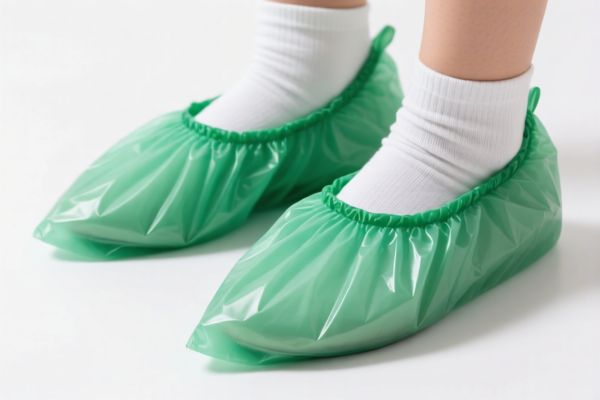
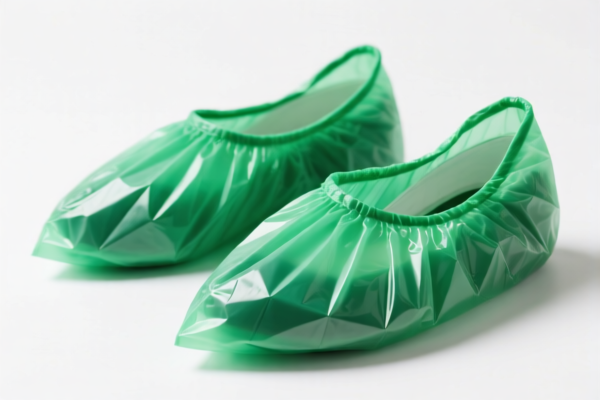
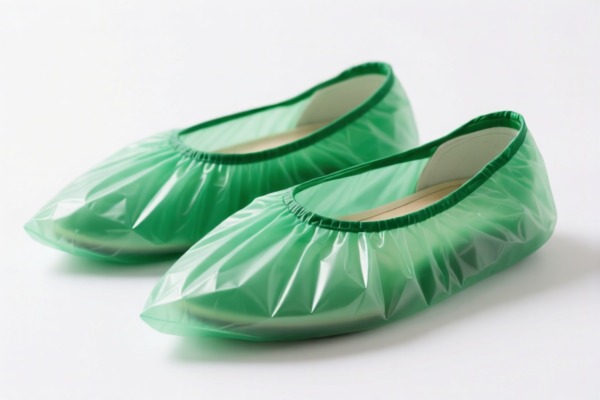
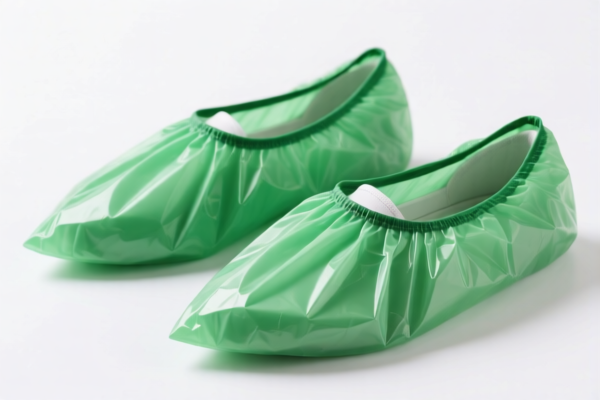
AI Analysis
👟 Eco-Friendly Biodegradable Shoe Covers (Booties)
🌐 HS Code Reference & Customs Clearance Guide | 2026 Latest Tariff Analysis | Professional Compliance Strategy
📌 I. Product Definition & Classification: Do You Really Know What You’re Shipping?
Eco-friendly biodegradable shoe covers are single-use protective garments designed to prevent contamination or track dirt. In international trade, the classification depends strictly on material composition and usage type. They are generally categorized into two main streams:
- Paper/Paperboard-Based Covers: Made from cellulose wadding, paper pulp, or webs of cellulose fibers. These are biodegradable but distinct from plastics.
- Plastic-Based Disposable Footwear: Often made from non-woven fabrics (which may be polypropylene, though "biodegradable" implies specific polymers like PLA or PBAT). If designed for one-time use, they fall under footwear or plastic articles.
⚠️ Key Distinction Point:
- If the material is purely paper/pulp/cellulose → It belongs to Chapter 48.
- If the material is plastic/non-woven polymer designed for one-time use → It belongs to Chapter 64 (Footwear) or Chapter 39 (Plastics).
📦 II. HS Code Classification Details (2026 Latest Tariff Authority Reference)
Based on the provided data, here are the specific HS Codes and their corresponding tax implications for importing into the United States.
| HS Code | Product Description | Applicable Scenario | Material/Type |
|---|---|---|---|
4823.90.86.20 |
Other Shoe Covers (Booties) of paper, paperboard, cellulose wadding, or webs of cellulose fibers | Paper-based booties, eco-friendly cellulose covers | ✅ Paper/Cellulose |
6405.90.20.00 |
Disposable Footwear, designed for one-time use (Other footwear: Other) | Non-woven plastic/polymer booties meant for single use | ✅ Plastic/Polymer (One-time) |
3926.20.40.10 |
Other Disposable Gloves, Mittens, Mitts (Articles of apparel of plastics) | Note: If mistakenly declared as gloves rather than shoe covers, or if mixed with hand protection | ❌ Incorrect for Shoe Covers |
3926.20.10.50 |
Seamless Gloves/Mittens (Other) | Note: Not applicable to shoe covers | ❌ Incorrect |
🔍 Critical Clarification:
- "Biodegradable" does not automatically mean "Plastic": If the cover is made from cellulose/paper, it MUST be classified under 4823.90.86.20, NOT under plastic codes.
- "Disposable Footwear" vs. "Plastic Articles": If the shoe cover is made of non-woven plastic (e.g., PP, PLA) and is one-time use, it is classified as Footwear (6405.90.20.00), not as a general plastic article (3926). This is a crucial distinction because the tax rates differ significantly.
💰 III. 2026 Latest Tariff Rate Breakdown (Including Supplementary Taxes, Policy Surcharges)
✅ Applicable Country: United States (US)
✅ Origin: China (CN)
✅ Effective Time: 2025/2026 (Current trade policy applies)
🎯 1. 4823.90.86.20 —— Paper/Cellulose Shoe Covers
| Item | Content |
|---|---|
| Base Tariff Rate | 0.0% (Ad Valorem) |
| USITC Supplementary Tax (Section 301) | +25.0% |
| IEEPA Supplementary Tax | 0.0% (Not applicable in provided data) |
| Total Tax Rate | 25.0% |
| Tax Calculation | CIF Value × 25% |
| De Minimis Eligibility | ❌ Not Eligible (For shipments > $800, duties apply; for < $800, Section 301 may still be scrutinized, but typically de minimis is exempt from general duties, not always from Section 301 depending on CBP enforcement). Note: Under current US trade policy, Section 301 tariffs often apply to shipments > $800. For < $800, de minimis (321) may still apply if not explicitly denied, but check latest CBP rulings. |
| Legal Basis Path | USITC:4823.90.86.20 → FOOTNOTE:9903.88.01 (Section 301) |
📌 Explanation:
- Paper-based products face a 25% additional tariff due to US-China trade tensions (Section 301).
- Although the base rate is 0%, the 25% surcharge makes it costly.
- "Eco-friendly" label does not exempt from Section 301 tariffs if the origin is China.
🎯 2. 6405.90.20.00 —— Disposable Plastic/Polymer Shoe Covers (One-Time Use)
| Item | Content |
|---|---|
| Base Tariff Rate | 3.8% (Ad Valorem) |
| USITC Supplementary Tax (Section 301) | +7.5% |
| IEEPA Supplementary Tax | 0.0% (Not applicable in provided data) |
| Total Tax Rate | 11.3% |
| Tax Calculation | CIF Value × 11.3% |
| De Minimis Eligibility | ❌ Not Eligible (Same as above) |
| Legal Basis Path | USITC:6405.90.20.00 → FOOTNOTE:9903.88.01 (Section 301) |
📌 Explanation:
- Non-woven disposable footgear is classified as Footwear (Ch. 64).
- The total tax burden is 11.3%, which is significantly lower than paper-based covers (25%).
- If your "biodegradable" shoe covers are made of non-woven fabric (polymer-based), this code is more tax-efficient than paper.
🎯 3. 3926.20.40.10 —— Disposable Plastic Articles (If Misclassified)
| Item | Content |
|---|---|
| Base Tariff Rate | 6.5% |
| USITC Supplementary Tax | 0.0% |
| Total Tax Rate | 6.5% |
| Tax Calculation | CIF Value × 6.6.5% |
⚠️ Warning:
- Do NOT classify shoe covers under3926(Plastic Articles) if they are footwear.
- CBP may reclassify3926items as6405(Footwear) if they are clearly designed for feet, leading to higher duties (11.3% vs 6.5%) and potential penalties.
- Only use3926if the item is not footwear (e.g., plastic gloves), but never for shoe covers.
🛠️ IV. Customs Clearance Practical Advice (Real-World Pitfall Avoidance)
✅ 1. Required Documentation Checklist
| Document | Required | Description |
|---|---|---|
| ✅ Product Specification Sheet | ✔️ | Must clearly state material (e.g., "100% Cellulose" vs. "Non-woven Polypropylene/PLA"). |
| ✅ Material Composition Certificate | ✔️ | Proof of "biodegradable" claim (e.g., ASTM D6400, EN 13432) if marketing claims eco-friendliness. |
| ✅ Product Photos | ✔️ | Clear images showing the item is a shoe cover/bootie, not a glove. |
| ✅ Commercial Invoice | ✔️ | Must specify: "Disposable Shoe Covers (Booties)" and correct HS Code. |
| ✅ Country of Origin Certificate | ✔️ | Critical for determining Section 301 applicability. |
✅ 2. Declaration Tips (Key Mantra)
🔥 "Material Defines Code, Usage Defines Class, Don’t Guess!"
| Scenario | Correct HS Code | Incorrect Code | Consequence |
|---|---|---|---|
| Paper/Cellulose Booties | 4823.90.86.20 (25% Tax) |
6405.90.20.00 |
Underpayment Penalty (11.3% vs 25%) |
| Non-woven Plastic Booties (One-time use) | 6405.90.20.00 (11.3% Tax) |
3926.20.40.10 |
Misclassification Risk (CBP may enforce Footwear rules) |
| Reusable Plastic Booties | 6405.90.90.60 (0% Tax) |
6405.90.20.00 |
Overpayment (11.3% vs 0%) |
📌 Important:
- Reusable shoe covers (e.g., rubber, durable plastic) fall under6405.90.90.60with 0% total tax.
- Disposable ones fall under6405.90.20.00with 11.3% total tax.
- Paper-based ones fall under4823.90.86.20with 25% total tax.
✅ 3. Special Cases & Handling
| Scenario | Handling Advice |
|---|---|
| "Biodegradable" PLA Plastics | If made of PLA (Polylactic Acid), it is still a plastic. Classify as 6405.90.20.00 if disposable footwear. |
| Mixed Packages (Paper + Plastic) | Declare separately. Do not combine under one HS Code. Paper parts → 4823..., Plastic parts → 6405.... |
| OEM Custom Booties | Provide OEM agreement and design specs. Ensure description matches function (shoe cover vs. glove). |
🌍 V. Global Market Clearance Comparison (2026 Latest)
| Country/Region | Recommended HS Code | Tax Rate (China Origin) | Certification | Note |
|---|---|---|---|---|
| 🇺🇸 USA | 6405.90.20.00 (Dispo.) |
11.3% (Footwear) | N/A | Paper: 25% |
| 🇺🇸 USA | 4823.90.86.20 (Paper) |
25% | N/A | High tax on cellulose |
| 🇪🇺 EU | 3926.20.90 (Plastics) |
Varies (0-6.5%) | CE, REACH | No Section 301 |
| 🇨🇳 China | 6405.90.90 (Footwear) |
20% | N/A | Import duties differ |
📌 Conclusion:
- US Market is Price-Sensitive: The 25% tax on paper shoe covers vs. 11.3% on plastic disposable creates a strong incentive to use non-woven plastic (if "biodegradable" claim can be met with PLA/PBAT) for US exports.
- Paper-based covers are significantly more expensive due to Section 301 tariffs.
📌 VI. Common Mistakes & Pitfalls (Blood Lesson Guide)
❌ Mistake 1: Declaring Plastic Disposable Booties as Gloves (3926)
👉 Consequence: CBP may reclassify as Footwear (6405), leading to back taxes (11.3% - 6.5%) + penalties.
❌ Mistake 2: Declaring Paper Booties as Footwear (6405)
👉 Consequence: Underpayment of Duty. Tax difference: 25% - 11.3% = 13.7% penalty.
❌ Mistake 3: Not distinguishing Disposable vs. Reusable
👉 Consequence: Reusable (6405.90.90.60) has 0% tax. Misdeclaring as disposable (6405.90.20.00) results in 11.3% overpayment.
✅ Correct Declaration Example:
"Disposable Non-Woven Polypropylene Shoe Covers, One-Time Use, Biodegradable (PLA Blend), Model: BC-100" → HS Code: 6405.90.20.00
🎯 VII. Conclusion: Professional Declaration, Cost Savings, Efficiency!
🎯 Remember the Mantra:
🔹 "Paper = 25%, Plastic Disposable = 11.3%, Plastic Reusable = 0%!"
🔹 "Material Matters, Usage Counts, Don’t Mix Codes!"
📌 Pro Tip:
If your "biodegradable" shoe covers are made of non-woven PLA/PBAT, they are plastics, not paper. Use 6405.90.20.00 to save 13.7% in duties compared to paper-based alternatives.
Consider applying for an Advance Ruling (Pre-Ruling) from US CBP if your product’s material composition is complex (e.g., mixed paper/plastic layers).
📣 Immediate Action:
📞 Contact a licensed customs broker + Provide Material Safety Data Sheet (MSDS) + Verify HS Code via CBP Rulings
🚀 Let your eco-friendly products clear smoothly, efficiently, and profitably!
✨ Professional Clearance Starts with Accurate Classification!
💼 Every percentage point of tax saved is pure profit!
Customer Reviews
About HS Code Classification
The Harmonized System (HS) is an internationally standardized nomenclature developed by the World Customs Organization (WCO) to classify traded products. Over 200 countries use the HS system as the basis for customs tariffs, trade statistics, and import/export regulations.
Each HS code follows a hierarchical structure:
- Chapter (2 digits) — Broad category of goods (e.g., Chapter 84: Machinery and Mechanical Appliances)
- Heading (4 digits) — More specific grouping within the chapter
- Subheading (6 digits) — Internationally standardized breakdown, used by all WCO member countries
- National subdivisions (8-10 digits) — Country-specific extensions for further classification, such as US HTSUS 10-digit codes
Correct HS code classification is essential for smooth customs clearance, accurate duty payment, and compliance with trade regulations. Misclassification can lead to customs delays, overpayment of duties, or penalties.
When importing from CN to US, the applicable tariff rates may include:
- Most-Favored-Nation (MFN) rate — The standard duty rate applied to WTO members
- General rate — Applied to countries without trade agreements
- Trade remedy duties — Additional tariffs such as Section 301 (anti-dumping), Section 232 (national security), or countervailing duties
The information provided on this page is for reference purposes only. For official classification, please consult with your local customs authority or a licensed customs broker.