Eco friendly Paper Bowl
CN → US| HS Code | Tariff Rate | Origin | Destination | Doc |
|---|---|---|---|---|
| 4823690020 | 35.0% | CN | US | Official Doc |
| 4819502000 | 35.0% | CN | US | Official Doc |
| 4823700020 | 35.0% | CN | US | Official Doc |
Product Images
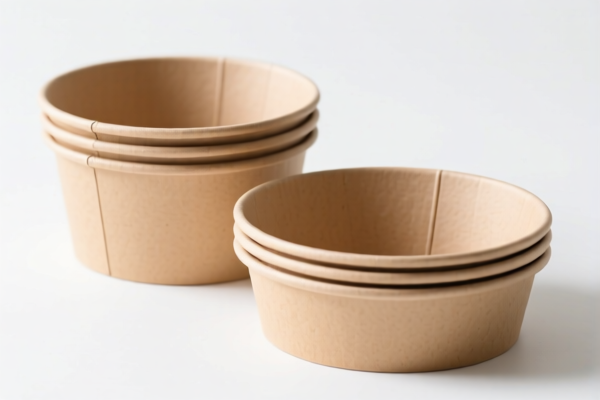
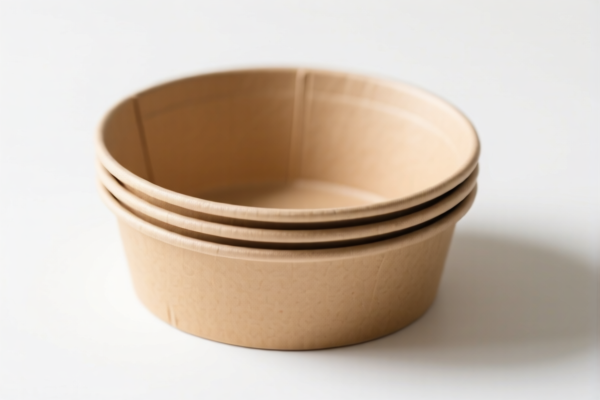
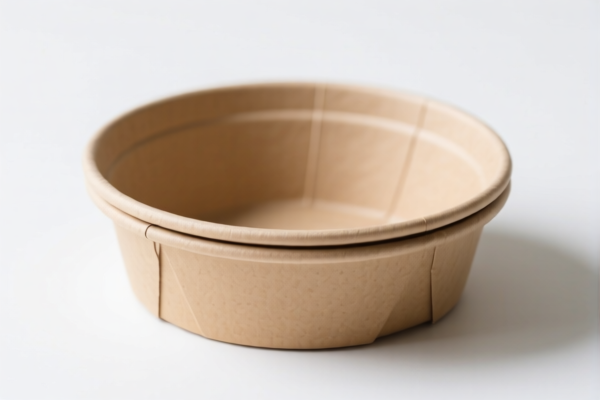

AI Analysis
🥣 Eco-Friendly Paper Bowl: HS Code Classification & 2026 Clearance Guide
🌐 HS Code Reference & Clearance Strategy | 2026 Latest Tariff Analysis | Professional Compliance Guide
📌 I. Product Definition & Classification: Do You Really Understand "Eco-Friendly Paper Bowls"?
Eco-friendly paper bowls are sustainable packaging solutions used in food service, catering, and retail. In international trade, despite the "eco-friendly" marketing claim, they are classified based on their material composition (paper), shape (bowl), and manufacturing process.
There are three primary HS Code categories depending on the specific structural details and manufacturing method:
- Paper Cups & Containers (Nested/Stackable): Focuses on the final form as a container.
- Packaging Containers: Focuses on the paper packaging aspect.
- Molded/Pulp Products: Focuses on the structural integrity via paper molding or pressing.
⚠️ Key Distinction Point:
- If the bowl is a single-layer or coated paper cup used for food → Often falls under 4823.69.00.20 (Cups/Glassware) or 4819.50.20.00 (Packaging).
- If the bowl is molded pulp (fibrous structure) → Falls under 4823.70.00.20 (Molded/Pulp products).
- "Eco-friendly" is not a HS Code classifier. Customs look at the physical properties (paper vs. plastic lining vs. molded pulp).
📦 II. HS Code Classification Details (2026 Official Tariff Alignment)
| HS Code | Product Description | Application Scenario | Key Feature |
|--------|--------------------------|--------------------------|
| 4823.69.00.20 | Paper cups, plates, and other tableware (other than paper or paperboard of heading 48.03 or 48.04) | Nested paper bowls, coated paper cups, food-grade paper containers | Form-focused: Classified as "tableware" or "cups/glassware." |
| 4819.50.20.00 | Other paper or paperboard containers | Generic paper packaging bowls, take-out containers | Package-focused: Classified as "packaging containers." |
| 4823.70.00.20 | Articles of pulp, of paper pulp, of paper or paperboard | Molded pulp bowls, pressed fiber bowls, compostable structured bowls | Process-focused: Classified as "molded/pulp products." |
🔍 Critical Reminder:
- "Eco-friendly" labels do not exempt any of these HS codes from standard tariffs.
- If the bowl has a plastic lining (PE coating), it still falls under Paper HS Codes (48xx) unless the coating constitutes the essential character (which is rare for paper bowls).
- Misclassification between 4823.69 (Tableware) and 4823.70 (Molded Pulp) is common and affects duty rates.
💰 III. 2026 Latest Tariff Rate Breakdown (Including Additional Duties)
✅ Applicable Country: United States (US)
✅ Origin: China (CN)
✅ Effective Date: November 10, 2025 (and subsequent imports)
✅ Total Tariff Rate: 35.0% (Combined)
All three HS codes listed above carry the same total tariff rate of 35.0% under the current US trade policy for Chinese-origin paper products.
🎯 1. 4823.69.00.20 – Paper Bowls as Tableware/Cups
| Item | Content |
|---|---|
| Base Rate | 0.0% |
| Section 301 Additional Duty | +25.0% |
| IEEPA Clause 122 Duty | +10.0% |
| Total Tariff | 35.0% |
| Tax Calculation | CIF Value × 35% |
| De Minimis Exemption? | ❌ No (deny_de_minimis) |
| Legal Basis Path | USITC:4823.69.00.20 → FOOTNOTE:Section301 + IEEPA:9903.122 |
📌 Explanation:
- The 25% Section 301 duty applies to most paper products from China.
- The 10% IEEPA Clause 122 duty is an additional levy on specific Chinese goods.
- Total 35% is a high-cost tariff. Must be factored into landed cost calculations.
🎯 2. 4819.50.20.00 – Paper Bowls as Packaging
| Item | Content |
|---|---|
| Base Rate | 0.0% |
| Section 301 Additional Duty | +25.0% |
| IEEPA Clause 122 Duty | +10.0% |
| Total Tariff | 35.0% |
| Tax Calculation | CIF Value × 35% |
| De Minimis Exemption? | ❌ No (deny_de_minimis) |
| Legal Basis Path | USITC:4819.50.20.00 → FOOTNOTE:Section301 + IEEPA:9903.122 |
📌 Note:
- Even if marketed as "packaging," the 35% total rate applies.
- Do not confuse with "plastic packaging" (which may have different rates). Paper remains at 35%.
🎯 3. 4823.70.00.20 – Molded/Pulp Paper Bowls
| Item | Content |
|---|---|
| Base Rate | 0.0% |
| Section 301 Additional Duty | +25.0% |
| IEEPA Clause 122 Duty | +10.0% |
| Total Tariff | 35.0% |
| Tax Calculation | CIF Value × 35% |
| De Minimis Exemption? | ❌ No (deny_de_minimis) |
| Legal Basis Path | USITC:4823.70.00.20 → FOOTNOTE:Section301 + IEEPA:9903.122 |
📌 Note:
- Molded pulp products are often seen as "more eco-friendly" but do not receive tariff preferences from the US for Chinese origin.
- Rate remains 35%.
🛠️ IV. Clearance Practical Advice (Battle-Tested Pitfall Avoidance)
✅ 1. Documentation Checklist (Mandatory)
| Document | Required | Explanation |
|---|---|---|
| ✅ Product Specifications | ✔️ | Material: 100% Paper? Plastic lining? Pulp? Weight per unit. |
| ✅ Product Photos | ✔️ | Clear images of the bowl, including interior (lining) and exterior. |
| ✅ Commercial Invoice | ✔️ | Must specify "Paper Bowl," "Molded Pulp Bowl," or "Paper Packaging Container" accurately. |
| ✅ Packing List | ✔️ | Quantity, dimensions, gross/net weight. |
| ✅ Certificate of Origin | ✔️ | To prove Chinese origin (triggers 35% tariff). If non-Chinese origin, check for FTA benefits. |
| ✅ FDA Compliance Docs | ✔️ | Food contact safety statement (if applicable). |
| ✅ Compostability Certification | ✔️ | BPI, ASTM D6400 (optional but helpful for "eco-friendly" marketing). |
✅ 2. Declaration Tips (Key Mnemonic)
🔥 “Paper is Paper, Tariff is 35%, No De Minimis, Origin is Key!”
| Scenario | Correct Declaration | Wrong Practice |
|---|---|---|
| Coated Paper Bowl | 4823.69.00.20 or 4819.50.20.00 |
Declare as "Plastic Cup" → Misclassification Risk |
| Molded Pulp Bowl | 4823.70.00.20 |
Declare as "Cardboard" → Incorrect HS Code |
| Bowl with Plastic Lid | Declare as "Paper Bowl + Plastic Lid" | Combine into one HS Code → Violation |
| Non-Chinese Origin | Check FTAs (e.g., Mexico, Vietnam) | Assume 35% applies |
✅ 3. Special Cases & Handling
| Scenario | Handling Advice |
|---|---|
| OEM Custom Bowls | Provide customer design files; ensure "Made in China" is marked on product/packaging. |
| Mixed Containers | If paper bowls are mixed with plastic cutlery, separate HS Codes. Do not consolidate into one "Kitchen Set" unless justified. |
| Small Quantity (De Minimis) | ❌ No $800 exemption for Chinese paper products. Every shipment is subject to 35% duty. |
| Recycled Content | "Eco-friendly" or "Recycled" claims do not reduce tariff. They are marketing terms, not tariff codes. |
🌍 V. Global Market Comparison (2026 Latest)
| Country/Region | Recommended HS Code | Tariff (China Origin) | Certification | Notes |
|---|---|---|---|---|
| 🇺🇸 USA | 4823.69.00.20 etc. |
35.0% | FDA + IEEPA | High tariff, no de minimis. |
| 🇨🇳 China | 4823.69.00.20 etc. |
0% - 10% | None | Import duty varies; export from China is duty-free for exporter. |
| 🇪🇺 EU | 4823.69.00.20 etc. |
0% - 5% | REACH + FDA | Low base tariff, no Section 301. |
| 🇬🇧 UK | 4823.69.00.20 etc. |
0% - 5% | UKCA | Post-Brexit rules apply. |
| 🇯🇵 Japan | 4823.69.00.20 etc. |
0% - 3% | JIS | Low tariff, strict food safety checks. |
📌 Conclusion:
- USA is the only major market with 35% punitive tariffs on Chinese paper bowls.
- EU/UK/Japan offer much lower tariffs (0-5%).
- Consider supply chain diversification (e.g., produce in Vietnam or Mexico) to avoid 35% US tariff.
📌 VI. Common Mistakes & Pitfalls (Blood & Tears Lessons)
❌ Mistake 1: Claiming "Eco-friendly" for duty reduction
👉 Consequence: No tariff benefit; potential fraud penalties if documentation is false.
❌ Mistake 2: Using De Minimis ($800 exemption) for Chinese paper bowls
👉 Consequence: Denied entry; 35% duty + fines + storage fees.
❌ Mistake 3: Misclassifying "Molded Pulp" as "Carton"
👉 Consequence: Wrong HS Code; customs audit; delay; retroactive tariffs.
❌ Mistake 4: Ignoring Plastic Linings
👉 Consequence: If >50% plastic by weight/value, may be classified as Plastic Packaging (3923/3924) with different duties. Clarify material composition.
✅ Correct Approach:
“Paper Bowl, 16oz, Molded Pulp, 100% Recycled Fiber, Food-Grade, Model PB-16, Made in China”
🎯 VII. Conclusion: Precise Classification Saves Cost!
🎯 Remember the Mnemonic:
🔹 “Paper Bowls = 35% Tariff (China to US)”
🔹 “No De Minimis = Pay Every Time”
🔹 “Eco-Friendly ≠ Tariff-Free”
📌 Pro Tip:
If your bowls are originating from Vietnam, Mexico, or Thailand, you may qualify for lower or zero tariffs under USMCA (Mexico) or other FTAs.
Recommendation: Apply for Advance Rulings and verify Country of Origin meticulously.
📣 Immediate Action:
📞 Contact a licensed Customs Broker + Provide Product Specs + Confirm HS Code Pre-Ruling
🚀 Ensure smooth clearance, avoid penalties, and maximize profit margins!
✨ Professional Clearance Starts with Accurate Classification!
💼 Every Penny in Tariff Counts – Get It Right the First Time!
Customer Reviews
About HS Code Classification
The Harmonized System (HS) is an internationally standardized nomenclature developed by the World Customs Organization (WCO) to classify traded products. Over 200 countries use the HS system as the basis for customs tariffs, trade statistics, and import/export regulations.
Each HS code follows a hierarchical structure:
- Chapter (2 digits) — Broad category of goods (e.g., Chapter 84: Machinery and Mechanical Appliances)
- Heading (4 digits) — More specific grouping within the chapter
- Subheading (6 digits) — Internationally standardized breakdown, used by all WCO member countries
- National subdivisions (8-10 digits) — Country-specific extensions for further classification, such as US HTSUS 10-digit codes
Correct HS code classification is essential for smooth customs clearance, accurate duty payment, and compliance with trade regulations. Misclassification can lead to customs delays, overpayment of duties, or penalties.
When importing from CN to US, the applicable tariff rates may include:
- Most-Favored-Nation (MFN) rate — The standard duty rate applied to WTO members
- General rate — Applied to countries without trade agreements
- Trade remedy duties — Additional tariffs such as Section 301 (anti-dumping), Section 232 (national security), or countervailing duties
The information provided on this page is for reference purposes only. For official classification, please consult with your local customs authority or a licensed customs broker.