Eco friendly Paper Handbag
CN → US| HS Code | Tariff Rate | Origin | Destination | Doc |
|---|---|---|---|---|
| 4819400040 | 35.0% | CN | US | Official Doc |
| 4819400020 | 35.0% | CN | US | Official Doc |
| 4819100020 | 35.0% | CN | US | Official Doc |
| 4819200020 | 35.0% | CN | US | Official Doc |
| 4819400040 | 35.0% | CN | US | Official Doc |
Product Images

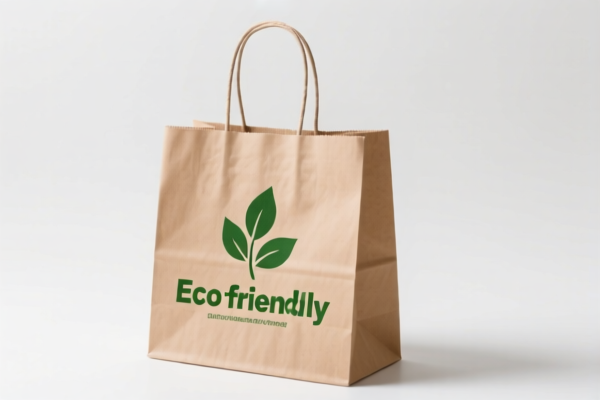
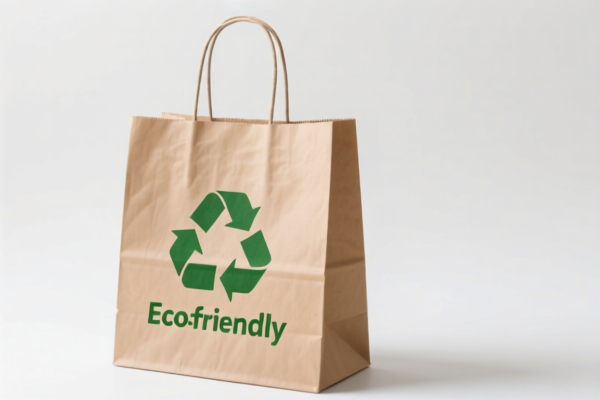
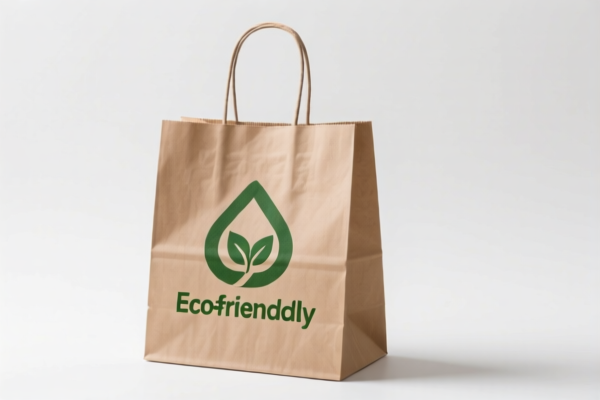
AI Analysis
🛍️ Eco-Friendly Paper Handbags (Paper Packaging & Bags)
🌐 HS Code Reference & Customs Clearance Guide | 2026 Latest Tariff Analysis | Professional Transit Strategy
📌 I. Product Definition & Classification: Do You Really Understand "Paper Bags"?
Eco-friendly paper handbags are essential packaging solutions in retail, gifting, and logistics. In international trade, they are strictly categorized based on material composition, structural form, and specific use case. While often perceived as a single category, customs authorities distinguish between rigid boxes, folding cartons, and handheld bags.
Key Distinctions:
- Rigid/Corrugated Boxes: Structured containers, often used for luxury goods or shipping (e.g., 4819.10).
- Folding Cartons: Flat-pack boxes designed to be folded (e.g., 4819.20).
- Handheld Bags: Bags with handles, designed for carrying goods by hand (e.g., 4819.40).
⚠️ Critical Classification Point:
- If the product is a rigid box (cannot be collapsed flat) →归类 to 4819.10 or 4819.20.
- If the product has handles and is designed to be held by hand →归类 to 4819.40.
- Do not misclassify a "box" as a "bag" just because it is paper-based. The presence of handles and the specific function drive the HS Code selection.
📦 II. HS Code Classification Details (2026 Latest Tariff Authority Match)
Based on the provided data, here are the precise HS Codes and their specific applications:
| HS Code | Product Description | Application Scenario | Key Feature |
|---|---|---|---|
4819.40.00.40 |
Eco-friendly Paper Handbags (General) | Retail shopping, gift packaging, branding | ✅ Handheld, Non-woven Paper Bag |
4819.40.00.20 |
Durable Paper Handbags | Heavy-duty retail, transport packaging | ✅ Durable, Transport-oriented Bag |
4819.10.00.20 |
Eco-friendly Paper Boxes | Luxury packaging, corrugated storage | ✅ Rigid Box, Corrugated/Cardboard |
4819.20.00.20 |
Eco-friendly Folding Paper Boxes | E-commerce shipping, standard retail boxes | ✅ Folding Carton/Box Type |
🔍 Key Reminder:
-4819.40is for HAND HELD BAGS. If your product has handles, start here.
-4819.10is for RIGID BOXES (Corrugated). No handles, rigid structure.
-4819.20is for FOLDING BOXES (Cartons). Can be flattened, no handles.
- Misclassification leads to severe penalties. A "bag" declared as a "box" may trigger a 25% tariff difference or inspection delays.
💰 III. 2026 Latest Tariff Rate Details (Including Surtaxes & Policy Add-ons)
✅ Applicable Country: United States (US)
✅ Origin: China (CN)
✅ Effective Date: November 10, 2025 (and subsequent imports)
All listed HS Codes share the same total tariff structure due to Section 301 and IEEPA actions against Chinese goods.
🎯 1. 4819.40.00.40 & 4819.40.00.20 —— Paper Handbags
| Item | Detail |
|---|---|
| Base Rate | 0% (Ad Valorem) |
| Section 301 Surcharge | +25% (From USITC Footnote 9903.88.01) |
| IEEPA Surcharge | +10% (Targeting China/HK products, effective Nov 10, 2025) |
| Total Rate | 35% |
| Tax Calculation | CIF Value × 35% |
| De Minimis Exemption | ❌ Not Eligible (deny_de_minimis) |
| Legal Basis Path | IEEPA:9903.01.25 → IEEPA:9903.01.24 → USITC:4819.40 → FOOTNOTE:9903.88.01 |
📌 Explanation:
- "25% Surcharge": From Section 301 of the Trade Act.
- "10% IEEPA": International Emergency Economic Powers Act surcharge.
- Total 35%: This is a high tariff for paper products. Must be factored into landed cost calculations.
- No De Minimis: Values under $800 do NOT escape these taxes for Chinese origin.
🎯 2. 4819.10.00.20 & 4819.20.00.20 —— Paper Boxes
| Item | Detail |
|---|---|
| Base Rate | 0% |
| Section 301 Surcharge | +25% |
| IEEPA Surcharge | +10% |
| Total Rate | 35% |
| Tax Calculation | CIF Value × 35% |
| De Minimis Exemption | ❌ Not Eligible |
| Legal Basis Path | IEEPA:9903.01.25 → IEEPA:9903.01.24 → USITC:4819.10/20 → FOOTNOTE:9903.88.01 |
📌 Note:
- Whether it is a box or a bag, if it is paper-based and from China, the tariff is identical.
- The distinction matters only for correct classification compliance, not for tax savings.
🛠️ IV. Customs Clearance Practical Advice (Pitfall Avoidance Guide)
✅ 1. Required Documentation Checklist (Mandatory)
| Document | Must Provide | Description |
|---|---|---|
| ✅ Product Specs | ✔️ | Material (Kraft, White, Corrugated), Weight, Handle Type |
| ✅ Product Photos | ✔️ | Clear images showing handles, logo, and structure |
| ✅ Commercial Invoice | ✔️ | Must explicitly state "Paper Handbag" or "Paper Box", NOT "Plastic Bag" |
| ✅ Packing List | ✔️ | Item count, Gross/Net Weight, Dimensions |
| ✅ Certificate of Origin | ✔️ | Proof of China origin (for tariff assessment) |
| ✅ Material Declaration | ✔️ | Confirm 100% Paper/Cellulose content (no plastic laminates) |
⚠️ Warning:
- If the bag contains plastic handles or plastic lining, it may be reclassified as plastic packaging, leading to different HS Codes and potentially higher tariffs or bans.
✅ 2. Declaration Tips (Key Mantra)
🔥 "Material First, Handle Second, Origin Clear, Tariff Calculated!"
| Scenario | Correct Declaration | Wrong Practice |
|---|---|---|
| Handheld Bag with Paper Handles | 4819.40.00.40 - "Paper Handbag" |
Call it "Box" → Wrong HS, Delay |
| Corrugated Shipping Box | 4819.10.00.20 - "Corrugated Box" |
Call it "Bag" → Wrong HS, Delay |
| Folding E-commerce Box | 4819.20.00.20 - "Folding Carton" |
Call it "Box" → Correct but vague |
| Bag with Plastic Window | ❌ Avoid or Disclose | Hidden plastic → Misclassification Risk |
✅ 3. Special Case Handling
| Scenario | Handling Advice |
|---|---|
| Mixed Materials (e.g., Paper bag + Plastic Handle) | Declare accurately. If plastic handles >5% by weight, customs may inspect for reclassification. |
| OEM Custom Bags | Provide customer PO + design files. Avoid generic "Paper Bag" if custom printing exists. |
| Small Sample Shipments | Still subject to 35% tariff. Do NOT use "Gift" or "Sample" to avoid taxes; CBP is strict. |
| Wooden Pallets | Ensure ISPM 15 compliant. Wood issues cause separate delays. |
🌍 V. Global Market Comparison (2026 Latest)
| Country/Region | Recommended HS Code | Tariff (China Origin) | Certification | Notes |
|---|---|---|---|---|
| 🇺🇸 USA | 4819.40 / 4819.10 / 4819.20 |
35% (Total) | None specific | High tariff due to Section 301 + IEEPA |
| 🇨🇳 China | 4819.40 / 4819.10 / 4819.20 |
5-10% | None | Domestic standard |
| 🇪🇺 EU | 4819.40 / 4819.10 / 4819.20 |
0-3% (depending on sub) | FSC/PEFC (Optional) | Green tax benefits if certified |
| 🇬🇧 UK | 4819.40 / 4819.10 / 4819.20 |
0-5% | None | Post-Brexit tariffs apply |
| 🇨🇦 Canada | 4819.40 / 4819.10 / 4819.20 |
0-5% | None | CUSMA benefits if Canadian origin |
📌 Conclusion:
- USA is the most challenging market due to the 35% blended tariff.
- EU/UK are more favorable but may require FSC certification for "Eco-friendly" marketing claims.
- Avoid De Minimis: US CBP is actively enforcing tariffs on small packages from China.
📌 VI. Common Errors & Pitfalls (Blood & Tears Lessons)
❌ Error 1: Calling a "Paper Box" a "Paper Bag"
👉 Consequence: Wrong HS Code, potential fraud investigation, 15-30 day delay.
❌ Error 2: Hiding Plastic Components
👉 Consequence: If handles are plastic, it may be classified under Chapter 39 (Plastics), which has different (sometimes higher) tariffs and environmental bans.
❌ Error 3: Assuming "Eco-friendly" = Tariff Exemption
👉 Consequence: No such exemption exists in US tariff code for paper bags. 35% still applies.
❌ Error 4: Under-declaring Value
👉 Consequence: CBP audits are frequent. Fines can be 2-3x the tax evaded.
✅ Correct Practice:
"Eco-Friendly Kraft Paper Handbag, 12x10x5 inches, Twisted Paper Handles, 100% Recycled Paper, Made in China, Model XYZ"
🎯 VII. Conclusion: Professional Declaration, Cost Optimization
🎯 Remember the Mantra:
🔹 "Paper Bags 35%, No De Minimis, Handle Type Matters, Misclassification Kills!"
🔹 "HS Code Defines Your Cost, 35% is the New Normal for CN Origin!"
📌 Pro Tip:
- If you are shipping to the US, consider pre-paying duties via your freight forwarder to avoid surprise costs at customs.
- For retailers, ensure marketing materials align with the actual material (e.g., don't claim "100% Plastic-Free" if handles contain plastic).
- Advance Ruling: Consider applying for a US CBP Advance Ruling to lock in the HS Code and avoid disputes.
📣 Immediate Action:
📞 Consult a licensed customs broker + Provide Product Photos + Verify Material Composition
🚀 Clear customs smoothly, control costs, and scale your eco-packaging business!
✨ Professional Customs Clearance Starts with Accurate Classification!
💼 Your Profit Margin Depends on Every 0.1% of Tariff Efficiency!
Customer Reviews
About HS Code Classification
The Harmonized System (HS) is an internationally standardized nomenclature developed by the World Customs Organization (WCO) to classify traded products. Over 200 countries use the HS system as the basis for customs tariffs, trade statistics, and import/export regulations.
Each HS code follows a hierarchical structure:
- Chapter (2 digits) — Broad category of goods (e.g., Chapter 84: Machinery and Mechanical Appliances)
- Heading (4 digits) — More specific grouping within the chapter
- Subheading (6 digits) — Internationally standardized breakdown, used by all WCO member countries
- National subdivisions (8-10 digits) — Country-specific extensions for further classification, such as US HTSUS 10-digit codes
Correct HS code classification is essential for smooth customs clearance, accurate duty payment, and compliance with trade regulations. Misclassification can lead to customs delays, overpayment of duties, or penalties.
When importing from CN to US, the applicable tariff rates may include:
- Most-Favored-Nation (MFN) rate — The standard duty rate applied to WTO members
- General rate — Applied to countries without trade agreements
- Trade remedy duties — Additional tariffs such as Section 301 (anti-dumping), Section 232 (national security), or countervailing duties
The information provided on this page is for reference purposes only. For official classification, please consult with your local customs authority or a licensed customs broker.