Eco friendly Paper Tube
CN → US| HS Code | Tariff Rate | Origin | Destination | Doc |
|---|---|---|---|---|
| 4805934010 | 35.0% | CN | US | Official Doc |
| 4805934050 | 35.0% | CN | US | Official Doc |
| 4823908680 | 35.0% | CN | US | Official Doc |
| 4823908000 | 35.0% | CN | US | Official Doc |
| 4819504020 | 35.0% | CN | US | Official Doc |
| 4819504060 | 35.0% | CN | US | Official Doc |
Product Images
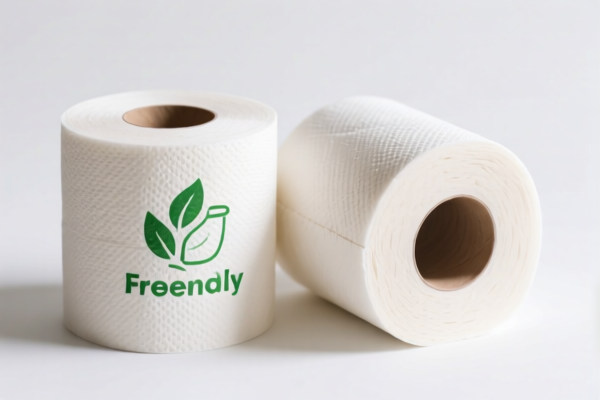
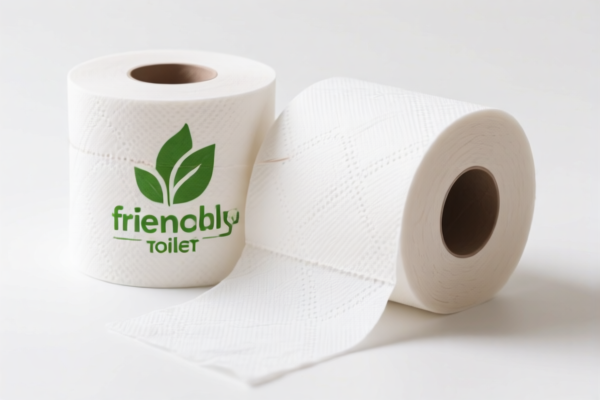

AI Analysis
🌿 Eco-Friendly Paper Tube (Papertube / Cardboard Tube)
🌐 HS Code Reference & Customs Clearance Guide | 2026 Latest Tariff Analysis | Professional通关策略
📌 1. Product Definition & Classification: Do You Really Understand "Paper Tubes"?
Paper tubes (also known as cardboard tubes, kraft tubes, or fiber tubes) are cylindrical containers made primarily from paper or paperboard. They are widely used in industrial packaging, textile winding, poster storage, and DIY crafts.
In international trade, they are categorized based on their material composition (uncoated paperboard vs. coated/specialty paper) and form (cut to specific shapes vs. generic rolls). Misclassification can lead to significant customs delays or penalties due to the strict scrutiny on Chinese-origin paper products under current US trade policies.
⚠️ Key Distinction Points:
- Raw Material: Is it uncoated virgin kraft paper? Or coated/recycled?
- Form Factor: Is it a simple cylinder (tube/core) or cut into specific shapes (gaskets, tubes for storage)?
- Usage: Is it purely for structural support (textile cores) or consumer packaging?
📦 2. HS Code Classification Details (2026 Latest Tariff Authority Comparison)
| HS Code | Product Description | Application Scenario | Material/State |
|---|---|---|---|
4805.93.40.10 |
Paperboard/Cardboard, other | Generic paperboard products, stiff paper sheets | ✅ Uncoated Paperboard |
4805.93.40.50 |
Paper Cores/Tubes (Uncoated) | Textile winding cores, industrial tubes | ✅ Uncoated Paperboard |
4823.90.86.80 |
Other Paper Products (Cut Shapes) | Cut-to-size paper items, specific shapes | ✅ Paper/Paperboard |
4823.90.80.00 |
Other Paper Articles (Gaskets/Pads) | Paper gaskets, pads, or shaped paper items | ✅ Paper/Paperboard |
4819.50.40.20 |
Fiber Drums/Cans/Tubes | Container tubes, fiber drums, cylindrical packaging | ✅ Fiber/Paper Containers |
🔍 Important Note:
- All listed HS Codes carry a 35% Total Tax Rate for Chinese origin goods entering the US. -4805.93.40.50is the most accurate for standard industrial "tubes" or "cores". -4819.50.40.20is suitable if the tube is marketed as a "container" or "drum" for storage. -4823.xxxxcodes apply if the paper is cut into non-cylindrical shapes or specific forms (gaskets/pads).
💰 3. 2026 Latest Tariff Rate Breakdown (Including Surtaxes & Policy Surcharges)
✅ Target Country: USA (US)
✅ Country of Origin: China (CN)
✅ Effective Date: From November 10, 2025 (and subsequent imports)
🎯 1. 4805.93.40.10 / 4805.93.40.50 —— Paperboard / Paper Cores
| Item | Details |
|---|---|
| Base Tariff | 0% (ad valorem) |
| USITC Surtax | +25% (Under USITC Footnote 9903.88.01) |
| IEEPA Surtax | +10% (Against China/HK Products, effective Nov 10, 2025) |
| Total Tax Rate | 35% |
| Tax Calculation | CIF Value × 35% |
| De Minimis Eligibility | ❌ Not Eligible (deny_de_minimis) |
| Legal Basis Path | IEEPA:9903.01.25 → IEEPA:9903.01.24 → USITC:4805.93.40.50 → FOOTNOTE:9903.88.01 |
📌 Explanation:
- The 25% USITC surtax is applied under the Section 301 trade remedy against China. - The 10% IEEPA surtax is the new "122 Clause" tariff targeting specific Chinese paper and paperboard products. - Total 35% is a high tariff rate. Importers must budget accordingly.
🎯 2. 4823.90.86.80 / 4823.90.80.00 —— Other Paper Products
| Item | Details |
|---|---|
| Base Tariff | 0% |
| USITC Surtax | +25% |
| IEEPA Surtax | +10% |
| Total Tax Rate | 35% |
| Tax Calculation | CIF Value × 35% |
| De Minimis Eligibility | ❌ Not Eligible |
| Legal Basis Path | IEEPA:9901.25 → IEEPA:9903.01.24 → USITC:4823.90.86.80 → FOOTNOTE:9903.88.01 |
📌 Note:
- These codes cover "other paper products" that do not fall under specific packaging headings. - If your "paper tube" is cut into a non-cylindrical shape (e.g., a flat gasket or pad), use these codes. - Same 35% total rate applies. No advantage in tariff reduction compared to4805codes.
🎯 3. 4819.50.40.20 —— Fiber Drums/Cans/Tubes
| Item | Details |
|---|---|
| Base Tariff | 0% |
| USITC Surtax | +25% |
| IEEPA Surtax | +10% |
| Total Tax Rate | 35% |
| Tax Calculation | CIF Value × 35% |
| De Minimis Eligibility | ❌ Not Eligible |
| Legal Basis Path | IEEPA:9903.01.25 → IEEPA:9903.01.24 → USITC:4819.50.40.20 → FOOTNOTE:9903.88.01 |
📌 Note:
- Best for tubes sold as storage containers (e.g., poster tubes, gift tubes). - The classification logic emphasizes the "container" aspect rather than just the "core" aspect. - Still 35% total rate.
🛠️ 4. Customs Clearance Practical Advice (Avoid Pitfalls)
✅ 1. Required Documentation Checklist (No Exceptions)
| Document | Mandatory? | Description |
|---|---|---|
| ✅ Product Specification Sheet | ✔️ | Must include material composition (e.g., 100% virgin kraft), weight, dimensions, and coating status. |
| ✅ Product Photos | ✔️ | Clear images showing the tube’s structure, ends, and any branding. |
| ✅ Commercial Invoice | ✔️ | Must explicitly state "Eco-Friendly Paper Tube" and specify HS Code. |
| ✅ Packing List | ✔️ | Detail contents to prove no mixed shipments with non-paper items. |
| ✅ Certificate of Origin (CO) | ✔️ | Essential for determining origin-based tariffs. |
| ✅ Third-Party Test Report | ✔️ | If claiming "Eco-Friendly" or "Recycled," provide proof (e.g., FSC certification, recycled content %). |
✅ 2. Declaration Tips (Key Mnemonic)
🔥 "Material First, Form Second, Name Precise, Tax Predictable!"
| Scenario | Correct Declaration | Wrong Practice |
|---|---|---|
| Standard industrial tube/core | 4805.93.40.50 |
Using generic "Paper" → Risk of misclassification |
| Tube as a storage container | 4819.50.40.20 |
Declaring as "Plastic Tube" → Severe penalty |
| Cut paper shapes/gaskets | 4823.90.86.80 |
Declaring as "Tube" → Rejection |
| Mixed shipment (Paper + Plastic) | Split Declaration | Mixed declaration → 100% Inspection & Fine |
✅ 3. Special Handling
| Situation | Recommendation |
|---|---|
| OEM Custom Tubes | Provide design drawings to confirm material and structure. Avoid vague terms like "Paper Item." |
| "Eco-Friendly" Claim | Ensure you have FSC Certification or Recycled Content Proof. If false claims are made, face FTC penalties. |
| Small Sample Shipments | De Minimis Exemption Does NOT Apply. Even small shipments of Chinese paper tubes are subject to 35% tax. |
| Transshipment | Do not transship through third countries to disguise origin. CBP is strict on paper products from China. |
🌍 5. Global Market Comparison (2026 Latest)
| Country/Region | Recommended HS Code | Tariff (China Origin) | Certification Requirement | Notes |
|---|---|---|---|---|
| 🇺🇸 USA | 4805.93.40.50 |
35% | No specific agency cert. | High tariff due to IEEPA/301. |
| 🇨🇳 China | 4805.93.40.50 |
~5-10% | CCC (if applicable) | No additional surtaxes. |
| 🇪🇺 EU | 4805.93 |
0-6.5% | CE (if applicable) | No Section 301 equivalent. |
| 🇦🇺 Australia | 4805.93 |
5% | None | Standard MFN rate. |
| 🇯🇵 Japan | 4805.93 |
0-3% | JIS | Low tariff. |
📌 Conclusion:
- USA is the only market imposing a 35% effective tariff on these items. - Cost Planning: Importers must factor in a 35% tax burden for US-bound paper tubes. - Alternative Sourcing: Consider sourcing from Vietnam, India, or Thailand to avoid IEEPA/301 surtaxes (0-5% total tariff).
📌 6. Common Errors & Pitfalls (Lessons Learned)
❌ Error 1: Declaring "Paper Tube" as "Plastic Pipe"
👉 Consequence: Classify under Chapter 39 (Plastics), which may have different tariffs but triggers fraud investigation if material is verified as paper.
❌ Error 2: Ignoring the "Eco-Friendly" Label
👉 Consequence: If you claim "Recycled" but lack proof, customs may reject the declaration or impose fines for false advertising.
❌ Error 3: Assuming De Minimis Exemption
👉 Consequence: Small shipments (<$800) from China are still taxed at 35%. Do not use courier services to avoid taxes.
✅ Correct Practice:
"Kraft Paper Tube, Uncoated, 100% Virgin Fiber, Diameter 50mm, Height 200mm, for Textile Winding, FSC Certified"
🎯 7. Conclusion: Professional Declaration, Save Time & Money!
🎯 Remember the Mnemonic:
🔹 "Paper is Paper, Tax is 35%, De Minimis is Dead, Declare Accurate!"
🔹 "HS Code Determines Life, 35% is High, Wrong Declaration Costs More!"
📌 Pro Tip:
If your paper tubes are sourced from Vietnam, India, or Mexico, you may apply for IEEPA Exemption, reducing the tariff to 0-5%.
Recommend Applying for an Advance Ruling to confirm the correct HS Code before shipping.
📣 Immediate Action:
📞 Contact a licensed customs broker + Provide Product Specs + Apply for HS Code Advance Ruling
🚀 Let your paper tubes clear customs smoothly, boost efficiency, and maximize profits!
✨ Professional Clearance Starts with Precise Classification!
💼 Every Cent of Your Cost Deserves Precision!
Customer Reviews
About HS Code Classification
The Harmonized System (HS) is an internationally standardized nomenclature developed by the World Customs Organization (WCO) to classify traded products. Over 200 countries use the HS system as the basis for customs tariffs, trade statistics, and import/export regulations.
Each HS code follows a hierarchical structure:
- Chapter (2 digits) — Broad category of goods (e.g., Chapter 84: Machinery and Mechanical Appliances)
- Heading (4 digits) — More specific grouping within the chapter
- Subheading (6 digits) — Internationally standardized breakdown, used by all WCO member countries
- National subdivisions (8-10 digits) — Country-specific extensions for further classification, such as US HTSUS 10-digit codes
Correct HS code classification is essential for smooth customs clearance, accurate duty payment, and compliance with trade regulations. Misclassification can lead to customs delays, overpayment of duties, or penalties.
When importing from CN to US, the applicable tariff rates may include:
- Most-Favored-Nation (MFN) rate — The standard duty rate applied to WTO members
- General rate — Applied to countries without trade agreements
- Trade remedy duties — Additional tariffs such as Section 301 (anti-dumping), Section 232 (national security), or countervailing duties
The information provided on this page is for reference purposes only. For official classification, please consult with your local customs authority or a licensed customs broker.