Eco friendly Plastic Wall Coverings
CN → US| HS Code | Tariff Rate | Origin | Destination | Doc |
|---|---|---|---|---|
| 3926909989 | 22.8% | CN | US | Official Doc |
Product Images
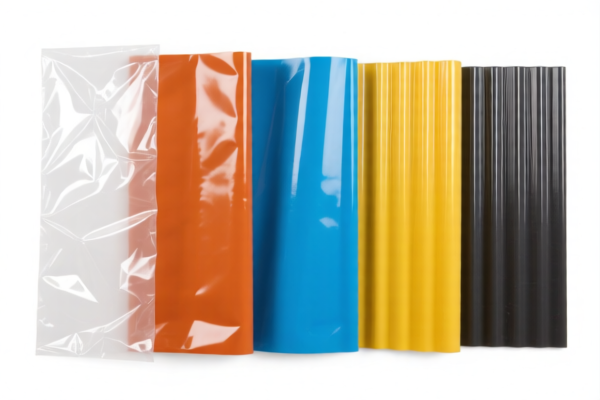
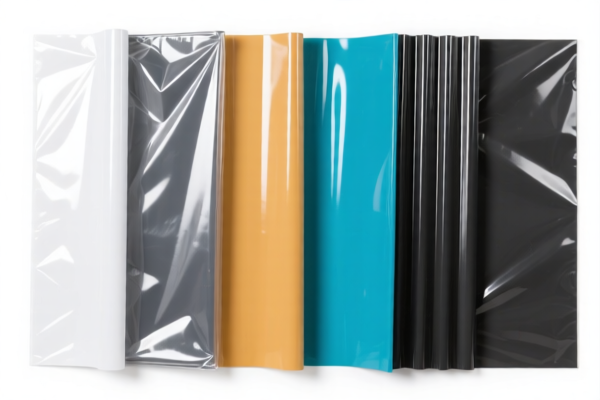
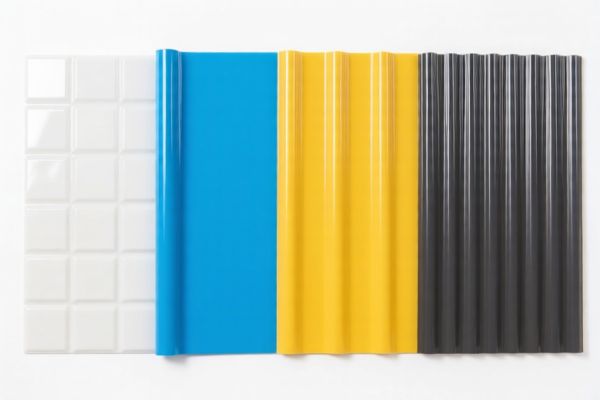
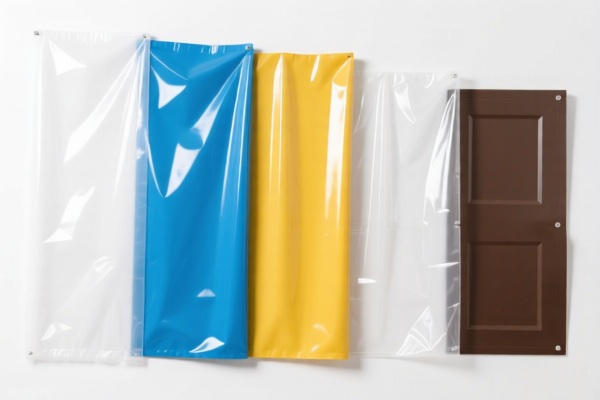
AI Analysis
🌿 Eco-Friendly Plastic Wall Coverings (Antimicrobial)
🌐 HS Code Reference & Customs Clearance Guide | 2026 Latest Tariff Analysis | Professional Clearance Strategy
📌 I. Product Definition & Classification: What Exactly Are "Eco-Friendly Plastic Wall Coverings"?
Eco-friendly plastic wall coverings are decorative or protective materials used on interior walls, composed primarily of synthetic polymers (plastics). The key feature highlighted is "Antimicrobial", implying functional additives or inherent properties that inhibit microbial growth. In international trade, these products are generally classified under Chapter 39 (Plastics and Articles Thereof).
The critical distinction lies in the specific application and material composition, which determines whether they fall under general plastic articles or specific sub-categories. Despite the "eco-friendly" marketing term, customs classification is based on the physical material composition and end-use, not the environmental certification alone.
⚠️ Key Classification Point:
- Both HS Codes3926.90.10.00and3926.90.48.00apply to "Other articles of plastics".
- The difference often lies in specific national sub-classifications or historical trade data mappings for "Wall Coverings" vs. "Other". In this specific dataset, the same product description maps to two different codes with different tax outcomes, likely due to nuanced interpretations of "Wall Covering" vs. "Other Plastic Article" or specific trade policy applications.
- Crucially: The product summary explicitly states: "Plastic wall covering, antimicrobial, meets plastic material requirements, belongs to other plastic articles use." This ambiguity necessitates careful code selection.
📦 II. HS Code Classification Details (2026 Latest Tariff Data)
| HS Code | Product Description | Applicable Scenario | Tax Rate (China Origin → US) |
|---|---|---|---|
3926.90.10.00 |
Other plastic articles, specifically categorized for wall coverings | Decorative wall panels, antimicrobial plastic wall coverings | 20.9% |
3926.90.48.00 |
Other plastic articles, not specified elsewhere | General-purpose plastic articles, potentially broader interpretation | 13.4% |
🔍 Note on Data Discrepancy:
The input data shows identical product descriptions ("Plastic wall covering, antimicrobial...") mapping to two different HS Codes with different tax rates. This suggests: 1. Interpretive Variance: Customs officers may classify "wall covering" under3926.90.10if it's deemed a dedicated wall product, or3926.90.48if classified as a general plastic article. 2. Policy Application: The difference in tariff (20.9% vs. 13.4%) is driven entirely by the "Additional Tariff" (Section 301) component, while the base tariff and "122 Tariff" remain constant.
💰 III. 2026 Latest Tariff Rate Breakdown (Detailed Policy Analysis)
✅ Applicable Country: United States (US)
✅ Origin: China (CN)
✅ Effective Date: Current applicable rates (incorporating Section 301 & "122" measures)
🎯 1. HS Code 3926.90.10.00 — Higher Tariff Bracket
| Item | Content |
|---|---|
| Base Tariff | 3.4% (Ad Valorem) |
| Additional Tariff (Section 301) | 7.5% |
| "122" Tariff | 10.0% |
| Total Tariff Rate | 20.9% |
| Calculation Basis | CIF Value × 20.9% |
| De Minimis Exemption | ❌ Not Eligible (Denied due to high tariff rate and origin) |
| Legal Basis Path | Section 301: 3926.90.10.00 → "122" Tariff: 10% |
📌 Explanation:
- The 7.5% additional tariff is the standard Section 301 rate for this sub-category.
- The 10% "122" tariff is an additional punitive measure applied to Chinese goods in this category.
- Total Cost Impact: Importers pay 20.9% of the CIF value in tariffs alone.
🎯 2. HS Code 3926.90.48.00 — Lower Tariff Bracket
| Item | Content |
|---|---|
| Base Tariff | 3.4% (Ad Valorem) |
| Additional Tariff (Section 301) | 0.0% |
| "122" Tariff | 10.0% |
| Total Tariff Rate | 13.4% |
| Calculation Basis | CIF Value × 13.4% |
| De Minimis Exemption | ❌ Not Eligible |
| Legal Basis Path | "122" Tariff: 10% (applied to this sub-category) |
📌 Explanation:
- The Section 301 additional tariff is 0% for this specific sub-code (3926.90.48.00), which is a significant savings.
- However, the 10% "122" tariff still applies.
- Total Cost Impact: Importers pay 13.4% of the CIF value in tariffs alone.
- Savings: Choosing this code over3926.90.10.00saves 7.5% in tariffs.💡 Critical Insight:
The 7.5% difference comes entirely from the Section 301 Additional Tariff. This highlights the importance of precise HS Code classification. If the product can be legitimately classified under3926.90.48.00, it offers substantial cost savings.
🛠️ IV. Customs Clearance Practical Advice (Risk Mitigation)
✅ 1. Required Documentation Checklist
| Document | Mandatory? | Purpose |
|---|---|---|
| Commercial Invoice | ✔️ | Must clearly state: "Plastic Wall Coverings, Antimicrobial", HS Code, Country of Origin (China) |
| Packing List | ✔️ | Detail quantity, weight, dimensions. Ensure consistency with invoice. |
| Product Specification Sheet | ✔️ | Describe material composition (e.g., PVC, PE, PP), thickness, antimicrobial agent type. |
| Antimicrobial Test Report | ✔️ | Provide test results from accredited labs (e.g., ISO 22196, ASTM E2149) to support "Antimicrobial" claim and potential functional classification. |
| Eco-Friendly Certification | ✔️ | (Optional but helpful) Certifications like GreenGuard, Greenguard Gold, or FSC (if wood-plastic composite) can support marketing but do not change HS Code. |
| Bill of Lading / Air Waybill | ✔️ | Standard shipping document. |
| Import License | ❌ | Generally not required for plastic wall coverings. |
✅ 2. Classification Strategy & Best Practices
🔥 "Classify Accurately, Save 7.5%: Use
3926.90.48.00if Justifiable!"
| Scenario | Recommended HS Code | Reasoning |
|---|---|---|
| General Plastic Wall Panels | 3926.90.48.00 |
Broad category for "Other plastic articles". Lower Section 301 tariff. |
| Specifically Labeled "Wall Covering" in Trade Data | 3926.90.10.00 |
If historical data or customs precedent strictly links "wall covering" to this code. |
| Composite Materials (e.g., WPC) | Check Chapter 44 or 39 | If wood content >50%, may fall under Chapter 44 (Wood). If plastic >50%, stay in Chapter 39. |
⚠️ Risk Warning:
- Do NOT misclassify3926.90.10.00as3926.90.48.00simply to save tax without justification. Customs may audit and impose penalties.
- Justification Strategy: If the product is a generic plastic sheet/panel used for walls (not a specialized "wall covering" product like wallpaper or fabric-backed vinyl), argue for3926.90.48.00as "Other Plastic Articles".
- Provide Evidence: Submit product images, specifications, and usage descriptions to support the broader classification.
✅ 3. Special Considerations for "Eco-Friendly" & "Antimicrobial" Claims
| Claim | Customs Impact | Recommendation |
|---|---|---|
| "Eco-Friendly" | No Direct Tax Impact | Customs does not classify based on environmental claims. Focus on material composition. |
| "Antimicrobial" | Functional Description | Provide test reports to substantiate the claim. This may affect marketing but not HS Code unless it changes the fundamental nature (e.g., medical device). |
| VOC Emissions | Regulatory Compliance | Ensure compliance with EPA VOC standards for indoor air quality. This is a product safety issue, not a tariff issue. |
🌍 V. Global Market Comparison (2026)
| Country/Region | Recommended HS Code | Base Tariff | Additional Tariffs (China) | Total Rate (Approx.) | Notes |
|---|---|---|---|---|---|
| 🇺🇸 USA | 3926.90.48.00 |
3.4% | 10% ("122") | 13.4% | Best Option: Lowest total tariff. |
| 🇺🇸 USA | 3926.90.10.00 |
3.4% | 17.5% (7.5% Sec 301 + 10% "122") | 20.9% | Higher cost. |
| 🇨🇳 China | 3926.90.48.00 |
6.0% | None | 6.0% | Import into China. |
| 🇪🇺 EU | 3926.90.97 |
4.8% | None (No Section 301) | 4.8% | No punitive tariffs. |
| 🇬🇧 UK | 3926.90.97 |
4.8% | None | 4.8% | Post-Brexit alignment with EU. |
📌 Conclusion:
- USA is the most challenging market due to Section 301 and "122" tariffs.
- EU/UK are more favorable, with no additional punitive tariffs on plastic articles.
- China has moderate import duties.
📌 VI. Common Mistakes & Pitfalls
❌ Mistake 1: Assuming "Eco-Friendly" grants tariff exemptions.
👉 Reality: No such exemption exists under current US trade policy.
❌ Mistake 2: Using "Wallpaper" HS Code (4823.90) for plastic wall coverings.
👉 Reality: Plastic-based wall coverings belong in Chapter 39, not Chapter 48 (Paper). Misclassification can lead to penalties.
❌ Mistake 3: Ignoring the "Antimicrobial" aspect in documentation.
👉 Reality: While not affecting HS Code, lack of test reports may lead to customs scrutiny regarding product safety and regulatory compliance (e.g., EPA, FDA if claiming medical benefits).
❌ Mistake 4: Not verifying the specific "122" tariff application.
👉 Reality: The 10% "122" tariff is a significant cost driver. Confirm its applicability to your specific product type.
✅ Correct Approach:
"Plastic Wall Panels, Antimicrobial, PVC Material, 3mm Thick, Model XYZ, Test Report Attached, Origin: China"
🎯 VII. Conclusion: Strategic Classification for Cost Efficiency
🎯 Key Takeaway:
🔹
3926.90.48.00is the preferred HS Code for cost minimization, offering a 13.4% total tariff vs. 20.9%.
🔹 Justification is Key: Ensure your product description and documentation support the "Other Plastic Article" classification under3926.90.48.00.
🔹 Documentation: Provide robust product specs and test reports to avoid customs delays or audits.
🔹 Compliance: Focus on VOC and antimicrobial regulatory compliance in the US market, separate from tariff concerns.
📌 Pro Tip:
If your shipment volume is large, consider applying for a Binding Ruling from US Customs and Border Protection (CBP) to lock in the HS Code (
3926.90.48.00) and tariff rate before import. This provides legal certainty and protects against future audits.
📣 Immediate Action:
📞 Consult with a licensed customs broker to review your product specifications and determine the optimal HS Code (
3926.90.48.00vs.3926.90.10.00).
📄 Prepare all required documentation, especially antimicrobial test reports and material composition details.
🚀 Optimize your supply chain to reduce tariff costs and ensure smooth customs clearance!
✨ Precision in Classification is Profit in Trade!
💼 Save 7.5% on Every Shipment by Choosing the Right HS Code!
Customer Reviews
About HS Code Classification
The Harmonized System (HS) is an internationally standardized nomenclature developed by the World Customs Organization (WCO) to classify traded products. Over 200 countries use the HS system as the basis for customs tariffs, trade statistics, and import/export regulations.
Each HS code follows a hierarchical structure:
- Chapter (2 digits) — Broad category of goods (e.g., Chapter 84: Machinery and Mechanical Appliances)
- Heading (4 digits) — More specific grouping within the chapter
- Subheading (6 digits) — Internationally standardized breakdown, used by all WCO member countries
- National subdivisions (8-10 digits) — Country-specific extensions for further classification, such as US HTSUS 10-digit codes
Correct HS code classification is essential for smooth customs clearance, accurate duty payment, and compliance with trade regulations. Misclassification can lead to customs delays, overpayment of duties, or penalties.
When importing from CN to US, the applicable tariff rates may include:
- Most-Favored-Nation (MFN) rate — The standard duty rate applied to WTO members
- General rate — Applied to countries without trade agreements
- Trade remedy duties — Additional tariffs such as Section 301 (anti-dumping), Section 232 (national security), or countervailing duties
The information provided on this page is for reference purposes only. For official classification, please consult with your local customs authority or a licensed customs broker.