Eco friendly Pulp Products
CN → US| HS Code | Tariff Rate | Origin | Destination | Doc |
|---|---|---|---|---|
| 4823700020 | 35.0% | CN | US | Official Doc |
| 4823901000 | 35.0% | CN | US | Official Doc |
| 4706200000 | 35.0% | CN | US | Official Doc |
| 4706910000 | 35.0% | CN | US | Official Doc |
| 4703110000 | 35.0% | CN | US | Official Doc |
| 4701000000 | 35.0% | CN | US | Official Doc |
Product Images
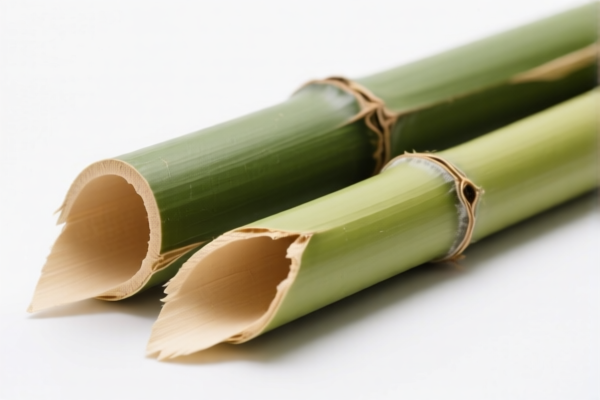
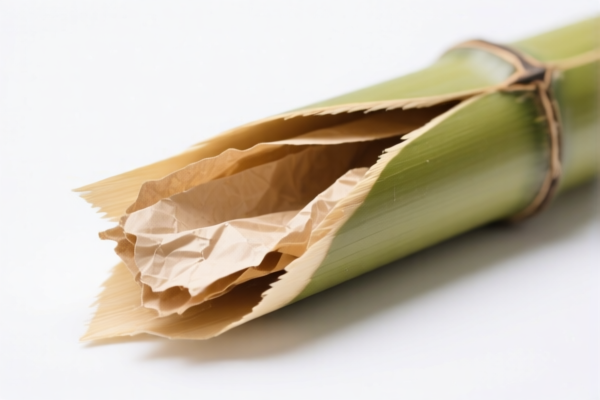
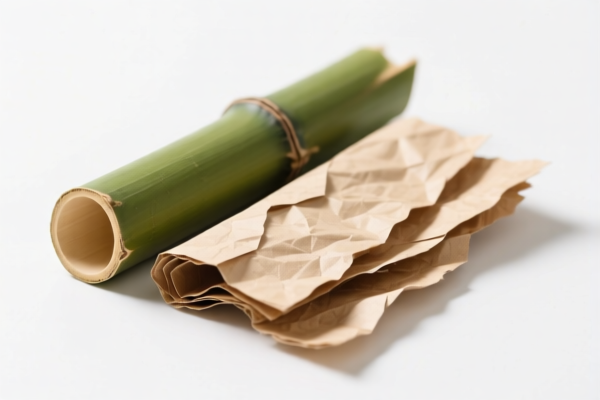
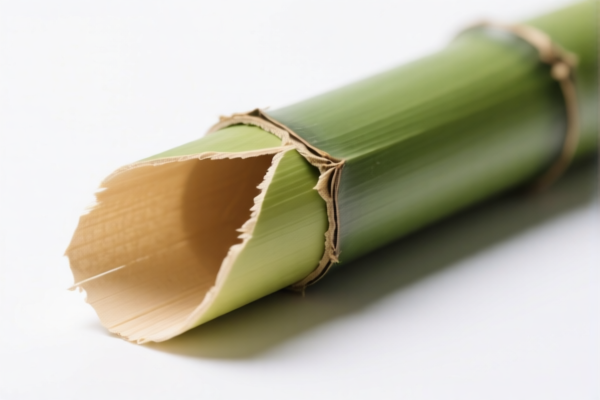
AI Analysis
🌿 Eco-Friendly Pulp Products (Biodegradable Paper & Pulp Goods)
🌐 HS Code Reference & Customs Clearance Guide | 2026 Latest Tariff Analysis | Professional Clearance Strategy
📌 I. Product Definition & Classification: What Are "Eco-Friendly Pulp Products"?
In international trade, "Eco-Friendly Pulp Products" primarily refer to goods made from cellulose fibers (wood pulp, straw pulp, bagasse, etc.) that are biodegradable, compostable, or recyclable. These products are strictly categorized based on their form (raw material vs. processed article) and processing level.
The key to accurate classification lies in distinguishing between:
1. Raw Materials: Unprocessed or minimally processed pulp/wood chips intended for further manufacturing.
2. Semi-Finished/Specific Articles: Items like paper cores or specific paper forms that have a definite shape but are not yet final consumer packaging.
3. Finished Goods: (Note: The provided data focuses on raw materials and semi-finished cores; general finished paper products may fall under different chapters, but we will strictly adhere to the provided <DATA>).
⚠️ Key Distinction Point:
- If the product is raw fiber/pulp → Classify under Chapter 47 (Pulp of wood or of other fibrous cellulosic material).
- If the product is a paper core/roll → Classify under Chapter 48 (Paper and paperboard).
- Crucial Note: All items in the provided<DATA>are subject to 35% Total Tax for US imports from China.
📦 II. HS Code Classification Details (2026 Latest Tariff Authority Comparison)
| HS Code | Product Description | Application Scenario | Material/Form Match |
|---|---|---|---|
4823.70.00.20 |
Eco-friendly Pulp Paper Cores | Matching material (pulp) and form (core belongs to pulp products). Used as bases for films, textiles, or tapes. | ✅ Pulp-based Core |
4823.90.10.00 |
Pulp Materials | Successful match. Product name explicitly contains "pulp" material. | ✅ Explicit "Pulp" |
4706.20.00.00 |
Pulp Materials | Successful match. Complies with the classification of "fiber pulp" material. | ✅ "Fiber Pulp" |
4706.91.00.00 |
Pulp Materials | The "pulp" in the product name is consistent with the classification requirement of "cellulosic material/pulp". | ✅ Cellulosic/Pulp |
4703.11.00.00 |
Pulp Raw Material | The "raw material" attribute matches the classification explanation of "Chemical Wood Pulp (Primary Form)". | ✅ Chemical Wood Pulp |
4701.00.00.00 |
Pulp Raw Material | The "raw material" attribute and form/use are consistent with "Mechanical Wood Pulp". | ✅ Mechanical Wood Pulp |
🔍 Important Reminder:
- Chapter 47 covers raw pulp and chemical/mechanical wood products.
- Chapter 48 covers paper, paperboard, and articles thereof (like cores).
- Despite the difference in form, ALL provided HS codes carry the same total tax rate of 35%.
💰 III. 2026 Latest Tariff Rate Details (Including Surcharges, Policy Add-ons)
✅ Applicable Country: United States (US)
✅ Origin: China (CN)
✅ Effective Time: Ongoing (Includes subsequent imports)
🎯 1. Universal Tax Structure for All Provided HS Codes
| Item | Content |
|---|---|
| Base Tariff Rate | 0.0% (ad valorem) |
| Section 301 Additional Tariff | +25.0% (Under USITC Footnote 9903.88.01) |
| Section 122 Tariff (IEEPA) | +10.0% (Targeted at Chinese products) |
| Total Tax Rate | 35.0% |
| Tax Calculation | CIF Value × 35% |
| De Minimis Eligibility | ❌ NOT Eligible (Section 301 and IEEPA tariffs generally do not apply to de minimis exemptions in the same way, but high-value commercial shipments must pay). |
| Legal Basis Path | IEEPA:9903.01.25 (10%) → USITC:301Clause (25%) → HS Code Specific |
📌 Explanation:
- The 25% additional tariff stems from the Section 301 trade remedy measures against China.
- The 10% tariff is under Section 122 (or associated IEEPA provisions depending on specific enactment date, labeled here as 122 Clause).
- Combined 35% is a high tariff burden. Accurate classification is vital to avoid misclassification penalties, though the rate is uniform across these specific entries.
🛠️ IV. Customs Clearance Practical Advice (Real-World Pitfall Avoidance)
✅ 1. Documentation Checklist (Missing items will cause delays)
| Document | Required | Explanation |
|---|---|---|
| ✅ Product Specification Sheet | ✔️ | Must clearly state: Material composition (e.g., 100% virgin wood pulp, recycled pulp), Bleaching process (ECF/TCF), and Intended Use. |
| ✅ Material Safety Data Sheet (MSDS) | ✔️ | Even for non-hazardous pulp, confirm no chemical residues. |
| ✅ Commercial Invoice | ✔️ | Critical: Do NOT just write "Pulp". Use specific descriptions like "Chemical Wood Pulp, Chemical Mechanical, Unbleached" or "Paper Core, Pulp-based, Recyclable". |
| ✅ Certificate of Origin (CO) | ✔️ | Required to prove Chinese origin for tariff calculation. |
| ✅ Bill of Lading (B/L) | ✔️ | Ensure weight and dimensions match the invoice. |
| ✅ Eco-Certification (Optional but Helpful) | ✔️ | FSC, PEFC, or compostability certificates can support "Eco-friendly" marketing claims, though they do not change HS Code. |
✅ 2. Declaration Tips (Key Mnemonic)
🔥 “Raw vs. Processed, Core vs. Sheet, Name must be Clear!”
| Scenario | Correct Declaration | Wrong Practice |
|---|---|---|
| Wood Chips / Mechanical Pulp | 4701.00.00.00 |
Declare as "Paper" or "Cardboard" → Misclassification |
| Chemical Wood Pulp (Primary Form) | 4703.11.00.00 |
Declare as "Finished Paper" → Wrong Chapter |
| Paper Cores / Tubes | 4823.70.00.20 |
Declare as "Plastic Core" if it is pulp → False Statement |
| Generic "Pulp" | 4823.90.10.00 or 4706.20.00.00 |
Vague description "Eco Pulp" → Customs Request for Info (RFI) |
✅ 3. Special Circumstances Handling
| Situation | Handling Advice |
|---|---|
| Mixed Shipments | If shipping cores (4823) with raw pulp (4700), declare separately. Do not blend them into one line item unless they are part of a single kit (which is rare for these materials). |
| Recycled vs. Virgin Pulp | Specify if the pulp is recycled (often 4706 or specific 4703 subheadings) vs. virgin wood pulp (4701/4703). This affects the exact 8-digit code. |
| Pre-Cutting Pulp Sheets | If the pulp is already cut into sheets ready for pressing into packages, it may still be classified under pulp (4706) or paper (4823) depending on thickness and processing. Consult a broker. |
| Green Claims | Ensure all "Eco-friendly," "Biodegradable," or "Compostable" labels match the actual material composition. False green claims can lead to FTC investigations in the US. |
🌍 V. Global Market Clearance Comparison (2026 Latest)
| Country/Region | Recommended HS Code | Tariff (China Origin) | Certification | Notes |
|---|---|---|---|---|
| 🇺🇸 USA | 4701.00.00.00 - 4823.70.00.20 |
35% (Total) | None specific for pulp | High tariff due to Section 301 + 122 Clause. |
| 🇨🇳 China | Same HS Codes | 0% - 5% (Import) | None | China imports raw pulp. Export tax may apply. |
| 🇪🇺 EU | 4703/4706/4823 |
0% (Most) | FSC/PEFC recommended | No Section 301 equivalent. Low base duty. |
| 🇬🇧 UK | Same HS Codes | 0% - 5% | None | Post-Brexit tariffs generally favorable for raw materials. |
| 🇯🇵 Japan | Same HS Codes | 0% - 5% | JAS (if organic) | Low base duty. |
📌 Conclusion:
- The US is the most expensive market for these products due to the 35% total tariff.
- EU/UK/Japan offer significantly better tariff advantages (often 0-5%).
- Consider supply chain diversification if shipping to the US to mitigate high costs.
📌 VI. Common Mistakes & Pitfall Guide (Blood & Tears Lessons)
❌ Mistake 1: Declaring "Paper Cores" as "Cardboard Boxes"
👉 Consequence: Wrong HS Code (4823 vs 4819). If 4819 has a different rate, you face Underpayment of Duty or Overpayment.
👉 Correction: Use 4823.70.00.20 for cores.
❌ Mistake 2: Vague Description "Eco Product"
👉 Consequence: Customs cannot determine material composition → Hold for Inspection → Delay of 2-4 weeks.
👉 Correction: Explicitly state "Wood Pulp" or "Recycled Paper Pulp".
❌ Mistake 3: Ignoring Section 122 Tariff
👉 Consequence: Calculator shows 25% (Section 301) but forgets the 10% (Section 122).
👉 Correction: Always budget for 35% total for these China-origin goods to the US.
❌ Mistake 4: Confusing "Mechanical Pulp" with "Chemical Pulp"
👉 Consequence: 4701 vs 4703. While the rate is the same in this dataset, misclassification is still a compliance violation.
👉 Correction: Provide technical data sheets proving the pulping process.
✅ Correct Practice:
"Chemical Wood Pulp, Mechanical-chemical, Unbleached, in Bales, 100% Virgin Fiber, HS Code 4703.11.00.00"
🎯 VII. Conclusion: Professional Declaration, Cost Control, Compliance!
🎯 Remember the Mnemonic:
🔹 "Raw Pulp is Chapter 47, Cores are Chapter 48. US Tariff is 35%, Vague Name Causes Delay!"
🔹 "HS Code Determines Duty, 35% is the US Price, Declare Clearly to Avoid Fines!"
📌 Pro Tip:
If your pulp products are sourced from Vietnam, Indonesia, or Malaysia, check for FTAs (Free Trade Agreements) like CPTPP or ASEAN-US discussions, though US-China Section 301 may still apply if transshipped.
Recommend Advance Ruling (Pre-classification) if shipping large volumes of new product types.
📣 Immediate Action:
📞 Contact a licensed US Customs Broker
📄 Provide Material Safety Data Sheets (MSDS) and Product Samples
🚀 Ensure your Commercial Invoice matches the Exact HS Code provided above.
✨ Professional Customs Clearance Starts with Accurate Classification!
💼 Your Cost Efficiency Depends on Precise Tariff Calculation!
Customer Reviews
About HS Code Classification
The Harmonized System (HS) is an internationally standardized nomenclature developed by the World Customs Organization (WCO) to classify traded products. Over 200 countries use the HS system as the basis for customs tariffs, trade statistics, and import/export regulations.
Each HS code follows a hierarchical structure:
- Chapter (2 digits) — Broad category of goods (e.g., Chapter 84: Machinery and Mechanical Appliances)
- Heading (4 digits) — More specific grouping within the chapter
- Subheading (6 digits) — Internationally standardized breakdown, used by all WCO member countries
- National subdivisions (8-10 digits) — Country-specific extensions for further classification, such as US HTSUS 10-digit codes
Correct HS code classification is essential for smooth customs clearance, accurate duty payment, and compliance with trade regulations. Misclassification can lead to customs delays, overpayment of duties, or penalties.
When importing from CN to US, the applicable tariff rates may include:
- Most-Favored-Nation (MFN) rate — The standard duty rate applied to WTO members
- General rate — Applied to countries without trade agreements
- Trade remedy duties — Additional tariffs such as Section 301 (anti-dumping), Section 232 (national security), or countervailing duties
The information provided on this page is for reference purposes only. For official classification, please consult with your local customs authority or a licensed customs broker.