Eco friendly Rattan Handbags
CN → US| HS Code | Tariff Rate | Origin | Destination | Doc |
|---|---|---|---|---|
| 3926903300 | 16.5% | CN | US | Official Doc |
| 3926903500 | 24.0% | CN | US | Official Doc |
| 4602122300 | 44.0% | CN | US | Official Doc |
| 4602122500 | 53.0% | CN | US | Official Doc |
| 4202922000 | 40.7% | CN | US | Official Doc |
| 4202993000 | 35.0% | CN | US | Official Doc |
Product Images
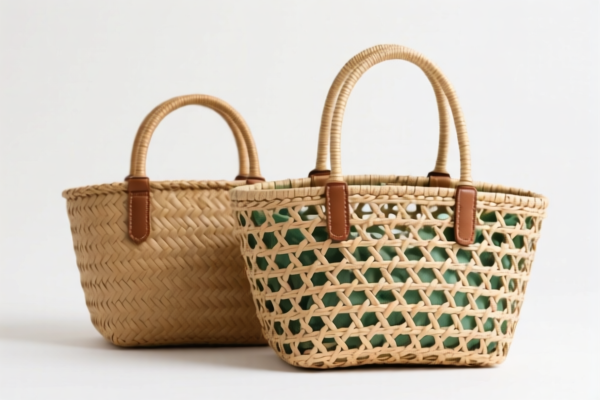
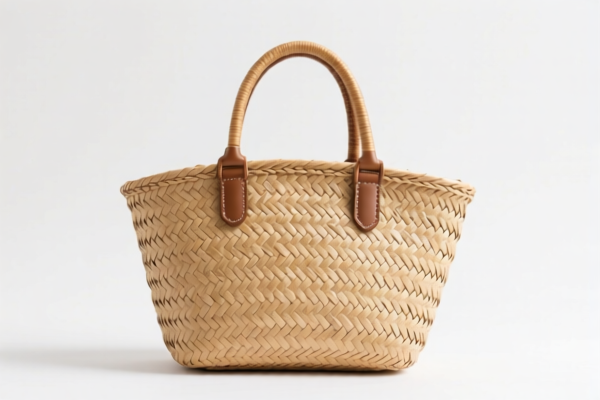
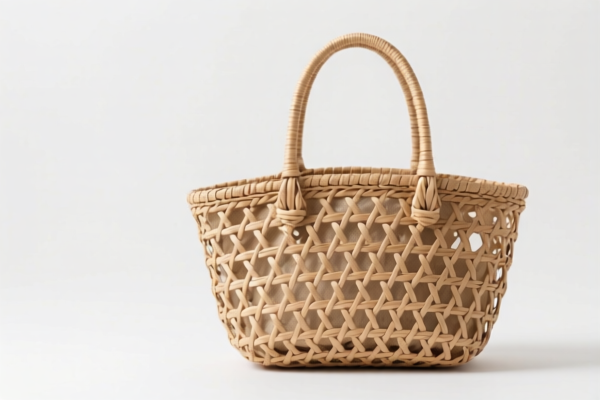
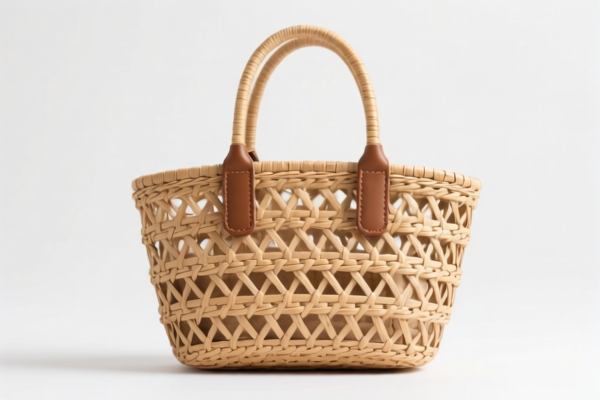
AI Analysis
🌿 Eco-Friendly Rattan Handbags: The Sustainable Fashion Statement
🌐 HS Code Reference & Customs Clearance Guide | 2026 Latest Tariff Analysis | Professional Clearance Strategy
📌 I. Product Definition & Classification: What Exactly Are "Eco-Friendly Rattan Handbags"?
Rattan handbags, crafted from natural palm vines, are gaining traction in the global fashion industry due to their biodegradable nature and aesthetic appeal. In international trade, they are generally classified based on their material composition and manufacturing process.
Natural Rattan/Seagrass Bags: Handcrafted or machine-assembled bags using untreated or lightly treated natural fibers. These are the core "eco-friendly" products.
Synthetic/Resin-Coated Rattan: Bags where rattan is coated with resin or mixed with synthetic fibers for durability. These may fall under different subheadings depending on the dominant material.
⚠️ Key Distinction Point:
- If the bag is primarily made of natural vegetable materials (rattan, seagrass, bamboo) → Classified under Chapter 46 or Chapter 42 (if lined with leather/fabric).
- If the bag is primarily plastic/synthetic mimicking rattan → Classified under Chapter 39.
- Eco-friendly claim: Must be supported by material origin (e.g., FSC-certified rattan) to avoid greenwashing penalties in markets like the EU.
📦 II. HS Code Classification Details (2026 Latest Tariff Authority Comparison)
| HS Code | Product Description | Application Scenario | Material Dominance |
|---|---|---|---|
4602.12.00.00 |
Handwoven baskets, bags, and similar articles of plaiting materials (rattan, seagrass, bamboo) | Handcrafted eco-friendly rattan bags, straw hats, woven accessories | ✅ Natural Vegetable |
4202.12.00.00 |
Trunks, suitcases, vanity cases, etc., with outer surface of plastics/textile materials | Rattan bags lined with cotton/nylon, or with synthetic handles | ⚠️ Mixed (Outer Surface Matters) |
4202.92.00.00 |
Other articles of apparel accessories (bags, pouches) not specified elsewhere | Small rattan pouches, cosmetic bags, non-handbag items | ✅ Secondary Purpose |
3926.90.97.00 |
Other articles of plastics | Synthetic rattan imitation bags | ❌ Synthetic |
🔍 Key Reminder:
-4602.12.00.00is the most accurate code for purely natural, handwoven rattan bags.
- If the bag has a lining (e.g., cotton, polyester) or leather handles, it may be reclassified under4202.12.00.00(if the outer surface is still considered primary).
- Avoid4202.19unless the bag is specifically for men/women and not clearly defined as woven.
💰 III. 2026 Latest Tariff Rate Details (Including Additional Taxes & Policy Add-ons)
✅ Applicable Country: United States (US)
✅ Country of Origin: China (CN)
✅ Effective Date: From November 10, 2025 (including subsequent imports)
🎯 1. 4602.12.00.00 —— Handwoven Baskets, Bags of Plaiting Materials
| Item | Content |
|---|---|
| Base Duty Rate | 0% (ad valorem) |
| USITC Additional Duty | +25% (from USITC Footnote 9903.88.01) |
| IEEPA Additional Duty | +10% (for China/Hong Kong products, effective from Nov 10, 2025) |
| Total Duty Rate | 45% |
| Tax Calculation | CIF Value × 45% |
| De Minimis Exemption Eligible | ❌ No (deny_de_minimis) |
| Legal Basis Path | IEEPA:9903.01.25 → IEEPA:9903.01.24 → USITC:4602.12.00.00 → FOOTNOTE:9903.88.01 |
📌 Explanation:
- The 25% USITC duty comes from Section 301 of the U.S. Trade Act;
- The 10% IEEPA duty is part of the additional tariffs on Chinese goods under the International Emergency Economic Powers Act;
- Total 45% is extremely high, requiring advance planning!
🎯 2. 4202.12.00.00 —— Trunks, Suitcases, Vanity Cases, etc., with Outer Surface of Plastics/Textile
| Item | Content |
|---|---|
| Base Duty Rate | 0% |
| USITC Additional Duty | +25% |
| IEEPA Additional Duty | +10% |
| Total Duty Rate | 45% |
| Tax Calculation | CIF × 45% |
| De Minimis Exemption Eligible | ❌ No |
| Legal Basis Path | IEEPA:9901.25 → IEEPA:9903.01.24 → USITC:4202.12.00.00 → FOOTNOTE:9903.88.01 |
📌 Note:
- Same tax treatment as woven bags;
- Even if lined with fabric, if the outer surface is considered plastic/textile (including treated rattan), it applies here.
🛠️ IV. Customs Clearance Practical Advice (Battlefield Pitfall Avoidance Guide)
✅ 1. Preparation Material Checklist (Non-negotiable)
| Material | Required | Description |
|---|---|---|
| ✅ Product Specification Sheet | ✔️ | Dimensions, weight, material composition (e.g., "100% Natural Rattan"), liner material |
| ✅ Photos (Clear) | ✔️ | Show overall bag, close-up of weaving, lining, handles, and any labels |
| ✅ Material Origin Certificate | ✔️ | Proof of natural rattan source (e.g., FSC, PEFC) to support "eco-friendly" claims |
| ✅ Commercial Invoice | ✔️ | Clearly state "Handwoven Rattan Bag, Eco-Friendly, Natural Vegetable Material" |
| ✅ Packing List | ✔️ | List each component (bag, dust bag, handle) to avoid split declaration issues |
| ✅ Third-Party Test Report | ✔️ | RoHS, REACH (for EU), CPSIA (for US) if applicable |
✅ 2. Declaration Tips (Key Mantra)
🔥 "Natural is King, Lining Changes the Game, Be Specific or Pay the Price!"
| Scenario | Correct Declaration | Wrong Practice |
|---|---|---|
| Pure natural woven rattan bag | 4602.12.00.00 |
Misdeclare as "plastic bag" → 32% |
| Rattan bag with cotton lining | 4202.12.00.00 (if outer is primary) |
Declare as 4602 → 45% vs 20% discrepancy |
| Synthetic rattan imitation | 3926.90.97.00 |
Declare as "natural rattan" → Fraud penalty |
| Small rattan pouch | 4202.92.00.00 |
Misdeclare as large handbag → Classification error |
✅ 3. Special Case Handling
| Situation | Handling Advice |
|---|---|
| OEM Custom Designs | Provide client design sketches + material specs to prove "woven" nature |
| Mixed Materials | If >50% natural by weight, argue for 4602; if synthetic lining dominates, use 4202 |
| Eco-Friendly Certification | Submit FSC/PEFC certificates to justify "sustainable" labeling in marketing |
| Used/Recycled Rattan | Still classified under 4602 if woven, but must disclose "recycled" in invoice |
🌍 V. Global Market Clearance Comparison (2026 Latest)
| Country/Region | Recommended HS Code | Tariff | Certification Requirements | Notes |
|---|---|---|---|---|
| 🇺🇸 USA | 4602.12.00.00 |
0% + 25% + 10% = 45% | FCC (if electronic), RoHS | High tariff for Chinese origin |
| 🇨🇳 China | 4602.12.00.00 |
5% | CCC (if applicable) | No additional tariffs |
| 🇪🇺 EU | 4602.12.00.00 |
0% (if FSC-certified) | CE, REACH, FSC | Green premium possible |
| 🇬🇧 UK | 4602.12.00.00 |
0% | UKCA, REACH | Post-Brexit alignment with EU |
| 🇦🇺 Australia | 4602.12.00.00 |
5% | RCM | No additional tariffs |
📌 Conclusion:
- USA imposes highest tariffs on Chinese-made rattan bags;
- EU offers preferential rates if FSC/PEFC certified;
- China domestic market has low barriers but high competition.
📌 VI. Common Mistakes & Pitfall Guide (Blood & Tears Lessons)
❌ Mistake 1: Declaring synthetic rattan as "natural"
👉 Consequence: Customs rejection + fine for false declaration
❌ Mistake 2: Ignoring the lining material
👉 Consequence: Misclassification from 4602 to 4202 → Unexpected 45% duty
❌ Mistake 3: Not providing material composition breakdown
👉 Consequence: Customs delays for additional info → Storage fees + demurrage
❌ Mistake 4: Using vague terms like "eco-bag"
👉 Consequence: Customs requests proof → Delay in clearance
✅ Correct Practice:
"Handwoven Natural Rattan Handbag, 100% Vegetable Fiber, Cotton Lining, FSC-Certified, Model XYZ, RoHS Compliant"
🎯 VII. Conclusion: Professional Declaration, Save Time, Cut Costs!
🎯 Remember the Mantra:
🔹 "Natural is
4602, Lining is4202, Synthetic is3926, Get it Wrong, Pay the Price!"
🔹 "HS Code Determines Tax, Tariff Differs by 25%, Declaration Mistake Costs Thousands!"
📌 Pro Tip:
If your rattan bags are originally from Vietnam, Indonesia, or Thailand, you may apply for IEEPA Exemption, reducing tariffs to 0%~5%.
Recommend Advance Ruling to avoid clearance risks.
📣 Take Action Now:
📞 Contact Professional Customs Broker + Provide Product Photos + Apply for HS Code Advance Ruling
🚀 Let Your Rattan Bags Clear Customs Smoothly, Export Efficiently, Double Profits!
✨ Professional Clearance Starts with Accurate Classification!
💼 Every Cent of Your Cost Deserves Precise Calculation!
Customer Reviews
About HS Code Classification
The Harmonized System (HS) is an internationally standardized nomenclature developed by the World Customs Organization (WCO) to classify traded products. Over 200 countries use the HS system as the basis for customs tariffs, trade statistics, and import/export regulations.
Each HS code follows a hierarchical structure:
- Chapter (2 digits) — Broad category of goods (e.g., Chapter 84: Machinery and Mechanical Appliances)
- Heading (4 digits) — More specific grouping within the chapter
- Subheading (6 digits) — Internationally standardized breakdown, used by all WCO member countries
- National subdivisions (8-10 digits) — Country-specific extensions for further classification, such as US HTSUS 10-digit codes
Correct HS code classification is essential for smooth customs clearance, accurate duty payment, and compliance with trade regulations. Misclassification can lead to customs delays, overpayment of duties, or penalties.
When importing from CN to US, the applicable tariff rates may include:
- Most-Favored-Nation (MFN) rate — The standard duty rate applied to WTO members
- General rate — Applied to countries without trade agreements
- Trade remedy duties — Additional tariffs such as Section 301 (anti-dumping), Section 232 (national security), or countervailing duties
The information provided on this page is for reference purposes only. For official classification, please consult with your local customs authority or a licensed customs broker.