Eco friendly Recycled Paper Label
CN → US| HS Code | Tariff Rate | Origin | Destination | Doc |
|---|---|---|---|---|
| 4823908000 | 35.0% | CN | US | Official Doc |
| 4811412100 | 35.0% | CN | US | Official Doc |
| 4823902000 | 35.0% | CN | US | Official Doc |
| 4819504060 | 35.0% | CN | US | Official Doc |
| 4823700040 | 35.0% | CN | US | Official Doc |
Product Images
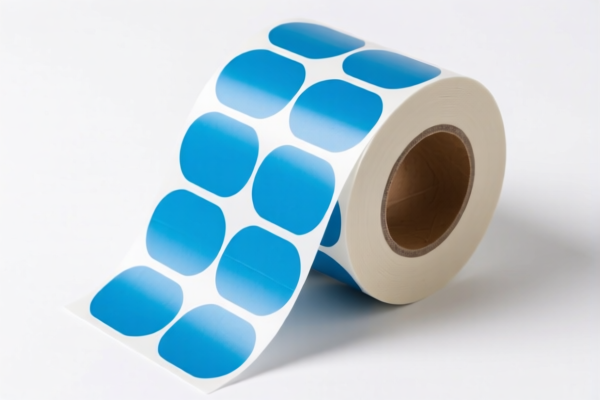
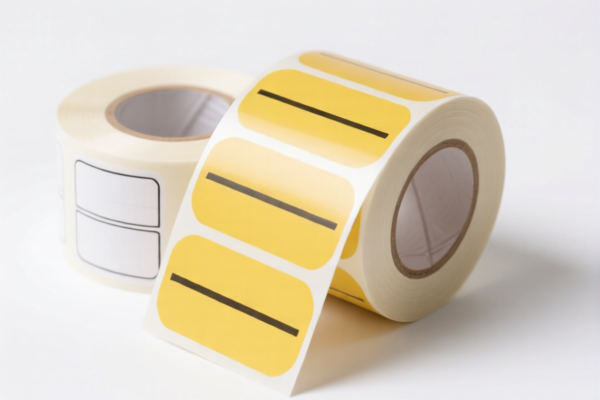
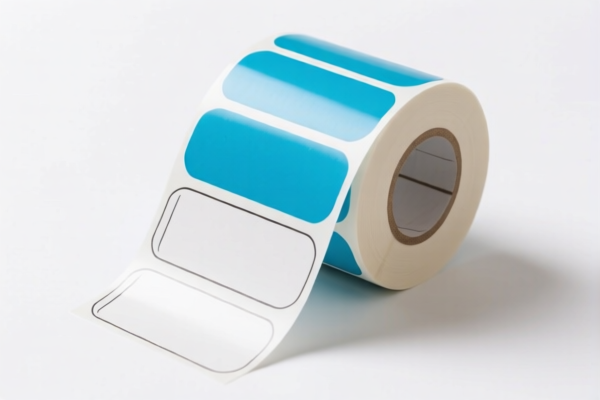
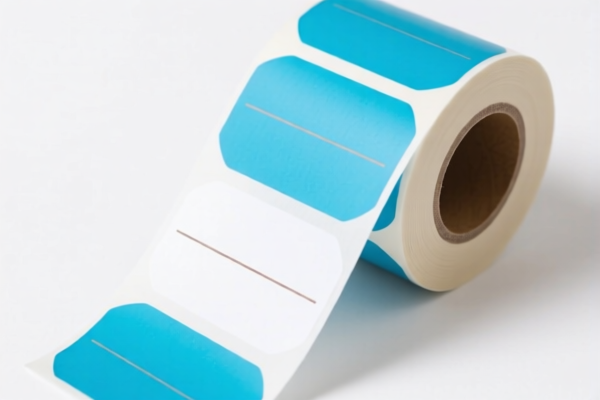
AI Analysis
🌿 Eco-Friendly Recycled Paper Label (Eco-Friendly Recycled Paper Label)
🌐 HS Code Reference & Customs Clearance Guide | 2026 Latest Tariff Analysis | Professional Clearance Strategy
📌 I. Product Definition & Classification: Do You Really Understand "Eco-Friendly Paper Labels"?
Eco-friendly recycled paper labels are sustainable packaging components widely used in consumer goods, food and beverage, and logistics. In international trade, they are not a single unified category but are classified based on their physical form, adhesive properties, and manufacturing process.
Misclassification here is dangerous because while the base tariff might be 0%, the additional tariffs (Section 301 & IEEPA) are extremely high. Furthermore, confusing "labels" with "packaging materials" can lead to severe customs penalties.
⚠️ Key Distinction Points:
- If it has an adhesive backing and is ready to stick → It is likely a Self-Adhesive Label (4811).
- If it is a cut sheet, sticker, or non-adhesive paper cut to shape → It is likely a Paper Article (4823).
- If it is a box, bag, or container made of recycled paper → It is Packaging Material (4819or4823.70).
📦 II. HS Code Classification Details (2026 Latest Tariff Authoritative Comparison)
Based on your specific product attributes, here are the four most likely HS Codes from the provided data:
| HS Code | Product Description | Application Scenario | Key Feature |
|---|---|---|---|
4811.41.21.00 |
Self-Adhesive Paper Labels | Product labeling, bottle labels, shipping labels | ✅ Has Adhesive |
4823.90.80.00 |
Other Cut Paper Articles | Die-cut stickers, non-adhesive decorative labels, paper tags | ❌ No Adhesive |
4823.90.20.00 |
Other Paper Articles (Pulp) | Labels made from molded pulp or rigid paper structures | ✅ Pulp-Molded |
4819.50.40.60 |
Recycled Paper Packaging | Paper boxes, cartons, bags (NOT individual labels) | ✅ Container Form |
4823.70.00.40 |
Paper Pulp Molded Articles | Egg cartons, protective molded packaging, rigid trays | ✅ Molded Structure |
🔍 Critical Warning:
- Labels vs. Packaging: If your product is a box made of recycled paper, it falls under4819or4823.70. If it is a small sticker for a bottle, it falls under4811or4823.90. Do not mix them up! - Adhesive is Key: If it has glue, it must go to4811.41. If it does not, it goes to4823.
💰 III. 2026 Latest Tariff Rate Detailed Explanation (Including Surcharges & Policy Add-ons)
✅ Applicable Country: United States (US)
✅ Country of Origin: China (CN)
✅ Effective Date: November 10, 2025 onwards (including subsequent imports)
All HS Codes in your dataset share the same tax structure due to the specific trade policy applied to Chinese paper goods.
🎯 1. 4811.41.21.00 / 4823.90.80.00 / 4823.90.20.00 / 4819.50.40.60 / 4823.70.00.40
(Unified Tariff Structure for All Listed Items)
| Item | Content |
|---|---|
| Base Tariff Rate | 0.0% (Ad Valorem) |
| Section 301 Additional Tariff | +25.0% (Standard USITC Additional Duty) |
| IEEPA Section 122 Tariff | +10.0% (Specific surcharge for Chinese-origin goods) |
| Total Effective Tax Rate | 35.0% |
| Tax Calculation Formula | CIF Value × 35% |
| De Minimis Exemption Eligible? | ❌ NO (Denied De Minimis) |
| Legal Basis Path | Base 0% → 301: +25% → IEEPA 122: +10% = 35% |
📌 Explanation:
- "Base 0%": These paper products generally have low base MFN rates.
- "Section 301 +25%": This is the standard tariff imposed on Chinese goods under Trade Act Section 301. It applies to almost all paper and cardboard articles from China.
- "IEEPA 122 +10%": This is an additional surcharge under the International Emergency Economic Powers Act, specifically targeting certain Chinese imports.
- Total 35%: This is a very high cost. For a $10,000 shipment, you must pay $3,500 in duties alone.
- No De Minimis: Unlike textiles or small electronics, paper goods from China cannot use the $800 de minimis exemption. Every shipment is subject to full duty.
🛠️ IV. Customs Clearance Practical Advice (Real-World Pitfall Avoidance Guide)
✅ 1. Document Checklist (Nothing Missing)
| Document | Required | Explanation |
|---|---|---|
| ✅ Product Specification Sheet | ✔️ | Must clearly state: Material (Recycled Paper), Thickness (gsm), Adhesive Type (if any). |
| ✅ Product Photos | ✔️ | Clear images of the label, showing the adhesive side (if applicable) and the final application. |
| ✅ Commercial Invoice | ✔️ | Must explicitly state: "Eco-Friendly Recycled Paper Labels" and HS Code. Do not use vague terms like "Stationery". |
| ✅ Packing List | ✔️ | Detailed list of items, weights, and dimensions. Ensure labels/packaging are listed correctly. |
| ✅ Certificate of Origin (CO) | ✔️ | Essential to prove origin (China). If origin is not China, tariffs may change (but IEEPA may still apply depending on rules of origin). |
| ✅ Adhesive Sample/Details | ✔️ | If claiming 4811, provide details on the adhesive composition to prove it is "self-adhesive". |
✅ 2. Declaration Tips (Key Mantra)
🔥 "Adhesive Determines 4811, Shape Determines 4823, Packaging is Separate!"
| Scenario | Correct Declaration | Wrong Practice |
|---|---|---|
| Self-Adhesive Label (Sticker) | HS Code: 4811.41.21.00 |
Misdeclaring as "Paper Tag" (4823) → Risk of Penalty |
| Die-Cut Non-Adhesive Label | HS Code: 4823.90.80.00 |
Misdeclaring as "Adhesive Label" → Incorrect Classification |
| Paper Box/Bag (Packaging) | HS Code: 4819.50.40.60 |
Misdeclaring as "Label" → Major Category Error |
| Molded Pulp Tray | HS Code: 4823.70.00.40 |
Misdeclaring as "Packaging Box" → Wrong Subheading |
📌 Note:
- If the label is self-adhesive, it must be declared under 4811.
- If it is not self-adhesive but cut into shape, it is 4823.90.
- Do not declare paper labels under "Printing Paper" or "Notebooks".
✅ 3. Special Situations Handling
| Situation | Handling Advice |
|---|---|
| Eco-Friendly Certification | Provide FSC (Forest Stewardship Council) or recycled content certificates. While this does not reduce the 35% tariff, it helps with buyer compliance and avoids anti-dumping scrutiny on "fake" eco-labels. |
| Sample Shipments | Even samples are subject to the 35% tariff. No de minimis exemption applies. Budget for duties even for small test orders. |
| Mixed Shipment (Labels + Boxes) | Split the declaration! Labels go to 4811/4823, Boxes go to 4819/4823.70. Do not bundle them into one generic "Paper Goods" line. |
| Origin Marking | Ensure all paper products are marked "Made in China". Failure to mark can lead to fines or rejection. |
🌍 V. Global Main Market Clearance Comparison (2026 Latest)
| Country/Region | Recommended HS Code | Tariff Rate (China Origin) | Certification Requirements | Remarks |
|---|---|---|---|---|
| 🇺🇸 USA | 4811.41.21.00 / 4823.90.80.00 |
35% (0% Base + 25% 301 + 10% IEEPA) | FSC, Recycled Content Proof | Highest Cost. No de minimis. |
| 🇨🇳 China | 4811.41.21.00 / 4823.90.80.00 |
Varies (5%-10%) | FSC, GB Standards | Domestic trade benefits from lower tariffs. |
| 🇪🇺 EU | 4811.41.21.00 / 4823.90.80.00 |
Varies (6.5%-7.5%) | CE, FSC, Ecolabel | No Section 301/IEEPA. Standard MFN rates apply. |
| 🇯🇵 Japan | 4811.41.21.00 / 4823.90.80.00 |
Varies (6.0%-8.0%) | FSC, JIS | No high additional tariffs. |
📌 Conclusion:
- USA is the most expensive market due to the 35% combined tariff.
- EU and Japan are more cost-effective, with standard MFN rates (~6-8%).
- Strategy: If exporting to the US, ensure your profit margin covers the 35% duty. Consider supply chain diversification (e.g., manufacturing in Vietnam or Mexico) if possible to mitigate IEEPA/301 risks, though USMCA/EU preferences must be verified.
📌 VI. Common Errors & Pitfall Guide (Lessons Learned)
❌ Error 1: Declaring self-adhesive labels as "Paper Stickers" (4823)
👉 Consequence: Misclassification. Customs may reassess under 4811 with higher scrutiny or penalties.
👉 Truth: 4811 is for self-adhesive; 4823 is for non-adhesive cut articles.
❌ Error 2: Ignoring the "Recycled" aspect in documentation
👉 Consequence: Buyer may reject goods if FSC/Recycled claims are not backed by certificates.
👉 Truth: Provide FSC or recycled content proof.
❌ Error 3: Assuming De Minimis applies to Paper Labels
👉 Consequence: Shipment detained for non-payment of duties.
👉 Truth: Paper labels from China are excluded from de minimis. Duties apply to every shipment.
❌ Error 4: Mixing "Labels" and "Packaging Boxes" in one HS Code
👉 Consequence: Incorrect valuation and potential anti-dumping investigation.
👉 Truth: Always separate labels (4811/4823.90) from packaging (4819/4823.70).
✅ Correct Practice:
"Self-Adhesive Eco-Friendly Recycled Paper Label, 100% Post-Consumer Waste, FSC Certified, 4811.41.21.00, Made in China"
🎯 VII. Conclusion: Professional Declaration, Save Money, Ensure Smooth Clearance!
🎯 Remember the Mantra:
🔹 "Adhesive is 4811, No Glue is 4823, Packaging is Separate!"
🔹 "35% Duty is Fixed, De Minimis is Gone, Prepare Your Budget!"
🔹 "FSC Certificate is Key, Avoid Buyer Dispute!"
📌 Pro Tip:
If your product is recycled paper packaging (boxes/bags), it also faces the 35% tariff in the US.
Recommendation:
1. Apply for Pre-Adjudication (Ruling) from CBP to confirm HS Code.
2. Verify FSC/Recycled Certificates with your supplier.
3. Calculate Landed Cost carefully, including the 35% duty.
4. Consider supply chain adjustment if margins are thin.
📣 Immediate Action:
📞 Contact a professional customs broker + Provide Product Specs + Apply for HS Code Pre-Ruling
🚀 Ensure your Eco-Friendly Paper Labels pass customs smoothly, avoid penalties, and maximize profits!
✨ Professional Clearance Starts with Accurate Classification!
💼 Every cent of your cost deserves precise calculation!
Customer Reviews
About HS Code Classification
The Harmonized System (HS) is an internationally standardized nomenclature developed by the World Customs Organization (WCO) to classify traded products. Over 200 countries use the HS system as the basis for customs tariffs, trade statistics, and import/export regulations.
Each HS code follows a hierarchical structure:
- Chapter (2 digits) — Broad category of goods (e.g., Chapter 84: Machinery and Mechanical Appliances)
- Heading (4 digits) — More specific grouping within the chapter
- Subheading (6 digits) — Internationally standardized breakdown, used by all WCO member countries
- National subdivisions (8-10 digits) — Country-specific extensions for further classification, such as US HTSUS 10-digit codes
Correct HS code classification is essential for smooth customs clearance, accurate duty payment, and compliance with trade regulations. Misclassification can lead to customs delays, overpayment of duties, or penalties.
When importing from CN to US, the applicable tariff rates may include:
- Most-Favored-Nation (MFN) rate — The standard duty rate applied to WTO members
- General rate — Applied to countries without trade agreements
- Trade remedy duties — Additional tariffs such as Section 301 (anti-dumping), Section 232 (national security), or countervailing duties
The information provided on this page is for reference purposes only. For official classification, please consult with your local customs authority or a licensed customs broker.