Eco friendly Wicker Mat
CN → US| HS Code | Tariff Rate | Origin | Destination | Doc |
|---|---|---|---|---|
| 4602191700 | 35.0% | CN | US | Official Doc |
| 4602900000 | 38.5% | CN | US | Official Doc |
Product Images
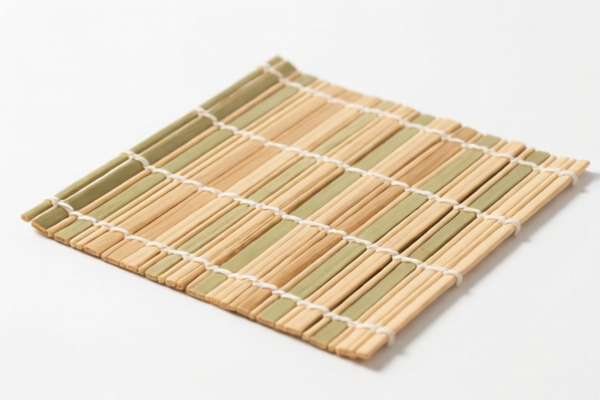
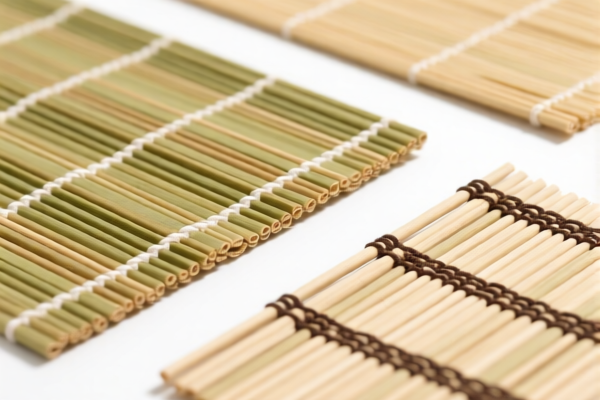
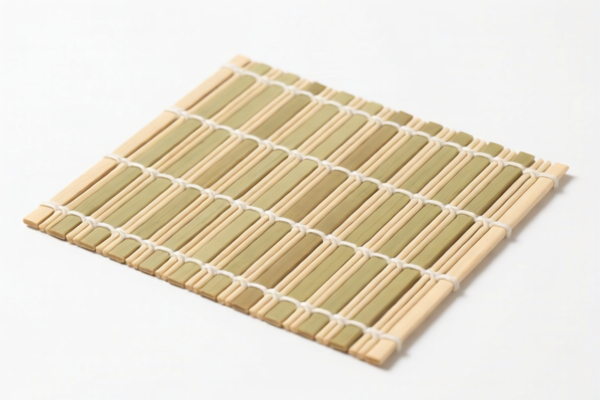
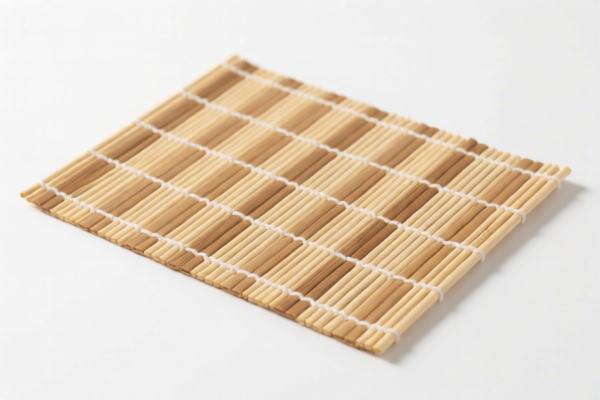
AI Analysis
🌿 Eco-Friendly Wicker Mat (Handicrafts & Home Decor)
🌐 HS Code Reference & Clearance Guide | 2026 Latest Tariff Analysis | Professional Clearance Strategy
📌 I. Product Definition & Classification: Do You Truly Understand "Wicker Mat"?
The "Eco-friendly Wicker Mat" is a broad category often used in marketing to describe mats, placemats, or decorative floor covers made from natural plant fibers. In international trade, however, the term "wicker" is not a precise customs definition. It falls under Heading 4602, which covers articles made from plaiting materials.
To classify this correctly, you must distinguish between two main types based on shape and structure:
- Pre-shaped Baskets/Bags (Heading 4602.19): Items that are manufactured directly into a specific 3D shape or are finished articles like rigid mats/bags.
- Other Wicker Articles (Heading 4602.90): Generic wicker items that do not fit the specific "basket/bag" definition, often including flexible mats, mats for flooring, or other decorative wicker works not made "directly to shape" in the same rigid manner as baskets.
⚠️ Key Distinction Point:
- If the "mat" is a rigid, pre-formed article (like a structured placemat set or a rigid floor mat) often listed under "Other baskets and bags," it leans toward 4602.19.
- If the "mat" is a generic woven article, flexible, or doesn't fit the specific "basket/bag" subcategories, it falls under 4602.90 ("Other").
- Material Check: The description specifies "Vegetable Materials." If it were synthetic, it would belong to Chapter 57 or 39, but here we strictly follow the Vegetable Material path.
📦 II. HS Code Classification Details (2026 Latest Tariff Authority Comparison)
Based on the provided data, there are two primary HS Codes for this product. The choice depends on the specific physical form and customs interpretation of "Wickerwork" vs. "Other articles."
| HS Code | Product Description | Application Scenario | Material Source |
|---|---|---|---|
4602.19.17.00 |
Wickerwork (Of vegetable materials: Other baskets and bags, whether or not lined: Other: Wickerwork) | Rigid wicker mats, structured placemats, or mat-like baskets | 🌱 Vegetable |
4602.90.00.00 |
Basketwork, wickerwork... Other | Generic wicker mats, flexible mats, or wicker items not classified as baskets/bags | 🌱 Vegetable |
🔍 Important Reminder:
-4602.19.17.00is more specific for "Wickerwork" under the "Baskets and bags" category. If your "mat" is considered a finished article similar to a basket (even if flat), this code is often preferred for structured wicker goods.
-4602.90.00.00is the "catch-all" for wicker items. If the mat is very flexible, large, or not a "bag/basket" type, customs may use this code.
- Do not confuse this with Heading 4601 (plaiting materials in strips), as these are "made up" articles.
💰 III. 2026 Latest Tariff Rate Detail (Including Additional Taxes, Policy Add-ons)
✅ Applicable Country: United States (US)
✅ Country of Origin: China (CN) (Assumed based on typical "Eco-friendly" export trends and the high tax context in the data)
✅ Effective Date: Current trade policies (2024-2026)
🎯 1. 4602.19.17.00 —— Wickerwork (Structured Mats/Articles)
| Item | Content |
|---|---|
| Base Tariff Rate | 0.0% (Ad valorem) |
| Additional Tariff (Section 301) | +25.0% |
| Total Tax Rate | 25.0% |
| Tax Calculation | CIF Value × 25% |
| De Minimis Exemption | ❌ Not Applicable (Section 301 goods generally do not qualify for de minimis exemption if value exceeds limits, but more importantly, 301 tariffs apply regardless of package size for commercial imports) |
| Legal Basis Path | USITC:4602.19.17.00 → SECTION_301:4602 |
📌 Explanation:
- Although the base tariff for wickerwork is 0%, the 25% Section 301 additional tariff applies to most Chinese-origin wicker products.
- Total Cost Impact: You will pay 25% of the customs value in additional duties alone. This is a significant cost factor.
🎯 2. 4602.90.00.00 —— Other Wicker Articles (Generic/Flexible Mats)
| Item | Content |
|---|---|
| Base Tariff Rate | 3.5% (Ad valorem) |
| Additional Tariff (Section 301) | +25.0% |
| Total Tax Rate | 28.5% |
| Tax Calculation | CIF Value × 28.5% |
| De Minimis Exemption | ❌ Not Applicable (Same as above) |
| Legal Basis Path | USITC:4602.90.00.00 → SECTION_301:4602 |
📌 Explanation:
- The base rate is 3.5%, but the 25% Section 301 tariff is added on top.
- Total Cost Impact: 28.5% total tax. This is 3.5% higher than the previous code.
- Strategic Note: If your product can be legitimately classified under4602.19.17.00(as a structured wicker article), you save 3.5% in base duties. However, customs may reject this if the item is not "basket-like."
🛠️ IV. Clearance Practical Advice (Real-World Pitfall Guide)
✅ 1. Preparation Checklist (Must-Haves)
| Document | Required | Explanation |
|---|---|---|
| ✅ Product Photos | ✔️ | Clear images of the mat's texture, material, and any labels. Show it is "wicker/plaiting material." |
| ✅ Material Declaration | ✔️ | Explicitly state "100% Natural Vegetable Fiber (e.g., Rattan, Bamboo, Water Hyacinth)." No synthetic blends if claiming 0% base tax. |
| ✅ Structure Diagram | ✔️ | Is it a flat mat? A rigid basket-mat? This determines between 4602.19 and 4602.90. |
| ✅ Commercial Invoice | ✔️ | Description should be precise: "Wicker Mat, Natural Rattan, Eco-Friendly." Avoid vague terms like "Decorative Item." |
| ✅ Packaging List | ✔️ | Show if mats are rolled, folded, or rigidly packed. |
✅ 2. Declaration Tips (Key Mnemonics)
🔥 "Material is Key, Shape Defines Code, 301 is Inevitable!"
| Scenario | Correct Declaration | Wrong Practice |
|---|---|---|
| Rigid, Pre-shaped Mat | 4602.19.17.00 - "Wickerwork, Natural Rattan" |
Classifying as "Textile Mat" (Ch 57) → Higher risk of audit |
| Flexible, Rollable Mat | 4602.90.00.00 - "Other Wicker Mat" |
Classifying as "Rug" (Ch 57) → Wrong chapter |
| Mixed Material (e.g., Cotton + Rattan) | Review Classification | Claiming "100% Natural" → Fraud risk, penalties |
| Eco-Friendly Marketing | Focus on Material Composition | Using "Eco-Friendly" as HS Code basis → Invalid |
✅ 3. Special Cases
| Situation | Handling Advice |
|---|---|
| Bamboo Mat vs. Rattan Mat | Both are "Vegetable Materials." Classify under Heading 4602. Ensure photos show the woven/plaited nature, not just sliced strips. |
| Mat with Non-Wicker Parts | If the mat has plastic feet or synthetic lining, the classification may change. Pure vegetable material is key for 4602. |
| De Minimis (Section 321) | ⚠️ Warning: Section 301 tariffs (25%) do NOT apply to de minimis shipments (under $800) IF they are not from China? NO, Section 301 DOES APPLY to China-origin goods even under de minimis since recent policy changes. Do not rely on de minimis exemption for Chinese wicker goods. |
🌍 V. Global Market Clearance Comparison (2026 Latest)
| Country/Region | Recommended HS Code | Base Tariff | Additional Tax | Total Tax | Remarks |
|---|---|---|---|---|---|
| 🇺🇸 USA | 4602.19.17.00 |
0.0% | +25% (301) | 25.0% | High cost. Check for structural classification. |
| 🇺🇸 USA | 4602.90.00.00 |
3.5% | +25% (301) | 28.5% | Higher base, same add-on. |
| 🇪🇺 EU | 4602.90 |
~6.5% | 0% | 6.5% | Lower total cost. No Section 301 equivalent. |
| 🇨🇳 China | 4602.90 |
10% | 0% | 10.0% | Import tax into China. |
| 🇬🇧 UK | 4602.90 |
~6.0% | 0% | 6.0% | Post-Brexit tariff. |
📌 Conclusion:
- USA is the most expensive market due to Section 301 tariffs.
- EU/UK are much more favorable for wicker products from China.
- Strategy: If selling to the US, consider costing in the 25-28% tax or explore supply chain diversification if margins are thin.
📌 VI. Common Errors & Pitfall Guide (Blood & Tears Lessons)
❌ Error 1: Classifying as "Rug" (HS 5702/5703)
👉 Consequence: Customs will reclassify to 4602, apply 25-28% tax, and impose penalties for misdeclaration. Rugs are textiles; Wicker is plaiting materials.
❌ Error 2: Ignoring Section 301 Tax
👉 Consequence: Assuming 0% base tax means 0% total tax. Wrong! You must pay 25-28.5%. Budgeting error leads to lost profit.
❌ Error 3: Vague Description "Eco Mat"
👉 Consequence: Customs cannot determine material. Hold for inspection, delay shipment, request additional documents.
✅ Correct Practice:
"Wicker Floor Mat, 100% Natural Rattan, Plaited, Eco-Friendly, Model W-101"
HS Code:4602.19.17.00(if structured) or4602.90.00.00(if generic)
🎯 VII. Conclusion: Professional Declaration, Cost Control, Efficiency!
🎯 Remember the Mantra:
🔹 "Wicker is Not Rug, 25% Tax is Real, Base 0 or 3.5, Total 25 or 28.5!"
🔹 "Material is Vegetable, Structure Defines Code, Don't Miss the 301 Add-on!"
📌 Pro Tip:
If you are importing into the US, apply for a Binding Tariff Ruling (BTR) from US Customs and Border Protection (CBP) before shipment. This provides legal certainty on whether your "mat" is 4602.19.17.00 or 4602.90.00.00, saving you from potential audits and back-taxes.
📣 Action Required:
📞 Contact a licensed customs broker + Provide Product Specs + Verify Section 301 Exclusions (if any)
🚀 Let your Wicker Mat, clear customs smoothly, stay profitable, and reach the market!
✨ Professional Clearance Starts with Accurate Classification!
💼 Every Cent of Tax Matters!
Customer Reviews
About HS Code Classification
The Harmonized System (HS) is an internationally standardized nomenclature developed by the World Customs Organization (WCO) to classify traded products. Over 200 countries use the HS system as the basis for customs tariffs, trade statistics, and import/export regulations.
Each HS code follows a hierarchical structure:
- Chapter (2 digits) — Broad category of goods (e.g., Chapter 84: Machinery and Mechanical Appliances)
- Heading (4 digits) — More specific grouping within the chapter
- Subheading (6 digits) — Internationally standardized breakdown, used by all WCO member countries
- National subdivisions (8-10 digits) — Country-specific extensions for further classification, such as US HTSUS 10-digit codes
Correct HS code classification is essential for smooth customs clearance, accurate duty payment, and compliance with trade regulations. Misclassification can lead to customs delays, overpayment of duties, or penalties.
When importing from CN to US, the applicable tariff rates may include:
- Most-Favored-Nation (MFN) rate — The standard duty rate applied to WTO members
- General rate — Applied to countries without trade agreements
- Trade remedy duties — Additional tariffs such as Section 301 (anti-dumping), Section 232 (national security), or countervailing duties
The information provided on this page is for reference purposes only. For official classification, please consult with your local customs authority or a licensed customs broker.