Economy Color Photo Paper Roll
CN → US| HS Code | Tariff Rate | Origin | Destination | Doc |
|---|---|---|---|---|
| 3703203030 | 38.7% | CN | US | Official Doc |
| 3703103030 | 38.7% | CN | US | Official Doc |
| 4823400000 | 35.0% | CN | US | Official Doc |
| 4823906000 | 35.0% | CN | US | Official Doc |
| 4811906010 | 35.0% | CN | US | Official Doc |
Product Images


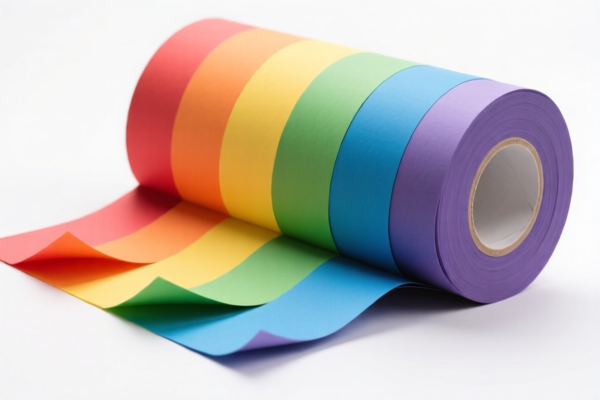
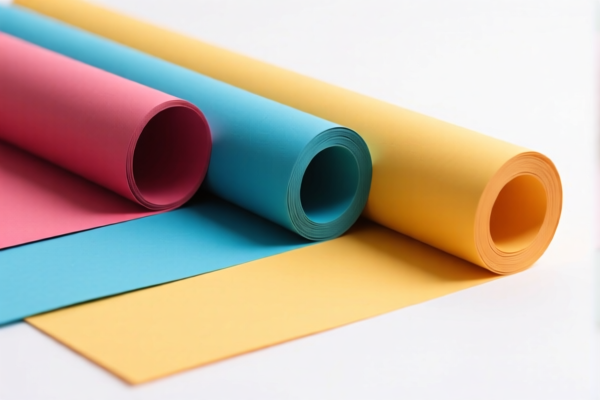
AI Analysis
📸 Economy Color Photo Paper Roll
🌐 HS Code Reference & Customs Clearance Guide | 2026 Latest Tariff Full Analysis | Professional-Level Clearance Strategy
📌 I. Product Definition & Classification: Do You Really Understand "Economy Color Photo Paper Roll"?
Color photo paper rolls are essential consumables in the printing and photography industry. In international trade, they are classified differently based on their chemical composition, intended use, and processing state. The term "Economy" often implies a specific coating or quality tier, but for customs purposes, the distinction lies in whether it is photosensitive (halide-based) or non-photosensitive (coated paper).
⚠️ Key Distinction Point:
- If the paper is photosensitive (containing silver halides for photographic development) → It falls under Chapter 37 (Photographic Goods).
- If the paper is non-photosensitive (regular coated paper used for thermal, dye-sublimation, or inkjet printing) → It falls under Chapter 48 (Paper and Paperboard).
- Form Factor: Since it is a roll (not sheets), it must match subheadings specifying "rolls."
📦 II. HS Code Classification Details (2026 Latest Tariff Authoritative Comparison)
| HS Code | Product Description | Applicable Scenario | Photosensitive? |
|---|---|---|---|
3703.20.30.30 |
Color photographic paper in rolls, light-resistant, exposed or unexposed | Traditional darkroom photography, silver halide development | ✅ Yes |
3703.10.30.30 |
Color photographic paper in rolls, for color photography, material: silver halide paper | Professional silver-based color printing | ✅ Yes |
4823.40.00.00 |
Color continuous-tone paper rolls, material: paper/cellulosic fibers, form: rolls | Automatic recorders, thermal printers, non-chemical printing | ❌ No |
4823.90.60.00 |
Color continuous-tone paper rolls, material: paper/cellulosic fibers, form: rolls, coated type | General coated paper for specialized inkjet/dye-sublimation | ❌ No |
4811.90.60.10 |
Color double-sided photo paper rolls, material: coated paper, form: rolls | Surface coloring or decorative printing, non-photosensitive | ❌ No |
🔍 Key Reminder:
- "Economy" does not change the HS Code; it only affects the unit price and potentially the duty burden.
- Chapter 37 (3703.xxxx) carries a higher base tariff (3.7%) due to the chemical nature of the product.
- Chapter 48 (48xx.xxxx) carries a 0% base tariff but is subject to the same punitive tariffs as above.
💰 III. 2026 Latest Tariff Rate Details (Including Additional Taxes, Policy Surcharges)
✅ Applicable Country: United States (US)
✅ Origin: China (CN)
✅ Effective Time: From November 10, 2025 (including subsequent imports)
🎯 1. 3703.20.30.30 & 3703.10.30.30 —— Color Photo Paper (Photosensitive/Halide-Based)
These codes apply to true photographic paper requiring chemical processing.
| Item | Content |
|---|---|
| Base Tariff | 3.7% (ad valorem) |
| USITC Additional Tariff | +25.0% (from USITC Footnote 9903.88.01 / Section 301) |
| 122 Provision Tariff (IEEPA) | +10.0% (Targeting Chinese/Hong Kong products, effective Nov 10, 2025) |
| Total Tariff Rate | 38.7% |
| Tax Calculation | CIF Value × 38.7% |
| De Minimis Exemption Available? | ❌ No (deny_de_minimis) |
| Legal Basis Path | IEEPA:9903.01.25 → IEEPA:9903.01.24 → USITC:3703.xx.xx.xx → FOOTNOTE:9903.88.01 |
📌 Explanation:
- The 3.7% is the standard Most Favored Nation (MFN) rate for photographic paper.
- The 25% is the Section 301 punitive tariff on Chinese goods.
- The 10% is the new "122 Provision" tariff under IEEPA for Chinese-origin goods entering the US.
- Total: 38.7%. This is a high-cost item for US importers.
🎯 2. 4823.40.00.00, 4823.90.60.00, 4811.90.60.10 —— Coated Paper Rolls (Non-Photosensitive)
These codes apply to regular coated paper used for modern digital printing (thermal, dye-sub, inkjet) that does not require chemical development.
| Item | Content |
|---|---|
| Base Tariff | 0.0% (ad valorem) |
| USITC Additional Tariff | +25.0% (Section 301) |
| 122 Provision Tariff (IEEPA) | +10.0% (New IEEPA tariff) |
| Total Tariff Rate | 35.0% |
| Tax Calculation | CIF Value × 35.0% |
| De Minimis Exemption Available? | ❌ No (deny_de_minimis) |
| Legal Basis Path | IEEPA:9903.01.25 → IEEPA:9903.01.24 → USITC:4823.xx.xx.xx / 4811.xx.xx.xx |
📌 Note:
- Although the base tariff is 0%, the punitive tariffs still apply.
- The total rate is 3.7% lower than the photosensitive version.
- "Economy" paper is usually non-photosensitive, so these Chapter 48 codes are more likely for generic "economy" rolls.
🛠️ IV. Customs Clearance Practical Advice (Combat Pitfall Guide)
✅ 1. Preparation Checklist (All Required)
| Material | Required | Description |
|---|---|---|
| ✅ Product Specification Sheet | ✔️ | Must specify: Material (Cellulose vs. Halide), Coating Type, Size, Length, Weight. |
| ✅ Chemical Composition Statement | ✔️ | Crucial: Declare if silver halides are present. If no, state "Non-photosensitive." |
| ✅ Product Photos (with Label) | ✔️ | Clear view of brand, model, and any "Photosensitive" warnings. |
| ✅ Commercial Invoice | ✔️ | Must describe as "Photo Paper Roll" or "Coated Paper Roll," not just "Paper." |
| ✅ Packing List | ✔️ | Detail net/gross weight and number of rolls per carton. |
| ✅ Origin Certificate (CO) | ✔️ | Required for US customs entry. |
✅ 2. Declaration Skills (Key Mantras)
🔥 “Identify Chemicals, Choose Chapter Right, Describe Form Clear, Avoid 38% Pain!”
| Situation | Correct Declaration | Incorrect Action |
|---|---|---|
| Silver Halide Paper (Chemical Development) | 3703.20.30.30 or 3703.10.30.30 |
Misdeclare as Coated Paper → Risk of penalty & reclassification to 37%. |
| Inkjet/Thermal Paper (Digital Printing) | 4823.40.00.00 or 4823.90.60.00 |
Misdeclare as Photo Paper → May incur unnecessary 3.7% base tariff. |
| Double-Sided Coated Paper | 4811.90.60.10 |
Misdeclare as single-sided → May trigger extra scrutiny. |
| Bulk vs. Retail | Declare as Rolls, not Sheets | Misdeclare as Sheets (4823.60) → Wrong duty rate & data mismatch. |
⚠️ Critical Tip:
If you are unsure whether the paper is photosensitive, assume it is NOT if it is marketed for "Digital Printers," "Thermal Printers," or "Dye-Sublimation." Only traditional darkroom paper is3703.
✅ 3. Special Cases Handling
| Situation | Handling Advice |
|---|---|
| "Economy" Label | Does not exempt from tariffs. Still subject to 35-38.7%. |
| Mixed Shipments | If boxes contain both rolls and sheets, declare separately by HS Code. |
| Re-export from 3rd Country | If shipped from Vietnam/Malaysia but made in China, US Customs still applies China-origin tariffs. |
| Sample Imports | No de minimis exemption for China. Even $1 samples face 35-38.7% duty. |
🌍 V. Global Main Market Clearance Comparison (2026 Latest)
| Country/Region | Recommended HS Code | Tariff | Certification | Notes |
|---|---|---|---|---|
| 🇺🇸 United States | 4823.40.00.00 (Non-Photo)3703.20.30.30 (Photo) |
35.0% (Non-Photo) 38.7% (Photo) |
None required for paper | High punitive tariffs apply. |
| 🇨🇳 China | 4823.40.00.00 |
0% | None | Domestic use. |
| 🇪🇺 European Union | 4823.40.00.00 |
6.5% | REACH Compliance | No Section 301 equivalent. |
| 🇬🇧 United Kingdom | 4823.40.00.00 |
6.5% | UKCA/CE | Post-Brexit rules apply. |
| 🇯🇵 Japan | 4823.40.00.00 |
6.0% | JIS Standard | Free Trade Agreement benefits may apply if originating in Japan. |
📌 Conclusion:
- The US market is exceptionally harsh on Chinese paper products due to the combination of base tariffs and punitive IEEPA/Section 301 tariffs.
- Non-photosensitive paper (4823) is slightly more cost-effective than photosensitive paper (3703) due to the 3.7% base rate difference.
- No de minimis exemption means small shipments are still heavily taxed.
📌 VI. Common Mistakes & Pitfall Guide (Lessons Learned)
❌ Mistake 1: Declaring "Photo Paper" as "Printing Paper" without specifying "Coated" or "Photosensitive"
👉 Consequence: Customs may classify under 4802 (General Paper) with 0% base, but then audit and impose penalties + back taxes.
❌ Mistake 2: Assuming "Economy" means lower duty
👉 Consequence: Duty is based on HS Code, not price. "Economy" paper still pays 35-38.7%.
❌ Mistake 3: Shipping from Vietnam to US to avoid tariffs
👉 Consequence: If Substantial Transformation does not occur in Vietnam, US Customs will still apply China-origin tariffs.
❌ Mistake 4: Ignoring the "122 Provision" 10% tariff
👉 Consequence: Many brokers forget the new 10% IEEPA tariff, leading to underpayment and fines.
✅ Correct Approach:
“Color Coated Photo Paper Roll, 100% Wood Pulp, Non-Photosensitive, for Dye-Sublimation Printing, Width 100mm, Length 50m, HS 4823.40.00.00”
🎯 VII. Conclusion: Professional Declaration Saves Money!
🎯 Remember the Mantra:
🔹 “Photosensitive? Go to 37 (38.7%). Digital Print? Go to 48 (35%).”
🔹 “No De Minimis for China. Every Roll Pays.”
🔹 “Check the 122 Provision. 10% is New. Don’t Miss It.”
📌 Pro Tip:
If your paper is non-photosensitive (
4823), ensure the description clearly states "Non-Photosensitive" or "For Digital Printing" to avoid customs confusion with3703products.
Consider Advance Ruling if you are importing large volumes, to lock in the HS Code classification.
📣 Immediate Action:
📞 Contact your customs broker with the Product Specification Sheet highlighting "Non-Photosensitive" or "Silver Halide."
🚀 Calculate the landed cost accurately: CIF + 35-38.7% duty + Merchandise Processing Fee (MPF) + Harbor Maintenance Fee (HMF).
✨ Professional Clearance Starts with Accurate Classification!
💼 Every percent of duty counts in low-margin "Economy" paper trade!
Customer Reviews
About HS Code Classification
The Harmonized System (HS) is an internationally standardized nomenclature developed by the World Customs Organization (WCO) to classify traded products. Over 200 countries use the HS system as the basis for customs tariffs, trade statistics, and import/export regulations.
Each HS code follows a hierarchical structure:
- Chapter (2 digits) — Broad category of goods (e.g., Chapter 84: Machinery and Mechanical Appliances)
- Heading (4 digits) — More specific grouping within the chapter
- Subheading (6 digits) — Internationally standardized breakdown, used by all WCO member countries
- National subdivisions (8-10 digits) — Country-specific extensions for further classification, such as US HTSUS 10-digit codes
Correct HS code classification is essential for smooth customs clearance, accurate duty payment, and compliance with trade regulations. Misclassification can lead to customs delays, overpayment of duties, or penalties.
When importing from CN to US, the applicable tariff rates may include:
- Most-Favored-Nation (MFN) rate — The standard duty rate applied to WTO members
- General rate — Applied to countries without trade agreements
- Trade remedy duties — Additional tariffs such as Section 301 (anti-dumping), Section 232 (national security), or countervailing duties
The information provided on this page is for reference purposes only. For official classification, please consult with your local customs authority or a licensed customs broker.