Edge Banding Strip
CN → US| HS Code | Tariff Rate | Origin | Destination | Doc |
|---|---|---|---|---|
| 4421999400 | 35.0% | CN | US | Official Doc |
| 4421919400 | 35.0% | CN | US | Official Doc |
| 7326908688 | 87.9% | CN | US | Official Doc |
| 7326190080 | 87.9% | CN | US | Official Doc |
| 3925900000 | 40.3% | CN | US | Official Doc |
Product Images

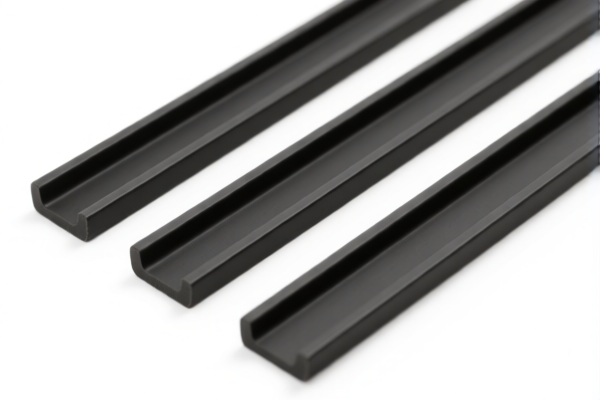


AI Analysis
🪵✨ Edge Banding Strip: The Ultimate Guide to HS Classification, Tariffs & Smart Customs Clearance (2026 Edition)
🌐 HS Code Reference & Customs Strategy | 2026 Tariff Deep-Dive | Pro-Level Clearance Tactics
📌 Part 1: What is an Edge Banding Strip? Are You Declaring It Right?
Edge Banding Strips are thin decorative or functional strips applied to the raw edges of wood-based panels (like particleboard, MDF, plywood) to improve aesthetics, seal the edge, and protect against moisture.
In international trade, they are NOT a single category. Their classification depends entirely on the material composition:
- 🌿 Wooden/Veneer Strips: Natural wood or plywood edges.
- 🎋 Bamboo Strips: Bamboo-based edging materials.
- 🛡️ Metal Strips: Steel, iron, or aluminum edges for industrial furniture.
- 🧪 Plastic (PVC) Strips: Polymer-based edging for residential use.
⚠️ Critical Classification Trap:
- If you mix materials (e.g., PVC with a wooden core) without specifying the predominant material, Customs may reject the declaration.
- Metal edge bands often carry massive additional tariffs compared to wood/plastic.
- Bamboo is often treated similarly to wood but has specific HS codes.
📦 Part 2: HS Code Classification Matrix (2026 Authoritative Data)
Based on the provided dataset, here is the precise mapping for Edge Banding Strips:
| 🏷️ HS Code | 📝 Product Description | 🏗️ Material Type | Total Tariff Rate | Key Trigger |
|---|---|---|---|---|
| 4421.99.94.00 | Wooden edge strips or trim, complying with laminated wood categories | 🪵 Wood (Solid/Laminated) | 35.0% | Natural wood/Laminated wood edges |
| 4421.91.94.00 | Edge banding materials for bamboo or other wood products | 🎋 Bamboo or Other Wood | 35.0% | Bamboo strips or similar wood derivatives |
| 7326.90.86.88 | Other iron/steel products, potentially metal edge strips | ⛓️ Steel/Iron | 87.9% | High Risk: Steel/Iron content |
| 7326.19.00.80 | Other articles of iron or steel (likely metal edge bands) | ⛓️ Steel/Iron | 87.9% | High Risk: Non-structural steel parts |
| 3925.90.00.00 | PVC plastic building components / edge sealing strips | 🧪 Plastic (PVC) | 40.3% | Synthetic polymer/Plastic edging |
🔍 Key Distinction:
- Wood & Bamboo (4421 Series): Moderate tariff (35%).
- Plastic (3925 Series): Moderate-High tariff (40.3%).
- Steel/Iron (7326 Series): CATASTROPHIC tariff (87.9%) due to steel/aluminum/copper surcharges.
💰 Part 3: 2026 Tariff Structure Breakdown (US Market Context)
✅ Applicable Market: United States (US)
✅ Origin: China (CN)
✅ Effective Date: Current 2026 Regime (Section 301 + IEEPA)
🎯 Scenario A: Wooden & Bamboo Edge Bands (HS 4421.99.94 / 4421.91.94)
Total Tax: 35.0%**
| Item | Rate | Legal Basis | Explanation |
|---|---|---|---|
| Base Duty | 0.0% | HTSUS Standard | Free entry for raw wood under base rate |
| Section 301 Surcharge | +25.0% | USITC Footnote | Standard "China Trade War" tax |
| 122 Clauses (IEEPA) | +10.0% | 122 Clauses Tax | Specific punitive tax on Chinese origin |
| Total | 35.0% | Heavy but manageable |
📌 Interpretation: Even though the base duty is 0%, the 35% comes from the combination of the 25% Section 301 tax and the 10% "122 Clauses" tax. This is a fixed surcharge for these wood products.
🎯 Scenario B: Plastic PVC Edge Bands (HS 3925.90.00.00)
Total Tax: 40.3%**
| Item | Rate | Legal Basis | Explanation |
|---|---|---|---|
| Base Duty | 5.3% | HTSUS Standard | Standard duty for plastic articles |
| Section 301 Surcharge | +25.0% | USITC Footnote | China-specific 301 tariff |
| 122 Clauses (IEEPA) | +10.0% | 122 Clauses Tax | Additional punitive tax |
| Total | 40.3% | Higher than wood due to base duty |
📌 Interpretation: Plastic edge bands start with a 5.3% base duty, then add the standard 25% + 10% surcharges, resulting in a slightly higher total (40.3%) compared to wood.
🎯 Scenario C: Steel/Iron Edge Bands (HS 7326.90.86 / 7326.19.00)
Total Tax: 87.9% 🚨
| Item | Rate | Legal Basis | Explanation |
|---|---|---|---|
| Base Duty | 2.9% | HTSUS Standard | Standard duty for steel articles |
| Section 301 Surcharge | +25.0% | USITC Footnote | China-specific 301 tariff |
| 122 Clauses (IEEPA) | +10.0% | 122 Clauses Tax | Additional punitive tax |
| Steel/Al/Cu Surcharge | +50.0% | Critical Add-on | Specific tax on Steel/Aluminum/Copper |
| Total | 87.9% | EXTREMELY HIGH - Avoid if possible |
📌 Interpretation: This is the killer tax. Beyond the standard 25% + 10% surcharges, there is a specific 50% surcharge explicitly targeting Steel, Aluminum, and Copper products. This brings the total to 87.9%, effectively making these products uncompetitive for import unless there is a specific exemption.
🛠️ Part 4: Customs Clearance Practical Advice (Avoiding the "87.9% Trap")
✅ 1. Material Verification (The Golden Rule)
Before shipping, you MUST verify the material composition. * If it contains Steel/Iron: Expect 87.9%. Consider sourcing from a non-eligible country or using a different material. * If it is Wood/Bamboo/PVC: The tax is 35% - 40%. This is standard for 2026.
✅ 2. Declaration Strategy
| Situation | Correct Declaration | ❌ Wrong Declaration | Consequence |
|---|---|---|---|
| Wooden Edge Band | "Wooden Edge Strip, Laminated Wood" | "Plastic Edge Strip" | Customs may audit material; if found wood, tax is 35%. |
| PVC Edge Band | "PVC Plastic Building Component" | "Wooden Trim" | Risk of reclassification if density test fails. |
| Steel Edge Band | "Steel Edge Strip" | "Plastic/Composite" | Fraud risk. If caught, fines + 87.9% tax + Seizure. |
🔥 Pro Tip: For Steel edge bands, check if they qualify for Exclusions (Section 301 Exclusions). If not, the 50% surcharge is unavoidable.
✅ 3. Required Documentation Checklist
| Document | Requirement | Why? |
|---|---|---|
| Material Safety Data Sheet (MSDS) | ✔️ Mandatory | Proves plastic/wood content, not metal. |
| Composition Certificate | ✔️ Critical | Explicitly states % of Wood/Bamboo vs. Steel/Plastic. |
| Technical Drawing | ✔️ Recommended | Shows cross-section (e.g., PVC core vs. Steel core). |
| Commercial Invoice | ✔️ Mandatory | Must match HS Code description exactly. |
| Country of Origin Cert (CO) | ✔️ Mandatory | Confirms "Made in China" to apply surcharges correctly. |
🌍 Part 5: Market Comparison & Strategic Recommendations
| Market | Recommended HS Code | Total Tariff | Strategic Advice |
|---|---|---|---|
| 🇺🇸 USA | 4421/3925 (Wood/Plastic) | 35% - 40.3% | Acceptable for high-margin products. |
| 🇺🇸 USA | 7326 (Steel) | 87.9% | Avoid! Unless you have an exclusion. |
| 🇪🇺 EU | 4421/3925 | ~2-4% | No Section 301; much cheaper for EU. |
| 🇨🇳 China | 4421/3925 | 0-5% | Export duty is low; import is the main cost. |
📌 Part 6: Common Mistakes & How to Avoid Them
❌ Mistake 1: "It's just a strip, it doesn't matter if it's steel." 👉 Result: Customs classifies as 7326, applying the 50% steel surcharge on top of everything. 87.9% Tax!
❌ Mistake 2: Mislabeling PVC as "Wood" 👉 Result: If the physical test shows plastic density, you are fined for misclassification.
❌ Mistake 3: Assuming "Edge Banding" is one single HS Code. 👉 Result: Using 4421 for a steel band leads to immediate rejection and penalties.
✅ The Correct Approach:
"Classify strictly by Material Composition:
1. Wood/Bamboo → 4421.99.94 / 4421.91.94 (35%)
2. Plastic → 3925.90.00 (40.3%)
3. Steel/Iron → 7326.90.86 / 7326.19.00 (87.9%) AVOID IF POSSIBLE!"
🎯 Final Conclusion: Smart Sourcing & Clearance
🚀 Action Plan: 1. Check Material: Is it wood, bamboo, plastic, or metal? 2. Calculate Cost: If metal, add 87.9% to your landed cost calculation immediately. 3. Declare Precisely: Ensure the commercial invoice and HS Code match the physical material exactly. 4. Apply for Exclusions: If importing steel edge bands, immediately check for Section 301 Exclusions to try to waive the 25% tax (though the 50% steel surcharge may still apply).
🛡️ Bottom Line: Wood and PVC edge bands are viable for the US market (35-40% tax).
Steel edge bands are prohibitively expensive (87.9% tax) unless you have a specific exclusion.
✨ Pro Tip for Exporters:
"Material is King! If your product contains steel, your margin is eaten by the 50% surcharge. Switch to Wood or PVC for US-bound edge banding!"
💼 Your Border is Your Battlefield.
📉 Precision in Classification = Profit in Your Pocket.
🚀 Ship Smart, Clear Fast, Save Big!
Customer Reviews
About HS Code Classification
The Harmonized System (HS) is an internationally standardized nomenclature developed by the World Customs Organization (WCO) to classify traded products. Over 200 countries use the HS system as the basis for customs tariffs, trade statistics, and import/export regulations.
Each HS code follows a hierarchical structure:
- Chapter (2 digits) — Broad category of goods (e.g., Chapter 84: Machinery and Mechanical Appliances)
- Heading (4 digits) — More specific grouping within the chapter
- Subheading (6 digits) — Internationally standardized breakdown, used by all WCO member countries
- National subdivisions (8-10 digits) — Country-specific extensions for further classification, such as US HTSUS 10-digit codes
Correct HS code classification is essential for smooth customs clearance, accurate duty payment, and compliance with trade regulations. Misclassification can lead to customs delays, overpayment of duties, or penalties.
When importing from CN to US, the applicable tariff rates may include:
- Most-Favored-Nation (MFN) rate — The standard duty rate applied to WTO members
- General rate — Applied to countries without trade agreements
- Trade remedy duties — Additional tariffs such as Section 301 (anti-dumping), Section 232 (national security), or countervailing duties
The information provided on this page is for reference purposes only. For official classification, please consult with your local customs authority or a licensed customs broker.