Edge Decoration Tape
CN → US| HS Code | Tariff Rate | Origin | Destination | Doc |
|---|---|---|---|---|
| 3919102055 | 40.8% | CN | US | Official Doc |
| 5806102400 | 42.0% | CN | US | Official Doc |
| 4823908000 | 35.0% | CN | US | Official Doc |
Product Images


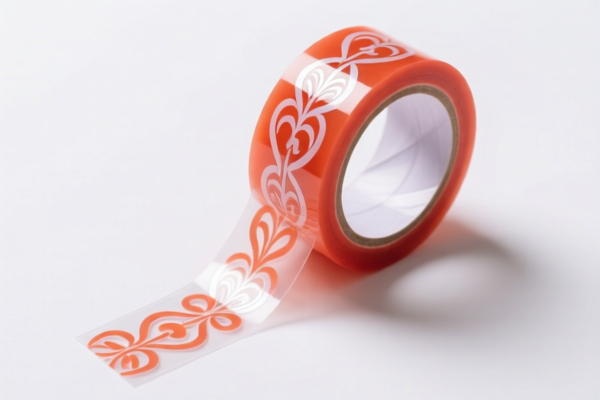
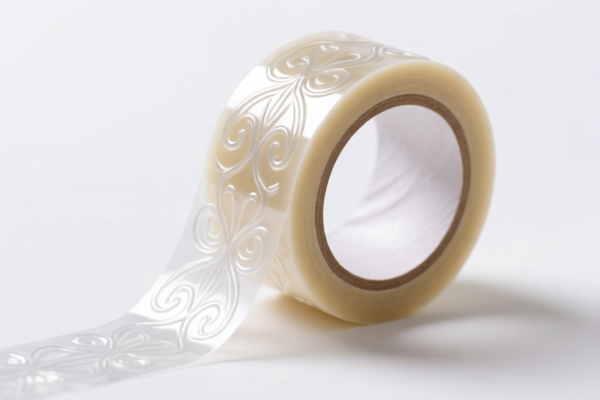
AI Analysis
🎀 Edge Decoration Tape (边缘装饰胶带)
🌐 HS Code Reference & Customs Clearance Guide | 2026 Latest Tariff Analysis | Professional Transit Strategy
📌 I. Product Definition & Classification: Do You Really Understand "Edge Decoration Tape"?
Edge Decoration Tape is a specialized adhesive product used primarily for finishing, protecting, or aesthetically enhancing the edges of materials (such as wood, glass, metal, or plastic). In international trade, its classification is critical because it sits at the intersection of plastics, textiles, and paper. Misclassification can lead to severe duty penalties.
⚠️ Key Distinction Point:
- If the base material is plastic/polymer (non-textile) → Classified under Chapter 39 (Plastics).
- If the base material is fabric/textile (woven/non-woven) → Classified under Chapter 58 (Textiles).
- If the base material is paper/fiber → Classified under Chapter 48 (Paper).
📦 II. HS Code Classification Details (2026 Latest Tariff Authority Cross-Reference)
Based on the provided data, here are the three potential classifications for "Edge Decoration Tape" depending on the exact material composition.
| HS Code | Product Description | Applicable Scenario | Material Basis |
|---|---|---|---|
3919.10.20.55 |
Self-adhesive plates, sheets, film, foil, tape, strip and other shapes, of plastics, whether or not in rolls, of plastics: Other: Other | General-purpose plastic edge tapes, PVC/PU/PET films used for decoration | ✅ Plastic/Polymer |
5806.10.24.00 |
Woven fabrics, narrow, containing by weight > 5% elastomeric yarn or rubber thread, width ≤ 30cm: Of synthetic fibers | Decorative tape where the base is a woven synthetic fabric (e.g., decorative ribbon tape) | ✅ Synthetic Textile |
4823.90.80.00 |
Other papers, paperboard, cardboard, fibrous sheet materials and articles thereof: Cut to size or shape, other | Paper-based edge trimmers, kraft paper tapes, or fiber-based decorative strips | ✅ Paper/Fiber |
🔍 Critical Reminder:
- Do NOT assume "Tape" means Plastic. Many "decorative tapes" are actually woven fabrics or paper-backed.
- The Base Material determines the Chapter. If the tape is a woven ribbon, it belongs in Ch. 58, NOT Ch. 39.
- If the material is ambiguous, customs may default to the most common form or request a sample for physical inspection.
💰 III. 2026 Latest Tariff Rate Details (Including Surcharges & Policy Add-ons)
✅ Applicable Country: United States (US)
✅ Origin: China (CN)
✅ Effective Date: 2025/2026 (Current Trade War Context)
🎯 1. 3919.10.20.55 —— Self-adhesive Plastic Tape (Non-Industrial)
| Item | Content |
|---|---|
| Basic Tariff | 5.8% |
| Section 301 Surtax | +25.0% |
| Section 122 Tariff | +10.0% |
| Total Tax Rate | 40.8% |
| Tax Calculation | CIF Value × 40.8% |
| De Minimis Exemption | ❌ Not Eligible (Deny De Minimis) |
| Legal Basis Path | Base: 5.8% → 301: 25% → 122: 10% |
📌 Explanation:
- This is the most common classification for standard plastic adhesive tapes.
- The 40.8% total rate is driven by the cumulative effect of Section 301 (25%) and the Section 122 tariff (10%).
- This is a high-duty category for Chinese-origin plastics.
🎯 2. 5806.10.24.00 —— Woven Narrow Fabric Tape (Synthetic)
| Item | Content |
|---|---|
| Basic Tariff | 7.0% |
| Section 301 Surtax | +25.0% |
| Section 122 Tariff | +10.0% |
| Total Tax Rate | 42.0% |
| Tax Calculation | CIF Value × 42.0% |
| De Minimis Exemption | ❌ Not Eligible (Deny De Minimis) |
| Legal Basis Path | Base: 7.0% → 301: 25% → 122: 10% |
📌 Note:
- If your "tape" is actually a woven ribbon or textile strip used for decoration, this code applies.
- The rate is slightly higher (42.0%) than plastic tape due to the higher basic tariff (7.0% vs 5.8%).
- Common in home decor, furniture edge banding made from synthetic fibers.
🎯 3. 4823.90.80.00 —— Other Paper/Fiber Articles (Plastic-backed or Not)
| Item | Content |
|---|---|
| Basic Tariff | 0.0% |
| Section 301 Surtax | +25.0% |
| Section 122 Tariff | +10.0% |
| Total Tax Rate | 35.0% |
| Tax Calculation | CIF Value × 35.0% |
| De Minimis Exemption | ❌ Not Eligible (Deny De Minimis) |
| Legal Basis Path | Base: 0.0% → 301: 25% → 122: 10% |
📌 Cost-Saving Insight:
- Lowest Total Duty (35.0%) among the three options.
- This code applies if the tape is primarily paper-based or a fibrous material without significant plastic backing.
- Strategy: If the product can be legitimately classified here (e.g., kraft paper tape with decorative print), it offers the 7.8% savings compared to plastic classification.
🛠️ IV. Customs Clearance Practical Advice (Combat Pitfall Guide)
✅ 1. Required Documentation Checklist (No Exceptions)
| Document | Mandatory | Description |
|---|---|---|
| ✅ Product Spec Sheet | ✔️ | Must specify Base Material (Plastic/Fabric/Paper), width, length, adhesive type. |
| ✅ Material Composition Breakdown | ✔️ | Crucial for distinguishing between Ch. 39, 58, and 48. |
| ✅ Product Photos (Labeled) | ✔️ | Show the cross-section to prove material (e.g., woven texture vs. smooth plastic). |
| ✅ Commercial Invoice | ✔️ | Clearly state "Edge Decoration Tape" and specify material (e.g., "100% PET Film Tape"). |
| ✅ Packing List | ✔️ | Consistent with Invoice. |
✅ 2. Declaration Tips (Key Mantras)
🔥 "Material First, Form Second, Name Specific, Duty Saved!"
| Scenario | Correct Declaration | Wrong Practice | Consequence |
|---|---|---|---|
| Plastic Film Tape | 3919.10.20.55 |
Vague: "Decorative Tape" | Risk of down-classification or audit |
| Woven Fabric Ribbon | 5806.10.24.00 |
Classifying as Plastic | Overpay duty (42% vs 40.8% + audit risk) |
| Paper-Based Tape | 4823.90.80.00 |
Classifying as Plastic | Underpay duty → Penalty & Back Taxes |
📌 Warning:
- Do not just write "Tape." Write "Self-adhesive Plastic Tape for Edge Decoration, 25mm Width, PET Material".
- For woven tapes, use "Woven Narrow Fabric Strip, Synthetic Fiber, for Edge Decoration".
✅ 3. Special Case Handling
| Situation | Handling Advice |
|---|---|
| Mixed Materials (e.g., Paper with Plastic Backing) | Usually classified under Chapter 39 (Plastic) as the backing defines the essential character. Verify with a sample. |
| Sample Kit for Customs | If declared value is low, provide physical samples if requested to prove material type. |
| Origin Marking | Ensure the product and packaging are marked "Made in China" to trigger the correct 301/122 tariffs. |
🌍 V. Global Market Clearance Comparison (2026 Latest)
| Country/Region | Recommended HS Code (Example) | Tariff (China Origin) | Certification | Notes |
|---|---|---|---|---|
| 🇺🇸 USA | 3919.10.20.55 |
40.8% | None specific for tape | High duty due to 301/122 |
| 🇺🇸 USA | 4823.90.80.00 |
35.0% | None | Lowest duty if paper-based |
| 🇨🇳 China | 3919.10.20.55 |
~5-6% | None | Export to China has low duty |
| 🇪🇺 EU | 3919.10.20.55 |
~6.5% | REACH (if adhesive) | No Section 301 equivalent |
| 🇯🇵 Japan | 3919.10.20.55 |
~6% | None | FTA benefits may apply |
📌 Conclusion:
- USA is the hardest market due to the 35%-42% total duty burden.
- Paper-based tapes (4823.90.80.00) offer the best cost advantage in the US market.
- If possible, optimize the product design to use paper/fiber bases instead of plastic or synthetic fabrics to leverage the 35% rate.
📌 VI. Common Mistakes & Pitfall Guide (Blood & Tears Lessons)
❌ Mistake 1: Using "Tape" as the only description
👉 Consequence: Customs cannot determine material → Holds the shipment for inspection → Delays.
❌ Mistake 2: Classifying Woven Ribbon as Plastic Tape
👉 Consequence: Incorrect duty calculation. While the rate difference is small (42% vs 40.8%), it creates a compliance record error. If done repeatedly, it triggers audits.
❌ Mistake 3: Ignoring Section 122 Tariff
👉 Consequence: Assuming only 301 (25%) applies. The 122 tariff (10%) is additional. Total is 35-42%, not 25-35%.
✅ Correct Practice:
"Self-Adhesive Edge Decoration Tape, 50mm Width, Base Material: Polyethylene Terephthalate (PET), Roll Packed, Model: DEC-50, Origin: China"
🎯 VII. Conclusion: Precise Classification Saves Money!
🎯 Remember the Mantra:
🔹 "Plastic 40.8%, Fabric 42.0%, Paper 35.0%."
🔹 "Check the Base! Paper saves you 5.8%!"
🔹 "Declare Material, Not Just 'Tape'!"
📌 Pro Tip:
If you have a mix of plastic and fabric tapes, consider separating shipments or optimizing the product line to maximize paper-based products for the US market to hit the 35% rate.
Always request a Pre-Ruling (Ruling Letter) from US Customs if the material is ambiguous.
📣 Immediate Action:
📞 Verify the Base Material with your supplier.
📄 Update the Commercial Invoice to include material composition.
🚀 Save 5-7% in duties by choosing the correct HS Code based on material reality!
✨ Professional Clearance Starts with Accurate Classification!
💼 Every Point of Duty Counts!
Customer Reviews
About HS Code Classification
The Harmonized System (HS) is an internationally standardized nomenclature developed by the World Customs Organization (WCO) to classify traded products. Over 200 countries use the HS system as the basis for customs tariffs, trade statistics, and import/export regulations.
Each HS code follows a hierarchical structure:
- Chapter (2 digits) — Broad category of goods (e.g., Chapter 84: Machinery and Mechanical Appliances)
- Heading (4 digits) — More specific grouping within the chapter
- Subheading (6 digits) — Internationally standardized breakdown, used by all WCO member countries
- National subdivisions (8-10 digits) — Country-specific extensions for further classification, such as US HTSUS 10-digit codes
Correct HS code classification is essential for smooth customs clearance, accurate duty payment, and compliance with trade regulations. Misclassification can lead to customs delays, overpayment of duties, or penalties.
When importing from CN to US, the applicable tariff rates may include:
- Most-Favored-Nation (MFN) rate — The standard duty rate applied to WTO members
- General rate — Applied to countries without trade agreements
- Trade remedy duties — Additional tariffs such as Section 301 (anti-dumping), Section 232 (national security), or countervailing duties
The information provided on this page is for reference purposes only. For official classification, please consult with your local customs authority or a licensed customs broker.