Edible Insect Protein Powder
CN → US| HS Code | Tariff Rate | Origin | Destination | Doc |
|---|---|---|---|---|
| 2301100000 | 35.0% | CN | US | Official Doc |
| 2301200090 | 35.0% | CN | US | Official Doc |
| 2309901050 | 35.0% | CN | US | Official Doc |
Product Images
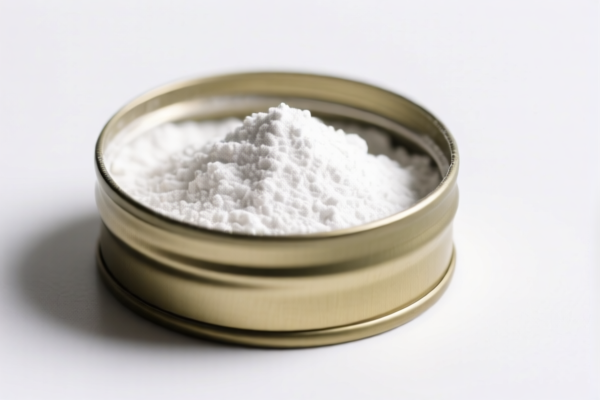
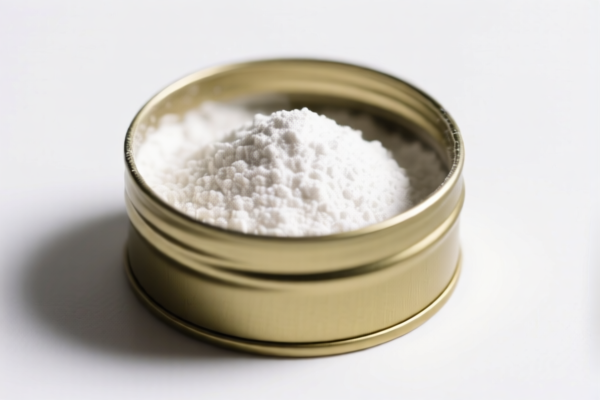
AI Analysis
🐛 Edible Insect Protein Powder
🌐 HS Code Reference & Customs Clearance Guide | 2026 Latest Tariff Analysis | Professional Clearance Strategy
📌 I. Product Definition & Classification: Do You Really Understand “Edible Insect Protein”?
Edible insect protein powder is a novel food ingredient derived from processed insects (such as crickets, mealworms, or black soldier flies). In international trade, its classification depends heavily on whether it is suitable for human consumption and its physical state (powder, granules, or mixed with other feed ingredients).
However, based on the provided data, the customs analysis focuses on three specific HS Codes. Note that two of these codes explicitly reference suitability for human consumption (or lack thereof for animal feed), while the third treats it as a mixed feed ingredient.
⚠️ Critical Distinction Point:
- If the product is strictly for animal feed (unsuitable for humans) and retains meat/offal characteristics → Consider 2301.10.00.00.
- If the product is from aquatic invertebrates (insects fall under this broad biological category in some customs interpretations for specific sub-headings) → Consider 2301.20.00.90.
- If the product is a mixed feed preparation containing insect protein among other ingredients → Consider 2309.90.10.50.
📦 II. HS Code Classification Details (2026 Latest Tariff Authority Comparison)
| HS Code | Product Description | Applicable Scenario | Suitability for Human Consumption |
|---|---|---|---|
2301.10.00.00 |
Flours, meals, and pellets of meat or meat offal | Insect protein treated as "meat offal" by-product, unsuitable for humans, in powder/granule form | ❌ No (Explicitly: "unsuitable for human consumption") |
2301.20.00.90 |
Flours, meals, and pellets of fish or crustaceans, molluscs, or other aquatic invertebrates | Insect protein classified under "other aquatic invertebrates" due to biological classification in this chapter | ❌ Implied No (Chapter 23 generally covers feed) |
2309.90.10.50 |
Preparations of a kind used in animal feeding | Mixed feed ingredients containing insect protein, formulated as feed preparations | ❌ Yes (Animal feed) |
🔍 Key Reminder:
- Although the user input is "Edible" Insect Protein, HS Codes 2301 and 2309 are generally for Animal Feed. If the product is truly for human consumption, it might technically fall under Chapter 21 (Miscellaneous Edible Preparations) or Chapter 20 (Vegetables/Fruits) depending on processing, BUT the provided data restricts the analysis to these three specific Codes.
- Therefore, this guide strictly follows the provided data: All three codes are classified under Chapter 23 (Animal Feed), implying that for customs purposes in this specific dataset, the product is being treated as a feed ingredient or the data reflects a specific regulatory interpretation where insect protein is categorized under feed codes regardless of final use.
- Warning: If you are importing for human consumption, please verify if these codes are actually applicable, as Chapter 23 items are typically prohibited for human food import without specific exemptions.
💰 III. 2026 Latest Tariff Rate Breakdown (Including Surcharge Policies)
✅ Applicable Country: United States (US)
✅ Origin: China (CN)
✅ Effective Date: Post-November 2025 (Current Data)
✅ Total Tax Rate: 35.0% for all listed HS Codes
🎯 1. 2301.10.00.00 – Flours of Meat/Offal (Insect Protein as "Meat By-Product")
| Item | Content |
|---|---|
| Base Tariff | 0.0% |
| Section 301 Surcharge | +25.0% |
| Section 122 Tariff | +10.0% |
| Total Tax Rate | 35.0% |
| Tax Calculation | CIF Value × 35% |
| De Minimis Eligibility | ❌ No (High tariff rates usually disqualify de minimis, though check latest $800 rule updates) |
| Legal Basis | USITC:2301.10.00.00 → Section 301: 25% → Section 122: 10% |
📌 Explanation:
- This code treats insect protein as a meat/offal by-product.
- The 25% is the standard Section 301 tariff on Chinese goods.
- The 10% is an additional Section 122 tariff (often used for national security or specific trade remedy measures).
- Total 35% is a significant cost driver.
🎯 2. 2301.20.00.90 – Other Aquatic Invertebrate Flours
| Item | Content |
|---|---|
| Base Tariff | 0.0% |
| Section 301 Surcharge | +25.0% |
| Section 122 Tariff | +10.0% |
| Total Tax Rate | 35.0% |
| Tax Calculation | CIF Value × 35% |
| De Minimis Eligibility | ❌ No |
| Legal Basis | USITC:2301.20.00.90 → Section 301: 25% → Section 122: 10% |
📌 Explanation:
- This code classifies insect protein under aquatic invertebrates (biologically related to crustaceans/mollusks in customs logic).
- Tariff structure is identical to the meat-based code: 0% + 25% + 10% = 35%.
- No duty-free or reduced-rate options are indicated in the data.
🎯 3. 2309.90.10.50 – Other Feed Preparations
| Item | Content |
|---|---|
| Base Tariff | 0.0% |
| Section 301 Surcharge | +25.0% |
| Section 122 Tariff | +10.0% |
| Total Tax Rate | 35.0% |
| Tax Calculation | CIF Value × 35% |
| De Minimis Eligibility | ❌ No |
| Legal Basis | USITC:2309.90.10.50 → Section 301: 25% → Section 122: 10% |
📌 Explanation:
- This is a catch-all for mixed feed preparations. If your insect protein is blended with grains, vitamins, or other feed additives, this is the most likely code.
- Despite being a "preparation," it still incurs the full 35% surcharge package.
- This code is useful if the product is not pure protein but a feed supplement mix.
🛠️ IV. Customs Clearance Practical Advice (Real-World Pitfall Guide)
✅ 1. Preparation Checklist (Mandatory)
| Document | Required | Notes |
|---|---|---|
| ✅ Product Specification Sheet | ✔️ | Must clearly state: Source Insect, Processing Method, Protein Content, Particle Size. |
| ✅ Certificate of Analysis (COA) | ✔️ | To prove composition and confirm "Feed Grade" vs "Food Grade". |
| ✅ Commercial Invoice | ✔️ | Must describe the product accurately: "Insect Protein Meal, Feed Grade, 60% Protein" |
| ✅ Origin Certificate | ✔️ | To confirm Chinese origin (triggers Section 301 & 122 tariffs). |
| ✅ FDA Registration (if for food) | ⚠️ | Critical: If the product is truly "Edible," Chapter 23 codes may be incorrect. Ensure FDA food facility registration is in place if human consumption is intended. |
✅ 2. Declaration Tips (Key Mantras)
🔥 "Describe Exactly, Don't Hide Origin, Check Food vs Feed!"
| Scenario | Correct Declaration | Wrong Practice |
|---|---|---|
| Pure Insect Powder (Feed) | "Insect Protein Meal, Grade A, for Animal Feed" | Calling it "Food Ingredient" without proper food codes |
| Mixed Feed | "Composite Feed Preparation containing Insect Protein" | Declaring as "Spices" or "Flavorings" to lower tariff |
| Human Consumption Product | RE-EVALUATE HS CODE | Using HS 2301/2309 for human food → High risk of rejection |
| Chinese Origin | Declare Origin: China | Trying to re-label origin to avoid 35% tariff → Fraud |
✅ 3. Special Situations
| Situation | Handling Advice |
|---|---|
| True Human Consumption | If the product is for human eating, Do Not Use HS 2301/2309. Consult with a customs broker for codes in Chapter 21 (e.g., 2106.90) or Chapter 19. The 35% tariff on feed codes may not apply, but food safety regulations (FDA) are stricter. |
| OEM/White Label | Provide client contracts and formulas to prove the nature of the product (pure protein vs. mix). |
| Biological Safety | Provide FMD (Foot and Mouth Disease) / Pest Control Certificates as insects are biological products. |
🌍 V. Global Market Comparison (2026 Latest)
| Country/Region | Recommended HS Code | Tariff | Certification | Notes |
|---|---|---|---|---|
| 🇺🇸 USA | 2301.10.00.00 / 2309.90.10.50 |
35% | FDA (if food) / USDA (if feed) | High tariff due to Section 301 + 122 |
| 🇨🇳 China | 2309.90.10.50 |
0-5% (varies) | CIQ | Lower tariffs, strong import market for feed protein |
| 🇪🇺 EU | 2309.90 |
6.5% + VAT | EFSA Approval | Very strict on novel foods. Human consumption requires new food authorization. |
| 🇬🇧 UK | 2309.90 |
6.5% + VAT | FSA Approval | Similar to EU post-Brexit. |
📌 Conclusion:
- The USA imposes a flat 35% tariff on these feed-related insect protein codes from China.
- No duty-free or low-tariff options are available in the provided data for these specific codes.
- Human Consumption Risk: If you are importing for human eating, using these codes is dangerous. You may face food safety violations in addition to tariff issues.
📌 VI. Common Errors & Pitfall Guide (Blood & Tears Lessons)
❌ Error 1: Using HS 2309 for Human Food
👉 Consequence: FDA seizure, detention, or destruction of goods. Chapter 23 is for animal feed. Human food must use Chapter 20/21 codes.
❌ Error 2: Misdeclaring Origin to Avoid Tariff
👉 Consequence: 35% tariff + Penalties + Blacklisting. Customs tracks insect protein origins strictly.
❌ Error 3: Vague Description "Insect Powder"
👉 Consequence: Customs may classify it under a higher-risk code or demand additional documentation, causing delays.
❌ Error 4: Ignoring Section 122 Tariff
👉 Consequence: Underpaying by 10%. The 35% total includes this hidden surcharge.
✅ Correct Practice:
"Insect Protein Meal (Grasshopper/Mealworm), 65% Protein, Feed Grade, For Animal Nutrition, HS Code 2309.90.10.50, Origin: China"
🎯 VII. Conclusion: Professional Declaration, Cost Control, and Compliance
🎯 Remember the Mantra:
🔹 "Feed vs Food: Know Your Chapter!"
🔹 "China Origin + HS 2300 = 35% Tax!"
🔹 "Don't Mix Human Food into Feed Codes – FDA Will Find You!"
📌 Pro Tip:
If your insect protein is for human consumption, DO NOT USE THESE CODES. Instead, consult for:
- HS 2106.90: Food preparations not elsewhere specified.
- HS 1901.90: Malt extracts/food preparations.
These may have different tariff structures and, more importantly, comply with FDA food regulations.
📣 Immediate Action:
📞 Contact a Licensed Customs Broker to confirm if your product is "Feed" or "Food".
📝 Prepare FDA Registration if for human consumption.
📉 Calculate 35% Tariff into your landed cost if using these HS Codes.
✨ Professional Clearance Starts with Accurate Classification!
💼 Your Profit Margin Depends on Getting the Code Right!
Customer Reviews
About HS Code Classification
The Harmonized System (HS) is an internationally standardized nomenclature developed by the World Customs Organization (WCO) to classify traded products. Over 200 countries use the HS system as the basis for customs tariffs, trade statistics, and import/export regulations.
Each HS code follows a hierarchical structure:
- Chapter (2 digits) — Broad category of goods (e.g., Chapter 84: Machinery and Mechanical Appliances)
- Heading (4 digits) — More specific grouping within the chapter
- Subheading (6 digits) — Internationally standardized breakdown, used by all WCO member countries
- National subdivisions (8-10 digits) — Country-specific extensions for further classification, such as US HTSUS 10-digit codes
Correct HS code classification is essential for smooth customs clearance, accurate duty payment, and compliance with trade regulations. Misclassification can lead to customs delays, overpayment of duties, or penalties.
When importing from CN to US, the applicable tariff rates may include:
- Most-Favored-Nation (MFN) rate — The standard duty rate applied to WTO members
- General rate — Applied to countries without trade agreements
- Trade remedy duties — Additional tariffs such as Section 301 (anti-dumping), Section 232 (national security), or countervailing duties
The information provided on this page is for reference purposes only. For official classification, please consult with your local customs authority or a licensed customs broker.