Effects Processor
CN → US| HS Code | Tariff Rate | Origin | Destination | Doc |
|---|---|---|---|---|
| 9207900040 | 22.5% | CN | US | Official Doc |
| 8543709820 | 37.6% | CN | US | Official Doc |
| 8518402000 | 35.0% | CN | US | Official Doc |
| 9207900080 | 22.5% | CN | US | Official Doc |
| 8518908100 | 35.0% | CN | US | Official Doc |
Product Images
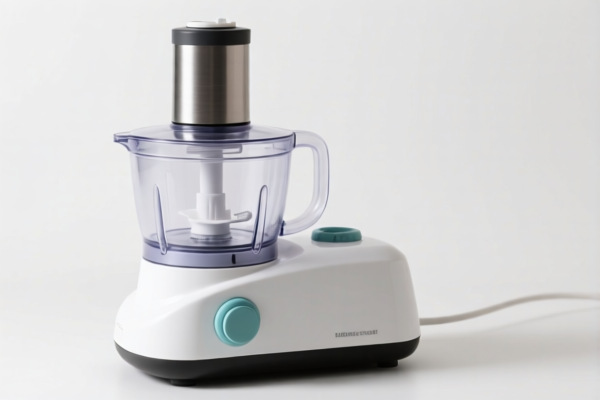
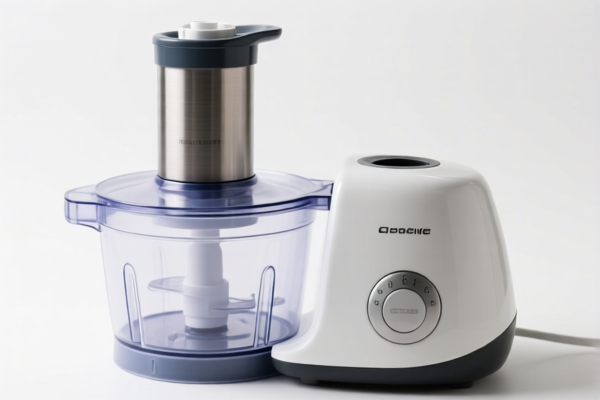
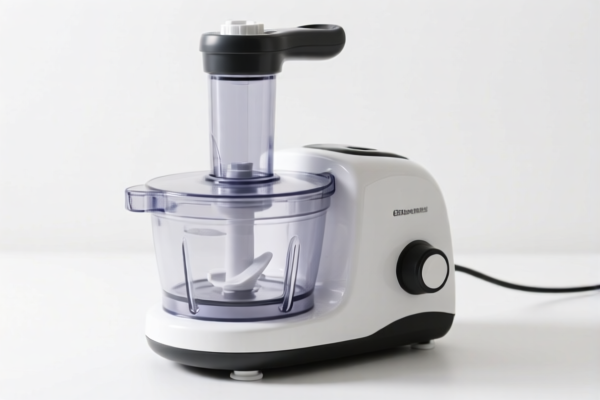
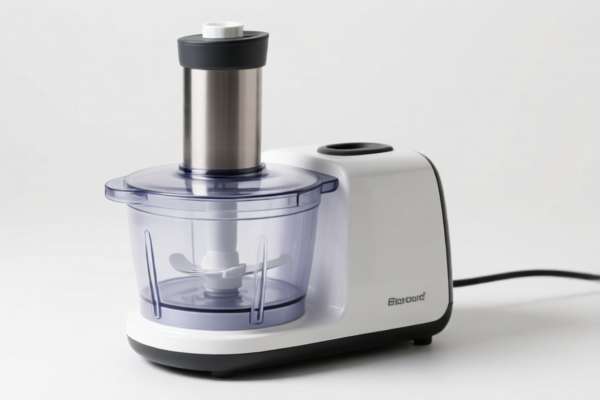
AI Analysis
🎸 Effects Processor (Audio Pedals & Rack Units)
🌐 HS Code Reference & Customs Clearance Guide | 2026 Latest Tariff Analysis | Professional Clearance Strategy
📌 I. Product Definition & Classification: What Exactly is an "Effects Processor"?
An Effects Processor is an electronic device used to alter the sound of musical instruments. It processes audio signals to create special effects such as reverb, delay, distortion, wah-wah, modulation, etc.
In international trade, classification depends on whether the device is considered: 1. An accessory to a musical instrument (if it doesn't have its own loudspeaker and is purely for signal processing). 2. An electrical apparatus (if it involves complex circuitry, power amplification features, or doesn't fit neatly into musical instrument categories).
⚠️ Key Distinction Point: - If the device is a standalone pedal or rack unit without a built-in speaker, and its primary function is signal alteration (not amplification), it may be classified under musical instrument accessories (9207) or general electrical apparatus (8518/8543). - However, US Customs and Trade Laws (Section 301 & IEEPA) heavily impact duties, often making the distinction between "Electrical" and "Instrument Accessory" critical for cost optimization.
📦 II. HS Code Classification Details (2026 Authorized Data)
Based on the provided <DATA>, there are 5 valid HS Codes for Effects Processors. The choice depends on the specific circuitry, power requirements, and functional description.
| HS Code | Summary / Functional Description | Total Tax Rate | Tax Breakdown |
|---|---|---|---|
| 9207.90.00.40 | Musical Instrument Accessory: Effect processor as an electric acoustic instrument accessory. Sound requires electrical amplification. Fits the "catch-all" principle for instruments. | 22.5% | Base: 5.0% + Add-on: 7.5% + Section 122: 10% |
| 8543.70.98.20 | Electrical Apparatus: Effect pedal for special instrument effects. Classified as an electrical device, not conflicting with power amplifiers. | 37.6% | Base: 2.6% + Add-on: 25.0% + Section 122: 10% |
| 8518.40.20.00 | Audio Signal Processing Device: Extension of audio electric amplifiers. Handles audio signal processing. | 35.0% | Base: 0.0% + Add-on: 25.0% + Section 122: 10% |
| 9207.90.00.80 | Musical Instrument Accessory: Electric acoustic instrument accessory. Audio signals require circuit amplification, fitting electric acoustic characteristics. | 22.5% | Base: 5.0% + Add-on: 7.5% + Section 122: 10% |
| 8518.90.81.00 | Audio Processing Equipment: Application fitting the definition of audio electric amplifiers or electric acoustic amplifier groups. | 35.0% | Base: 0.0% + Add-on: 25.0% + Section 122: 10% |
🔍 Critical Observation: - The lowest tax rates (22.5%) are found under HS Code 9207 (Musical Instruments). - The higher tax rates (35-37.6%) are found under HS Codes 8518/8543 (Electrical/Electronic Apparatus). - Section 122 Tariff (10%) applies to ALL listed codes for products of Chinese origin.
💰 III. 2026 Latest Tariff Rate Breakdown (Detailed Policy Explanation)
✅ Applicable Country: United States (US)
✅ Origin: China (CN)
✅ Key Policy: Section 122 Tariff (10%) + Other Add-ons
🎯 Option 1: Best Case Scenario — HS Code 9207 (Musical Accessories)
Codes: 9207.90.00.40 & 9207.90.00.80
| Item | Detail |
|---|---|
| Base Duty | 5.0% |
| Section 301 Add-on | 7.5% |
| Section 122 Tariff | 10.0% (Mandatory for CN origin) |
| Total Effective Rate | 22.5% |
| Legal Basis | Harmonized Tariff Schedule (HTSUS) Chapter 92 |
📌 Explanation: - These codes classify the effect processor as an accessory to a musical instrument. - Why is it cheaper? Musical instruments often have lower base duties. - Caveat: You must prove the device is primarily an instrument accessory and not a general-purpose electronic device.
🎯 Option 2: Middle Case — HS Code 8518 (Audio Amplifiers/Parts)
Codes: 8518.40.20.00 & 8518.90.81.00
| Item | Detail |
|---|---|
| Base Duty | 0.0% |
| Section 301 Add-on | 25.0% |
| Section 122 Tariff | 10.0% |
| Total Effective Rate | 35.0% |
| Legal Basis | HTSUS Chapter 85 (Electrical Machinery) |
📌 Explanation: - Classifying under 8518 treats the effect processor as an audio signal processing device or part of an amplifier system. - Although the base duty is 0%, the 25% Section 301 add-on pushes the total to 35%.
🎯 Option 3: Highest Risk — HS Code 8543 (Other Electrical Apparatus)
Code: 8543.70.98.20
| Item | Detail |
|---|---|
| Base Duty | 2.6% |
| Section 301 Add-on | 25.0% |
| Section 122 Tariff | 10.0% |
| Total Effective Rate | 37.6% |
| Legal Basis | HTSUS Chapter 85 |
📌 Explanation: - This is a "catch-all" for electrical apparatus not specified elsewhere. - Avoid this code if possible due to the highest total tax rate (37.6%).
🛠️ IV. Customs Clearance Practical Advice (Avoiding Pitfalls)
✅ 1. Documentation Checklist (Must-Have)
| Document | Required? | Note |
|---|---|---|
| Product Datasheet | ✅ Yes | Must specify: "Effects Processor," "No Built-in Speaker," "Input/Output Impedance." |
| Circuit Diagram | ✅ Yes | Crucial to prove it is a signal processor (supports 9207) vs. a power amplifier (supports 8518/8543). |
| Product Photos | ✅ Yes | Show clear labels, inputs (Instrument In, Out), and lack of speaker grille. |
| Bill of Lading / Invoice | ✅ Yes | Description must match HS code logic (e.g., "Guitar Effects Pedal" for 9207). |
| Origin Certificate | ✅ Yes | Required for Section 122 assessment. |
✅ 2. Strategic Classification Tips
🔥 "Call it an Instrument, Not an Appliance!"
Scenario Recommended HS Code Why? Guitar/Bass Effects Pedal (e.g., Boss, MXR style) 9207.90.00.40 or 9207.90.00.80 Lowest tax (22.5%). Define as "Accessory to String Instrument." Rack-Mount Studio Processor 9207.90.00.80 Still an instrument accessory if for professional music production. Complex Multi-Effects with Built-in Speaker 8518.40.20.00 If it amplifies sound itself, it becomes an "Audio Amplifier." Generic Audio Signal Converter 8543.70.98.20 High tax (37.6%). Only use if no other classification fits.
✅ 3. Critical Warnings for US Customs
| Risk Factor | Mitigation Strategy |
|---|---|
| Misclassification | Do not describe as "Audio Equipment" generically. Use "Musical Instrument Accessory." |
| Section 122 (10%) | Cannot be avoided for Chinese origin. Factor this into all cost calculations. |
| Audit Risk | If declaring 9207, ensure the product does not have a power amplifier circuit for speakers. If it does, CBP may reclassify to 8518. |
| Labeling | Clearly label on the box: "For Use With Musical Instruments" or "Audio Effects Pedal." |
🌍 V. Global Market Comparison (2026 Outlook)
| Market | Recommended HS Code | Est. Total Duty | Notes |
|---|---|---|---|
| 🇺🇸 USA | 9207.90.00.40 | 22.5% | Best option. Includes 10% Sec 122. |
| 🇺🇸 USA | 8518.40.20.00 | 35.0% | Higher duty. Avoid if possible. |
| 🇪🇺 EU | 9207.90.00 | Varies (Avg 0-4%) | No Section 301/122. Check EORI & VAT. |
| 🇨🇳 China | 9207.90.00 | 5-10% | Standard import duty. No US-style add-ons. |
📌 Conclusion for US Importers: - Target HS Code:
9207.90.00.40or9207.90.00.80. - This saves ~12.5-15% in total duties compared to electrical apparatus classifications. - Ensure product documentation supports the "Musical Instrument Accessory" definition.
📌 VI. Common Errors & Pitfalls (Lessons Learned)
❌ Mistake 1: Declaring as "Electronic Audio Device" under 8543 or 8518. 👉 Consequence: Tax jumps to 35-37.6%. Unnecessary cost increase.
❌ Mistake 2: Omitting "No Built-in Speaker" in product description. 👉 Consequence: CBP may classify as an "Amplifier" (8518) or even a "TV/Video Equipment" (8528), leading to reclassification and penalties.
❌ Mistake 3: Ignoring Section 122 (10%). 👉 Consequence: Underpayment of duties. CBP will assess back-tariffs + interest + penalties.
✅ Best Practice Declaration:
"Musical Instrument Accessory: Guitar Effects Processor Pedal. No Built-in Speaker. Digital Signal Processing Unit. Model: XYZ123."
🎯 VII. Conclusion: Smart Classification for Cost Savings
🎯 Key Takeaway:
🔹 Effects Processors = Musical Accessories (9207) → 22.5% Tax
🔹 Effects Processors = Electrical Apparatus (8518/8543) → 35-37.6% Tax
📌 Action Item: 1. Review Product Specs: Confirm no built-in speaker or power amplifier output for loudspeakers. 2. Draft Description: Use "Musical Instrument Accessory" keywords. 3. File for Pre-Ruling: If high volume, apply for an CBP Pre-Ruling to secure HS Code 9207.90.00.40 or 9207.90.00.80. 4. Budget for 10% Sec 122: This is non-negotiable for CN origin.
📣 Ready to Ship?
📞 Contact Your Customs Broker: Provide datasheets and request classification under 9207.90.00.40. 🚀 Optimize Your Landed Cost: Every 1% in duty saves significantly at scale!
✨ Precision in Classification = Profit in Your Pocket!
💼 Don't let tax misclassification eat your margins!
Customer Reviews
About HS Code Classification
The Harmonized System (HS) is an internationally standardized nomenclature developed by the World Customs Organization (WCO) to classify traded products. Over 200 countries use the HS system as the basis for customs tariffs, trade statistics, and import/export regulations.
Each HS code follows a hierarchical structure:
- Chapter (2 digits) — Broad category of goods (e.g., Chapter 84: Machinery and Mechanical Appliances)
- Heading (4 digits) — More specific grouping within the chapter
- Subheading (6 digits) — Internationally standardized breakdown, used by all WCO member countries
- National subdivisions (8-10 digits) — Country-specific extensions for further classification, such as US HTSUS 10-digit codes
Correct HS code classification is essential for smooth customs clearance, accurate duty payment, and compliance with trade regulations. Misclassification can lead to customs delays, overpayment of duties, or penalties.
When importing from CN to US, the applicable tariff rates may include:
- Most-Favored-Nation (MFN) rate — The standard duty rate applied to WTO members
- General rate — Applied to countries without trade agreements
- Trade remedy duties — Additional tariffs such as Section 301 (anti-dumping), Section 232 (national security), or countervailing duties
The information provided on this page is for reference purposes only. For official classification, please consult with your local customs authority or a licensed customs broker.