Egg Ring Mold
CN → US| HS Code | Tariff Rate | Origin | Destination | Doc |
|---|---|---|---|---|
| 7323915020 | 15.3% | CN | US | Official Doc |
| 7323930035 | 62.0% | CN | US | Official Doc |
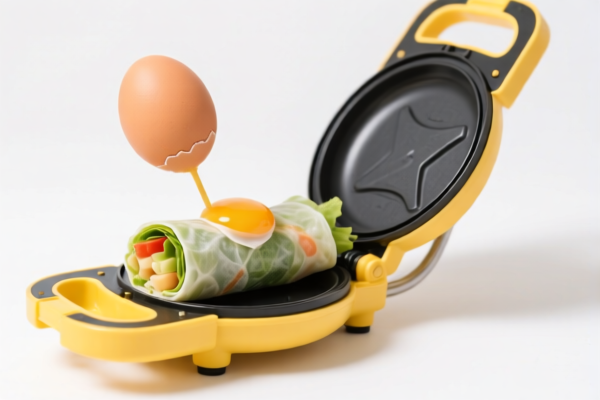
Product Images



AI Analysis
🍳 Egg Ring Mold (Iron/Steel Bakeware)
🌐 HS Code Reference & Customs Clearance Guide | 2026 Latest Tariff Analysis | Professional Clearance Strategy 📌 I. Product Definition & Classification: Do You Know What "Egg Ring" Really Is?
An Egg Ring Mold is a kitchen tool used to shape eggs (fried, scrambled, or baked) into perfect circles. In international trade, its classification depends entirely on the material and manufacturing process (specifically whether it is made of cast iron or stainless steel, and if it is enameled).
Key Distinction: * Cast Iron (Un-enameled): Typically associated with traditional cookware, heavy-duty heat retention. * Stainless Steel: Typically associated with modern, durable, non-reactive cookware.
⚠️ Critical Classification Point: * If the product is Cast Iron and NOT enameled → It falls under 7323.91.50.20. * If the product is Stainless Steel → It falls under 7323.93.00.35. * Note: Both codes specifically define the item as "Bakeware (cookware not suitable for stove top use)". If your egg ring can be used directly on a stove, this classification might be contested, but for standard baking/pans, this is the standard.
📦 II. HS Code Classification Details (2026 Latest Tariff Authority Comparison)
| HS Code | Product Description | Applicable Scenario | Material/Process |
|---|---|---|---|
7323.91.50.20 |
Table, kitchen or other household articles of iron or steel: Other: Of cast iron, not enameled: Bakeware (cookware not suitable for stove top use) | Traditional cast iron egg rings, uncoated, heavy | ✅ Cast Iron (Un-enameled) |
7323.93.00.35 |
Table, kitchen or other household articles of iron or steel: Other: Of stainless steel: Cooking ware: Bakeware (cookware not suitable for stove top use) | Modern stainless steel egg rings, polished, durable | ✅ Stainless Steel |
🔍 Key Reminder: * Material is King: You must know if your mold is Cast Iron or Stainless Steel. * Enameled? If the cast iron is enameled (coated with porcelain-like glass), it does NOT fit the "not enameled" description of
7323.91.50.20and may require a different subheading (not listed in the provided data). * Usage: Both descriptions explicitly state "Bakeware (cookware not suitable for stove top use)". If marketed as "Stovetop Safe," customs may challenge this classification.
💰 III. 2026 Latest Tariff Rate Breakdown (Including Additional Taxes)
✅ Applicable Country: United States (US) ✅ Origin: China (CN) ✅ Effective Time: 2026 Tariff Schedule
🎯 1. 7323.91.50.20 —— Cast Iron Egg Ring (Un-enameled)
| Item | Content |
|---|---|
| Base Tariff | 5.3% (Basic Ad Valorem) |
| Section 301 / Additional Tariff | 0.0% |
| Total Tariff Rate | 5.3% |
| Tax Detail | Base: 5.3%, Additional: 0.0% |
| Legal Basis | HTSUS: 7323.91.50.20 |
📌 Explanation: * This category benefits from a low total tax rate. * There are NO additional Section 301 or IEEPA surcharges listed for this specific subheading in the provided data. * Cost Advantage: Significantly cheaper to import than stainless steel equivalents under current trade policies.
🎯 2. 7323.93.00.35 —— Stainless Steel Egg Ring
| Item | Content |
|---|---|
| Base Tariff | 2.0% (Basic Ad Valorem) |
| Additional Tariff (Steel/Aluminum/Copper) | 50% (Specific Add-on for Steel Products) |
| Total Tariff Rate | 52.0% |
| Tax Detail | Base: 2.0%, Additional: 50% (Steel/Al/Cu Add-on) |
| Legal Basis | HTSUS: 7323.93.00.35 + Steel Surcharge Rule |
📌 Warning: * Although the base tariff is very low (2.0%), the additional 50% tax on steel products drastically increases the cost. * Total Cost Impact: You pay 52% on the CIF value. This is a HIGH tariff barrier. * Reason: This likely falls under specific U.S. trade actions targeting steel imports (e.g., Section 232 or specific anti-dumping/countervailing duties aggregated into the "Steel/Al/Cu" add-on).
🛠️ IV. Customs Clearance Practical Advice (Real-World Pitfall Guide)
✅ 1. Documentation Checklist (Do Not Miss These)
| Document | Required? | Notes |
|---|---|---|
| ✅ Product Specification Sheet | ✔️ | Must clearly state: Material (Cast Iron vs. Stainless Steel), Finish (Enameled/Un-enameled), Usage (Bakeware Only). |
| ✅ Material Certificate | ✔️ | Proof that the product is indeed "Cast Iron" or "Stainless Steel" to justify the HS code. |
| ✅ Product Photos | ✔️ | Clear images showing the texture (matte vs. polished) and any coating (to prove "Un-enameled" if using 7323.91.50.20). |
| ✅ Commercial Invoice | ✔️ | Must describe item as "Egg Ring Mold, Cast Iron, Bakeware" or "Stainless Steel Bakeware." |
| ✅ Declaration of Non-Stovetop Use | ✔️ | Since both codes specify "not suitable for stove top," a declaration or product warning label helps avoid classification disputes. |
✅ 2. Classification Strategy (Key Mantra)
🔥 “Know Your Metal, Check Your Enamel, Avoid the 50% Trap!”
| Scenario | Correct HS Code | Risk Level |
|---|---|---|
| Cast Iron, Un-enameled | 7323.91.50.20 |
✅ Low Tax (5.3%) |
| Cast Iron, Enameled | ❌ Not Listed | ⚠️ High Risk (Might be classified elsewhere, potentially higher tax) |
| Stainless Steel | 7323.93.00.35 |
❌ High Tax (52%) |
| Aluminum Alloy | ❌ Not Listed | ⚠️ High Risk (Aluminum may have different surcharges) |
📌 Critical Tip: * If you are selling Stainless Steel egg rings, be aware of the 52% total tax. Consider if the margin can absorb this cost. * If you are selling Cast Iron, ensure it is NOT ENAMELED. If it is enameled, it does not fit
7323.91.50.20. You must find the correct code for "Enameled Cast Iron," which may have different tax implications.
✅ 3. Special Circumstances
| Situation | Handling Advice |
|---|---|
| Mislabeling as "Cookware" (Stovetop) | If customs determines the product IS suitable for stovetop use, they may reject the "Bakeware" definition and reclassify it, leading to penalties or different taxes. Label it as "Bakeware / Oven Use Only" if possible. |
| Mixed Materials (e.g., Stainless Steel with Rubber Handle) | The primary material is Steel. It still falls under Chapter 73. The rubber handle is incidental. |
| Kit Set (Egg Ring + Utensil) | Declare as the primary item (Egg Ring). Do not split the shipment if they are sold as a single unit. |
🌍 V. Global Market Comparison (2026 Snapshot)
| Market | Recommended HS Code | Estimated Tax | Note |
|---|---|---|---|
| 🇺🇸 USA (Cast Iron) | 7323.91.50.20 |
5.3% | Favorable for cast iron. |
| 🇺🇸 USA (Stainless Steel) | 7323.93.00.35 |
52.0% | High Barrier due to steel surcharge. |
| 🇨🇳 China (Export) | Various | Depends on China Export Duty | Usually 0% for these items, but check Chinese export policies. |
| 🇪🇺 EU | 7323.93 or 7323.91 |
0% - 6% | Generally lower tariffs, but VAT applies. |
📌 Conclusion: * USA Market: There is a massive tax disparity between Cast Iron (5.3%) and Stainless Steel (52%) egg rings. * Strategic Advice: If your product line is mixed, consider emphasizing Cast Iron (Un-enameled) for price-sensitive markets or products where texture is not critical, as the tariff savings are significant. For Stainless Steel, factor the 52% tax into your pricing strategy.
📌 VI. Common Mistakes & Pitfalls (Lessons Learned)
❌ Mistake 1: Assuming all "Steel" products have the same tax rate. 👉 Consequence: Underpaying taxes on Stainless Steel (52% vs 5.3%). Customs may audit and demand back payments + penalties.
❌ Mistake 2: Classifying Enameled Cast Iron as 7323.91.50.20.
👉 Consequence: Code mismatch. 7323.91.50.20 explicitly says "NOT ENAMELED". Enameled items must be classified elsewhere (e.g., 7323.91.00.90 or similar), which may have different tax rates.
❌ Mistake 3: Ignoring the "Bakeware" definition. 👉 Consequence: If your marketing says "Perfect for Stovetop Frying," customs may question the "Bakeware" classification. Ensure product packaging aligns with the HS code description.
✅ Correct Practice:
“Cast Iron Egg Mold, Un-enameled, For Oven/Baking Use Only, Model XYZ” “Stainless Steel Egg Ring, For Baking, Model ABC”
🎯 VII. Conclusion: Precise Classification Saves Money!
🎯 Remember the Mantra:
🔹 “Cast Iron Un-enameled: 5.3% – Sweet Spot! 🔹 Stainless Steel: 52% – Pain Spot! 🔹 Enameled? Look Elsewhere!”
📌 Pro Tip:
- If you are importing Stainless Steel egg rings into the US, verify if any HTSUS Exclusions or Free Trade Agreements (FTAs) apply if the origin is NOT China (e.g., Mexico under USMCA, though USMCA rules for steel are complex).
- For Cast Iron, ensure the "Un-enameled" status is visually verifiable to avoid customs delays.
📣 Immediate Action:
📞 Verify Material & Finish before shipping. 📄 Update Product Descriptions to match HS Code keywords ("Bakeware," "Un-enameled," "Stainless Steel"). 🧮 Calculate Landed Cost including the 52% tax for stainless steel items.
✨ Professional Customs Clearance Starts with Accurate Classification! 💼 Your Margin Depends on Your HS Code!
Customer Reviews
About HS Code Classification
The Harmonized System (HS) is an internationally standardized nomenclature developed by the World Customs Organization (WCO) to classify traded products. Over 200 countries use the HS system as the basis for customs tariffs, trade statistics, and import/export regulations.
Each HS code follows a hierarchical structure:
- Chapter (2 digits) — Broad category of goods (e.g., Chapter 84: Machinery and Mechanical Appliances)
- Heading (4 digits) — More specific grouping within the chapter
- Subheading (6 digits) — Internationally standardized breakdown, used by all WCO member countries
- National subdivisions (8-10 digits) — Country-specific extensions for further classification, such as US HTSUS 10-digit codes
Correct HS code classification is essential for smooth customs clearance, accurate duty payment, and compliance with trade regulations. Misclassification can lead to customs delays, overpayment of duties, or penalties.
When importing from CN to US, the applicable tariff rates may include:
- Most-Favored-Nation (MFN) rate — The standard duty rate applied to WTO members
- General rate — Applied to countries without trade agreements
- Trade remedy duties — Additional tariffs such as Section 301 (anti-dumping), Section 232 (national security), or countervailing duties
The information provided on this page is for reference purposes only. For official classification, please consult with your local customs authority or a licensed customs broker.