Egg Tray Box
CN → US| HS Code | Tariff Rate | Origin | Destination | Doc |
|---|---|---|---|---|
| 3923109000 | 38.0% | CN | US | Official Doc |
| 4819100040 | 35.0% | CN | US | Official Doc |
| 3926901000 | 20.9% | CN | US | Official Doc |
| 3926909989 | 22.8% | CN | US | Official Doc |
| 3923900080 | 38.0% | CN | US | Official Doc |
| 4819504060 | 35.0% | CN | US | Official Doc |
Product Images
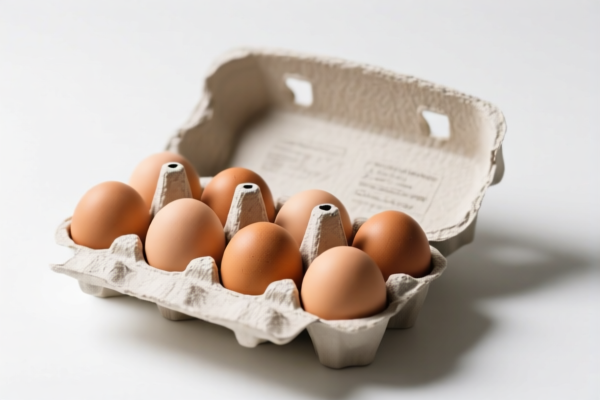
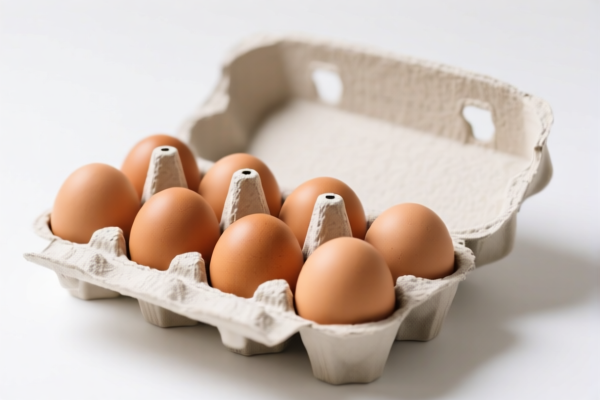
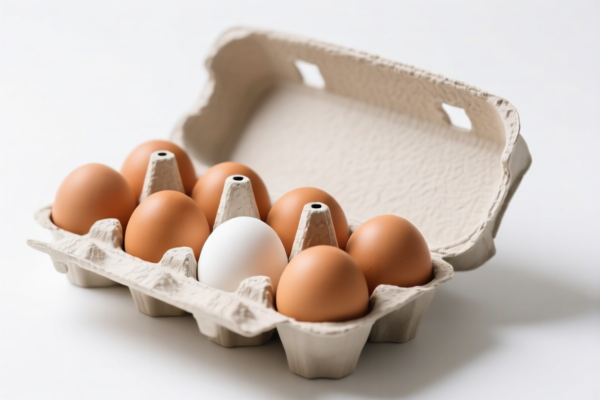
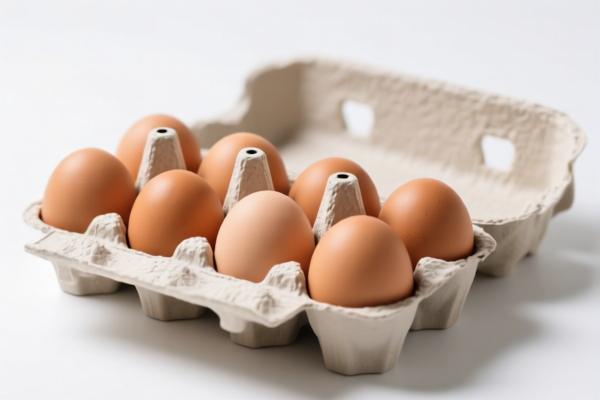
AI Analysis
🥚📦 Egg Tray Box (Egg Cartons & Packaging)
🌐 HS Code Reference & Customs Clearance Guide | 2026 Latest Tariff Analysis | Strategic Clearance Strategy
📌 I. Product Definition & Classification: Do You Really Know What an "Egg Tray Box" Is?
An "Egg Tray Box" is a versatile packaging solution designed to protect fragile eggs during transport and storage. In international trade, its classification is not determined by its name alone, but by its material composition. The market generally divides these products into two main categories:
Paper/Pulp-Based Containers: Made from molded pulp, recycled paper, or cardboard. These are the traditional, eco-friendly options.
Plastic/Composite Containers: Made from polyethylene, polypropylene, or other synthetic polymers. These are durable, reusable, or high-volume disposable options.
⚠️ Key Distinction Point:
- If the material is Paper/Pulp/Cardboard → It falls under Chapter 48 (Paper & Paperboard).
- If the material is Plastic → It falls under Chapter 39 (Plastics & Articles Thereof).
- Crucial Warning: Misdeclaring material leads to massive tax differences and customs delays!
📦 II. HS Code Classification Details (2026 Latest Tariff Authority Cross-Reference)
Based on the input data, here are the five possible HS Codes depending on the specific material and form:
| HS Code | Product Description | Material Inference | Key Characteristics |
|---|---|---|---|
3923.10.90.00 |
Boxes, cases, crates, and similar articles (Plastic) | Plastic (Inferred) | Fits "Boxes, cases" category; assumed plastic packaging articles. |
4819.10.00.40 |
Cartons, boxes, and cases, of paper or paperboard | Paper/Pulp | Standard paper-based packaging containers; no material conflict. |
3926.90.10.00 |
Other articles of plastics (Plastic Pulp/Composite) | Plastic/Pulp Mix | "Other articles"; fits plastic range (Ch 39-41); reasonable for molded plastic trays. |
3926.90.99.89 |
Other articles of plastics and other materials (Plastic) | Plastic/Composite | "Catch-all" for plastic articles; fits "other manufactured plastic items." |
3923.90.00.80 |
Other articles for the conveyance or packaging of goods (Plastic) | Plastic (Inferred) | Packaging utility match; assumed plastic packaging articles. |
🔍 Important Note:
- The term "Egg Tray Box" is ambiguous. Customs requires specific material declaration.
- If you declare it as Paper but it arrives as Plastic, you face penalties.
- If you declare it as Plastic but it arrives as Paper, you overpay taxes.
💰 III. 2026 Latest Tariff Rate Breakdown (Including Surcharges & Policy Add-ons)
✅ Applicable Country: United States (US)
✅ Country of Origin: China (CN)
✅ Effective Time: From November 10, 2025 (including subsequent imports)
🎯 1. 3923.10.90.00 & 3923.90.00.80 —— Plastic Packaging (Boxes/Crates/Other)
| Item | Content |
|---|---|
| Base Tariff | 3.0% (Ad Valorem) |
| Section 301 Surcharge | +25.0% (USITC Footnote related to Chinese plastics) |
| Section 122 Surcharge | +10.0% (Additional duty on Chinese goods) |
| Total Tariff | 38.0% |
| Tax Calculation | CIF Value × 38.0% |
| De Minimis Eligibility | ❌ No (Denied) |
| Legal Basis Path | USITC:3923.10.90.00 → Section 301:25% → Section 122:10% |
📌 Explanation:
- These codes cover plastic boxes, crates, and other packaging items.
- The 38% total rate is very high.
- Strategy: If your product is plastic, consider if there are alternative classifications or if you can claim any exemptions.
🎯 2. 4819.10.00.40 & 4819.50.40.60 —— Paper/Pulp Packaging (Cartons/Other Containers)
| Item | Content |
|---|---|
| Base Tariff | 0.0% (Ad Valorem) |
| Section 301 Surcharge | +25.0% (USITC Footnote related to Chinese paper products) |
| Section 122 Surcharge | +10.0% (Additional duty on Chinese goods) |
| Total Tariff | 35.0% |
| Tax Calculation | CIF Value × 35.0% |
| De Minimis Eligibility | ❌ No (Denied) |
| Legal Basis Path | USITC:4819.10.00.40 → Section 301:25% → Section 122:10% |
📌 Explanation:
- These codes cover paper, cardboard, and pulp cartons and containers.
- Although the base rate is 0%, the surcharges bring the total to 35%.
- This is 3% cheaper than the plastic options, but still a significant cost.
🎯 3. 3926.90.10.00 & 3926.90.99.89 —— Plastic Articles (Other/Mixed)
| Item | Content |
|---|---|
| Base Tariff | 3.4% (for .10.00) / 5.3% (for .99.89) |
| Section 301 Surcharge | +7.5% (Lower rate for certain plastic articles) |
| Section 122 Surcharge | +10.0% (Additional duty) |
| Total Tariff | 20.9% (for .10.00) / 22.8% (for .99.89) |
| Tax Calculation | CIF Value × 20.9% or 22.8% |
| De Minimis Eligibility | ❌ No (Denied) |
| Legal Basis Path | USITC:3926.90.10.00 → Section 301:7.5% → Section 122:10% |
📌 Explanation:
- These are "Other Articles of Plastics," often used for molded pulp-plastic composites or specific non-packaging-shaped plastic trays.
- Significantly Lower Tax: Only 20.9% - 22.8%.
- Critical: You must prove the item is not a "box, case, or crate" (which fall under Ch 39.23) to use these codes. If it is clearly a box/crate, using these codes is a misclassification risk.
🛠️ IV. Customs Clearance Practical Advice (Real-World Pitfall Avoidance)
✅ 1. Essential Documentation Checklist (Non-Negotiable)
| Document | Required? | Explanation |
|---|---|---|
| ✅ Product Specification Sheet | ✔️ | Must explicitly state Material Composition (e.g., "100% Recycled Paper Pulp" or "HDPE Plastic"). |
| ✅ High-Resolution Photos | ✔️ | Show the product, texture, and any logos/branding. Help customs visually verify material. |
| ✅ Commercial Invoice | ✔️ | Clearly state "Egg Tray / Egg Carton" AND Material (e.g., "Plastic Egg Tray, HDPE"). |
| ✅ Packing List | ✔️ | Detail dimensions and weight. Helps verify if it’s a container (Ch 48/39.23) or a generic article (Ch 39.26). |
| ✅ Material Test Report | ✔️ | Optional but recommended if material is ambiguous (e.g., paper-plastic composite). |
✅ 2. Declaration Tips (Golden Rules)
🔥 “Material First, Form Second, Name Third!”
| Scenario | Correct Declaration | Incorrect Declaration |
|---|---|---|
| Paper Pulp Tray | "Egg Tray, Material: Molded Paper Pulp" → 4819.10.00.40 (35%) |
"Egg Box" → Risk of being classified as plastic if not specified → 38% |
| Plastic Tray | "Egg Tray, Material: HDPE Plastic" → 3923.10.90.00 (38%) or 3926.90.10.00 (20.9%*) |
"Egg Carton" → Ambiguous → Potential audit |
| Composite Material | "Egg Tray, Paper with Plastic Coating" → Consult customs for 3926.90.10.00 |
"Egg Box" → Likely default to highest risk code |
Note: Using
3926.90.10.00for a "box" may be challenged. Ensure the item is not primarily a "container" for transport/storage in the eyes of customs.
✅ 3. Special Circumstances
| Situation | Handling Advice |
|---|---|
| OEM Custom Design | Provide design drawings showing material layers. |
| Color/Molding Marks | Ensure invoices match physical goods. Discrepancies cause delays. |
| Wooden Pallets Used | If shipped on wooden pallets, ensure they are ISPM 15 compliant (fumigated/heat-treated). |
| Food Contact | If for human consumption, ensure FDA compliance for food-safe materials. |
🌍 V. Global Market Clearance Comparison (2026 Latest)
| Country/Region | Recommended HS Code (Paper) | Tariff (Paper) | Recommended HS Code (Plastic) | Tariff (Plastic) | Remarks |
|---|---|---|---|---|---|
| 🇺🇸 USA | 4819.10.00.40 |
35% | 3923.10.90.00 |
38% | High tariffs due to Section 301 & 122. |
| 🇪🇺 EU | 4819.20.00 |
~6% + VAT | 3923.10.00 |
~6.5% + VAT | No Section 301/122 equivalents. |
| 🇨🇳 China | 4819.10.00 |
10% | 3923.10.90 |
10% | Domestic trade tariffs apply. |
| 🇦🇺 Australia | 4819.50.00 |
5% | 3923.21.00 |
5% | Lower base rates, no high surcharges. |
📌 Conclusion:
- USA is the most expensive market due to additive tariffs.
- Paper is slightly cheaper (35%) than Plastic Boxes (38%).
- Plastic "Other Articles" (20.9%) offer savings but carry classification risk.
📌 VI. Common Errors & Pitfall Guide (Lessons Learned)
❌ Mistake 1: Declaring "Egg Tray" without specifying material.
👉 Consequence: Customs may assign the highest-risk code (Plastic, 38%) by default.
❌ Mistake 2: Using 3926 (Other Articles) for a standard Paper Egg Tray.
👉 Consequence: Audit Failure. Paper falls under Ch 48. Misclassification leads to fines and delays.
❌ Mistake 3: Assuming "Plastic" always means 38%.
👉 Consequence: Missing the opportunity to classify as 3926.90.10.00 (20.9%) if the product is technically a molded tray/insert and not a "box/crate." Requires expert argument.
❌ Mistake 4: Ignoring Section 122 Tariff.
👉 Consequence: Even if base rate is 0%, the 10% Section 122 still applies. Total cost is never just the base rate.
✅ Correct Approach:
"Egg Carton, Molded Pulp, Recycled Paper, 12-Egg Capacity, Brown Color, FDA Compliant Material"
→ HS Code:4819.10.00.40
→ Total Tariff: 35%
🎯 VII. Conclusion: Precise Classification Saves Money!
🎯 Remember These Key Points:
🔹 "Paper is 35%, Plastic Box is 38%, Plastic 'Other' is 20.9%!"
🔹 "Material is King! If you don't declare it, Customs will assume the worst!"
🔹 "Section 301 (25%) + Section 122 (10%) = Mandatory Add-ons for China Origin!"
📌 Pro Tip:
If you are importing Plastic egg trays, consult a customs broker to see if your specific molded tray can be classified under 3926.90.10.00 (20.9%) instead of 3923.10.90.00 (38%). This 17% difference can significantly boost margins.
📣 Immediate Action Required:
📞 Contact your freight forwarder to confirm the exact material of your supplier’s goods.
📄 Update your commercial invoice to include "Material: [Paper/Plastic]."
🚀 Pre-classify with a broker to avoid post-import audits and back-taxes.
✨ Professional clearance starts with accurate classification!
💼 Every percentage point of tariff difference is pure profit lost!
Customer Reviews
About HS Code Classification
The Harmonized System (HS) is an internationally standardized nomenclature developed by the World Customs Organization (WCO) to classify traded products. Over 200 countries use the HS system as the basis for customs tariffs, trade statistics, and import/export regulations.
Each HS code follows a hierarchical structure:
- Chapter (2 digits) — Broad category of goods (e.g., Chapter 84: Machinery and Mechanical Appliances)
- Heading (4 digits) — More specific grouping within the chapter
- Subheading (6 digits) — Internationally standardized breakdown, used by all WCO member countries
- National subdivisions (8-10 digits) — Country-specific extensions for further classification, such as US HTSUS 10-digit codes
Correct HS code classification is essential for smooth customs clearance, accurate duty payment, and compliance with trade regulations. Misclassification can lead to customs delays, overpayment of duties, or penalties.
When importing from CN to US, the applicable tariff rates may include:
- Most-Favored-Nation (MFN) rate — The standard duty rate applied to WTO members
- General rate — Applied to countries without trade agreements
- Trade remedy duties — Additional tariffs such as Section 301 (anti-dumping), Section 232 (national security), or countervailing duties
The information provided on this page is for reference purposes only. For official classification, please consult with your local customs authority or a licensed customs broker.