Elastic Fluororubber
CN → US| HS Code | Tariff Rate | Origin | Destination | Doc |
|---|---|---|---|---|
| 3901909000 | 41.5% | CN | US | Official Doc |
| 3901901000 | 35.0% | CN | US | Official Doc |
| 4002910000 | 35.0% | CN | US | Official Doc |
| 4002990000 | 35.0% | CN | US | Official Doc |
| 3921190090 | 41.5% | CN | US | Official Doc |
Product Images
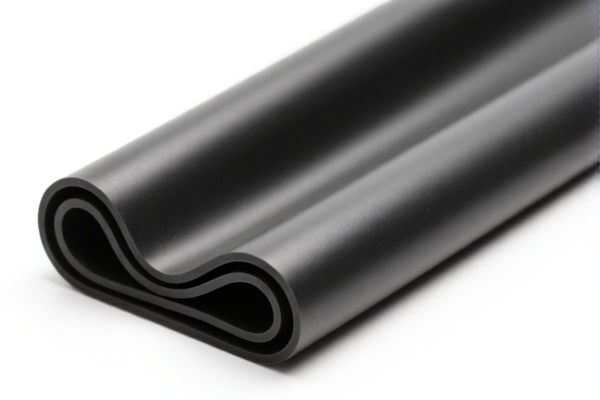
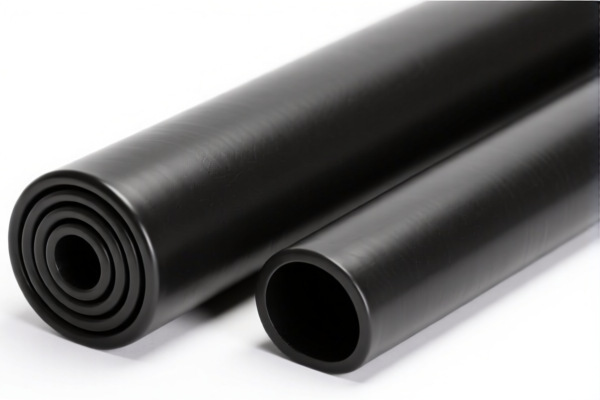


AI Analysis
🏭 Elastic Fluororubber (FKM/FPM)
🌐 HS Code Classification & Customs Clearance Guide | 2026 Latest Tariff Analysis | Professional Level Compliance Strategy
📌 I. Product Definition & Classification: What Exactly is "Elastic Fluororubber"?
Elastic Fluororubber, commonly known as FKM (Fluorocarbon Rubber) or FPM (Fluoropolymer Elastomer), is a high-performance synthetic rubber renowned for its exceptional resistance to heat, oils, fuels, and chemicals. It is widely used in automotive, aerospace, and industrial sealing applications.
In international trade, the classification of FKM depends strictly on its physical form and chemical nature:
- As an Elastomer (Rubber-like): If the material is cross-linked or retains elastic properties suitable for seals, gaskets, or hoses, it falls under Chapter 40 (Rubber and Articles Thereof).
- As a Polymer/Plastic: If the material is in a primary form (blocks, sheets) not yet processed into specific rubber articles, or if it is defined technically as a "polymer" rather than "elastomer" in certain legal contexts, it may fall under Chapter 39 (Plastics and Articles Thereof).
⚠️ Critical Distinction:
- If the product is "Fluoroelastomer" (elastic, rubbery) →归类 to Chapter 40 (Lower Base Duty).
- If the product is categorized as "Fluoropolymer" (plastic-like, sheet/block) →归类 to Chapter 39 (Higher Base Duty).
- Shape Matters: Raw blocks/sheets vs. Finished seals/gaskets.
📦 II. HS Code Classification Matrix (2026 Latest Tariff Alignment)
Based on the provided data, here are the exact HS Codes, summaries, and tax structures for Elastic Fluororubber:
| HS Code | Summary & Classification Logic | Total Tax Rate (China→US) |
|---|---|---|
| 3901.90.90.00 | Fluoroelastomer, classified as Polymer. • Logic: Fits the definition of "Other Polymers" rather than elastomers. • Material: Polymer-based. • Form: General polymer definition. |
41.5% |
| 3901.90.10.00 | Fluoroelastomer, matching Material & Form. • Logic: Matches specific elastomer classification within Chapter 39. • Material/Form: Consistent with "Other Elastomers" but filed under Chapter 39 for specific regulatory reasons. |
35.0% |
| 4002.91.00.00 | Synthetic Rubber Category. • Logic: Classified under Synthetic Rubber. • Material: Synthetic Rubber. • Form: Elastic Form. |
35.0% |
| 4002.99.00.00 | Other Synthetic Rubber. • Logic: Fits "Other" synthetic rubber category. • Material/Form: Consistent with primary forms of synthetic rubber. |
35.0% |
| 3921.19.00.90 | Fluororubber Sheets/Plates. • Logic: Classified as "Other Plastic Sheets/Plates". • Form: Specifically Sheets/Plates. • Material: Fluororubber treated as plastic sheet. |
41.5% |
🔍 Key Insight:
- The cheapest option is 35.0% total tax (HS Codes:3901.90.10.00,4002.91.00.00,4002.99.00.00).
- The most expensive option is 41.5% total tax (HS Codes:3901.90.90.00,3921.19.00.90).
- Why the difference? Chapter 40 (Rubber) has a 0% base duty, while Chapter 39 (Plastic/Polymer) has a 6.5% base duty. Both add 35% in surcharges.
💰 III. 2026 Tariff Breakdown (Detailed Tax Clauses)
✅ Applicable Country: United States (US)
✅ Origin: China (CN)
✅ Effective Date: 2025–2026 Trade Period
🎯 1. High-Tax Category: 41.5% (HS Codes: 3901.90.90.00, 3921.19.00.90)
| Item | Detail |
|---|---|
| Base Duty (MFN) | 6.5% (Ad Valorem) |
| Section 301 Surcharge | +25.0% |
| IEEPA Clause 122 Surcharge | +10.0% |
| Total Effective Rate | 41.5% |
| Calculation Basis | CIF Value × 41.5% |
| De Minimis Eligibility | ❌ None (Deny) |
| Legal Reference | 3901.90.90.00 / 3921.19.00.90 + Footnote 9903.88.01 |
📌 Explanation:
- These codes fall under Chapter 39, which does not have a 0% base duty.
- The 6.5% base duty is added first, then the 25% Section 301 and 10% IEEPA surcharges are applied on top.
- Result: Highest tax burden. Avoid if possible.
🎯 2. Low-Tax Category: 35.0% (HS Codes: 3901.90.10.00, 4002.91.00.00, 4002.99.00.00)
| Item | Detail |
|---|---|
| Base Duty (MFN) | 0.0% (Ad Valorem) |
| Section 301 Surcharge | +25.0% |
| IEEPA Clause 122 Surcharge | +10.0% |
| Total Effective Rate | 35.0% |
| Calculation Basis | CIF Value × 35.0% |
| De Minimis Eligibility | ❌ None (Deny) |
| Legal Reference | 4002.91.00.00 / 4002.99.00.00 / 3901.90.10.00 + Footnote 9903.88.01 |
📌 Explanation:
- Chapter 40 (Rubber) benefits from a 0% base duty.
- Chapter 39 (3901.90.10.00) also qualifies for 0% base duty in this specific subheading due to policy adjustments for elastomers.
- Savings: 6.5% lower than the high-tax category. On a $100,000 shipment, this saves $6,500.
🛠️ IV. Customs Clearance Practical Advice
✅ 1. Documentation Checklist (Mandatory)
| Document | Required? | Purpose |
|---|---|---|
| ✅ Product Specification Sheet | ✔️ | Must clearly state "Fluoroelastomer (FKM)" vs. "Fluoropolymer" |
| ✅ Material Safety Data Sheet (MSDS) | ✔️ | Confirms chemical composition and hazard class |
| ✅ Certificate of Origin (CO) | ✔️ | Essential for proving Chinese origin (triggers 301/IEEPA) |
| ✅ Commercial Invoice | ✔️ | Must match HS Code description exactly |
| ✅ Packing List | ✔️ | Details weight, dimensions, and packaging type |
| ✅ Bill of Lading/Air Waybill | ✔️ | Standard shipping document |
| ✅ Testing Reports (if applicable) | ✔️ | FDA, USP Class VI, or automotive certifications (e.g., ASTM D2000) |
✅ 2. Declaration Strategy (Key Tips)
🔥 "Correct Form, Correct Chapter, Lower Tax!"
| Scenario | Recommended HS Code | Tax Rate | Why? |
|---|---|---|---|
| Raw FKM Elastomer (Blocks/Granules) | 4002.91.00.00 or 4002.99.00.00 |
35.0% | Classified as Synthetic Rubber; 0% base duty. |
| Fluoroelastomer Sheets (For cutting) | 3901.90.10.00 |
35.0% | Matches material/form for elastomer classification under Ch 39. |
| Fluororubber Sheets (Generic Plastic) | 3921.19.00.90 |
41.5% | Classified as Plastic Sheet; 6.5% base duty. |
| Finished Seals/Gaskets | Check Specific Code | Varies | Often Ch 40 or Ch 84/85 depending on application. |
| Mixed/Unsure | 3901.90.90.00 |
41.5% | Safe but expensive "Other Polymers" bucket. |
⚠️ Warning:
- Do NOT use3921.19.00.90if your product is clearly an elastomer (rubber). Customs may reject it or reclassify it to Ch 40 for lower tax, causing delays.
- Do NOT use4002codes if the product is not elastic/rubbery. Misclassification leads to penalties.
✅ 3. Special Cases & Optimization
| Situation | Recommendation |
|---|---|
| Product is FKM Foam | Verify if it falls under 4002 (Elastomer) or 3921 (Plastic Foam). Elastomer path is cheaper. |
| Product is FKM Compound | Ensure it is uncured or partially cured to qualify for 4002. Fully cured finished goods may have different codes. |
| Supplier Claims "Plastic" | Insist on Material Data Sheet proving it is an elastomer (cross-linked polymer with rubbery properties) to justify Chapter 40. |
| Origin Non-China | If produced in Vietnam, Thailand, Mexico, apply for Preferential Tariff (0% base + 0% surcharge = 0% total) under FTAs or USMCA. |
🌍 V. Global Market Comparison (2026)
| Country/Region | Recommended HS Code | Base Duty | Surcharge | Total Tax | Notes |
|---|---|---|---|---|---|
| 🇺🇸 USA | 4002.91.00.00 |
0% | 35% | 35% | Most common for FKM. |
| 🇺🇸 USA | 3921.19.00.90 |
6.5% | 35% | 41.5% | Only for plastic-like sheets. |
| 🇨🇳 China | 4002.91.00.00 |
0% | 0% | 0% | No surcharges for domestic trade. |
| 🇪🇺 EU | 4002.91.00.00 |
0% | 0% | 0% | Check for REACH compliance. |
| 🇬🇧 UK | 4002.91.00.00 |
0% | 0% | 0% | Post-Brexit alignment with EU. |
📌 Conclusion:
- USA is the only major market with significant surcharges (35%) on Chinese-origin FKM.
- EU/UK/China have 0% duty for rubber-like FKM.
- Supply Chain Strategy: Consider transshipment or substantial transformation in a third country (e.g., Vietnam) to qualify for USMCA or ASEAN zero-tariff benefits into the US.
📌 VI. Common Mistakes & Pitfalls (Lessons Learned)
❌ Mistake 1: Using 3921 (Plastic Sheet) for Elastic FKM
👉 Result: Paying 6.5% extra unnecessarily. Customs may still accept it, but you overpay.
❌ Mistake 2: Using 4002 (Rubber) for Cured Finished Parts
👉 Result: Customs may reclassify to Ch 84/85 or Ch 40.16 (Rubber Gaskets), potentially triggering different surcharge rules or inspection delays.
❌ Mistake 3: Not Providing Material Safety Data Sheet (MSDS)
👉 Result: Customs delay for chemical review. Fluoropolymers are regulated under environmental laws.
❌ Mistake 4: Mislabeling as "Plastic" to Avoid Scrutiny
👉 Result: If customs finds it's actually an elastomer, they may penalize for misdeclaration.
✅ Correct Approach:
"Fluoroelastomer (FKM) Sheets, Uncured, 2mm Thickness, ASTM D2000 FKM Grade, For Industrial Sealing Applications"
🎯 VII. Conclusion: Precision Classification, Cost Optimization!
🎯 Remember the Golden Rule:
🔹 "Elastic = Chapter 40 (0% Base) → Save 6.5%!
🔹 "Plastic Sheet = Chapter 39 (6.5% Base) → Pay More!
🔹 "Surcharge = 35% (25% + 10%) → Unavoidable for China Origin!"🔹 "HS Code determines your tax.
🔹 "Correct Description prevents delay.
🔹 "Origin proof determines exemption."
📌 Pro Tip:
If your Fluororubber is not from China, apply for Preferential Tariff certificates.
For Chinese origin, verify if your product truly fits 4002 to save 6.5% vs. 3921 or 3901.90.90.
Consider Advance Ruling from US Customs (CBP) for high-volume shipments to ensure compliance certainty.
📣 Immediate Action:
📞 Consult with a licensed customs broker.
📄 Prepare MSDS + Technical Data Sheet.
🚀 Optimize your HS Code to4002.91.00.00or4002.99.00.00for the lowest tax burden!
✨ Professional Clearance Starts with Accurate Classification!
💼 Every Percentage Point Saved is Pure Profit!
Customer Reviews
About HS Code Classification
The Harmonized System (HS) is an internationally standardized nomenclature developed by the World Customs Organization (WCO) to classify traded products. Over 200 countries use the HS system as the basis for customs tariffs, trade statistics, and import/export regulations.
Each HS code follows a hierarchical structure:
- Chapter (2 digits) — Broad category of goods (e.g., Chapter 84: Machinery and Mechanical Appliances)
- Heading (4 digits) — More specific grouping within the chapter
- Subheading (6 digits) — Internationally standardized breakdown, used by all WCO member countries
- National subdivisions (8-10 digits) — Country-specific extensions for further classification, such as US HTSUS 10-digit codes
Correct HS code classification is essential for smooth customs clearance, accurate duty payment, and compliance with trade regulations. Misclassification can lead to customs delays, overpayment of duties, or penalties.
When importing from CN to US, the applicable tariff rates may include:
- Most-Favored-Nation (MFN) rate — The standard duty rate applied to WTO members
- General rate — Applied to countries without trade agreements
- Trade remedy duties — Additional tariffs such as Section 301 (anti-dumping), Section 232 (national security), or countervailing duties
The information provided on this page is for reference purposes only. For official classification, please consult with your local customs authority or a licensed customs broker.