Elastic Petroleum Resin Granules
CN → US| HS Code | Tariff Rate | Origin | Destination | Doc |
|---|---|---|---|---|
| 3913902090 | 40.8% | CN | US | Official Doc |
| 3824994900 | 41.5% | CN | US | Official Doc |
| 3913901000 | 35.0% | CN | US | Official Doc |
| 3824995500 | 38.7% | CN | US | Official Doc |
| 3909501000 | 35.0% | CN | US | Official Doc |
Product Images


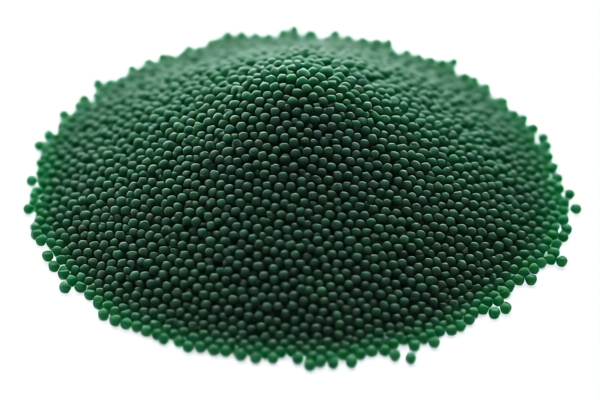
AI Analysis
🧪 Elastic Petroleum Resin Granules (Low Molecular Weight)
🌐 HS Code Reference & Customs Clearance Guide | 2026 Latest Tariff Analysis | Professional-Level Classification Strategy
📌 I. Product Definition & Classification: Do You Really Understand "Elastic Petroleum Resin"?
Elastic Petroleum Resin Granules are specialized hydrocarbon polymers derived from petroleum. In international trade, they are primarily used as elastomeric modifiers, plasticizers, or tackifiers in rubber, adhesives, and coatings. Due to their complex chemical nature, they can be classified into multiple HS Codes depending on their precise molecular structure and functional classification.
Low Molecular Weight Elastomers: Resins that act as flexible binders or modifiers.
Chemical Mixtures/Modifications: Resins treated or mixed with other chemical agents for specific industrial applications.
⚠️ Key Distinction Point:
- If classified as a hydrocarbon polymer acting as an elastomer → Look at Chapter 39 (Plastics/Polymers).
- If classified as a modified chemical product or halogenated mixture → Look at Chapter 38 (Miscellaneous Chemical Products).
- Crucial Note: Misclassification can lead to significant tariff differences (from 35% to 41.5%).
📦 II. HS Code Classification Details (2026 Latest Tariff Authority Comparison)
Based on the provided data, here are the five potential HS Codes for "Low Molecular Weight Petroleum Resin Elastomers":
| HS Code | Product Summary | Key Characteristic | Total Tax Rate |
|---|---|---|---|
3913.90.20.90 |
Low molecular weight petroleum resin elastomer; belongs to hydrocarbon polymers; morphology is elastomer. | Primary Hydrocarbon Polymer | 40.8% |
3824.99.49.00 |
Low molecular weight petroleum resin elastomer; derived from petroleum with hydrocarbon composition. | General Chemical Product (Misc.) | 41.5% |
3913.90.10.00 |
Low molecular weight petroleum resin elastomer; belongs to natural polymers and their modified derivatives. | Natural Polymer Derivative | 35.0% |
3824.99.55.00 |
Low molecular weight petroleum resin elastomer; belongs to halogenated hydrocarbon mixtures or other chemical products. | Halogenated/Chemical Mix | 38.7% |
3909.50.10.00 |
Petroleum resin elastomer plasticizer; elastomer morphology and resin composition fit polyurethane/resin primary shapes. | Resin/PU Category | 35.0% |
🔍 Focus Alert:
-3913.90.10.00and3909.50.10.00offer the lowest total tax rate (35.0%).
-3824.99.49.00has the highest total tax rate (41.5%).
- The difference lies in whether the product is viewed as a natural polymer derivative (3913.90.10), a hydrocarbon polymer (3913.90.20), or a miscellaneous chemical (3824or3909).
💰 III. 2026 Latest Tariff Rate Breakdown (Including Additional Taxes & Policy Surcharges)
✅ Applicable Country: United States (US)
✅ Origin: China (CN)
✅ Effective Time: Current Trade War Tariffs Apply (Section 301 & IEEPA)
🎯 1. 3913.90.20.90 —— Low Molecular Weight Petroleum Resin (Hydrocarbon Polymer)
| Item | Content |
|---|---|
| Base Tariff | 5.8% (ad valorem) |
| Section 301 Tariff | +25.0% |
| Section 122 Tariff | +10.0% |
| Total Tariff | 40.8% |
| Tax Calculation | CIF Value × 40.8% |
| De Minimis Exemption? | ❌ NO (Denied for this classification) |
| Legal Basis Path | USITC:3913.90.20.90 → FOOTNOTE:301/122 |
📌 Explanation:
- This code treats the product as a standard hydrocarbon polymer.
- The high base tariff (5.8%) combined with 35% in surcharges results in a heavy tax burden.
🎯 2. 3824.99.49.00 —— Other Chemical Products (Miscellaneous)
| Item | Content |
|---|---|
| Base Tariff | 6.5% (ad valorem) |
| Section 301 Tariff | +25.0% |
| Section 122 Tariff | +10.0% |
| Total Tariff | 41.5% |
| Tax Calculation | CIF Value × 41.5% |
| De Minimis Exemption? | ❌ NO |
| Legal Basis Path | USITC:3824.99.49.00 → FOOTNOTE:301/122 |
📌 Warning:
- This is the most expensive classification.
- It is often used as a fallback for chemicals that don't fit neatly into polymer chapters. Avoid unless no other classification fits.
🎯 3. 3913.90.10.00 —— Natural Polymers and Modified Derivatives (Best Value)
| Item | Content |
|---|---|
| Base Tariff | 0.0% |
| Section 301 Tariff | +25.0% |
| Section 122 Tariff | +10.0% |
| Total Tariff | 35.0% |
| Tax Calculation | CIF Value × 35.0% |
| De Minimis Exemption? | ❌ NO |
| Legal Basis Path | USITC:3913.90.10.00 → FOOTNOTE:301/122 |
📌 Opportunity:
- 0% Base Tariff makes this the most cost-effective option if the product can be scientifically justified as a "modified natural polymer derivative."
- Requires strong technical documentation to prove the "natural polymer derivative" status.
🎯 4. 3824.99.55.00 —— Halogenated Hydrocarbon Mixtures
| Item | Content |
|---|---|
| Base Tariff | 3.7% (ad valorem) |
| Section 301 Tariff | +25.0% |
| Section 122 Tariff | +10.0% |
| Total Tariff | 38.7% |
| Tax Calculation | CIF Value × 38.7% |
| De Minimis Exemption? | ❌ NO |
| Legal Basis Path | USITC:3824.99.55.00 → FOOTNOTE:301/122 |
📌 Note:
- Only applicable if the resin contains halogenated components or is marketed as a specific chemical mixture.
- Mid-range tax rate.
🎯 5. 3909.50.10.00 —— Aminoplasts, Polyurethanes, etc. (Plasticizer Category)
| Item | Content |
|---|---|
| Base Tariff | 0.0% |
| Section 301 Tariff | +25.0% |
| Section 122 Tariff | +10.0% |
| Total Tariff | 35.0% |
| Tax Calculation | CIF Value × 35.0% |
| De Minimis Exemption? | ❌ NO |
| Legal Basis Path | USITC:3909.50.10.00 → FOOTNOTE:301/122 |
📌 Strategy:
- If the product is marketed specifically as an "Elastomer Plasticizer" with PU/resin compatibility, this code applies.
- Like3913.90.10.00, it has a 0% base tariff, resulting in the lowest total tax (35.0%).
🛠️ IV. Customs Clearance Practical Advice (Battle-Tested Pitfall Guide)
✅ 1. Documentation Checklist (Non-Negotiable)
| Document | Required | Description |
|---|---|---|
| ✅ Product Specification Sheet | ✔️ | Must detail molecular weight, chemical composition, and physical state (granules/elastomer). |
| ✅ Formula/Composition Analysis | ✔️ | Crucial for distinguishing between 3913 (Polymers) and 3824 (Chemicals). |
| ✅ Product Photos (Clear Label) | ✔️ | Show granule shape, color, and packaging. |
| ✅ Safety Data Sheet (SDS) | ✔️ | Must match the declared chemical properties. |
| ✅ Commercial Invoice | ✔️ | Clearly state "Elastic Petroleum Resin Granules" and intended use (e.g., plasticizer, modifier). |
| ✅ Certificate of Origin (CO) | ✔️ | Required to verify origin for Section 301/122 application. |
| ✅ Usage Statement | ✔️ | Explain how it is used (e.g., "mixed into rubber compounds as an elastomeric modifier"). |
✅ 2. Declaration Tips (Key Mantra)
🔥 "Nature Defines Code, Base Rate Drives Cost! 0% Base = 35% Total!"
| Scenario | Correct Declaration | Wrong Action |
|---|---|---|
| Standard Hydrocarbon Resin | 3913.90.20.90 |
Declaring as chemical → Risk of misclassification audit. |
| Marketed as Plasticizer/PU Compatible | 3909.50.10.00 |
Declaring as generic resin → Missed opportunity for 0% base rate. |
| Derived from Natural Polymers | 3913.90.10.00 |
Declaring as synthetic polymer → Higher base tariff. |
| Halogenated/Chemical Mix | 3824.99.55.00 |
N/A |
| Generic Fallback | 3824.99.49.00 |
Avoid if possible due to highest tax. |
✅ 3. Special Circumstances Handling
| Situation | Handling Advice |
|---|---|
| OEM Custom Resin | Provide client order + technical data sheet to justify specific HS Code. |
| "Plasticizer" Labeling | If labeled as plasticizer, strongly consider 3909.50.10.00 for lower tax. |
| Scientific Ambiguity | If composition is unclear, customs may default to 3824 (higher tax). Pre-ruling is essential. |
| Mixed Shipments | Do not mix 3913 and 3824 in one line item. Declare separately. |
🌍 V. Global Market Customs Comparison (2026 Latest)
| Country/Region | Recommended HS Code | Tariff | Certification Requirements | Notes |
|---|---|---|---|---|
| 🇺🇸 USA | 3913.90.10.00 / 3909.50.10.00 |
35.0% | SDS, CO | Highest Priority: Aim for 0% base rate codes. |
| 🇨🇳 China | 3913.90.10.00 |
5-10% | No special | Lower tariff than US, but no Section 301. |
| 🇪🇺 EU | 3913.90.90 |
0-6% | REACH Registration | EU does not have Section 301/122 equivalents. |
| 🇦🇺 Australia | 3913.90.00 |
5% | ADR | No extra surcharges. |
| 🇯🇵 Japan | 3913.90.00 |
0-6% | JLPS | Generally favorable. |
📌 Conclusion:
- USA is the only market with punitive Section 301/122 tariffs.
- Strategy for USA: Aggressively argue for3913.90.10.00or3909.50.10.00to achieve the 35.0% total rate instead of 40.8% or 41.5%.
📌 VI. Common Errors & Pitfall Guide (Blood & Tears Lessons)
❌ Error 1: Declaring as 3824.99.49.00 without justification
👉 Consequence: Paying 41.5% tax instead of 35.0%. $6,500 extra tax per $100k shipment!
❌ Error 2: Using "Generic Resin" as declaration
👉 Consequence: Customs may assign the highest applicable code (3824) or hold shipment for further review.
❌ Error 3: Ignoring the "0% Base Tariff" opportunity
👉 Consequence: Paying 5.8% or 6.5% base tariff when 0% is available for similar products.
❌ Error 4: Not providing Composition Analysis
👉 Consequence: Customs cannot distinguish between 3913 (Polymers) and 3824 (Chemicals), leading to misclassification.
✅ Correct Action:
"Elastic Petroleum Resin Granules, Low Molecular Weight, Used as Rubber Modifier, Composition: Hydrocarbon Polymer, HS Code: 3913.90.10.00"
🎯 VII. Conclusion: Precise Classification Saves Money!
🎯 Remember the Mantra:
🔹 "Zero Base is Zero Fear! 35% is the Goal!"
🔹 "Code Choice Dictates Profit Margin!"
📌 Pro Tip:
If your resin can be technically documented as a modified natural polymer derivative (3913.90.10.00) or a PU-compatible plasticizer (3909.50.10.00), you save 2.7% to 6.5% in total taxes compared to the general polymer or chemical codes.
Action Plan:
📞 Consult a Customs Broker + Provide Technical Data + Apply for Advance Ruling (if possible)
🚀 Optimize Your HS Code, Maximize Your Profit!
✨ Professional Customs Clearance Starts with Accurate Classification!
💼 Every Percent Saved is Pure Profit!
Customer Reviews
About HS Code Classification
The Harmonized System (HS) is an internationally standardized nomenclature developed by the World Customs Organization (WCO) to classify traded products. Over 200 countries use the HS system as the basis for customs tariffs, trade statistics, and import/export regulations.
Each HS code follows a hierarchical structure:
- Chapter (2 digits) — Broad category of goods (e.g., Chapter 84: Machinery and Mechanical Appliances)
- Heading (4 digits) — More specific grouping within the chapter
- Subheading (6 digits) — Internationally standardized breakdown, used by all WCO member countries
- National subdivisions (8-10 digits) — Country-specific extensions for further classification, such as US HTSUS 10-digit codes
Correct HS code classification is essential for smooth customs clearance, accurate duty payment, and compliance with trade regulations. Misclassification can lead to customs delays, overpayment of duties, or penalties.
When importing from CN to US, the applicable tariff rates may include:
- Most-Favored-Nation (MFN) rate — The standard duty rate applied to WTO members
- General rate — Applied to countries without trade agreements
- Trade remedy duties — Additional tariffs such as Section 301 (anti-dumping), Section 232 (national security), or countervailing duties
The information provided on this page is for reference purposes only. For official classification, please consult with your local customs authority or a licensed customs broker.