Elastic Polyurethane Resin for Injection Molding
CN → US| HS Code | Tariff Rate | Origin | Destination | Doc |
|---|---|---|---|---|
| 3909501000 | 35.0% | CN | US | Official Doc |
| 3914002000 | 35.0% | CN | US | Official Doc |
| 3914006000 | 38.9% | CN | US | Official Doc |
| 3909505000 | 41.3% | CN | US | Official Doc |
| 3909501000 | 35.0% | CN | US | Official Doc |
Product Images
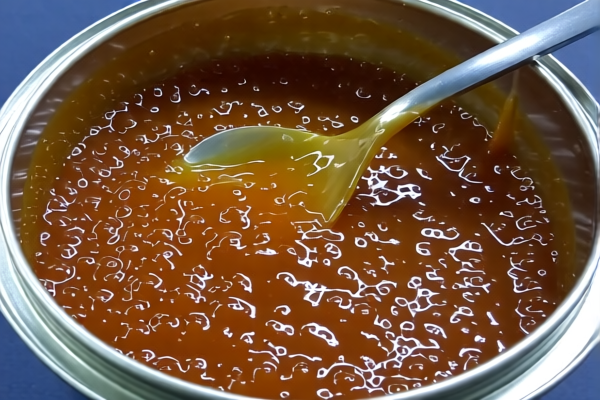

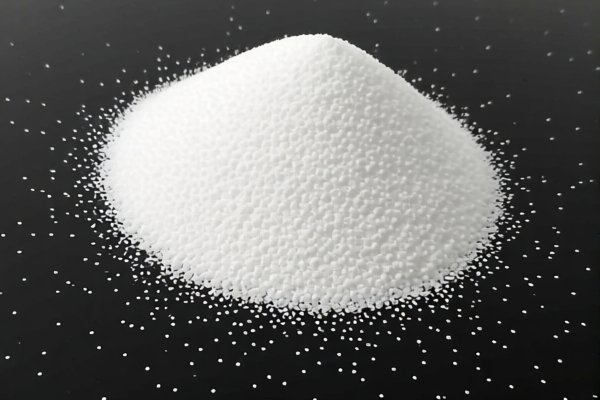
AI Analysis
🧪 Elastic Polyurethane Resin for Injection Molding (Injection-Grade PUR)
🌐 HS Code Reference & Customs Clearance Guide | 2026 Latest Tariff Analysis | Professional Compliance Strategy
📌 I. Product Definition & Classification: Do You Really Understand "Elastic PUR"?
Elastic Polyurethane (PUR) Resin for Injection Molding is a high-performance thermoplastic or thermoset polymer used to create durable, flexible, and abrasion-resistant parts. In international trade, it is strictly categorized based on its chemical nature (polymer vs. elastomer) and physical form (primary shape for molding).
Thermoplastic Polyurethane (TPU) / Elastomeric Polyurethane:
These materials are elastic, rubber-like, and designed for processing techniques like injection molding, extrusion, or casting.
Rigid Polyurethane Resins:
These are structural polymers, often foams or hard plastics, used for insulation or structural components.
⚠️ Critical Distinction Point:
- If the product is explicitly described as "Elastic" or "Elastomeric" and is in a form suitable for molding (pellets, powder, liquid), it often falls under Subheading 3909.50 (Polyurethanes, in primary forms).
- If classified broadly as a generic "Polyurethane Resin" under the "Other" category of Chapter 39, it may fall under Subheading 3914.
- The presence of specific attributes like "Ion Exchange" capabilities (rare for standard injection molding but possible in specialized resins) or specific base percentages can shift the code within 3914.
📦 II. HS Code Classification Details (Based on Provided Data)
According to the provided dataset, there are four potential HS Codes for Polyurethane Resins/Elastomers, with two distinct codes specifically linked to the "Elastic" and "Injection Molding" characteristics.
| HS Code | Product Description | Applicability to Input | Tax Rate |
|---|---|---|---|
| 3909.50.10.00 | Polyurethane Elastomeric Resin | ✅ High Match: Explicitly described as "Elastomeric" and "matches classification requirements for material and form." | 35.0% |
| 3909.50.10.00 | Polyurethane Elastomeric Resin | ✅ High Match: Specifically noted as "Suitable for injection molding," matching material and form. | 35.0% |
| 3914.00.20.00 | Polyurethane Resin | ⚠️ Broad Match: Fits "Primary Form" and "Polymer" criteria. However, less specific than 3909.50 for elastic grades. | 35.0% |
| 3914.00.60.00 | Polyurethane Resin | ⚠️ Lower Match: Fits "Primary Form Polymer" but mentions "Ion Exchange Agent" description, which is likely inaccurate for standard injection molding resins. | 38.9% |
| 3914.00.50.00 | Polyurethane Resin | ⚠️ Lowest Match: Described as consistent material but "Primary Form" under 3914. Highest base tariff in this set. | 41.3% |
🔍 Key Insight:
- Codes 3909.50.10.00 are the most accurate for "Elastic Polyurethane Resin for Injection Molding" because they explicitly acknowledge the elasticity and molding suitability.
- Codes under 3914 (e.g., 3914.00.20/60/50) are broader categories for "Other Polyurethanes." While technically correct as "resins," they miss the specific "elastomer" nuance unless the product lacks elastic properties.
- Avoid 3914.00.60.00 unless the resin has specific ion-exchange properties, as this is a niche application not typical for general injection molding.
💰 III. 2026 Latest Tariff Rate Breakdown (Including Surcharges & Policy Add-ons)
✅ Applicable Country: United States (US)
✅ Origin: China (CN) (Inferred from "122 Clause" and typical trade data context)
✅ Effective Date: 2025/2026 (Current Trade Environment)
🎯 1. 3909.50.10.00 — Polyurethane Elastomeric Resin (Best Fit)
| Item | Content |
|---|---|
| Base Tariff Rate | 0.0% (Ad valorem, general duty) |
| Section 301 / Additional Tariff | +25.0% (Retaliatory tariffs on Chinese goods) |
| Section 122 Tariff | +10.0% (Specific trade remedy tariff, often related to steel/aluminum spillover or specific textile/polymer clauses depending on current enforcement) |
| Total Effective Rate | 35.0% |
| Tax Calculation | CIF Value × 35% |
| De Minimis Exemption? | ❌ No (Deny De Minimis for China-origin goods under current enforcement) |
| Legal Basis Path | HTSUS: 3909.50.10 → Section 301 Footnote → Section 122 Provision |
📌 Explanation:
- Although the base duty is 0%, the additional tariffs (25% + 10%) make the total landing cost significant.
- The "Section 122" tariff is critical here; it is not a standard MFN rate but a specific trade measure. Ensure your supplier’s origin documentation is precise to avoid misclassification penalties.
🎯 2. 3914.00.20.00 — Other Polyurethane Resins (Primary Form)
| Item | Content |
|---|---|
| Base Tariff Rate | 0.0% |
| Additional Tariff | +25.0% |
| Section 122 Tariff | +10.0% |
| Total Effective Rate | 35.0% |
| Tax Calculation | CIF Value × 35% |
📌 Note:
- Same total tax burden as 3909.50.10.00.
- However, if the goods are audited as "Elastic," customs may prefer 3909.50.10.00. If classified as 3914, it might raise questions about the "elastic" claim, potentially leading to delays.
🎯 3. 3914.00.60.00 — Polyurethane Resin (Ion Exchange?)
| Item | Content |
|---|---|
| Base Tariff Rate | 3.9% |
| Additional Tariff | +25.0% |
| Section 122 Tariff | +10.0% |
| Total Effective Rate | 38.9% |
| Tax Calculation | CIF Value × 38.9% |
📌 Warning:
- This code incurs a base duty of 3.9%.
- Do not use unless the product is specifically an ion-exchange resin, as this will likely cause a "Misdeclaration" flag during customs inspection for standard injection molding pellets.
🎯 4. 3914.00.50.00 — Other Polyurethane Resins
| Item | Content |
|---|---|
| Base Tariff Rate | 6.3% |
| Additional Tariff | +25.0% |
| Section 122 Tariff | +10.0% |
| Total Effective Rate | 41.3% |
| Tax Calculation | CIF Value × 41.3% |
📌 Warning:
- This is the most expensive option in the dataset.
- Avoid unless absolutely necessary. The higher base rate (6.3%) adds significant cost on top of the already heavy surcharges.
🛠️ IV. Customs Clearance Practical Advice (Field Pitfall Guide)
✅ 1. Preparation Checklist (Mandatory)
| Document | Must Provide | Description |
|---|---|---|
| ✅ Product Specification Sheet | ✔️ | Must clearly state: "Polyurethane," "Elastomeric," "Injection Molding Grade," and physical form (pellets/powder/liquid). |
| ✅ Structure/Molecular Formula | ✔️ | Proof of polyurethane structure (polyol + isocyanate reaction product). |
| ✅ Product Photos | ✔️ | Clear images of the resin in its shipping container (showing pellets/powder consistency). |
| ✅ Commercial Invoice | ✔️ | Must explicitly state "Elastic Polyurethane Resin for Injection Molding" and HS Code 3909.50.10.00. |
| ✅ Certificate of Origin | ✔️ | To verify China origin and apply applicable trade remedies. |
| ✅ Safety Data Sheet (SDS) | ✔️ | Classifies the chemical nature and safety hazards (often required for polymer imports). |
✅ 2. Declaration Strategy (Key Tips)
🔥 "Declare as Elastomer, Not Just Resin!"
| Scenario | Correct Declaration | Incorrect Declaration |
|---|---|---|
| Elastic PUR Pellets | 3909.50.10.00 - "Elastic Polyurethane Resin" |
3914.00.20.00 - "Polyurethane Resin" (Too vague, may trigger audit) |
| Rigid PUR Resin | 3914.00.20.00 - "Other Polyurethane Resin" |
3909.50.10.00 - "Elastic..." (Wrong physical property) |
| Ion Exchange Resin | 3914.00.60.00 |
3909.50.10.00 |
📌 Critical Reminder:
- If the product is elastic, 3909.50.10.00 is the most precise and defensible code.
- Using 3914 codes for elastic resins is not illegal but less precise. If customs asks for proof of elasticity, you must provide it. If you use 3909.50, you are already aligned with the physical property.
✅ 3. Special Cases
| Scenario | Handling Advice |
|---|---|
| Custom Blend | If the resin is a blend with other polymers, ensure the essential character is polyurethane to stay in Chapter 39. |
| Additives/Fillers | Minor additives (stabilizers, colorants) do not change the HS code. Major fillers (e.g., >10% glass fiber) may change classification to composite materials (Chapter 39 or 35 depending on structure). |
| Pre-Shaped Parts | If the product is already molded (not pellets), it falls under Chapter 39 (Articles of plastics) or Chapter 40 (Articles of rubber), NOT these resin codes. These codes are for raw materials. |
🌍 V. Global Market Clearance Comparison (2026 Latest)
| Country/Region | Recommended HS Code | Total Tariff (China Origin) | Certification Requirements | Notes |
|---|---|---|---|---|
| 🇺🇸 USA | 3909.50.10.00 |
35% | ASTM D412 (Tensile Test) | High surcharges apply. |
| 🇨🇳 China | 3909.50.10.00 |
~5-10% | CCC (if applicable) | Lower duties, no 301/122 tariffs. |
| 🇪🇺 EU | 3909.50.00 |
~6.5% | REACH Registration | No retaliatory tariffs. REACH compliance is critical. |
| 🇬🇧 UK | 3909.50.00 |
~6.5% | UK REACH | Post-Brexit alignment with EU standards. |
| 🇯🇵 Japan | 3909.50.00 |
~3.5% | JIS Standards | Low base duty, no major surcharges. |
📌 Conclusion:
- The USA is the most challenging market due to 35% total tariffs.
- EU, UK, and Japan offer significantly lower duty rates (~3.5% - 6.5%), making them more attractive for cost-sensitive supply chains.
📌 VI. Common Errors & Pitfalls (Lessons Learned)
❌ Error 1: Classifying "Elastic PUR" under "Plastic Articles" (Chapter 39 last chapters) instead of "Resins"
👉 Consequence: If the product is raw pellets, it must be classified under 3909. Classifying it as an article (finished part) is incorrect and leads to duty evasion claims.
❌ Error 2: Ignoring Section 122 Tariff
👉 Consequence: Assuming only 25% (Section 301) applies. The additional 10% under Section 122 is real and adds 10% to the cost. Total is 35%, not 25%.
❌ Error 3: Confusing "Thermoplastic" vs "Thermoset"
👉 Consequence: Both TPU (thermoplastic) and cast PUR (thermoset) can fall under 3909.50 if in primary forms. However, if it's a cross-linked resin not meltable, it might still be 3909.50, but documentation must clarify "Primary Form."
✅ Correct Practice:
"Elastic Polyurethane Resin, Injection Molding Grade, Pellets, ASTM D412 Compliant, HS Code 3909.50.10.00, Origin: China"
🎯 VII. Conclusion: Precision Saves Money!
🎯 Remember the Mantra:
🔹 "Elastic = 3909.50.10.00 (35% Total)"
🔹 "Generic Resin = 3914 (Risk of Higher Duty or Audit)"
🔹 "Section 122 is Real! Add 10% on Top!"
📌 Pro Tip:
If you are importing into the USA, consider Value Engineering:
- Can the resin be sourced from Vietnam, Mexico, or Malaysia to avoid Section 301/122 tariffs?
- If so, tariffs could drop to 0-6%, saving ~30%+ in duty costs.
- Apply for an Advance Ruling from CBP if the elastic nature is debatable, to lock in the 35% rate and avoid retroactive penalties.
📣 Immediate Action:
📞 Consult a Customs Broker + Provide Spec Sheet + Confirm Origin
🚀 Ensure 3909.50.10.00 is declared with full transparency to avoid audits.
✨ Professional Clearance Starts with Accurate Classification!
💼 Every 1% of Duty Saved is 1% of Profit Kept!
Customer Reviews
About HS Code Classification
The Harmonized System (HS) is an internationally standardized nomenclature developed by the World Customs Organization (WCO) to classify traded products. Over 200 countries use the HS system as the basis for customs tariffs, trade statistics, and import/export regulations.
Each HS code follows a hierarchical structure:
- Chapter (2 digits) — Broad category of goods (e.g., Chapter 84: Machinery and Mechanical Appliances)
- Heading (4 digits) — More specific grouping within the chapter
- Subheading (6 digits) — Internationally standardized breakdown, used by all WCO member countries
- National subdivisions (8-10 digits) — Country-specific extensions for further classification, such as US HTSUS 10-digit codes
Correct HS code classification is essential for smooth customs clearance, accurate duty payment, and compliance with trade regulations. Misclassification can lead to customs delays, overpayment of duties, or penalties.
When importing from CN to US, the applicable tariff rates may include:
- Most-Favored-Nation (MFN) rate — The standard duty rate applied to WTO members
- General rate — Applied to countries without trade agreements
- Trade remedy duties — Additional tariffs such as Section 301 (anti-dumping), Section 232 (national security), or countervailing duties
The information provided on this page is for reference purposes only. For official classification, please consult with your local customs authority or a licensed customs broker.