Elastomeric Fluororubber
CN → US| HS Code | Tariff Rate | Origin | Destination | Doc |
|---|---|---|---|---|
| 3901909000 | 41.5% | CN | US | Official Doc |
| 3901901000 | 35.0% | CN | US | Official Doc |
| 4002910000 | 35.0% | CN | US | Official Doc |
| 4002990000 | 35.0% | CN | US | Official Doc |
| 3921190090 | 41.5% | CN | US | Official Doc |
Product Images
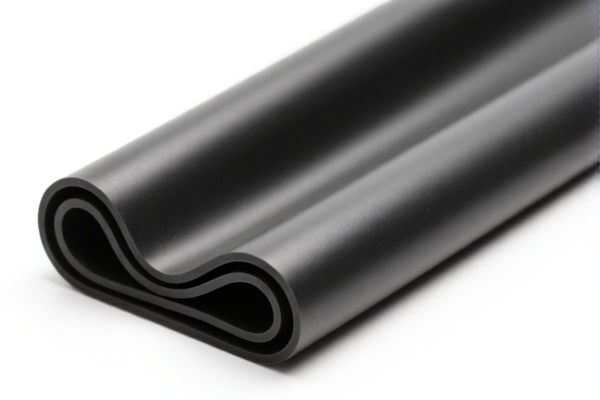
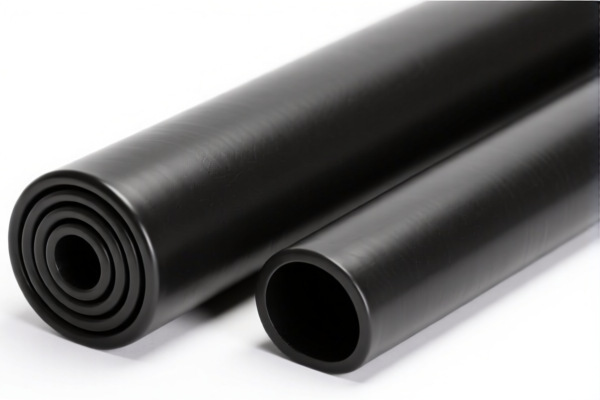


AI Analysis
🧪 Elastomeric Fluororubber (Fluoroelastomer / FKM)
🌐 HS Code Reference & Customs Clearance Guide | 2024 Latest Tariff Analysis | Professional Clearance Strategy
📌 Part I: Product Definition & Classification: Do You Really Understand "Elastomeric Fluororubber"?
Elastomeric Fluororubber (often referred to as FKM, Viton®, or Fluoroelastomer) is a high-performance synthetic rubber known for exceptional resistance to heat, oils, fuels, and chemicals. In international trade, it is primarily classified under Chapter 39 (Plastics and Articles Thereof) or Chapter 40 (Rubber and Articles Thereof), depending on its physical form and specific regulatory interpretation.
Key Distinctions in Classification: 1. As an Elastomer (Chapter 39): If the material is processed as a specific type of polymer/elastic body not exclusively defined as "rubber" in Chapter 40, or if customs authorities view it under plastic-based elastic bodies. 2. As Synthetic Rubber (Chapter 40): If the product is clearly identified as a polymer of fluorine-containing monomers (copolymer) and falls under the standard definition of synthetic rubber. 3. As Semi-Finished Goods (Chapter 39/40): If the rubber is processed into sheets, plates, or strips.
⚠️ Critical Classification Point:
- Raw/Granular/Forming Stock: Often debated between 3901 (Other Primary Forms of Plastics) and 4002 (Synthetic Rubber).
- Sheets/Plates: Typically falls under specific plastic/rubber plate codes (e.g., 3921 or 4002).
- Final Parts (Seals/Gaskets): Would fall under Chapter 40 or 39, but this guide focuses on the material itself as per your data.
📦 Part II: HS Code Classification Details (Based on Provided Data)
| HS Code | Product Description | Summary from Data |
|---|---|---|
| 3901.90.90.00 | Other Polymers of Ethylene (Miscellaneous Category) | Classified under "Other Polymers". Material: Fluororubber. Total Tax: 41.5% |
| 3901.90.10.00 | Other Elastomers (Plastic Category) | Classified as "Other Elastomers". Material: Fluororubber. Form: Elastomer. Total Tax: 35.0% |
| 4002.91.00.00 | Other Synthetic Rubber (Fluorine-containing Polymers) | Classified as "Synthetic Rubber". Material: Fluororubber. Form: Elastomer. Total Tax: 35.0% |
| 4002.99.00.00 | Other Synthetic Rubber (Miscellaneous) | Classified as "Other Synthetic Rubber". Material: Fluororubber. Form: Elastomer. Total Tax: 35.0% |
| 3921.19.00.90 | Other Plastic Plates, Sheets, etc. | Classified as "Other Plastic Products". Material: Fluororubber. Form: Sheets/Plates. Total Tax: 41.5% |
🔍 Key Insight:
- Chapter 39 vs. Chapter 40: The biggest variance comes from whether it's seen as a "Plastic/Polymer" (Ch 39) or "Rubber" (Ch 40).
- Form Matters: Sheets (3921) incur a higher base tariff (6.5%) compared to raw elastomers/rubber (0% base).
- Tax Rate Variance: Ranges from 35.0% to 41.5% due to differences in base tariffs.
💰 Part III: 2024 Latest Tariff Rate Breakdown (With Additional Taxes)
✅ Applicable Country: United States (US)
✅ Origin: China (CN) (Implied by "Section 301" and "122 Clause" references in source data)
✅ Effective Time: Current regulations (Section 301 & 122 remain active)
🎯 1. 3901.90.10.00 & 4002.91.00.00 & 4002.99.00.00 —— Synthetic Rubber / Other Elastomers
These three codes share the same tax structure.
| Item | Content |
|---|---|
| Base Tariff | 0.0% (ad valorem) (0% for both Ch 39 and Ch 40 in this specific context) |
| Section 301 Additional Tariff | +25.0% (Under US Trade Law Section 301) |
| Section 122 Clause Tariff | +10.0% (Specific administrative/trade clause) |
| Total Tax Rate | 35.0% |
| Tax Calculation | CIF Value × 35% |
| De Minimis Exemption? | ❌ No (<800 USD threshold does NOT apply due to Section 301/122) |
| Legal Basis Path | USITC:4002.91.00.00 → SECTION_301:35 → SECTION_122:10 |
📌 Explanation:
- Even though the base tariff is 0%, the additional taxes push the total to 35%.
- This applies to raw/semi-finished fluororubber elastomers classified as synthetic rubber or miscellaneous elastomers.
🎯 2. 3901.90.90.00 & 3921.19.00.90 —— Other Polymers / Plastic Sheets
These two codes incur a higher total tax rate.
| Item | Content |
|---|---|
| Base Tariff | 6.5% (ad valorem) (Standard MFN rate for these specific subheadings) |
| Section 301 Additional Tariff | +25.0% |
| Section 122 Clause Tariff | +10.0% |
| Total Tax Rate | 41.5% |
| Tax Calculation | CIF Value × 41.5% |
| De Minimis Exemption? | ❌ No |
| Legal Basis Path | USITC:3901.90.90.00 or 3921.19.00.90 → SECTION_301:35 → SECTION_122:10 |
📌 Explanation:
- The base tariff is 6.5%, which is added to the 25% and 10% surcharges.
- This higher rate applies if the product is classified under "Other Polymers" (3901.90.90) or as "Plastic Sheets" (3921.19.00.90).
- Crucial: If you import fluororubber sheets, customs may classify it under 3921.19.00.90, triggering the 41.5% rate.
🛠️ Part IV: Customs Clearance Practical Advice (Avoid Pitfalls)
✅ 1. Essential Documentation Checklist
| Document | Required? | Description |
|---|---|---|
| ✅ Product Specification Sheet | ✔️ | Must detail chemical composition (e.g., VDF-HFP copolymer), hardness, density. |
| ✅ Material Safety Data Sheet (MSDS) | ✔️ | For safety handling and HS code confirmation. |
| ✅ Commercial Invoice | ✔️ | Clearly state: "Fluororubber Elastomer, FKM Type, Not for Medical Use" (if applicable). |
| ✅ Packing List | ✔️ | Specify form: Granules, Sheets, or Blocks. Do not mix forms. |
| ✅ Certificate of Origin (CO) | ✔️ | To prove origin (China) and ensure correct Section 301 application. |
| ✅ Technical Data Sheet (TDS) | ✔️ | Helps customs distinguish between "Rubber" (Ch 40) and "Plastic" (Ch 39). |
✅ 2. Declaration Strategy (Key Tips)
🔥 "Form Determines Code, Code Determines Cost!"
| Scenario | Recommended HS Code | Total Tax | Risk Note |
|---|---|---|---|
| Raw Granules / Pellets | 4002.91.00.00 or 3901.90.10.00 |
35.0% | Most common for raw material import. Ensure it's declared as "Elastomer". |
| Fluororubber Sheets/Plates | 3921.19.00.90 |
41.5% | High risk of being classified here due to form. Verify if it can be classified as Ch 40. |
| Molded Parts (Seals/Gaskets) | Not in Data | Varies | Usually Ch 40. If included in a kit, might affect classification. |
| Miscellaneous Polymer Form | 3901.90.90.00 |
41.5% | "Catch-all" category. Avoid if 4002 fits better. |
📌 Pro Tip:
- If importing sheets, try to argue for Chapter 40 (e.g.,4002.99.00.00if possible) to save 6.5% on the base tariff, but be prepared to justify why it's not "plastic sheeting" under Ch 39.
- Do not declare "Fluororubber" vaguely. Use specific terms like "FKM Fluoroelastomer Copolymer".
✅ 3. Special Circumstances
| Situation | Handling Advice |
|---|---|
| OEM Custom Compound | Provide formula sheet. Ensure it doesn't fall under restricted chemicals. |
| Mixed Shipments | Separate HS Codes for different forms (e.g., granules vs. sheets) to avoid confusion and delays. |
| High-Value Imports | Consider Section 301 Exclusions if applicable (check USTR website), though currently rare for FKM. |
| Pre-Arrival Review | Apply for US Customs Ruling if the classification between Ch 39 and Ch 40 is ambiguous. |
🌍 Part V: Global Market Comparison (2024)
| Country/Region | Recommended HS Code | Tariff Rate | Notes |
|---|---|---|---|
| 🇺🇸 USA | 4002.91.00.00 |
35.0% | High due to Section 301 + 122. Base 0%. |
| 🇺🇸 USA | 3921.19.00.90 (Sheets) |
41.5% | Higher base tariff (6.5%) makes sheets more expensive. |
| 🇨🇳 China | 4002.91.00.00 |
~2% - 10% | Depends on specific import regulations. Lower than US. |
| 🇪🇺 EU | 4002.99.00 |
0% - 4% | Generally low tariffs for raw rubber. No Section 301 equivalent. |
| 🇯🇵 Japan | 4002.99.00 |
5.3% | Standard MFN rate. |
📌 Conclusion:
- USA is the most expensive market due to additional punitive tariffs.
- Form factor is critical: Sheets are taxed higher than raw elastomers in the US.
- Strategic Sourcing: If possible, source from non-China origins to avoid Section 301 tariffs.
📌 Part VI: Common Mistakes & Pitfalls (Blood & Tears Lessons)
❌ Mistake 1: Declaring "Fluororubber Sheets" as "Synthetic Rubber" (4002.91)
👉 Consequence: Customs may reject and reclassify to 3921.19.00.90 → Extra 6.5% tax + delay.
❌ Mistake 2: Using generic "Plastic" description without specifying "Fluoroelastomer"
👉 Consequence: Customs may assign a wrong code → Penalties + Audit.
❌ Mistake 3: Ignoring Section 122 Clause
👉 Consequence: Under-declaration of duty → Seizure of goods + fines.
❌ Mistake 4: Assuming De Minimis ($800) applies
👉 Consequence: NO. Section 301 and 122 tariffs DO NOT apply to de minimis shipments. Every shipment is taxable.
✅ Correct Declaration Example:
"Fluororubber (FKM) Elastomer, Copolymer of Vinylidene Fluoride and Hexafluoropropylene, in Granule Form, HS 4002.91.00.00"
🎯 Part VII: Conclusion: Precise Classification Saves Money!
🎯 Remember the Rules:
🔹 "Raw/Granules: 35% | Sheets: 41.5%"
🔹 "Base Tariff 0% + 35% Add-ons = 35% | Base 6.5% + 35% Add-ons = 41.5%"
🔹 "De Minimis Does NOT Apply!"
📌 Pro Tip:
If your fluororubber is imported from Vietnam, Mexico, or Thailand, you may qualify for lower or zero Section 301 tariffs.
Recommendation: Apply for a Pre-Arrival Ruling (PAR) with US Customs if you are importing large volumes of sheets or ambiguous forms.
📣 Immediate Action:
📞 Consult a licensed customs broker + Provide Technical Data Sheet + Verify Origin.
🚀 Ensure smooth clearance, avoid penalties, and optimize your landed cost!
✨ Professional clearance starts with accurate classification!
💼 Every percentage point counts in global trade!
Customer Reviews
About HS Code Classification
The Harmonized System (HS) is an internationally standardized nomenclature developed by the World Customs Organization (WCO) to classify traded products. Over 200 countries use the HS system as the basis for customs tariffs, trade statistics, and import/export regulations.
Each HS code follows a hierarchical structure:
- Chapter (2 digits) — Broad category of goods (e.g., Chapter 84: Machinery and Mechanical Appliances)
- Heading (4 digits) — More specific grouping within the chapter
- Subheading (6 digits) — Internationally standardized breakdown, used by all WCO member countries
- National subdivisions (8-10 digits) — Country-specific extensions for further classification, such as US HTSUS 10-digit codes
Correct HS code classification is essential for smooth customs clearance, accurate duty payment, and compliance with trade regulations. Misclassification can lead to customs delays, overpayment of duties, or penalties.
When importing from CN to US, the applicable tariff rates may include:
- Most-Favored-Nation (MFN) rate — The standard duty rate applied to WTO members
- General rate — Applied to countries without trade agreements
- Trade remedy duties — Additional tariffs such as Section 301 (anti-dumping), Section 232 (national security), or countervailing duties
The information provided on this page is for reference purposes only. For official classification, please consult with your local customs authority or a licensed customs broker.