Electric Bead Machine
CN → US| HS Code | Tariff Rate | Origin | Destination | Doc |
|---|---|---|---|---|
| 8479899599 | 87.5% | CN | US | Official Doc |
| 8479909596 | 85.0% | CN | US | Official Doc |
| 8467290090 | 17.5% | CN | US | Official Doc |
| 8467290035 | 17.5% | CN | US | Official Doc |
Product Images
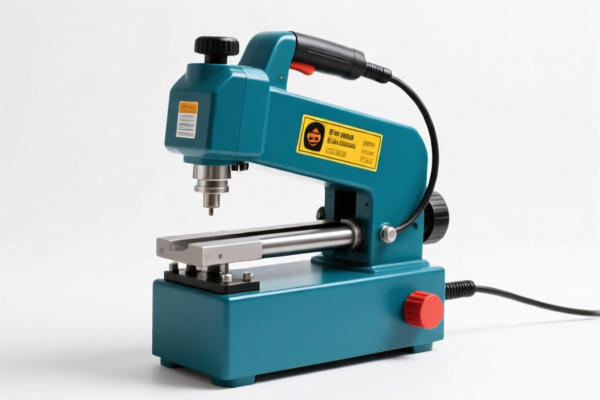
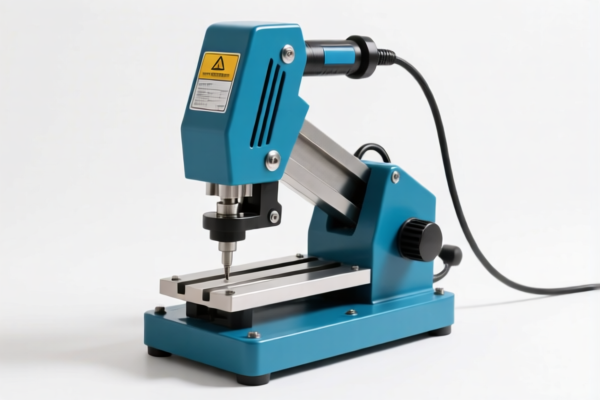
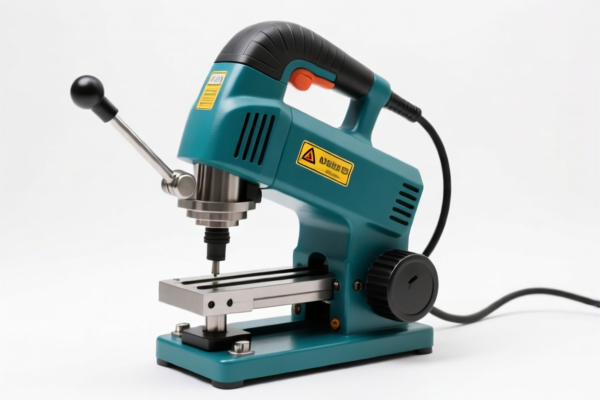
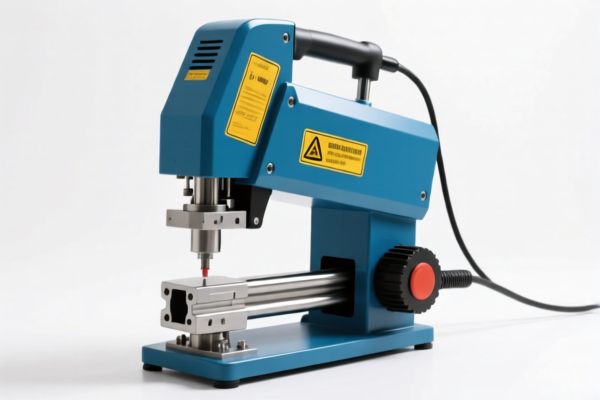
AI Analysis
🧵 Electric Bead Machine (Handheld Bead Making Tools)
🌐 HS Code Reference & Customs Clearance Guide | 2026 Latest Tariff Analysis | Professional Clearance Strategy
📌 I. Product Definition & Classification: Do You Really Understand the "Electric Bead Machine"?
The "Electric Bead Machine" typically refers to handheld tools equipped with self-contained electric motors used for forming, shaping, or processing beads (often plastic, glass, or metallic). In international trade, these are classified based on their function and power source. Because they are handheld tools driven by an internal motor, they fall under Chapter 84 (Nuclear Reactors, Boilers, Machinery and Mechanical Appliances).
Key Distinctions: * Handheld Power Tools: Devices designed to be held in the hand, pneumatic, hydraulic, or with a self-contained electric/non-electric motor. This includes grinders, polishers, sanders, and specific bead-forming tools. * Industrial Machinery vs. Handheld: If the machine is a large, stationary automated production line for beads, it would fall under Chapter 84 heading 8479. However, the term "Electric Bead Machine" in a consumer or small-business context usually implies a handheld tool. * Parts: Separate parts of these machines are also classified separately.
⚠️ Critical Classification Point:
- If the device is a handheld tool with an electric motor used for working (e.g., heating, shaping, polishing beads), it is classified under 8467.
- If the device is a standalone machine with individual functions not specified elsewhere (e.g., an automated bead assembly unit), it may fall under 8479.
- Parts of these machines are classified under 8479.90.
📦 II. HS Code Classification Details (2026 Latest Tariff Authority Comparison)
Based on the provided <DATA>, here are the specific HS Codes and their applications:
| HS Code | Product Description | Applicable Scenario | Classification Logic |
|---|---|---|---|
8467.29.00.90 |
Tools for working in the hand... With self-contained electric motor: Other: Other | General handheld electric bead shapers/formers not specifically listed as grinders/polishers | ✅ Handheld, Electric Motor, "Other" Category |
8467.29.00.35 |
Tools for working in the hand... With self-contained electric motor: Grinders, polishers and sanders: Other: Other | If the bead machine functions primarily as a grinder, polisher, or sander for bead finishing | ✅ Handheld, Electric, Specifically Grinder/Polisher |
8479.89.95.99 |
Machines and mechanical appliances having individual functions...: Other machines...: Other: Other Other | Stationary automated bead-making machines that do not fit other specific headings | ✅ Standalone Machine, Individual Function, "Other" |
8479.90.95.96 |
Machines and mechanical appliances...: Parts: Other Other: Other | Spare parts for the stationary machines under 8479.89.95.99 | ✅ Parts, Not Elsewhere Specified |
🔍 Key Clarification:
- Handheld Tools (8467): If your "Electric Bead Machine" is designed to be held in the hand (like a drill or sander) and has its own motor, it belongs to 8467. The specific sub-code depends on whether it's a grinder/polisher (35) or a general tool (90).
- Stationary Machines (8479): If it’s a benchtop or floor-standing automated unit, it goes to 8479.
- Parts (8479.90): Always classify separate parts under their respective parent machine’s heading, not under the tool heading.
💰 III. 2026 Latest Tariff Rate Details (Including Surcharges & Policy Add-ons)
✅ Applicable Country: United States (US)
✅ Origin: China (CN)
✅ Effective Date: November 10, 2025 (and subsequent imports)
🎯 1. 8467.29.00.90 – Handheld Electric Tools (General)
| Item | Detail |
|---|---|
| Base Tariff Rate | 0.0% |
| Section 301 Surcharge | +7.5% |
| Total Tariff Rate | 7.5% |
| Tax Calculation | CIF Value × 7.5% |
| Can De Minimis Apply? | ❌ No (Deny De Minimis) |
| Legal Basis Path | 8467.29.00.90 → Section 301: 7.5% |
📌 Explanation:
- Handheld power tools with self-contained electric motors generally have a base duty of 0%.
- However, due to Section 301 tariffs on Chinese goods, a 7.5% surcharge applies.
- Total Cost Impact: 7.5% of the declared value.
🎯 2. 8467.29.00.35 – Handheld Electric Grinders/Polishers/Sanders
| Item | Detail |
|---|---|
| Base Tariff Rate | 0.0% |
| Section 301 Surcharge | +7.5% |
| Total Tariff Rate | 7.5% |
| Tax Calculation | CIF Value × 7.5% |
| Can De Minimis Apply? | ❌ No (Deny De Minimis) |
| Legal Basis Path | 8467.29.00.35 → Section 301: 7.5% |
📌 Explanation:
- If the bead machine is classified as a grinder or polisher, it still falls under the same 7.5% surcharge band.
- Note: Ensure the product description matches the function. If it’s a heater/former, use8467.29.00.90. If it’s a sander/polisher, use8467.29.00.35.
🎯 3. 8479.89.95.99 – Other Machines (Stationary Bead Makers)
| Item | Detail |
|---|---|
| Base Tariff Rate | 0.0% |
| General Surcharge | 0.0% |
| Steel/Aluminum/Copper Surcharge | +50% |
| Total Tariff Rate | 50.0% |
| Tax Calculation | CIF Value × 50% |
| Can De Minimis Apply? | ❌ No (Deny De Minimis) |
| Legal Basis Path | 8479.89.95.99 → Steel/Al/Cu Surcharge: 50% |
📌 Explanation:
- This code carries a heavy 50% surcharge if the machine contains significant steel, aluminum, or copper components.
- Critical: Even if the machine is "plastic-bodied," customs may scrutinize internal motors, shafts, or frames for metal content.
- High Risk: This rate is significantly higher than handheld tools. Misclassification here can lead to massive tax liabilities.
🎯 4. 8479.90.95.96 – Parts for Other Machines
| Item | Detail |
|---|---|
| Base Tariff Rate | 0.0% |
| General Surcharge | +25.0% |
| Steel/Aluminum/Copper Surcharge | +50% |
| Total Tariff Rate | 75.0% |
| Tax Calculation | CIF Value × 75% |
| Can De Minimis Apply? | ❌ No (Deny De Minimis) |
| Legal Basis Path | 8479.90.95.96 → Section 301: 25% + Steel/Al/Cu: 50% |
📌 Explanation:
- Parts for these stationary machines are taxed at the sum of surcharges.
- 25% General Surcharge + 50% Metal Surcharge = 75% Total.
- Warning: Shipping spare parts separately can be extremely expensive due to this cumulative tax. Consider shipping parts as "accessories" with the main machine if possible, or ensure they are clearly identified.
🛠️ IV. Customs Clearance Practical Advice (Battle-Tested Pitfall Guide)
✅ 1. Preparation Checklist (All Docs Required)
| Document | Mandatory | Purpose |
|---|---|---|
| ✅ Product Specification Sheet | ✔️ | Defines whether it’s handheld or stationary, electric or manual. |
| ✅ Technical Diagrams | ✔️ | Shows internal components (motor type, material composition) to determine if 8467 or 8479 applies. |
| ✅ Product Photos (Clear) | ✔️ | Must show the device in use, power source, and any metal parts. |
| ✅ Commercial Invoice | ✔️ | Must accurately describe the item as "Handheld Electric Bead Shaper" or "Automatic Bead Making Machine." |
| ✅ Packing List | ✔️ | Details if parts are shipped separately (impacts tax rate). |
| ✅ Material Composition Statement | ✔️ | Crucial for 8479 codes to verify steel/aluminum/copper content for the 50% surcharge. |
✅ 2. Declaration Strategy (Key Mnemonics)
🔥 "Handheld is 7.5%, Stationary is 50%, Parts are 75%!"
| Scenario | Correct HS Code | Incorrect Action | Consequence |
|---|---|---|---|
| Handheld bead former/tool | 8467.29.00.90 or .35 |
Classify as stationary machine | Overpaying 42.5%-67.5% |
| Stationary bead maker | 8479.89.95.99 |
Classify as handheld tool | Underpayment & Penalty |
| Spare parts for stationary machine | 8479.90.95.96 |
Ship as part of main unit (if declared separately) | 75% Tax if declared alone |
| Handheld tool with metal parts | 8467.29.00.90 |
Apply metal surcharge incorrectly | Avoid 50% surcharge (only applies to 8479 parts/machines) |
📌 Note: The 50% steel/aluminum/copper surcharge does not apply to
8467(handheld tools) in the provided data, only to8479(machines and parts). This is a massive saving for handheld devices!
✅ 3. Special Cases Handling
| Case | Handling Advice |
|---|---|
| OEM Custom Bead Tools | Provide client orders and design specs. Ensure the description matches the functional output (e.g., "Bead Shaper," not "Plastic Molding Machine"). |
| Hybrid Devices (Manual + Electric) | If it has a self-contained motor, it’s still 8467. Do not classify as manual tools (which may have different tariffs). |
| Parts Shipped Separately | If parts are for a handheld tool, they might be classified under 8467.90. However, the provided data only lists 8479.90 parts. Verify if 8467 parts exist in the full tariff to avoid the 75% rate. |
| Machine with Significant Metal Content | For 8479.89.95.99, provide a detailed bill of materials (BOM) to contest the 50% surcharge if metal content is minimal. |
🌍 V. Global Market Comparison (2026 Latest)
| Country/Region | Recommended HS Code | Tariff (China Origin) | Certification Required | Notes |
|---|---|---|---|---|
| 🇺🇸 USA | 8467.29.00.90 |
7.5% | FCC, UL (if applicable) | Handheld tools are cheaper than stationary machines (50%). |
| 🇪🇺 EU | 8467.21 (approx.) |
0-4% | CE, RoHS | No Section 301 equivalent. |
| 🇨🇳 China | 8467.29 |
0-5% | CCC (if applicable) | No additional surcharges. |
| 🇬🇧 UK | 8467.29 |
0-4% | UKCA, RoHS | Post-Brexit rules apply. |
📌 Conclusion:
- USA is the most critical market due to Section 301 surcharges.
- Handheld tools (8467) are significantly more favorable than stationary machines (8479) due to the lack of the 50% metal surcharge.
- Ensure your product is marketed and declared as a handheld tool if possible to leverage the 7.5% rate.
📌 VI. Common Mistakes & Pitfalls (Lessons Learned)
❌ Mistake 1: Classifying a handheld bead shaper as a stationary machine (8479)
👉 Consequence: Tariff jumps from 7.5% to 50%.
💡 Fix: Emphasize "Handheld," "Portable," "Battery-operated" in the description.
❌ Mistake 2: Shipping spare parts for a stationary machine separately and paying 75%
👉 Consequence: Massive cost increase on low-value parts.
💡 Fix: Ship parts with the main machine if possible, or verify if 8467.90 (parts for handhelds) is applicable and cheaper.
❌ Mistake 3: Ignoring the steel/aluminum/copper composition for 8479 items
👉 Consequence: Customs audits may reveal higher metal content, leading to back-taxes + penalties.
💡 Fix: Provide a detailed BOM and material certification.
❌ Mistake 4: Using vague terms like "Bead Machine" without specifying power source
👉 Consequence: Customs delays, possible reclassification.
💡 Fix: Always specify "Electric," "Handheld," "Self-contained motor."
✅ Correct Declaration Example:
"Handheld Electric Bead Shaping Tool, Model XYZ, 120V, Self-Contained Motor, For Plastic Bead Formation, FCC Certified"
🎯 VII. Conclusion: Smart Classification Saves Money!
🎯 Remember the Key Takeaways:
🔹 "Handheld = 7.5% | Stationary = 50% | Parts = 75%"
🔹 "Metal Content Matters for Machines, Not Handhelds!"
🔹 "Declare Function, Not Just Name!"
📌 Pro Tip:
If your product can be classified as a handheld tool (8467), ensure the design clearly supports handheld use. This simple distinction can save you 42.5% in tariffs on the US market.
📣 Immediate Action:
📞 Consult a Customs Broker to confirm if your "Bead Machine" fits
8467.29.00.90or.35.
📄 Prepare Technical Docs to prove handheld nature and low metal content (if applicable).
🚀 Optimize your supply chain to avoid the 50%/75% rates associated with8479.
✨ Professional Clearance Starts with Accurate Classification!
💼 Every Percent of Tax Savings is Pure Profit!
Customer Reviews
About HS Code Classification
The Harmonized System (HS) is an internationally standardized nomenclature developed by the World Customs Organization (WCO) to classify traded products. Over 200 countries use the HS system as the basis for customs tariffs, trade statistics, and import/export regulations.
Each HS code follows a hierarchical structure:
- Chapter (2 digits) — Broad category of goods (e.g., Chapter 84: Machinery and Mechanical Appliances)
- Heading (4 digits) — More specific grouping within the chapter
- Subheading (6 digits) — Internationally standardized breakdown, used by all WCO member countries
- National subdivisions (8-10 digits) — Country-specific extensions for further classification, such as US HTSUS 10-digit codes
Correct HS code classification is essential for smooth customs clearance, accurate duty payment, and compliance with trade regulations. Misclassification can lead to customs delays, overpayment of duties, or penalties.
When importing from CN to US, the applicable tariff rates may include:
- Most-Favored-Nation (MFN) rate — The standard duty rate applied to WTO members
- General rate — Applied to countries without trade agreements
- Trade remedy duties — Additional tariffs such as Section 301 (anti-dumping), Section 232 (national security), or countervailing duties
The information provided on this page is for reference purposes only. For official classification, please consult with your local customs authority or a licensed customs broker.